Sophia Ivanovna
Sophia Ivanovna is one of the two maiden aunts with whom Dmitri Ivanovitch Nekhludoff spends his transformative summers at the secluded Panovo estate. She is the younger sister, the kinder and more sentimental of the pair, and her role in the novel is that of a gentle, unwitting catalyst: she saves the infant Katusha Maslova from death, raises her in a half-servant, half-ward status, and provides the domestic stage on which Nekhludoff's first pure love and later his ruinous betrayal of Katusha unfold. Her character represents the benevolent but ultimately passive and complicit face of the landed gentry, whose good intentions cannot prevent the social machinery that destroys women of Katusha's class.
Identity and Background
Sophia Ivanovna and her elder sister, Maria Ivanovna, are maiden ladies who own a dairy farm and a country estate. When Katusha's mother, an unmarried village woman employed on their farm, dies after giving birth to her sixth child, it is Sophia Ivanovna who intervenes. She comes into the farmyard to scold the dairymaids, sees the healthy newborn, and her heart is touched; she offers to stand godmother to the little girl. Her pity induces her to give milk and a little money to the mother so that the baby can be fed, and the child lives. The old ladies thereafter speak of Katusha as "the saved one." Sophia Ivanovna dresses the girl in nice clothes and teaches her to read and write, meaning to educate her like a lady, while Maria Ivanovna, the harder sister, trains her to be a good servant. Growing up under these two different influences, Katusha turns out half servant, half young lady. Sophia Ivanovna's more poetical nature also makes her fear, during Nekhludoff's first visit, that her nephew, with his thoroughgoing, resolute character, might fall in love with Katusha and marry her without considering her birth or station—a fear that has more ground than her sister's worry about a mere intimacy.
Life and Plot Trajectory
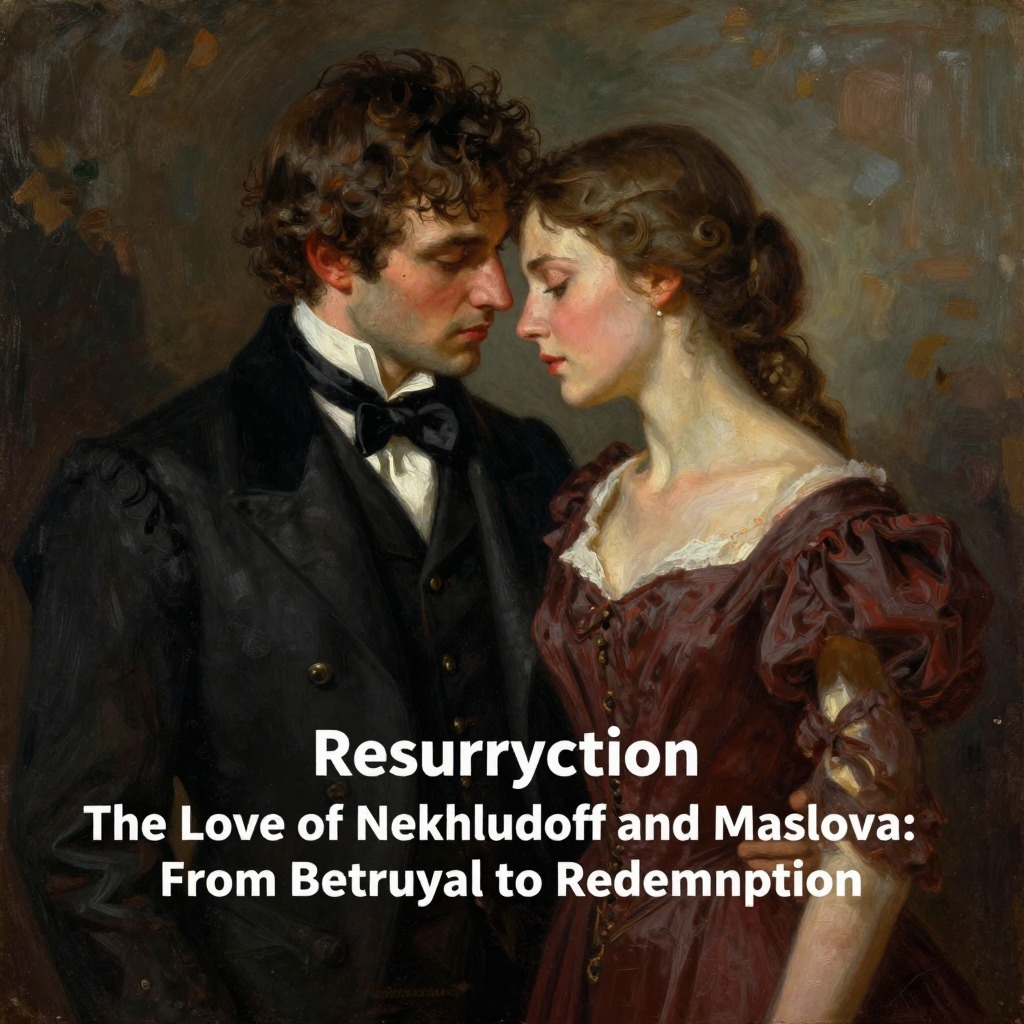
Sophia Ivanovna's estate is the setting for the two crucial periods of Nekhludoff's youth. During his first summer there as a university student, he lives in a blissful state of innocence, writing an essay on land tenure, wandering through fields and woods, and falling into a pure, unacknowledged love with Katusha. Sophia Ivanovna and her sister love their nephew and heir very tenderly, and he is fond of them and their simple, old-fashioned life. Three years later, after Nekhludoff has been depraved by military life, he returns to the aunts' house on his way to join his regiment. Sophia Ivanovna meets him in the ante-room, dressed in silk and a cap, having just been to church and received communion. She greets him warmly, notices his new moustaches, and immediately calls for Katusha to bring him coffee. It is during this second visit that Nekhludoff, now ruled by his animal self, seduces and betrays Katusha. The aunts, who have always loved Nekhludoff, welcome him this time more warmly than ever because he is going to war, where he might be wounded or killed. They are unaware of the betrayal occurring under their roof. After Nekhludoff leaves, the aunts' pious old ladies turn Katusha out when she can no longer serve them as she used to, once they notice something wrong. Sophia Ivanovna's later life is marked by the arrival of Nekhludoff's friend Schonbock, who wins the old ladies' hearts with his refined and amiable manner, though his exaggerated generosity perplexes them. The aunts' estate eventually falls into decay, and Nekhludoff, returning years later, finds the house dilapidated and the garden overgrown. He takes only the letters and a photograph of a group consisting of his aunts, a student, and Katusha from the house before it is sold.
Relationships and Conflict
Sophia Ivanovna's relationship with Katusha is one of benevolent but unequal patronage. She saves the child's life and provides her with an education and a comfortable home, yet she never elevates her to the status of a true family member. Katusha remains half servant, half young lady, and when she becomes pregnant, the pious old ladies turn her out without hesitation. Sophia Ivanovna's relationship with Nekhludoff is one of deep, uncritical affection. She loves him tenderly and is proud of him, but she never questions his actions or intervenes in his moral decline. Her fear that he might marry Katusha is based on a concern for social propriety, not for Katusha's welfare. The conflict between her gentle intentions and the harsh consequences of her inaction is central to her character's tragic irony.
Change and Ending
Sophia Ivanovna does not undergo a personal transformation in the novel. She remains a static figure, a representative of the old, kindly, but morally blind gentry. Her estate, Panovo, decays after her death, and Nekhludoff's return there to settle the land with the peasants marks the final dissolution of her world. The photograph he takes from the house is the last tangible link to her and to the lost innocence of his youth.
Thematic Significance
Sophia Ivanovna embodies the theme of passive complicity. Her kindness saves Katusha's life but does nothing to change the social conditions that make Katusha vulnerable. Her love for Nekhludoff blinds her to his moral corruption. She represents the gentry's ability to feel pity without acting for justice, to preserve the forms of religion and charity while ignoring the systemic cruelty that their class perpetuates. Her character serves as a foil to Nekhludoff's eventual moral awakening: where he comes to see his sin and seeks to atone, she remains comfortably unaware, a gentle soul in a world that her own gentleness cannot save.