Katerina Maslova
Katerina Maslova, known as Katusha in her youth and later as Lubov in the brothel, is the character around whom the entire moral drama of Resurrection revolves. Her life traces a devastating arc from innocent, lively half-servant to a prostitute and wrongly convicted prisoner, and finally to a woman who achieves a hard-won moral rebirth. She is the living embodiment of the novel's central question: can a person who has been crushed by society and by another's sin rise again?
Identity and Background
Maslova was born the illegitimate daughter of a village woman employed on a dairy farm; her father was a gipsy tramp. She was the sixth child of an unmarried mother, and the only one who survived infancy, saved because one of the maiden ladies who owned the farm, Sophia Ivanovna, offered to stand godmother and provided milk and money. Raised by the two sisters, she grew up "half servant, half young lady" — taught to read and write by the kinder Sophia Ivanovna, yet trained for domestic work by the stricter Maria Ivanovna. She was called Katusha, a name that marked her ambiguous status. Though she had more than one offer of marriage from working men, she refused them, feeling that life as a peasant's wife would be too hard after the ease she had known. At sixteen, the nephew of the ladies, Prince Dmitri Nekhludoff, came to stay, and Katusha, not daring to acknowledge it even to herself, fell in love with him.
Life and Plot Trajectory
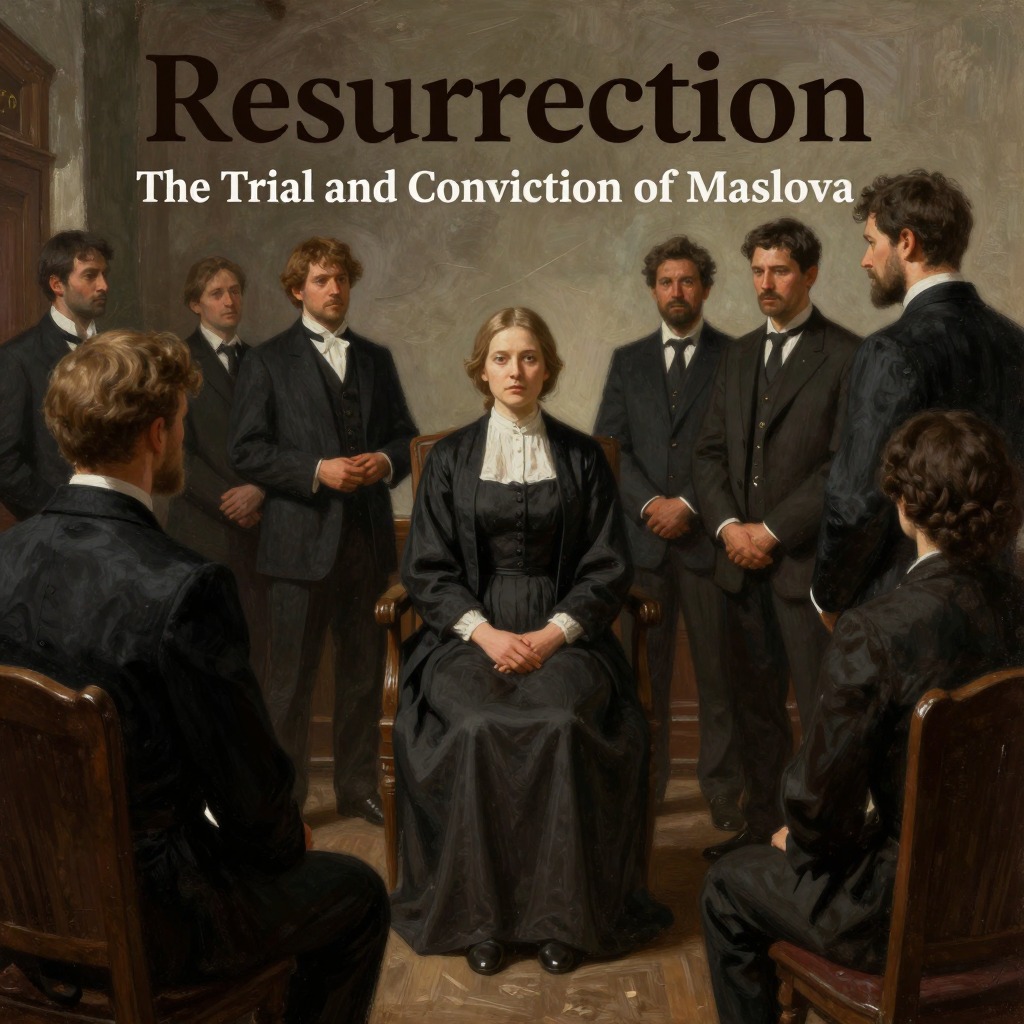
Two years later, Nekhludoff returned on his way to join his regiment. On the night before Easter, after a passionate and innocent love had reawakened between them, he seduced and then abandoned her, leaving a 100-rouble note. Five months later, knowing she was pregnant, Katusha was dismissed by the aunts. She found work as a housemaid but was soon turned out after resisting the advances of her employer, a police officer. After a brief, brutal stint with a forester who raped her, she was again thrown out. Her baby was sent to the Foundlings' Hospital, where it died. Destitute and desperate, she was recruited into a brothel run by Carolina Albertovna Kitaeva, beginning a life of "chronic sin against human and divine laws" that lasted seven years. In the seventh year, at age twenty-six, she was arrested and charged with poisoning the merchant Therapont Emelianovich Smelkoff. At her trial, she was wrongly convicted of murder and sentenced to four years' hard labor in Siberia, a verdict that brought her face to face with Nekhludoff, who was serving on the jury.
Key Actions and Objectives
Throughout the novel, Maslova's actions are driven by a complex mixture of survival instinct, wounded pride, and a gradual reawakening of moral feeling. In court, she initially gives her name as "Lubov" and answers the president's question about her occupation with the defiant, knowing reply, "You know yourself." After her conviction, her immediate desires are for tobacco and vodka, the only comforts she knows. When Nekhludoff first visits her in prison and asks forgiveness, she responds with a cold, luring smile, asking for money — ten roubles — and hiding the note in her belt. She tells him, "Your price is a ten-rouble note," a bitter echo of the 100 roubles he gave her years before. Yet she also shows a capacity for loyalty and care: she pleads with Nekhludoff to help the innocent old woman Menshova and her son, and she protects Theodosia, the young woman who tried to poison her husband. Her most decisive action is her refusal of Nekhludoff's offer of marriage. She tells him, "I am a convict, and you are a gentleman and a prince. There's no need for you to soil yourself by touching me." This refusal is not merely spite; it is a form of self-sacrifice, a determination not to drag him down with her.
Relationships and Conflict
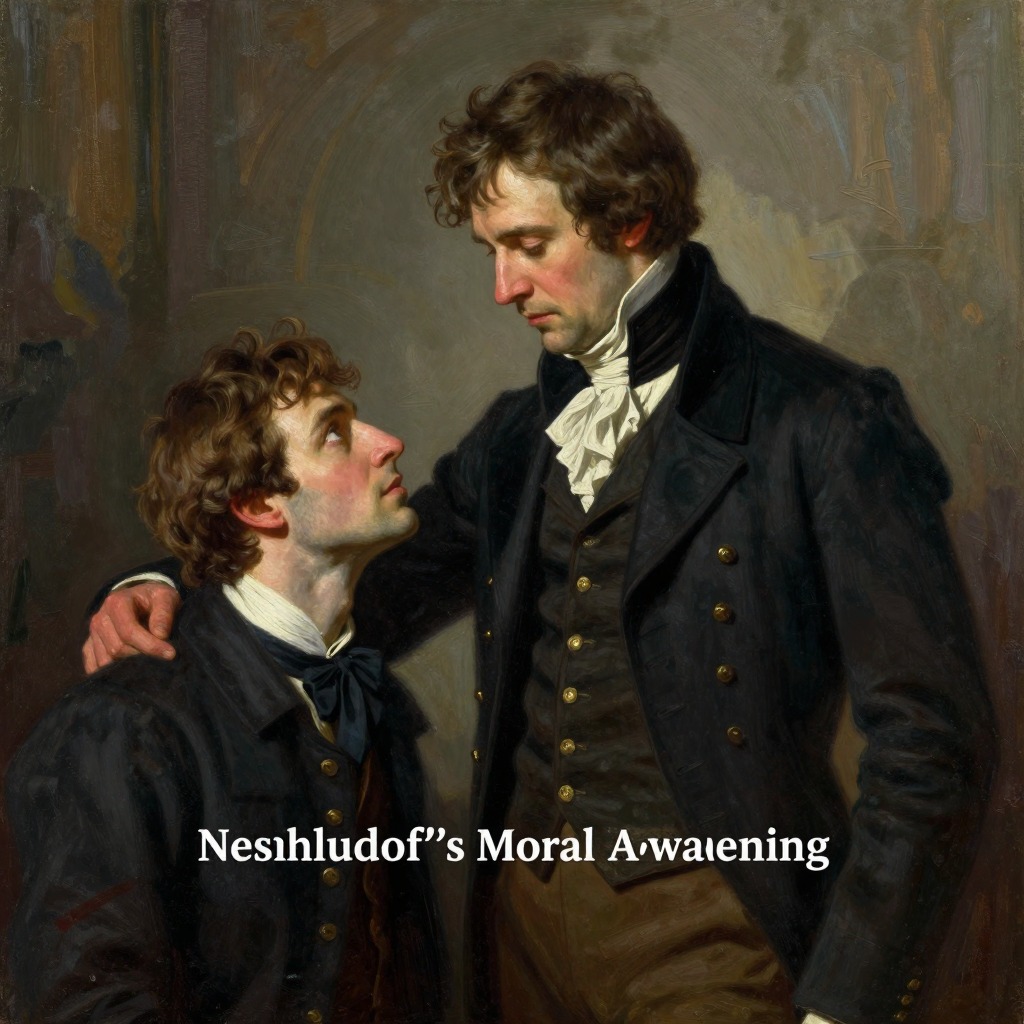
The central relationship of Maslova's life is with Nekhludoff. Their first innocent love, shattered by his betrayal, leaves a wound that festers for years. When they meet again in court, she does not recognize him at first, and when she does, she buries the memory, associating him only with the men who use women like her. Their subsequent prison interviews are a battlefield of accusation, shame, and the slow, painful work of forgiveness. She tells him, "You've got pleasure out of me in this life, and want to save yourself through me in the life to come." Yet she also loves him still, and her final decision to go with Valdemar Simonson is made partly to set Nekhludoff free. Her other key relationships are with her fellow prisoners. She forms a deep, devoted friendship with Mary Pavlovna Schetinina, a political prisoner whose selfless idealism inspires her. She is also loved by Simonson, a quiet, principled revolutionary who sees her not as a fallen woman but as an exceptional human being. His love raises her in her own estimation and gives her a new sense of purpose.
Change and Ending
Maslova undergoes a profound inner transformation over the course of the novel. The change begins when she is transferred to the political prisoners' group, where she is no longer molested by men and is surrounded by people who live for ideals. She stops drinking and smoking, and volunteers to work in the prison hospital. When Nekhludoff brings her the news that her sentence has been commuted to exile, she tells him that she has decided to stay with Simonson. Her words are a final act of love and renunciation: "What have I to consider? Where Valdemar Simonson goes, there I shall follow." She tells Nekhludoff, "You must live, too." In her final interview, she asks not for "good-bye" but for "forgive me," and her eyes, with their strange squint, show that she still loves him but has chosen a different path. She leaves the room, and Nekhludoff is left with the knowledge that she has, in her own way, risen again.
Narrative Role and Evaluation
Maslova is the moral center and the test case of the novel's themes. Her suffering exposes the hypocrisy of the legal system, the cruelty of class privilege, and the degradation of institutionalized prostitution. She is a round character in Forster's sense: capable of surprising convincingly, she moves from a passive victim to an active agent of her own fate. Her refusal of Nekhludoff's marriage proposal is not a rejection of redemption but a redefinition of it on her own terms. She embodies the novel's central paradox: that the person who has been most sinned against can become the most forgiving, and that true resurrection is not a return to innocence but a hard-won acceptance of a new, difficult life. Her story is the engine of Nekhludoff's own moral awakening, and her final choice — to go with Simonson — is both a sacrifice and a triumph, a quiet assertion of her own worth and her own will.