Kamaswami
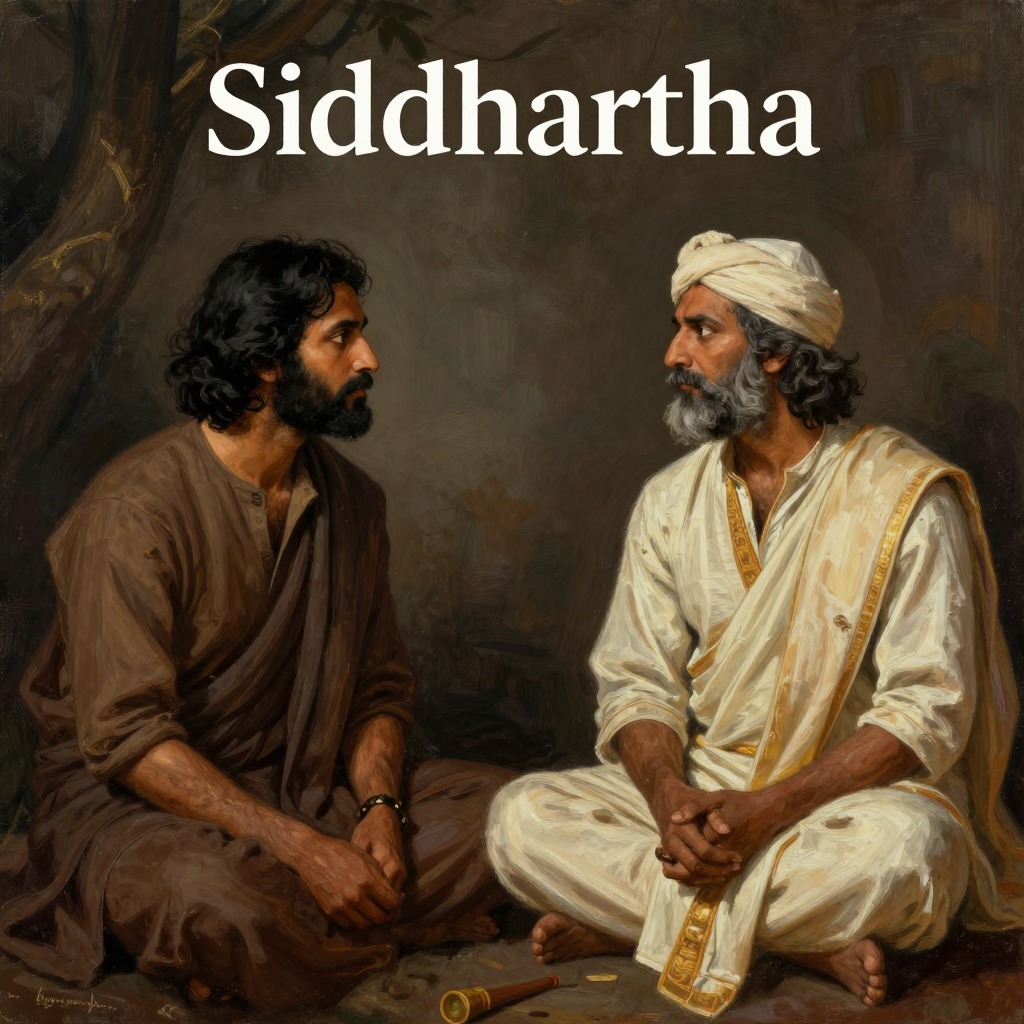
SiddharthaKamaswami is the richest merchant of the unnamed city where Siddhartha arrives after leaving the Samanas and meeting the courtesan Kamala. He is a swiftly moving man with very gray hair, very intelligent and cautious eyes, and a greedy mouth. His house is rich, with precious carpets and servants, and he conducts his business with care and often with passion. Kamala arranges for Siddhartha to meet Kamaswami, telling Siddhartha that Kamaswami is starting to get old and lazy, and that if he likes Siddhartha, he will entrust him with a lot. She instructs Siddhartha to be polite but not too modest, and to become Kamaswami's equal, not his servant.
Employment and Business Partnership
When Siddhartha first meets Kamaswami, the merchant asks if he has become destitute, since he seeks to serve. Siddhartha replies that he is without possessions voluntarily and therefore not destitute. When asked what he can give, Siddhartha answers, "I can think. I can wait. I can fast." Kamaswami tests him by having him read a sales-contract scroll, which Siddhartha reads aloud, and then write something on a piece of paper. Siddhartha writes: "Writing is good, thinking is better. Being smart is good, being patient is better." Impressed, Kamaswami invites Siddhartha to live in his house. Clothes, shoes, and a daily bath are provided, and twice a day a plentiful meal is served, though Siddhartha eats only once a day and neither meat nor wine. Kamaswami soon delegates the writing of important letters and contracts to Siddhartha and discusses all important affairs with him. He sees that Siddhartha knows little about rice and wool, shipping and trade, but that he acts in a fortunate manner and surpasses the merchant in calmness, equanimity, and the art of listening and understanding people.
Siddhartha's Detached Attitude Toward Business
Siddhartha never becomes subservient to Kamaswami, forcing him to treat him as an equal or even more than an equal. He looks upon business as if it were a game, the rules of which he learns precisely but whose contents do not touch his heart. Kamaswami observes that Siddhartha has no passion in his soul when conducting business, but possesses a mysterious quality that brings success, whether from a good star, magic, or something learned among Samanas. He seems to merely play with business affairs, never fully becoming part of them, never afraid of failure, never upset by a loss. A friend advises Kamaswami to give Siddhartha a third of the profits but also hold him liable for the same amount of losses, hoping to make him more zealous. Siddhartha cares little about this arrangement: when he makes a profit, he accepts it with equanimity; when he makes losses, he laughs and says, "Well, look at this, so this one turned out badly!"
Contrast in Values and Worldview
A key incident reveals the fundamental difference between the two men. Siddhartha travels to a village to buy a large harvest of rice, but finds it already sold to another merchant. Instead of returning immediately, he stays for several days, treats the farmers to drink, gives copper-coins to their children, joins a wedding celebration, and returns extremely satisfied. Kamaswami scolds him for wasting time and money. Siddhartha replies that nothing is achieved by scolding, that he has gotten to know many kinds of people, made a Brahman friend, had children sit on his knees, and been shown fields by farmers. He says, "If I had been Kamaswami, I would have travelled back, being annoyed and in a hurry, as soon as I had seen that my purchase had been rendered impossible, and time and money would indeed have been lost. But like this, I've had a few good days, I've learned, had joy." When Kamaswami claims that Siddhartha learned everything he knows from him, Siddhartha retorts, "What I've learned from you is how much a basket of fish costs and how much interests may be charged on loaned money. These are your areas of expertise. I haven't learned to think from you, my dear Kamaswami, you ought to be the one seeking to learn from me."
Siddhartha's Transformation and Departure
Over the years, Siddhartha becomes rich, possessing his own house, servants, and a garden by the river. He learns to trade, use power over people, wear beautiful clothes, give orders, bathe in perfumed waters, eat tenderly prepared food, drink wine, play dice and chess, watch dancing girls, be carried in a sedan-chair, and sleep on a soft bed. Yet he still feels different from and superior to others, watching them with mocking disdain. Slowly, however, his mockery becomes more tired, his superiority more quiet, and he assumes something of the childlike people's ways—their fearfulness, their discontent, their sickliness, their sloth, their lack of love. The disease of the soul that rich people have grabs hold of him. He becomes captured by greed, gambling with high stakes, hating himself, mocking himself, winning and losing thousands, losing money, jewelry, and a house in the country. After each big loss, he pursues trade more zealously, forces debtors more strictly, wanting to continue gambling and squandering. He loses his calmness, patience, kindness toward beggars, and disposition for giving. When Siddhartha finally leaves the city, Kamaswami has people look for him, thinking he has fallen into the hands of robbers. Siddhartha never returns, and the world of Kamaswami—the world of business, worry, and material accumulation—becomes a memory that he reflects on with disgust and from which he ultimately frees himself by the river.