The Dark Years are a period of ancient history in Middle-earth, characterized by the dominion of the Dark Lord Morgoth and later Sauron, marked by war, enslavement, and the corruption of peoples, whose legacy of fear and ruin persists into the Third Age.
The Lithedays, also called the Lithe, are the three summer days in the Shire Calendar that fall outside the regular months, serving as the chief holidays and time of feasting in the Shire. They include Mid-year's Day and, in leap years, an additional day called Overlithe. The Free Fair on the White Downs, where the Mayor of Michel Delving is elected every seven years, is held at the Lithe at Midsummer.
The Siege of Barad-dûr was the culminating military campaign of the War of the Last Alliance at the end of the Second Age, in which the combined forces of Elves and Men besieged Sauron's fortress for seven years, leading to Sauron's overthrow and the cutting of the One Ring from his hand by Isildur.
T.A. 3019 is the pivotal year of the War of the Ring, encompassing the breaking of the Fellowship, the great battles of Helm's Deep and the Pelennor Fields, the destruction of the One Ring, and the fall of Sauron, culminating in the crowning of Aragorn as King Elessar.
The War of the Elves and Sauron (c. 1693–1701 Second Age) was a conflict in Eregion and Eriador triggered by Sauron's forging of the One Ring and his subsequent attack on the Elven-smiths who had made the Rings of Power. The war resulted in the devastation of Eregion, the death of Celebrimbor, the founding of Rivendell as a refuge, and Sauron's temporary expulsion from Eriador by a Númenórean navy.
Yestarë, the New Year's Day in the Númenórean calendar, is a sacred festival that marks the beginning of the year and stands outside the normal monthly reckoning, embodying the Eldarin concept of a time that is set apart from the mundane flow of days.
The hummingbirds are a recurring visionary image in Toni Morrison's Beloved, appearing at two of the novel's most charged moments: when Sethe recalls her flight from Sweet Home and her infanticide, and when she attacks Edward Bodwin. The image fuses maternal protection, trauma, and the involuntary return of the past, embodying the novel's exploration of how memory and violence erupt unbidden.
The sound is the collective, wordless cry raised by thirty neighborhood women outside 124 Bluestone Road in the climactic exorcism scene of Toni Morrison's Beloved. It is the sound that breaks the back of words, a wave of communal voice that both summons Sethe out of her consuming bond with Beloved and precipitates the novel's final crisis, in which Sethe attacks Edward Bodwin with an ice pick. The sound represents the community's reclamation of Sethe and the triumph of collective witnessing over individual trauma.
In Toni Morrison's Beloved, the bee appears as a recurring natural image, most notably in the phrase 'the perfumed things honeybees love,' which marks the sensory atmosphere of the Sweet Home men's world and the sweetness of the natural world that contrasts with the brutality of slavery. The bee is also part of the novel's broader pattern of animal imagery that underscores themes of freedom, captivity, and the natural world's indifference or beauty.
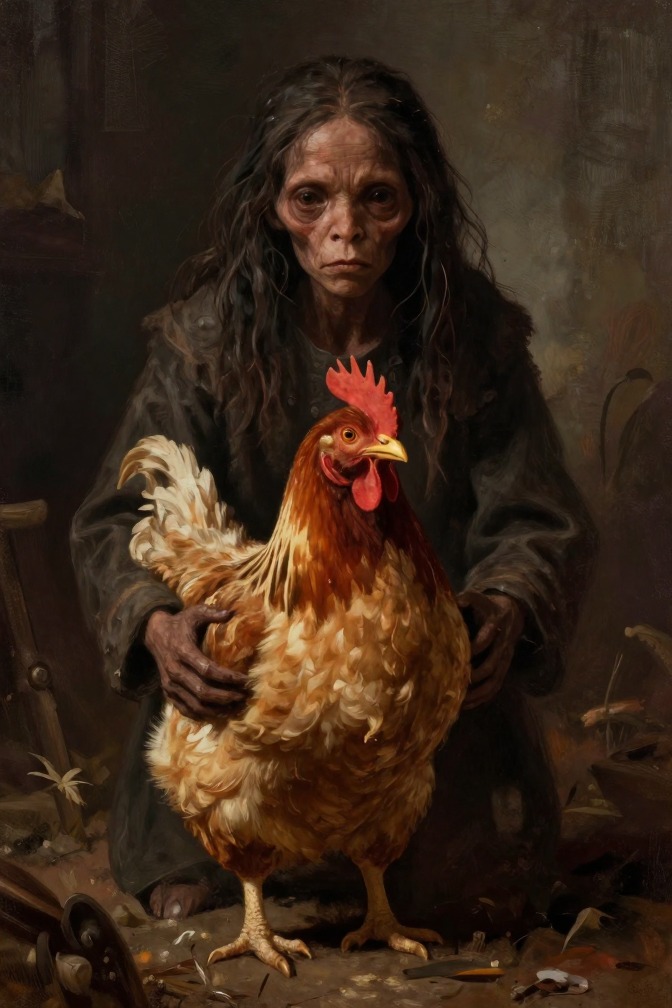
In Toni Morrison's Beloved, the chicken appears as a recurring animal motif that carries symbolic weight across the novel's exploration of slavery, freedom, and the dehumanization of Black people. From the hens that become part of the feast at 124 Bluestone Road to the rooster Mister whose freedom and dignity Paul D contrasts with his own enslaved condition, chickens serve as markers of both communal sustenance and the brutal hierarchies that define the characters' lives.
Beloved's disappearance from 124 Bluestone Road is the final, ambiguous dissolution of the ghostly presence that had consumed Sethe's life, an event that leaves no physical trace and is deliberately forgotten by the community, yet whose absence reshapes the survivors' understanding of memory, loss, and the possibility of a future.
The ice skating scene is a pivotal moment in Beloved where Sethe, Denver, and Beloved share a rare, joyful afternoon on a frozen creek, marking a temporary escape from the haunting and the beginning of Sethe's delusional belief that Beloved is her returned daughter.
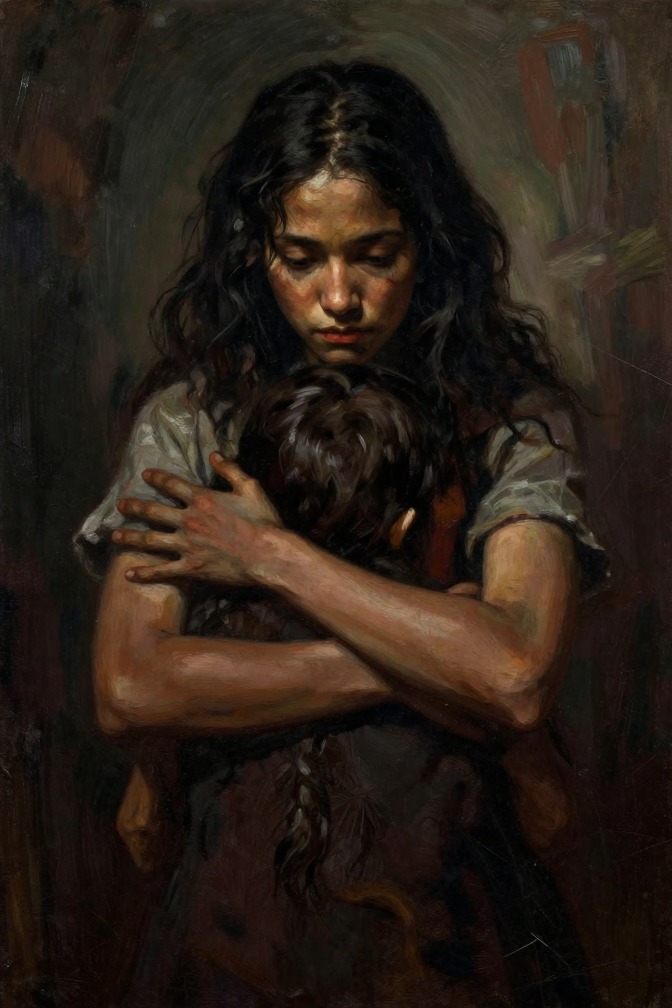
The infanticide is the central, catastrophic event of Toni Morrison's Beloved: Sethe, a fugitive slave, kills her two-year-old daughter rather than allow her to be returned to slavery under schoolteacher. This act, committed in a woodshed at 124 Bluestone Road, transforms the novel's characters and community, leading to the haunting of 124 by the child's ghost, the arrival of the mysterious Beloved, and the long, painful reckoning with memory, love, and freedom.
Cincinnati is the free-state city in southwestern Ohio where the formerly enslaved Sethe, her daughter Denver, and the ghost-haunted house at 124 Bluestone Road are located. It is the novel's central setting for the post-slavery present, a place of both refuge and judgment, where the black community's shunning, the arrival of Beloved, and the final exorcism all unfold.
Delaware is the northern state where Paul D lived with a weaver woman for nearly two years after escaping from the chain gang in Alfred, Georgia, and before making his way to Cincinnati and 124 Bluestone Road. It represents the longest period of settled life he had known since slavery, yet it also became the place where he first experienced the house-fits that would later recur at 124.
Lady Jones' house is the modest Cincinnati home of the mixed-race teacher Lady Jones, which becomes a clandestine school for Black children and a pivotal site in Denver's development, first as a place of learning and later as a source of community aid during Sethe's decline.
The barn at Sweet Home is a central location in Toni Morrison's Beloved, serving as the site of Halle's psychological breakdown and the scene of Sethe's sexual assault, which together catalyze her escape and the novel's central tragedy.
The big house at Sweet Home is the central plantation residence where the Garner family lived and where Sethe worked as a domestic slave. It is the site of Mrs. Garner's illness and death, and the place where schoolteacher's nephews assaulted Sethe, stealing her milk and leading to the brutal whipping that left the chokecherry tree on her back. The big house symbolizes the false security of Garner's 'manhood' policy and the violent reality of slavery that shatters under schoolteacher's regime.
The boxwood bushes, also known as the emerald closet, are a hidden circular room formed by five boxwood bushes behind 124 Bluestone Road, serving as Denver's private refuge and the site of her imaginative and spiritual life.
The cemetery in Toni Morrison's Beloved is a liminal space where the dead and the living, the remembered and the forgotten, converge. It is the site of Baby Suggs's burial and the resting place of Sethe's murdered daughter, whose headstone bears the single word "Beloved." The cemetery embodies the novel's central meditation on memory, grief, and the unquiet presence of the past, serving as a physical and symbolic ground where the community's history of loss is inscribed.
The graveyard is the burial ground where Sethe's baby daughter, killed by her own hand, is laid to rest, and where Baby Suggs is later buried beside her. It is the site of Sethe's most anguished act of remembrance and the place where the community's judgment and Sethe's isolation are made manifest.
The headstone is the gravestone Sethe has carved for her baby daughter, whom she killed to save from slavery. It bears the single word "Beloved," the only word she could afford to have engraved after bartering sex with the engraver for ten minutes of his work. The headstone becomes the physical anchor of Sethe's grief, guilt, and the haunting that defines 124 Bluestone Road, and its name is later adopted by the mysterious young woman who arrives at the house, linking the stone to the novel's central themes of memory, loss, and the return of the repressed.
The indigo field is a recurring site of memory and labor in Toni Morrison's Beloved, where Sethe's mother worked and where Sethe herself was pointed out to her as a child. It symbolizes the erasure of maternal presence under slavery and the transmission of identity through marks of labor and loss.
The jail in Cincinnati is the place where Sethe is imprisoned after killing her baby daughter, and where she nurses the infant Denver while awaiting trial. It functions as a site of punishment, maternal endurance, and the beginning of the community's estrangement from Sethe.
The slaughterhouse in Cincinnati is a recurring site of labor, degradation, and economic survival for the Black community in Toni Morrison's Beloved. It represents the brutal, dehumanizing work available to freed and fugitive slaves, and its imagery—of offal, blood, and the Saturday girls—becomes a measure of the depths to which Sethe and others are willing to descend to sustain themselves and their families.
The smokehouse at 124 Bluestone Road is a small outbuilding that becomes the site of the novel's most harrowing act: Sethe's murder of her baby daughter to prevent her return to slavery. It is also a place of memory, transformation, and haunting, where the community's judgment and Sethe's own trauma converge.
Turnips appear in Toni Morrison's Beloved as a humble root vegetable that carries unexpected symbolic weight, marking moments of hunger, survival, and the fragile beginnings of freedom. They surface in the novel's final section, where Paul D, having returned to 124 Bluestone Road, reflects on his first earned purchase—a bunch of withered turnips—which he bought with a coin given to him by a white man in Trenton, New Jersey. This seemingly trivial transaction becomes a milestone in his journey from slavery to a tentative, self-owned life, and it resonates with the novel's broader themes of nourishment, deprivation, and the quiet dignity of claiming one's own sustenance.
Garner's Manhood Policy was the set of beliefs and practices by which Mr. Garner, the owner of Sweet Home in Kentucky, defined his male slaves as "men" rather than "niggers," a distinction that gave them privileges unheard of on other farms but that also proved to be a fragile, dependent identity that collapsed under schoolteacher's regime.
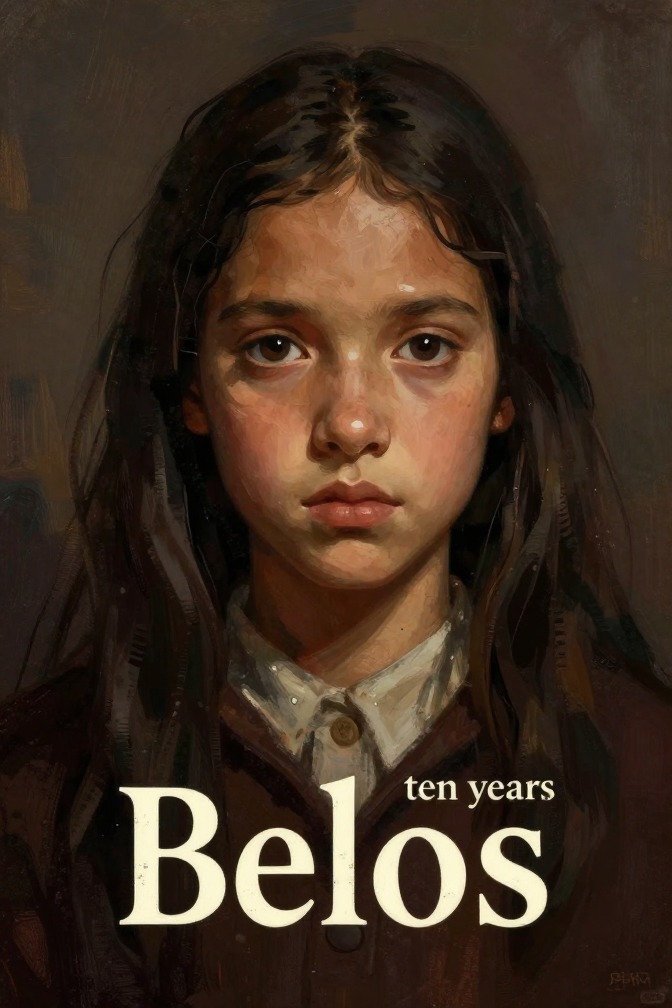
The ten years refers to the decade Baby Suggs spent at Sweet Home, a period that shaped her understanding of slavery and freedom, and that she later recalled as a time of relative peace before the arrival of schoolteacher and the tragedy that followed.
The little prince's planet is the distant, tiny home world of the Little Prince, the place he left to travel the universe and the destination he returns to at the story's end. Its significance lies in being the locus of the Little Prince's love for his flower and his sheep, and the source of the narrator's enduring anxiety about whether the sheep has eaten the rose. The planet's unseen fate becomes a central mystery that transforms the narrator's perception of the cosmos, turning stars into bells or tears.