The 1935 heat wave is a pervasive atmospheric condition that saturates the first part of Ian McEwan's *Atonement*, functioning as more than mere weather. It is a catalytic force that intensifies emotions, accelerates events, and creates a pressure-cooker environment where the novel's central tragedy—Briony Tallis's false accusation of Robbie Turner—becomes possible. The relentless, oppressive heat lowers inhibitions, heightens irritability, and blurs the boundaries between reality and fantasy, directly contributing to the misunderstandings and rash actions that shatter lives.
The divorce of Hermione and Cecil Quincey is the background crisis that brings Lola, Jackson, and Pierrot to the Tallis house in the summer of 1935, and its unspoken shame shapes the children's vulnerability throughout the novel.
1935 is the year in which the central, catastrophic events of the novel take place: the summer heat wave at the Tallis family home, Briony Tallis's false accusation of Robbie Turner, and the subsequent arrest and imprisonment that set the story's tragedy in motion.
1999 is the narrative frame year of the novel's final section, in which the elderly Briony Tallis, now a celebrated novelist, confronts her terminal vascular dementia diagnosis, revisits the scenes of her childhood crime, and completes the final draft of her lifelong project of atonement.
The 1930s in Atonement is the decade of the novel's central crime and its long aftermath, a period defined by the lingering shadow of the Great War, the rise of fascism, and the rigid social hierarchies of English country life. It is the era in which Briony Tallis's false accusation destroys Robbie Turner's life, and the decade that culminates in the Second World War, which provides the setting for Robbie's ordeal at Dunkirk and Briony's attempt at atonement through nursing.
The Blitz, the sustained German bombing campaign against Britain from September 1940 to May 1941, forms the historical backdrop for the novel's final sections, shaping the wartime experiences of Briony Tallis and Robbie Turner and providing the context for the novel's climactic revelations about memory, trauma, and atonement.
The summer of 1935 is the pivotal temporal setting for the novel's central tragedy, a period of intense heat and social tension at the Tallis family estate that culminates in a false accusation of rape, the arrest of Robbie Turner, and the irrevocable fracturing of the Tallis family, setting in motion a chain of guilt, war, and a lifelong quest for atonement.
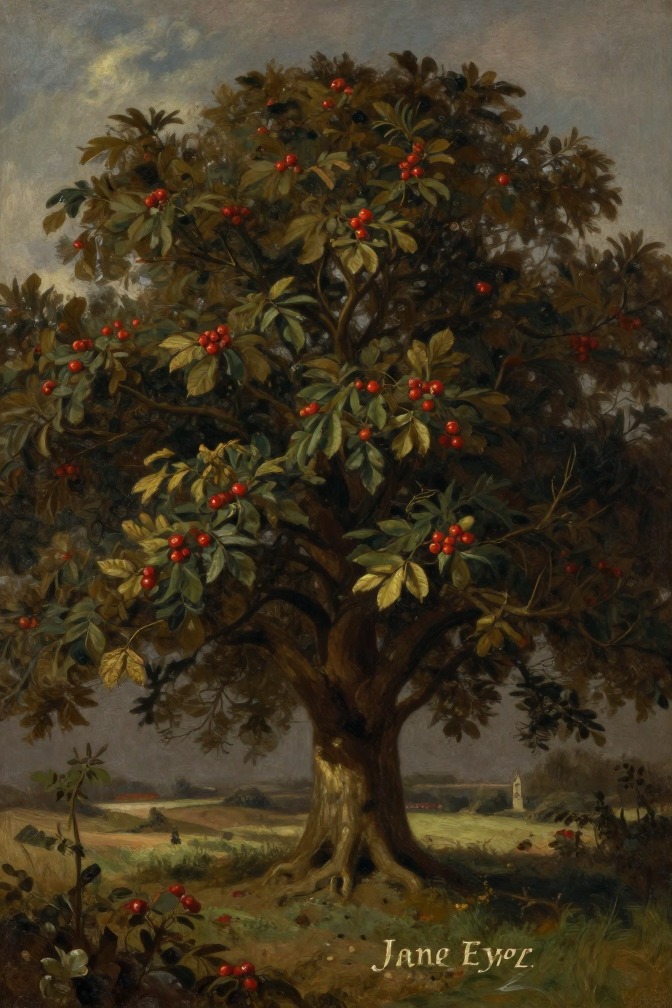
The chestnut tree in the orchard at Thornfield Hall is a powerful symbolic presence in Jane Eyre, marking the site of Jane and Rochester's engagement and its subsequent fracture. Struck by lightning on the night they pledge themselves to each other, the tree becomes a living emblem of their union's vulnerability, the moral and social obstacles that threaten it, and the lasting scars of passion and fate. Its ruined form recurs throughout the novel, linking the lovers' fate to the natural world and serving as a touchstone for themes of destruction, endurance, and the possibility of renewal.
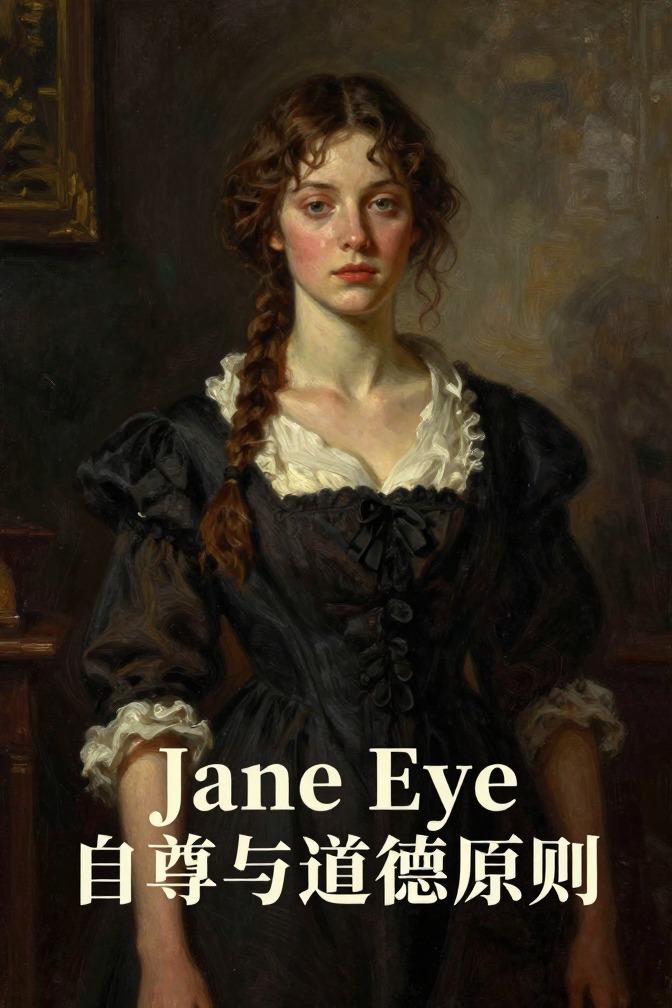
Self-respect and moral integrity are the central ethical principles that govern Jane Eyre's decisions throughout the novel, defining her identity and shaping her relationships. From her childhood defiance against injustice at Gateshead to her ultimate rejection of a bigamous union with Mr. Rochester and her refusal of a loveless marriage to St. John Rivers, Jane consistently prioritizes her own moral code and sense of self-worth over security, passion, or social advancement. This unwavering commitment to principle, which she herself articulates as a law given by God and sanctioned by man, constitutes the core of her character and the engine of the novel's drama.
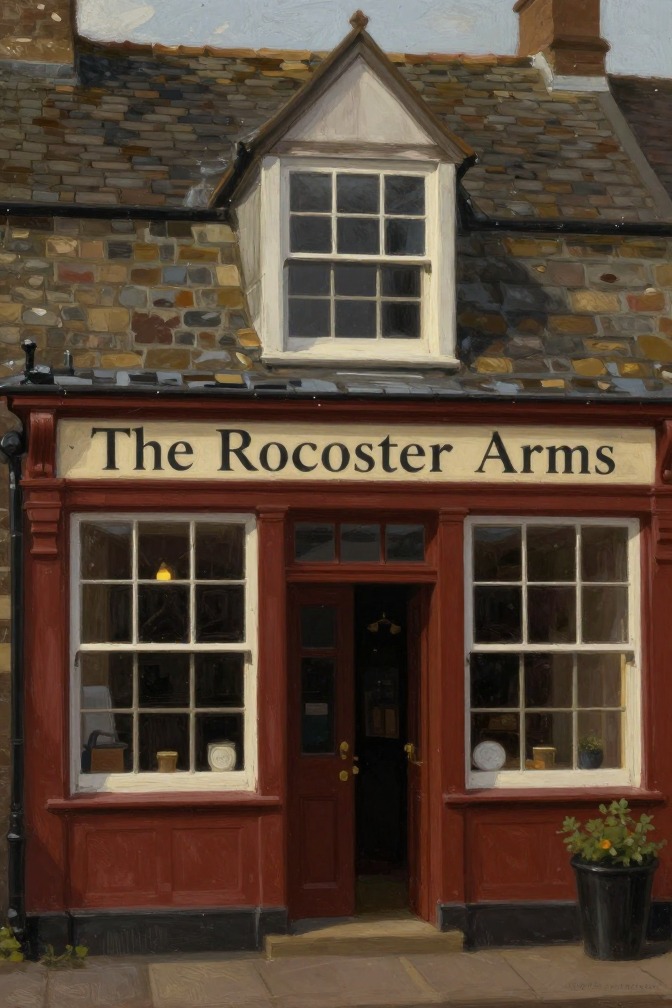
The Rochester Arms is the inn near Thornfield Hall where Jane Eyre stops on her return journey, and its name confirms she has reached her master's lands, marking a pivotal moment of hope and dread before she discovers the ruin of the estate.
Lowton is the small market town nearest to Lowood Institution, serving as the postal and commercial hub for the school and its inhabitants. It is the place where Jane Eyre posts her advertisement for a governess position, receives Mrs. Fairfax's reply, and later meets Bessie Leaven for the last time before departing for Thornfield. The town also appears as the destination for a shopping trip by Mr. Brocklehurst, who buys thread and needles there, and as the location of the Lowton Dispensary, whose matron briefly becomes the housekeeper at Lowood during the typhus epidemic.
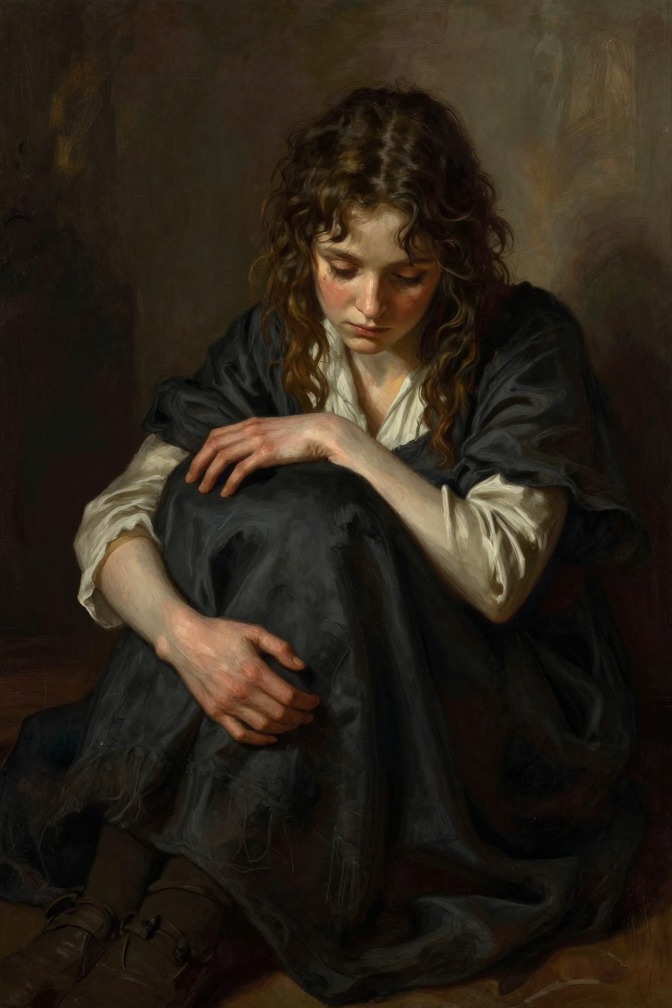
Poverty is a defining condition of Jane Eyre's early life and a persistent force that shapes her identity, choices, and moral development. From her dependent status at Gateshead Hall, where she is reminded that she is "less than a servant," to her destitute wanderings after fleeing Thornfield, poverty functions as both a material reality and a social stigma that Jane must confront, endure, and ultimately transcend through inheritance and principled action.
Anórien is a region of Gondor, the narrow land between the White Mountains and the Great River Anduin, serving as the vital corridor linking Minas Tirith to Rohan. It is defined by its strategic beacon-hills, its role as a buffer zone against invasion from the north and east, and its deep historical connection to the vanished North-kingdom of Arnor.
Angband is the primordial subterranean fortress of Morgoth, the first Dark Lord, located in the far north of Middle-earth. It serves as the ultimate source of evil in the First Age, the place where the Silmarils were stolen and where Sauron was originally a servant. In the Third Age, its legacy persists as a byword for ancient terror, and its name is invoked in the Ring-verse and in the lore of the Balrog, connecting the War of the Ring to the deeper history of the world.
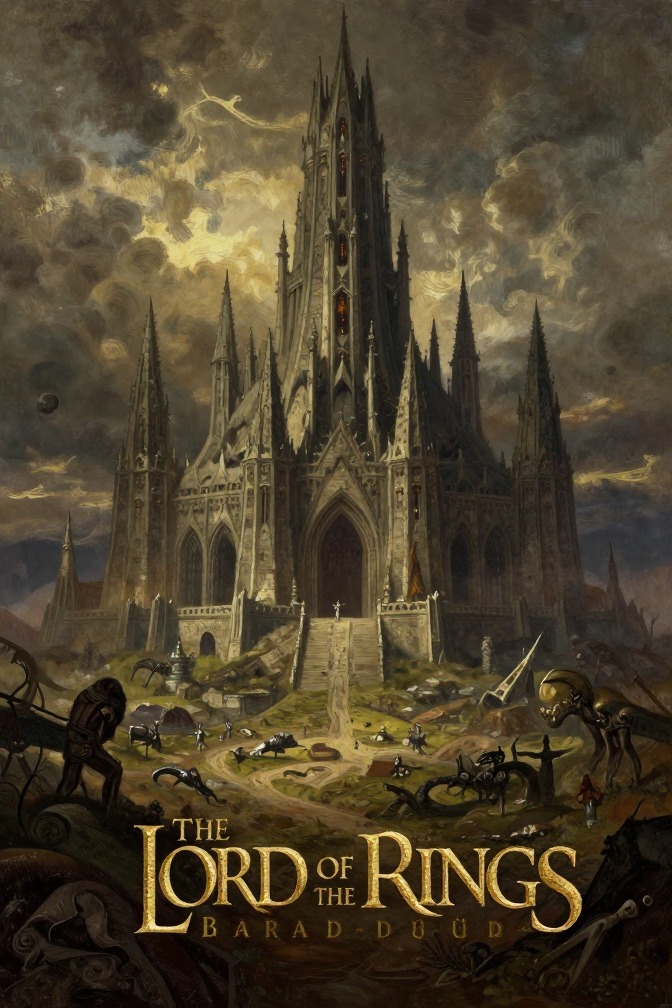
Barad-dûr, the Dark Tower, is the central fortress of Sauron in Mordor, the physical and symbolic embodiment of his power and malice throughout the Third Age. It is the ultimate destination of the One Ring and the focal point of the War of the Ring, representing absolute tyranny and the shadow that threatens to engulf Middle-earth.
Belfalas is a coastal region in southern Gondor, ruled by the Prince of Dol Amroth, known for its hardy, sea-faring people and its role as a key defensive bulwark against the Corsairs of Umbar during the War of the Ring.
The Black Gate (Morannon) is the heavily fortified main entrance to Mordor, a massive iron gate set in a great rampart between the Towers of the Teeth, guarded by countless Orcs and watched by the Eye of Sauron. It is the site of the final, desperate confrontation between the Captains of the West and the forces of the Dark Lord, and the place where the Host of the West makes its last stand to draw Sauron's attention away from Frodo's quest.
Brandy Hall is the vast ancestral mansion of the Brandybuck family in Buckland, east of the Brandywine River. Built and excavated by Gorhendad Oldbuck, who renamed himself Brandybuck, it grew into a sprawling warren of tunnels, halls, and windows that housed hundreds of relatives, serving as the political and social heart of Buckland and a symbol of the family's independent, boat-loving, and slightly eccentric character.
The Brandywine River (Baranduin) is the eastern border of the Shire, a major geographical and symbolic boundary that separates the hobbits' homeland from the wider, more dangerous world. It is the site of the Buckland Gate, the Brandywine Bridge, and the Bucklebury Ferry, and its crossing marks the point of no return for Frodo and his companions as they leave the Shire behind.
The Celebrant, also called the Silverlode, is a swift, cold river that rises in the Dimrill Dale beneath the Misty Mountains and flows through Lothlórien to join the Great River Anduin. It marks the northern boundary of the Golden Wood and serves as the Company’s route into the Elven realm, where its waters are treated with reverence and its crossing is guarded by the Galadhrim.
Dor Caranthir is a region in the far east of Beleriand, named after Caranthir, the fourth son of Fëanor. It appears in the narrative of The Lord of the Rings only as a distant, legendary place, mentioned in the context of the ancient history of the Elves and the geography of the First Age. Its significance lies in its role as a realm of the Noldor during the Elder Days, a time of war against Morgoth, and its memory contributes to the depth and historical texture of the world in which the main story unfolds.
Dor Dínen, the Silent Land, is a region of the dead in the First Age of Middle-earth, a place of silence and desolation that serves as a narrative and thematic counterpoint to the living lands of the Third Age. Its mention in *The Lord of the Rings* occurs in the context of the Fellowship's journey, specifically in the chapter 'A Journey in the Dark' (Book Two, Chapter 4), where it is referenced as a part of the ancient history of Beleriand, a land that has passed away. The name itself, meaning 'Silent Land' in Sindarin, evokes a sense of loss and the passage of ages, contrasting with the vibrant, though perilous, world of the Third Age.
Doriath, the Hidden Kingdom of King Thingol in Beleriand, is the most storied and tragic realm of the Elves in the First Age, a forested land protected by the magical Girdle of Melian where the love of Beren and Lúthien unfolded and the Silmaril was won, only to be destroyed in the final ruin of the Elder Days.
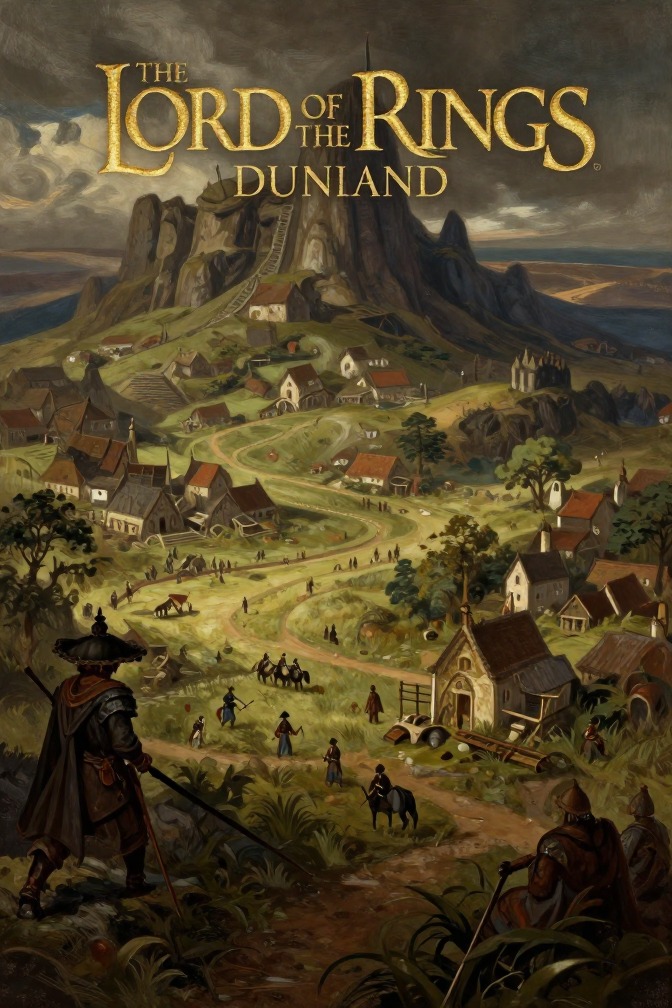
Dunland is a rugged, hilly region west of the Misty Mountains and south of the Shire, inhabited by a remnant people who are hostile to the Rohirrim and have long been estranged from the Dúnedain. Its significance in the War of the Ring lies in its role as a source of wild men and hill-folk whom Saruman recruits for his armies, and as a territory through which the Fellowship and later the Company of the Ring pass on their journeys.
Eithel Ivrin is a legendary spring in the First Age of Middle-earth, the source of the River Sirion in the region of Hithlum, and a site of profound narrative and symbolic significance, most notably as the place where the Elven-king Fingolfin's host camped before the Dagor Bragollach and where the waters were later defiled by the dragon Glaurung.
Eldamar is the coastal region of Valinor, the Undying Lands, where the Elves of the High Kindred dwell. It is the land of the Eldar, the Elvenhome beyond the Great Sea, a realm of timeless beauty and light, from which the Noldor exiles came to Middle-earth and to which some, like Galadriel and Elrond, eventually returned. In the narrative of *The Lord of the Rings*, Eldamar functions as the ultimate, unreachable West, a source of longing and a symbol of a lost, perfect world that shapes the Elves' sorrow and the mortal characters' sense of exile.
The Emyn Muil is a rugged, barren highland region east of the Anduin River, forming the eastern boundary of Rohan and the western approach to the Dead Marshes and Mordor. It is a landscape of stony ridges, deep ravines, and treacherous paths, where the Fellowship of the Ring became lost after the Breaking, and where Frodo and Samwise Gamgee, guided by Gollum, began their harrowing journey toward the Black Gate.
Erech is a hill in the ancient realm of Gondor, upon which stands a black stone brought from Númenor by Isildur. It is the site where the King of the Mountains swore an oath of allegiance to Isildur, an oath later broken, leading to a curse that turned his people into the Dead Men of Dunharrow. In the War of the Ring, Aragorn summoned these Oathbreakers to the Stone of Erech, compelling them to fulfill their pledge and thereby gaining an army of shadows that helped secure victory at Pelargir.
Ered Engrin, the Iron Mountains, is a vast mountain range in the far north of Middle-earth, serving as the original fortress of Morgoth in the Elder Days. Though largely destroyed in the War of Wrath, its legacy as the source of primeval evil and its association with Morgoth's iron legions cast a long shadow over the geography and history of the Third Age, making it a foundational location of dark power.
Ered Lithui, the Ashen Mountains, form the northern wall of Mordor, a range of barren, ash-grey peaks that, together with the Ephel Dúath to the west, enclose the dark land of Sauron. This mountain chain is not merely a geographical boundary but a narrative and symbolic barrier, marking the edge of the living world and the beginning of the desolate, industrial hellscape of Gorgoroth. Its grim, lifeless slopes are the backdrop for the final, desperate stages of Frodo and Sam's journey, and its strategic importance is underscored by the fortress of Barad-dûr, which is reared upon a long spur thrust down from its northern reaches.