Ink is a recurring object in Toni Morrison's Beloved, symbolizing the intersection of literacy, power, and identity. Sethe's homemade ink becomes a tool of oppression when schoolteacher uses it to document her 'animal' characteristics, yet it also represents her creative agency and the potential for self-definition. The ink's presence in the narrative underscores the tension between oral and written culture, and its legacy persists in the novel's final images of forgetting and remembrance.
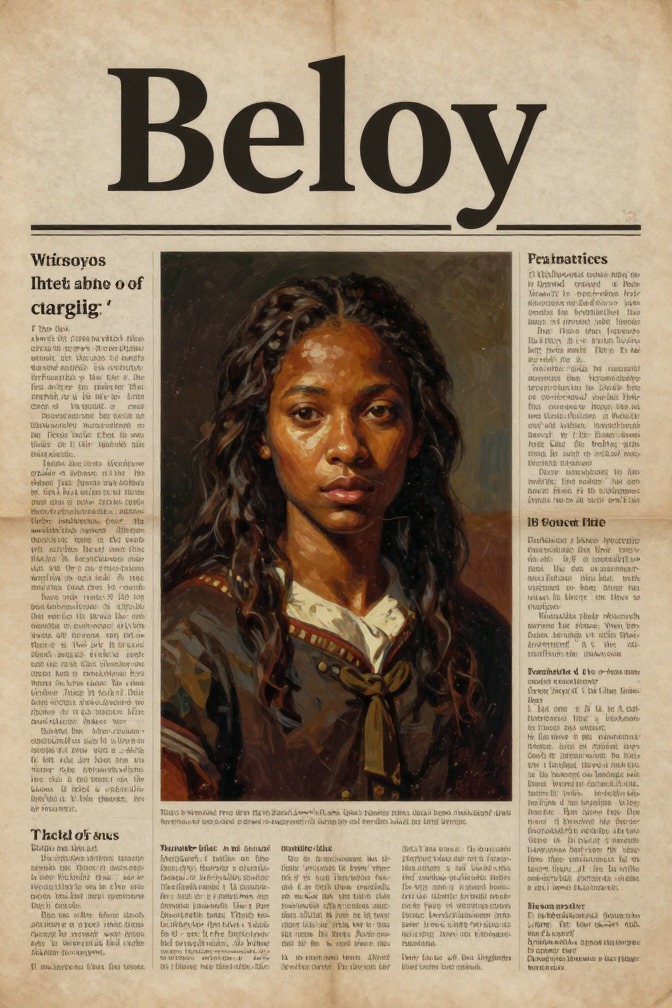
The newspaper clipping is a pivotal object in Toni Morrison's Beloved, a printed account of Sethe's infanticide that Stamp Paid shows to Paul D, shattering his understanding of Sethe and driving him from 124 Bluestone Road. It embodies the community's judgment, the power of written records over oral testimony, and the novel's meditation on how stories are told, remembered, and passed on.
The skiff is a small, stolen boat that carries Sethe across the Ohio River during her escape from Sweet Home, marking the climax of her flight and the birth of Denver. It is a fragile vessel, riddled with holes and equipped with a single oar, yet it becomes the instrument of Sethe's deliverance and the site of Denver's birth, symbolizing both the peril and the possibility of freedom.
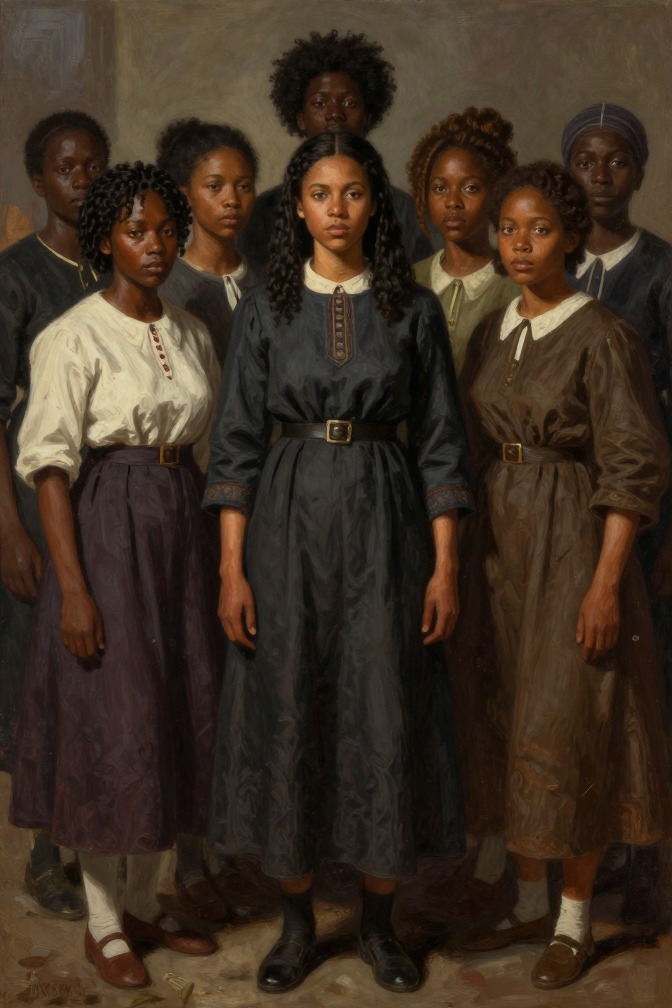
The Colored Ladies of Delaware, Ohio, is a charitable organization of Black women in the novel Beloved that intervenes at a crucial moment to save Sethe from execution after she kills her baby daughter, embodying the community's collective moral judgment and its capacity for both condemnation and mercy.
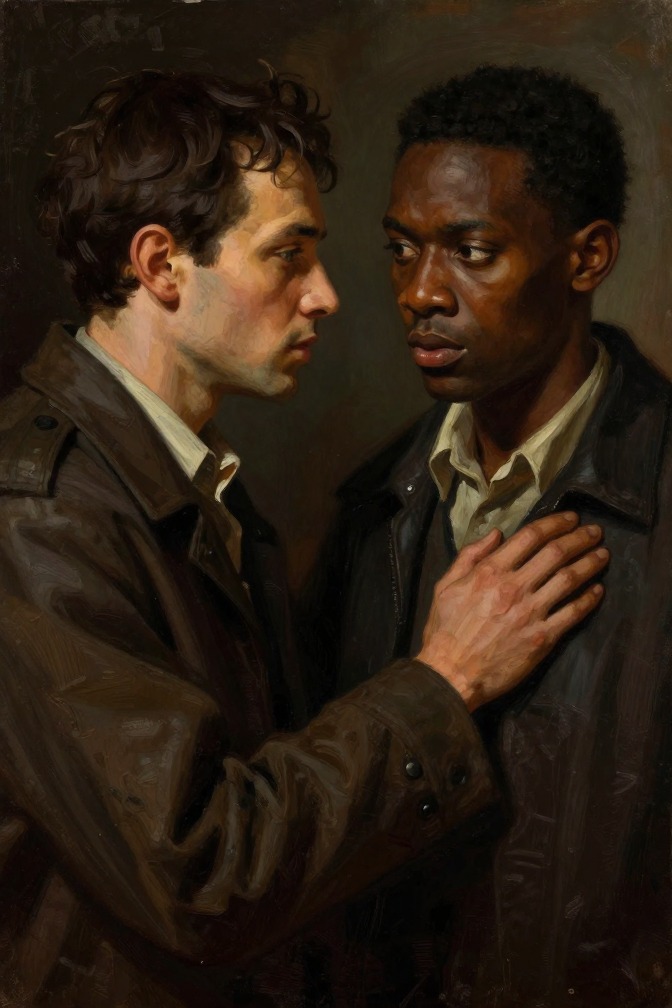
Paul D and Halle are fellow enslaved men at Sweet Home whose bond is defined by shared suffering, loyalty, and the traumatic events surrounding Sethe's escape. Their relationship is marked by Halle's mysterious disappearance and Paul D's guilt-ridden memory of witnessing Halle's breakdown, which he reveals to Sethe years later.
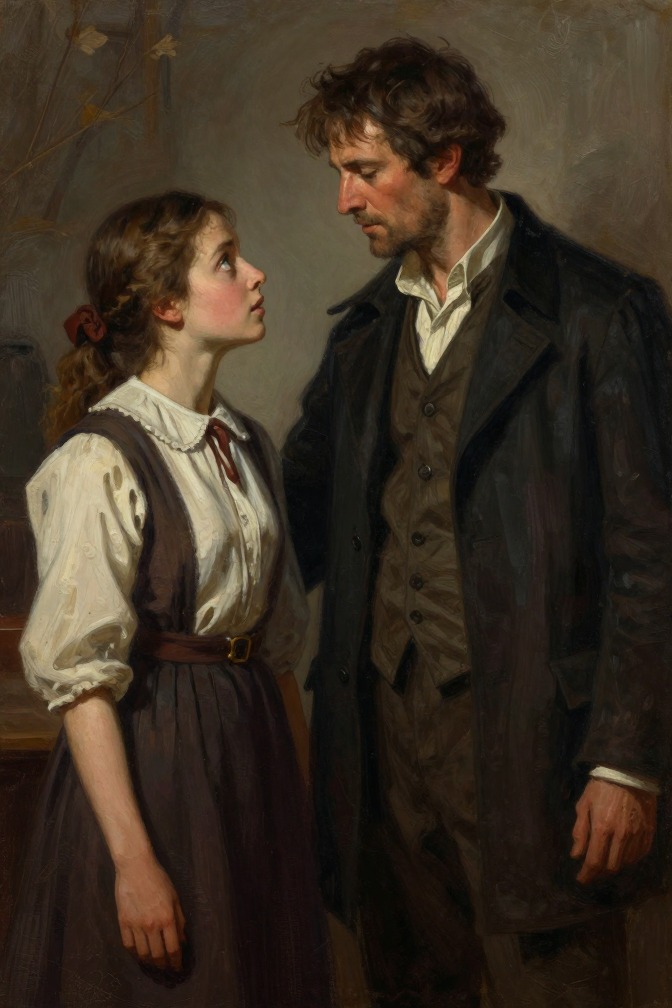
Schoolteacher and Sethe is the central master-slave relationship in Toni Morrison's Beloved, embodying the dehumanizing logic of slavery and the violent rupture that drives Sethe to infanticide. Their conflict—from schoolteacher's arrival at Sweet Home to his pursuit of Sethe in Cincinnati—exposes the brutal mechanisms of racial classification and ownership, culminating in the tragic act that defines Sethe's life and the novel's haunting.
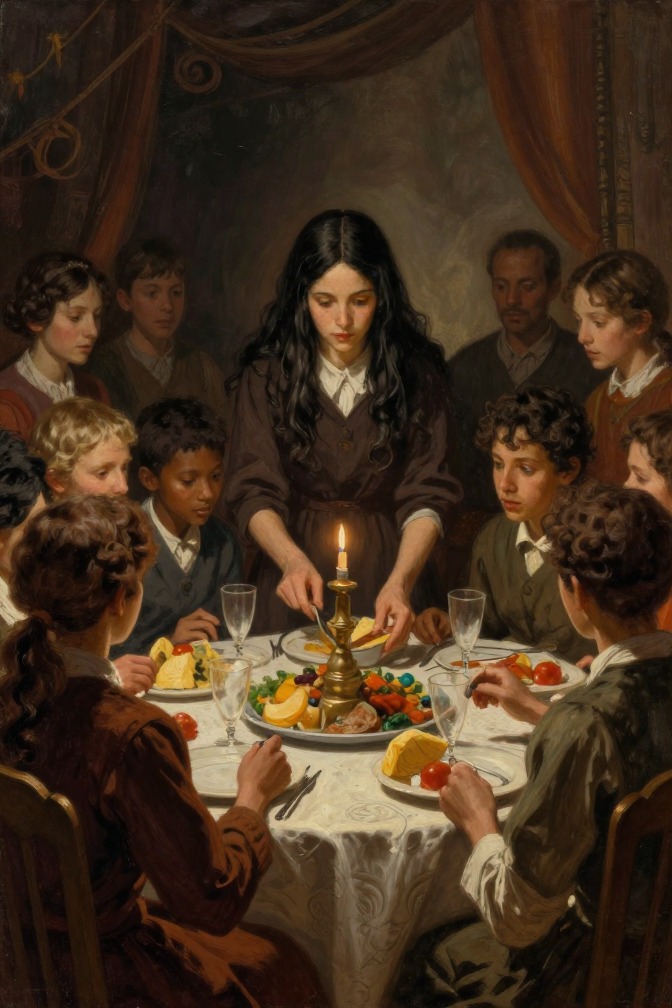
The feast at 124 Bluestone Road, also known as the blackberry feast, was a lavish celebration held roughly twenty days after Sethe's arrival, initiated by Stamp Paid's gift of two buckets of wild blackberries to Baby Suggs. It grew from a modest plan for a few pies into a massive gathering of ninety people, featuring fried perch, corn pudding, five turkeys, and a washtub of strawberry shrug, and it marked the peak of Baby Suggs' communal authority as an unchurched preacher. However, the feast's excess provoked the community's envy and disapproval, which Baby Suggs sensed as a 'dark and coming thing'—a premonition that foreshadowed the arrival of the four horsemen and the tragedy of Sethe's infanticide, ultimately leading to Baby Suggs' collapse and the shunning of 124.
1856 is the year Paul D endures eighty-three consecutive days of trembling while chained in a box in Alfred, Georgia, a period that marks the shattering of his former self and the beginning of his long, fragmented journey toward 124 Bluestone Road.
Sunday is the recurring day of rest and worship in Toni Morrison's Beloved, a day that paradoxically becomes the setting for both Halle's and Sethe's most intimate moments and the community's collective rituals of healing and judgment. It is the day Halle, who rented himself out every Sunday for five years to buy his mother Baby Suggs' freedom, finally gains his own time with Sethe, and the day the Sweet Home men watch the couple's public coupling in the cornfield. Sunday also anchors the community's spiritual life, from Baby Suggs' sermons in the Clearing to the women's exorcism of Beloved, and it marks the temporal rhythm against which Sethe's escape and the novel's haunting unfold.
The War is the American Civil War, a historical conflict that frames the lives of the formerly enslaved characters in Toni Morrison's Beloved, marking both the promise of freedom and the persistent violence that follows emancipation.
The Little Prince's appearance on Earth is the pivotal event of the narrative, marking his arrival in the African desert and his subsequent disappearance, which frames the narrator's grief and the story's central mystery.
The Sheep escaping is a hypothetical event in The Little Prince that haunts the narrator after the little prince's departure. The narrator's failure to draw a leather strap on the muzzle he gave the little prince means the sheep may have been able to eat the rose, creating an unresolved uncertainty that transforms the stars from bells to tears and becomes the story's central mystery.
The glass globe is a protective object used by the Little Prince to shield his rose from harm, and its potential neglect becomes a central source of anxiety for the Narrator, symbolizing the fragility of love and responsibility.
The Narrator and the Little Prince is the central relationship of Antoine de Saint-Exupéry's tale, a bond forged in the African desert and defined by loss, memory, and the narrator's enduring uncertainty about the prince's fate. Their connection transforms the narrator's perception of the universe, turning the stars into bells or tears depending on whether the sheep has eaten the rose.
The antelope appears in Humbert Humbert's memoir as a brief but resonant image during the cross-country road trip with Lolita, when he records seeing a herd of antelopes in a wildlife refuge. This fleeting encounter, embedded in the vast catalog of American landscapes and tourist attractions they consume, underscores the tension between Humbert's obsessive, predatory gaze and the natural world that remains indifferent to his drama.
The bird of paradise appears in Humbert Humbert's imagined murals for the dining room of The Enchanted Hunters, where a tiger pursues it, serving as a vivid emblem of the predatory, aestheticized violence that pervades his narrative.
The cat appears in Humbert Humbert's memoir as a minor but recurring motif, associated with moments of interruption, domestic tension, and the intrusion of ordinary life into his obsessive world. Its appearances are brief but strategically placed, often coinciding with critical junctures in his pursuit of Lolita.
The deer appears as a roadside sign in the American landscape during Humbert and Lolita's cross-country journey, a fleeting emblem of the natural world that remains indifferent to their transgressive passage.
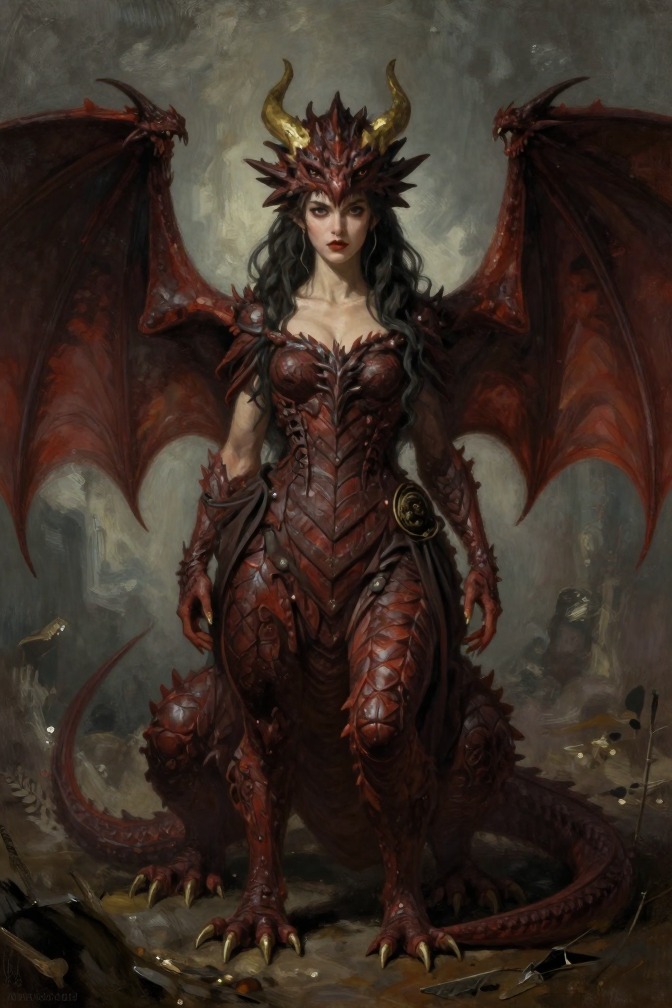
In Vladimir Nabokov's Lolita, dragons appear only as a passing simile in the narrator's complaint about the practical difficulties of outdoor lovemaking in the American wilderness, where he claims that the landscape is so inhospitable that it seems to harbor 'semi-extinct dragons' alongside snakes and stinging insects. The reference is brief, ironic, and entirely metaphorical, serving to underscore Humbert Humbert's frustrated sense that the natural world refuses to cooperate with his romantic and predatory designs.
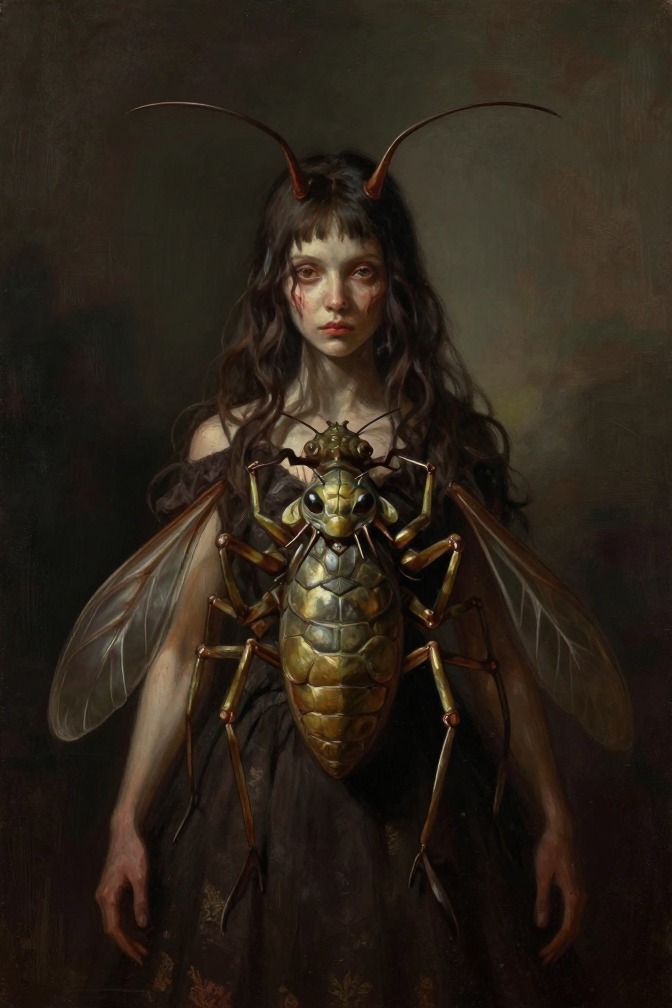
The gnat is a minor but recurring natural detail in Humbert Humbert's cross-country narrative, appearing in the context of a specific physical encounter during the road trip with Lolita. It serves as a marker of the intimate, tactile, and often grotesque texture of Humbert's obsessive experience, linking the natural world to his predatory desires.
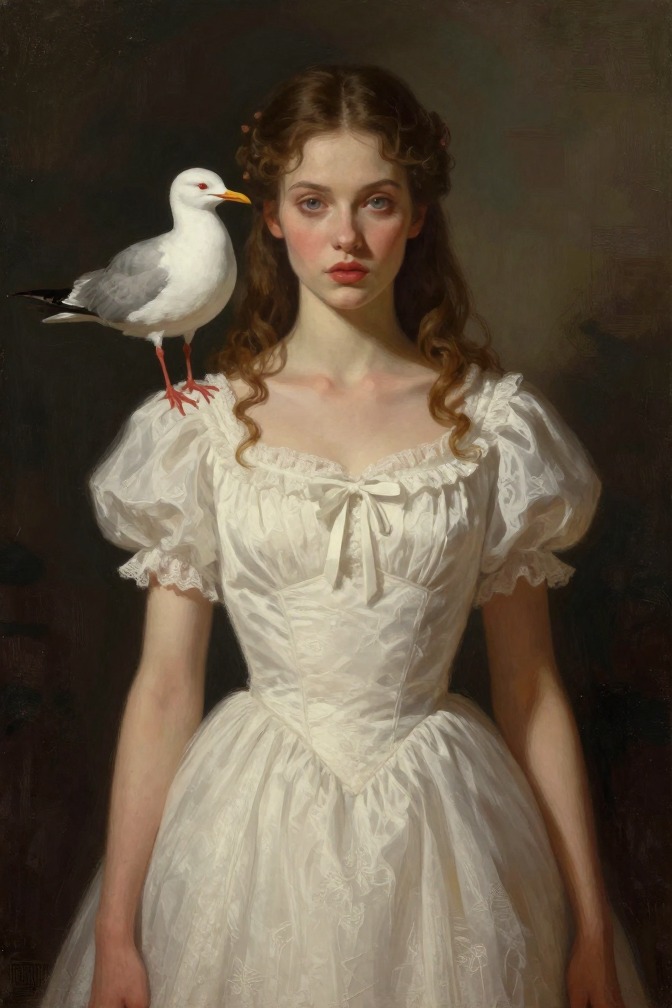
The gull appears as a brief but resonant image in Humbert Humbert's cross-country narrative, a creature glimpsed in the margins of his obsessive journey with Lolita. Its presence, though fleeting, crystallizes the tension between the natural world's indifferent beauty and the narrator's predatory, solipsistic gaze.
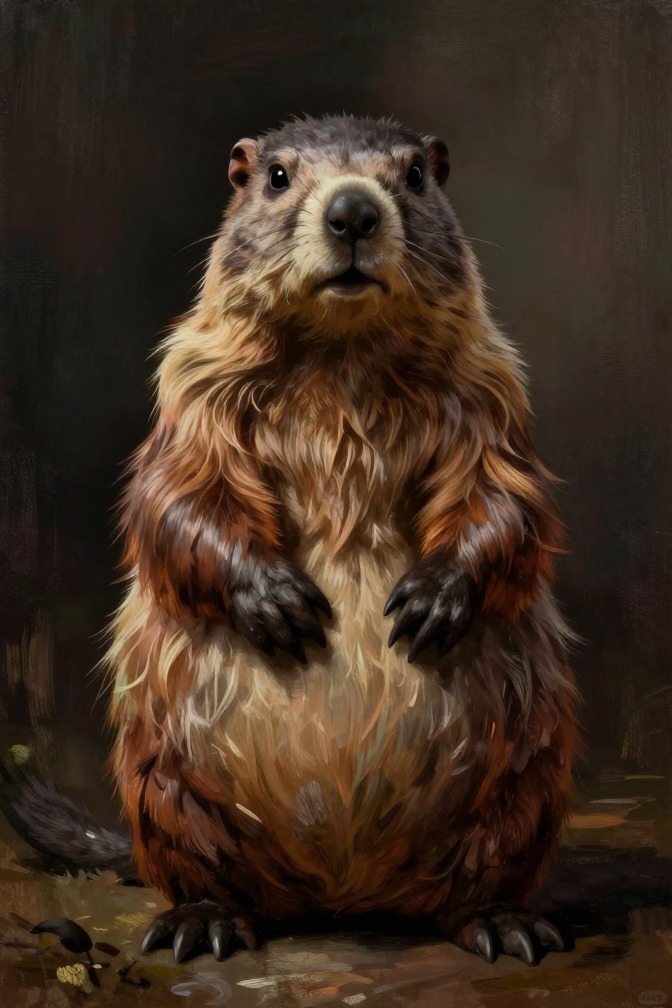
The marmot appears in a single, vivid scene during Humbert and Lolita's cross-country journey, serving as a brief but resonant marker of the natural world's indifference to human transgression. Whistling and withdrawing as the couple trespasses into a secluded alpine spot, the animal punctuates a moment of false pastoral security that immediately collapses into near-discovery, exposing the fragility of Humbert's paradise.
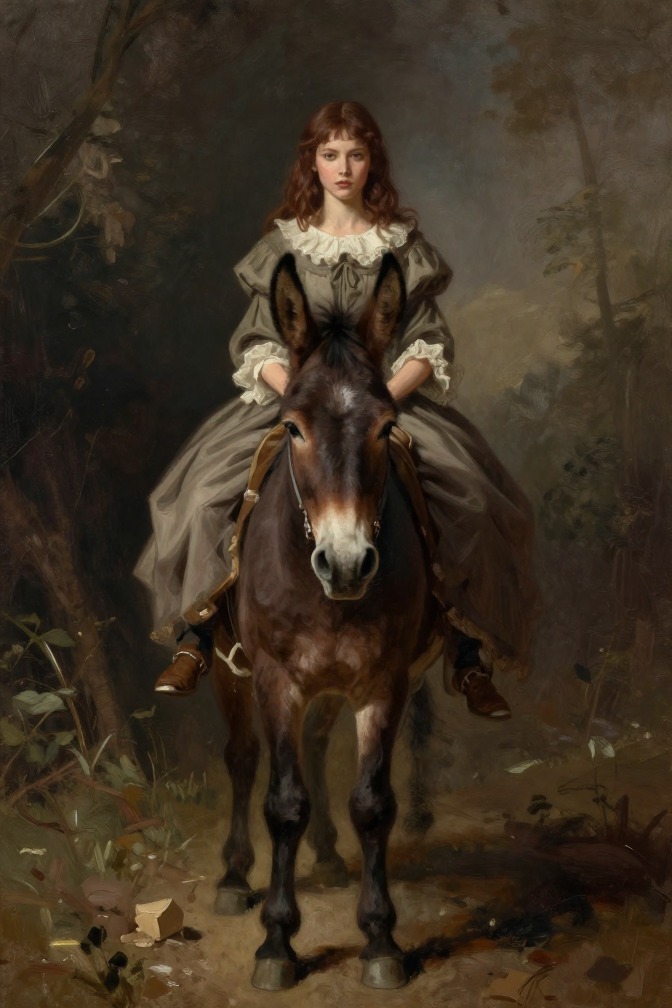
The mule appears in a single, brief mention during Humbert Humbert's final visit to Elphinstone, where it is glimpsed grazing in a pasture within the town's neat, model-like layout, serving as a minor detail in the landscape that underscores the surreal, dreamlike quality of his desperate search for Lolita.
Annabel Leigh's death from typhus in Corfu, four months after the summer of 1919, is the foundational trauma of Humbert Humbert's life, crystallizing his frustrated desire for a preadolescent girl into a permanent psychological wound that he later seeks to heal by incarnating her in Lolita.
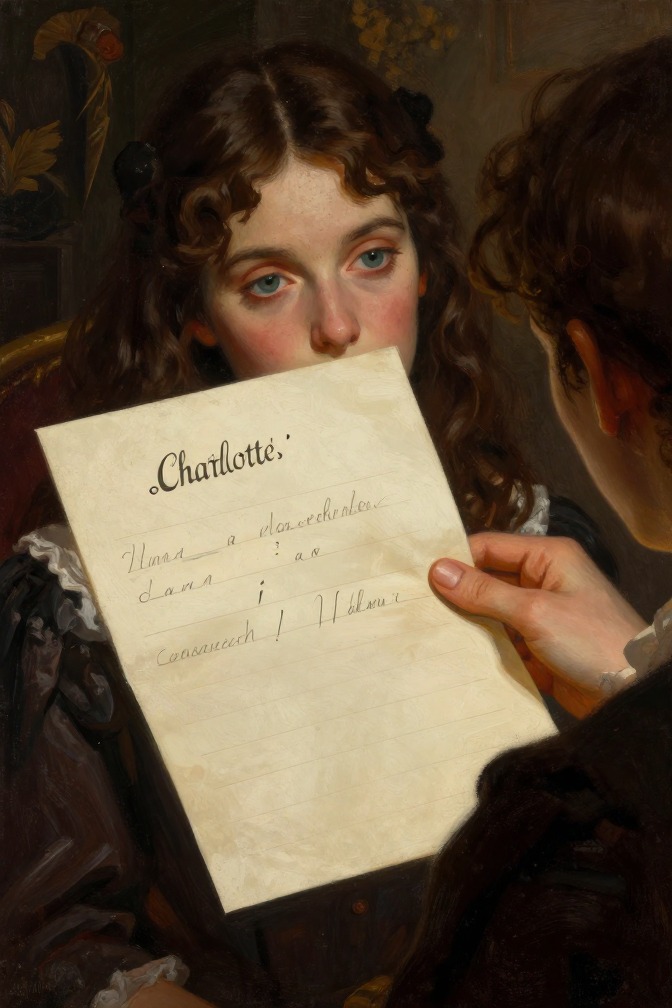
Charlotte Haze's confession letter is the pivotal event that transforms Humbert Humbert from a scheming lodger into a calculating husband, setting the stage for his legal access to Lolita. Written after the davenport scene and left for him on the morning she drives Lolita to Camp Q, the letter declares Charlotte's love, orders him to leave, and paradoxically offers him marriage—a proposal he seizes as the key to possessing her daughter.
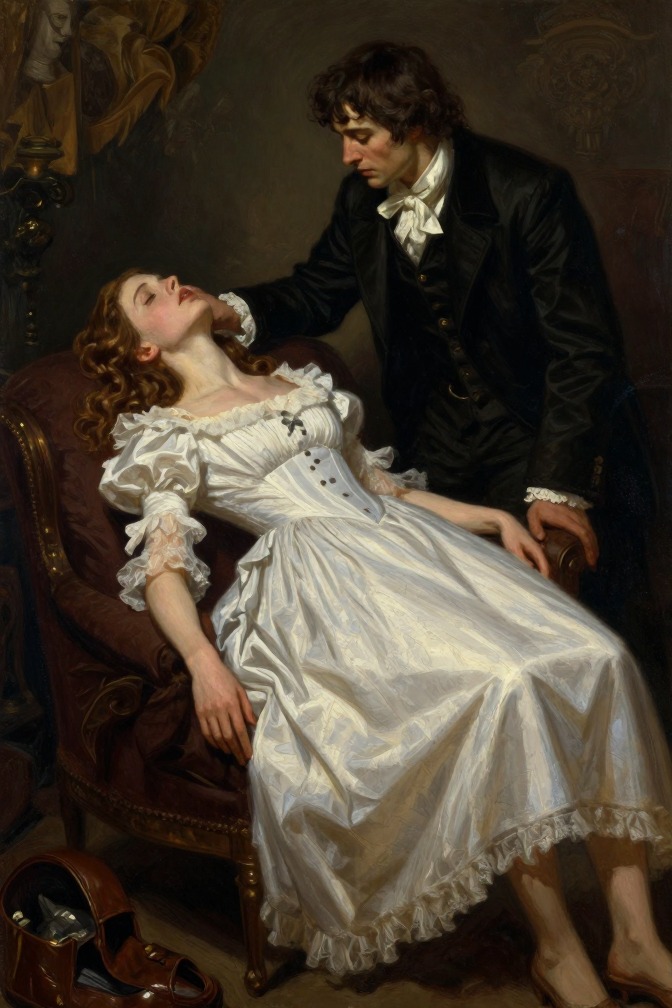
Charlotte Haze's sudden death in a car accident is the pivotal event that transforms Humbert Humbert from a frustrated lodger into the sole guardian of his beloved Lolita, removing the primary obstacle to his predatory desires and setting the entire subsequent narrative of abuse, travel, and tragedy in motion.
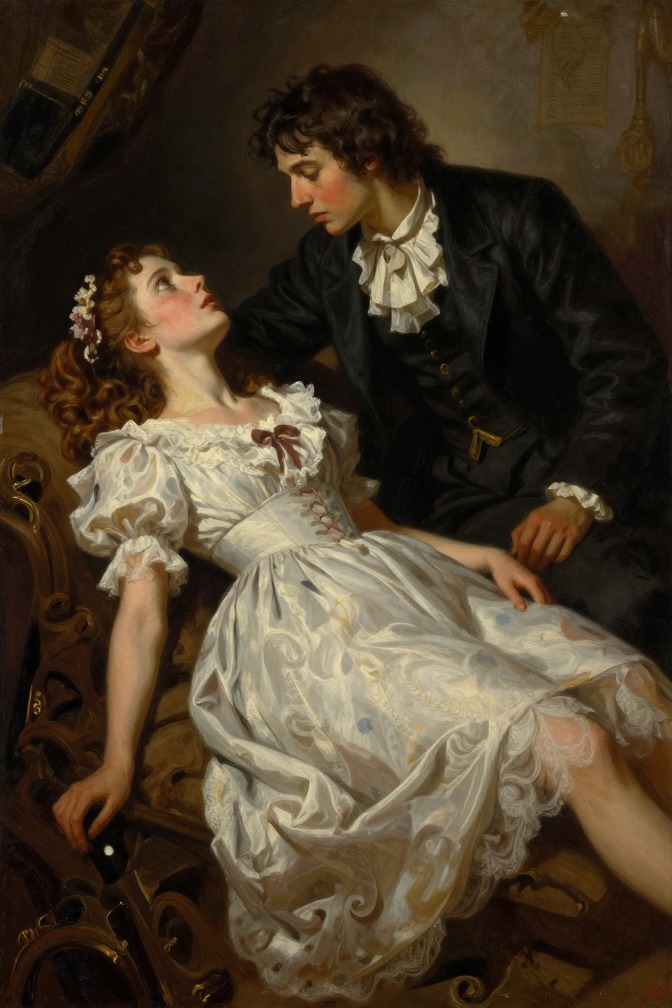
Humbert Humbert marries Charlotte Haze in a quiet ceremony, a calculated move to gain legal access to her twelve-year-old daughter, Lolita. The marriage is a strategic deception: Humbert feigns romantic interest in Charlotte while secretly planning to use his new role as stepfather to pursue his obsession with Lolita. The event marks a pivotal shift in the narrative, transforming Humbert from a lodger into a husband and stepfather, and setting the stage for the tragic exploitation that follows.
Humbert Humbert receives a letter from Dolores Haze, now married and pregnant as Dolly Schiller, which reopens his wound and sets him on a final journey to confront her and her abductor.
Humbert Humbert's relationship with Rita, spanning from the summer of 1950 to the summer of 1952, represents a period of relative stability and human connection in the years following Lolita's disappearance. Rita, a kind, simple, and alcoholic woman twice Lolita's age, became Humbert's constant companion and, by his own account, saved him from the madhouse. Their life together, marked by cross-country travel, mutual dependency, and a shared taste for drink, provided Humbert with a soothing, comprehending presence that allowed him to function, even as he secretly continued his obsessive search for Lolita and his plot for revenge against Clare Quilty.
Humbert Humbert's search for Lolita after her escape from the Elphinstone hospital with Clare Quilty is a harrowing, obsessive, and ultimately futile quest that spans over three years, transforming from a frantic pursuit of a lost nymphet into a methodical, revenge-driven hunt for her abductor. This period marks the nadir of Humbert's moral descent, as his love curdles into a monomaniacal fixation on tracking down the man who took her, while the object of his search—Lolita herself—recedes into an increasingly ghostly absence.