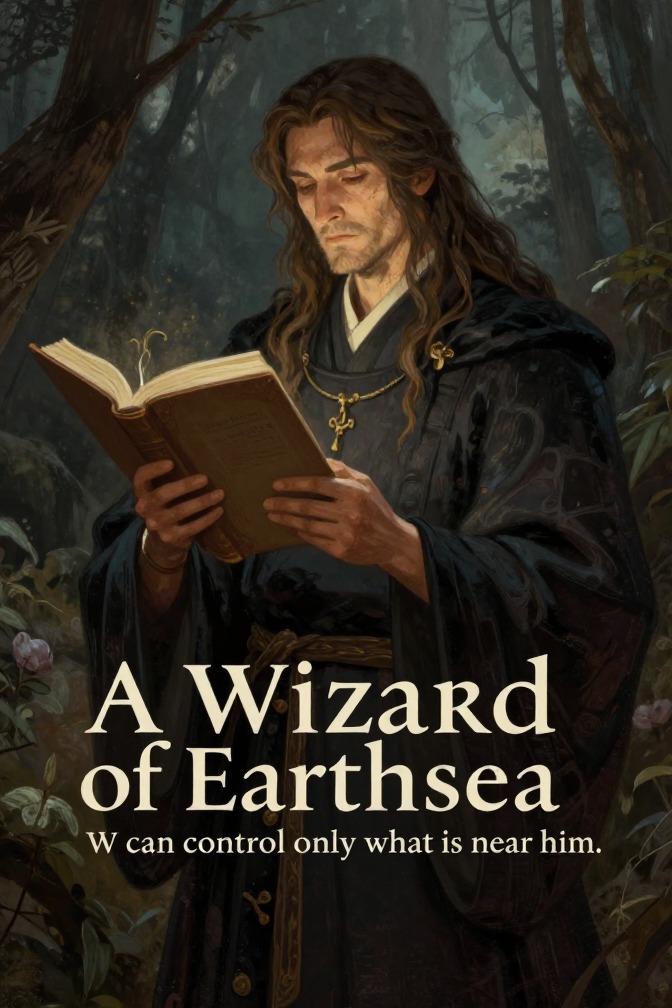
This rule, articulated by the Master Namer Kurremkarmerruk, defines the fundamental limitation of wizardly power in Earthsea: a mage can only exert magical control over what is physically near him and what he can name with complete precision in the Old Speech. It establishes the principle that the power to work magic is inherently self-limiting, a safeguard for the world's Equilibrium.
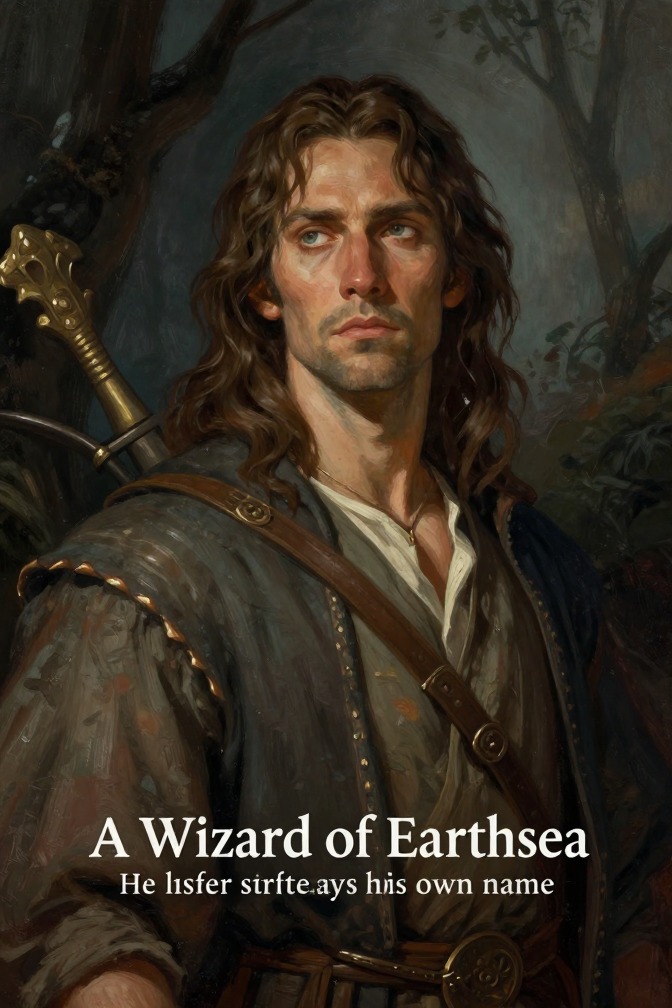
This rule, deeply embedded in the lore of Earthsea, states that a person never speaks their own true name aloud except when more than their life's safety is at stake. The true name, given in a naming ceremony, holds a person's essential being; to know it is to hold power over that person. The rule governs the most critical moments of the narrative, from Ged's entry into the School for Wizards on Roke to his final confrontation with the shadow, and is a cornerstone of the magic system, where knowledge of a name grants control.
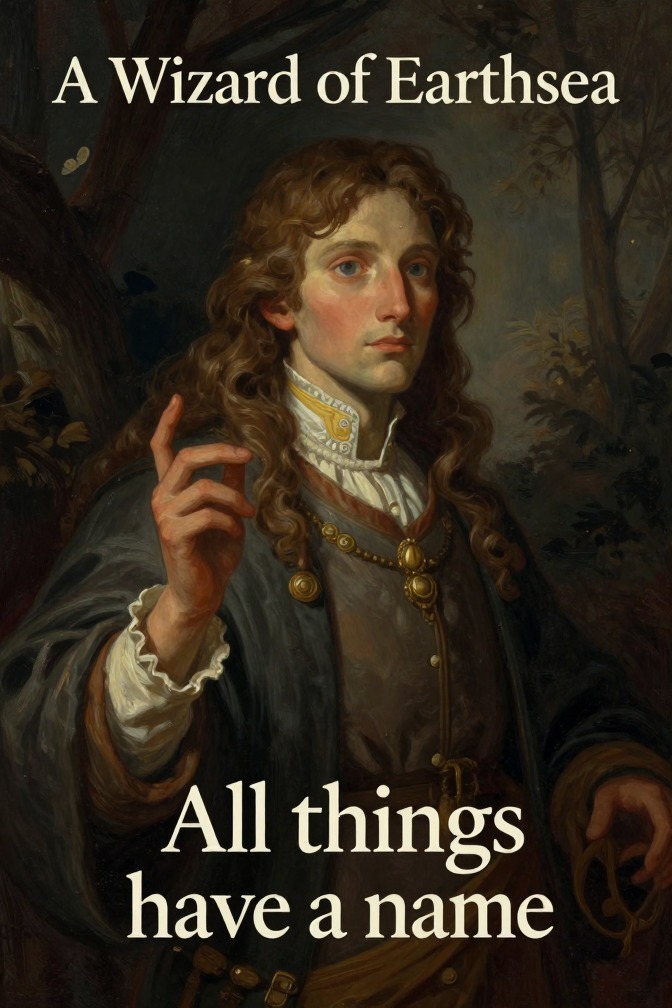
The principle that all things have a true name in the Old Speech is the foundational law of magic in Earthsea, governing the power and limits of wizardry, the nature of identity, and the ultimate resolution of Ged's conflict with the shadow.
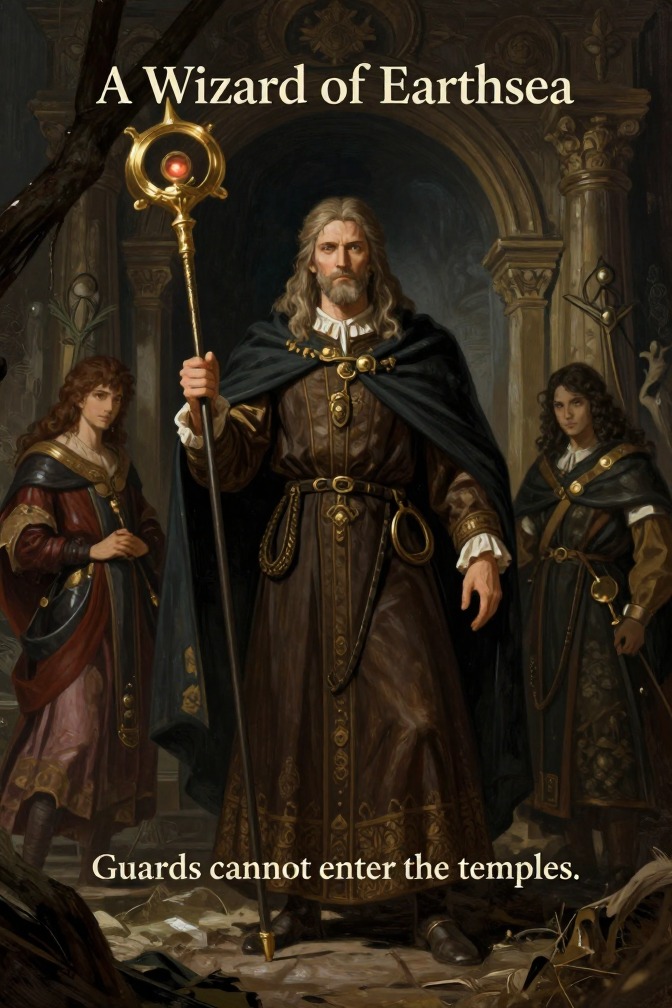
Guards cannot enter the temples is a strict spatial and ritual prohibition at the Place of the Tombs of Atuan, defining the boundary between the sacred inner ground and the secular outer world. This rule ensures that no armed or male presence defiles the temples, reinforcing the absolute authority of the priestesses and the isolation of the Eaten One.
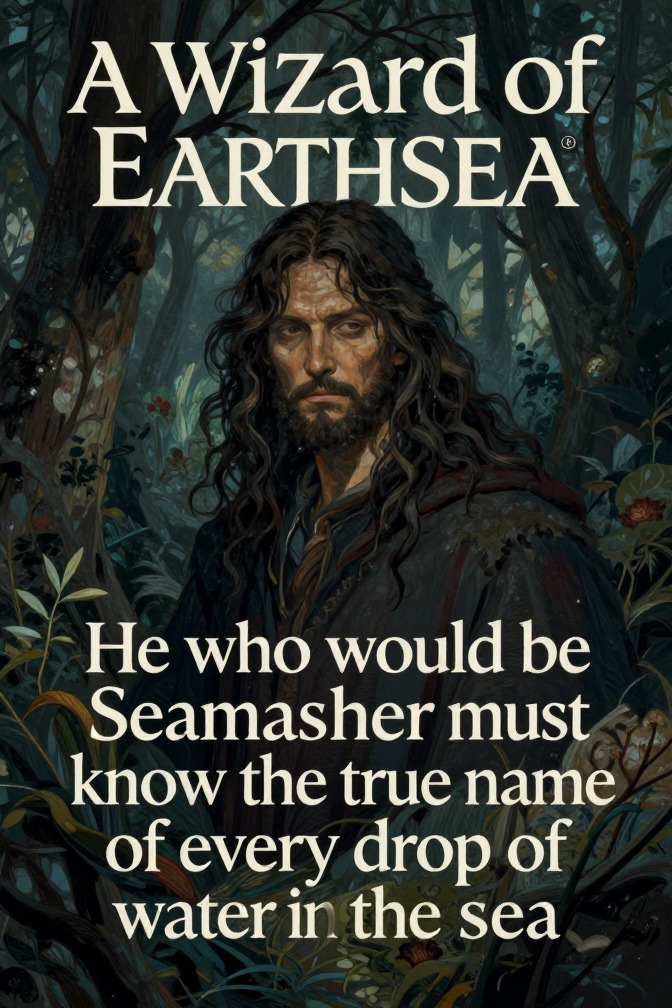
The maxim "He who would be Seamaster must know the true name of every drop of water in the sea" is a foundational principle of magic in Earthsea, articulated by the Master Namer Kurremkarmerruk to his students at the Isolate Tower on Roke. It encapsulates the doctrine that true wizardry consists in the exact and complete naming of a thing, and that the power to work magic is inherently limited by the scope of that knowledge. This rule governs the practice of all high arts, from weatherworking to summoning, and is central to the story's themes of balance, humility, and the peril of overreaching.
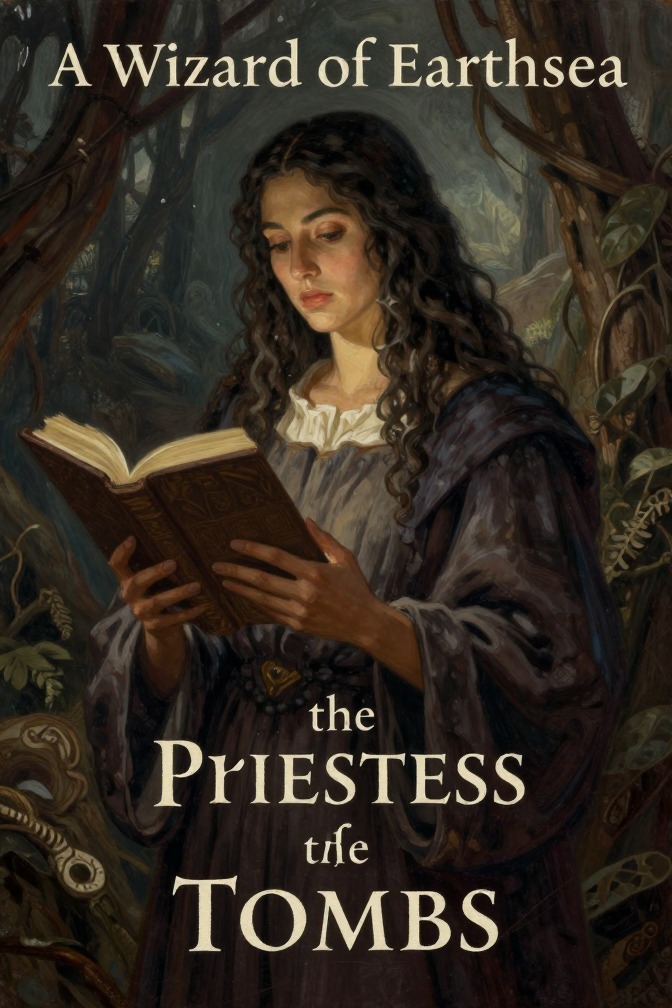
The Selection rules for the Priestess of the Tombs of Atuan are a rigid, ancient protocol that determines the successor to the One Priestess, the nameless servant of the Nameless Ones. These rules dictate that the new Priestess must be a girl-child born on the exact night of the previous Priestess's death, must remain physically unblemished until the age of five, and is then taken from her family to be ritually 'eaten' and reborn as Arha, the Eaten One, a process that strips her of her former identity and binds her to a life of solitary service within the sacred precincts.
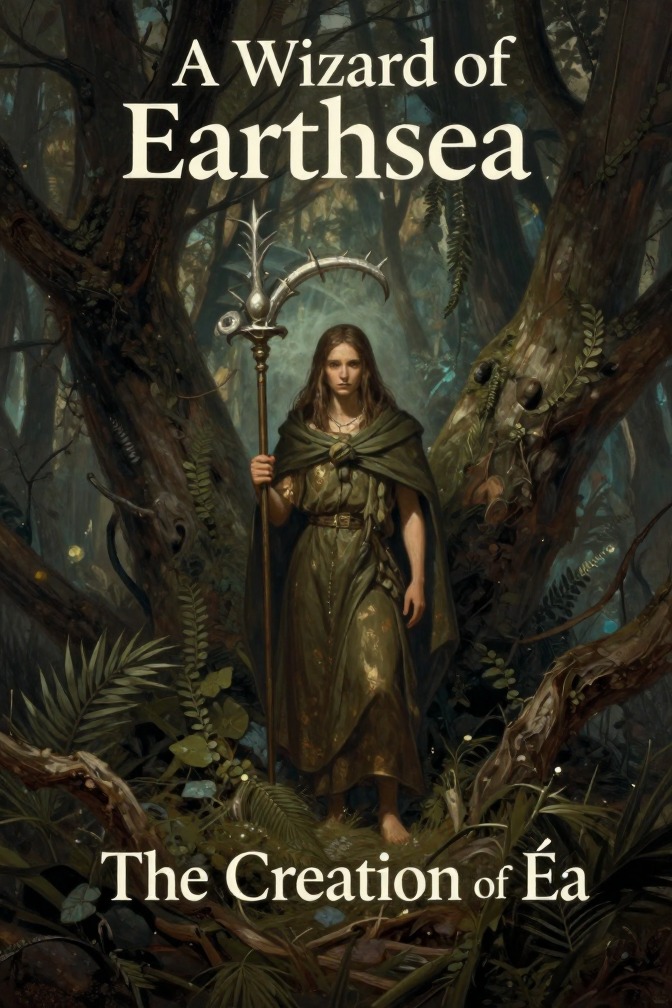
The Creation of Éa is the oldest song in Earthsea, a foundational cosmological poem whose opening lines—'Only in silence the word, only in dark the light, only in dying life: bright the hawk's flight on the empty sky'—serve as the book's central philosophical axiom, encapsulating the principles of Equilibrium, the unity of opposites, and the necessity of death and darkness for life and light.
Equilibrium, also called the Balance, is the fundamental cosmic law of Earthsea that governs all magic and existence. It holds that every act of power, especially the Changing and Summoning of things, must be weighed against its consequences, for to disturb the balance is to invite ruin. The concept is taught by the Masters of Roke and embodied by the true wizard, who serves the Pattern rather than his own will.
The One Priestess, also known as the Eaten One, is the supreme religious authority of the Place of the Tombs of Atuan, a nameless girl chosen as an infant to serve the Nameless Ones, the Old Powers of the Earth. Her life is defined by ritual, isolation, and the absolute prohibition against men entering the sacred inner ground, a role that consumes her individual identity entirely.
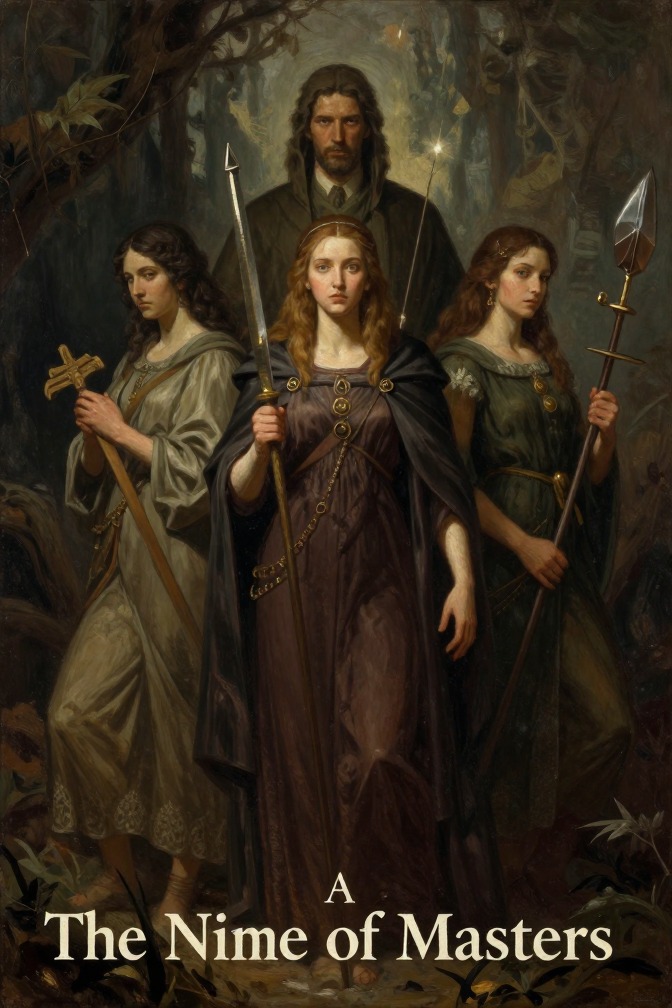
The Nine Masters are the supreme governing body of the School for Wizards on Roke, the eight named Masters of specific magical arts plus the Archmage, who together guide the education of wizards and choose the new Archmage when the office falls vacant.
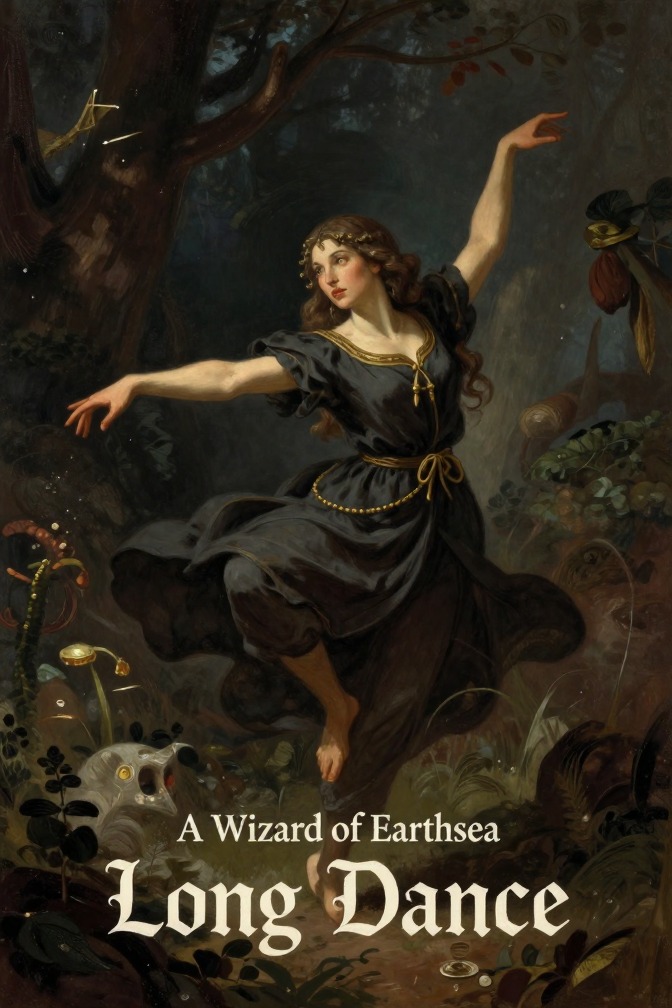
The Long Dance is a biannual festival celebrated across Earthsea, a night of communal dancing, music, and magic that binds the islands together and marks a sacred time of unity and joy.
The Winter Festival is a recurring seasonal celebration in Earthsea, marking the winter solstice and the beginning of the new year, and serves as a key temporal marker for Ged's journey and the narrative's cyclical structure.
Milk runs are a recurring concept in Joseph Heller's Catch-22, referring to combat missions that are officially designated as easy, low-risk targets. The term embodies the novel's central absurdity: the military's promise of safety is always contingent and deceptive, as even supposedly safe missions can turn deadly, and the designation itself is a tool of manipulation used by commanders like Colonel Cathcart and Colonel Korn to maintain control over the men.
The mission to Avignon is the catastrophic bombing run during which the radio-gunner Snowden is mortally wounded, an event that becomes the psychological and moral fulcrum of the novel. It is the moment Yossarian loses his nerve, abandons his uniform, and confronts the visceral truth that man is matter—a secret that shatters his capacity for denial and drives his subsequent rebellion against the military system.
The principle of "like us" is the central moral trap of Catch-22, the corrupt bargain Colonel Korn and Colonel Cathcart offer Yossarian to buy his silence and complicity in exchange for a hero's discharge. It transforms a principled act of resistance into a shameful pact of personal privilege, forcing Yossarian to choose between betraying his fellow airmen and facing a rigged court-martial.
The syndicate, also known as M & M Enterprises, is Milo Minderbinder's sprawling, amoral economic organization that begins as a mess-hall supply cooperative and expands into a multinational cartel trading with both Allied and Axis powers. It embodies the novel's central critique of unchecked capitalism, transforming war itself into a profit-making enterprise where every individual holds a 'share' and where bombing one's own squadron becomes a lucrative business deal.
Field mice appear in Catch-22 as a recurring motif tied to Havermeyer's nightly shooting sprees, symbolizing the casual, almost recreational violence that permeates the squadron. Havermeyer, a lead bombardier who never takes evasive action, spends his evenings baiting and killing mice with a stolen .45 pistol, treating the tiny mammals as disposable targets. The mice also surface in other contexts—as objects of fear in Hungry Joe's nightmares, as part of the squadron's decaying environment, and as a metaphor for the vulnerability of the powerless. Their presence underscores the novel's themes of arbitrary cruelty, the normalization of death, and the ecological and psychological toll of war.
The Grand Conspiracy of Lowery Field is a legendary, uninvestigated mass disappearance of sixty-four enlisted men from a single barracks at Lowery Field, Colorado, on a single payday, who were never heard from again. The event functions in the novel as a darkly comic benchmark of inexplicable vanishing, against which Yossarian measures Clevinger's later disappearance and which ex-P.F.C. Wintergreen uses to illustrate his philosophy of fatalistic duty.
The law of supply and demand is a recurring economic principle in Joseph Heller's Catch-22, invoked and grotesquely manipulated by Milo Minderbinder to justify his syndicate's predatory practices. Milo treats the law not as a neutral market force but as a moral and rhetorical weapon, using it to rationalize price gouging, profiteering from war, and even bombing his own squadron. The novel exposes how the abstraction of supply and demand can be twisted to serve greed, erode ethics, and commodify human life itself.
The Splendid Atabrine Insurrection is a minor but revealing episode in Joseph Heller's Catch-22, a conflict that begins during the flight of Yossarian's bomber group from the United States to Pianosa and culminates in Appleby's formal report against Yossarian for refusing to take his Atabrine tablets. The incident exposes the absurdity of military discipline, the arbitrary enforcement of regulations, and the way institutional loyalty is measured through meaningless acts of compliance.
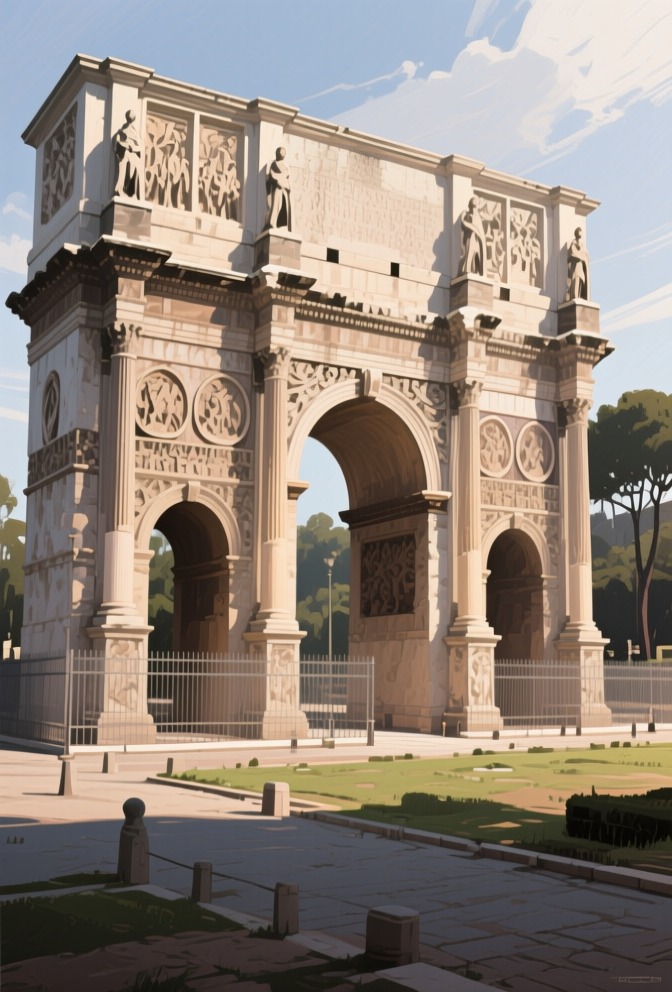
The Arch of Constantine is a ruined Roman monument in Rome that appears in the novel as a symbol of the Eternal City's decay and the collapse of historical meaning, marking Yossarian's desolate walk through a city where all structures—physical and moral—have fallen.
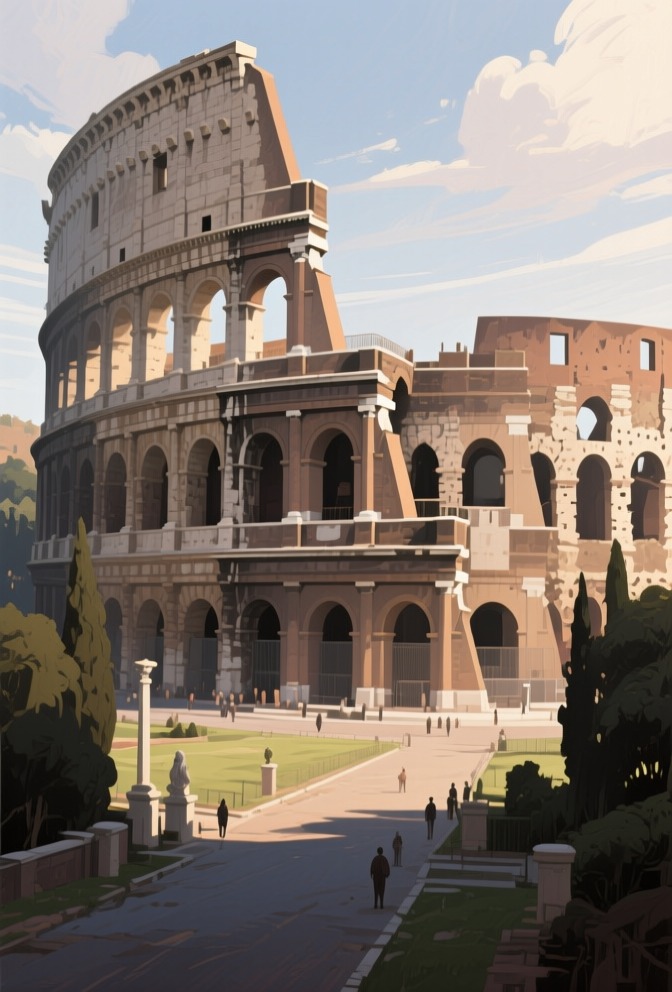
The Colosseum in Rome appears in Catch-22 as a dilapidated shell, a symbol of the decay and ruin that pervade the Eternal City during Yossarian's nightmarish journey through the city after the brothel is raided.
Rome is the ancient capital city in Italy that serves as the primary destination for rest leaves and black-market operations for the men of Colonel Cathcart's bomb group. It is a place of both pleasure and horror, where Yossarian pursues love and escape, witnesses the brutal destruction of a brothel by military police invoking Catch-22, and where Aarfy commits a murder that goes unpunished. The city embodies the novel's central paradox: a site of civilization and history that has become a lawless, nightmarish landscape of arbitrary violence and institutionalized hypocrisy.
Spezia is the Italian port city where the climactic mid-air collision of Nately's and Dobbs's planes occurs during the mission to bomb a disabled Italian cruiser, a disaster that kills Nately and twelve other men and precipitates Yossarian's final refusal to fly more missions.
Switzerland appears in Catch-22 as a symbolic sanctuary of escape and survival, a neutral haven that Yossarian and Orr envision as an alternative to the war's relentless machinery of death. It represents the possibility of opting out of the system, a place where one might live free from the Catch-22 logic that traps men in endless combat. The country is never visited in the novel's main action, but its mere existence as a destination for deserters and a site of internment shapes the characters' desperate plans and, ultimately, Yossarian's final act of flight.
Egyptian cotton is a commodity that nearly destroys Milo Minderbinder's syndicate after he purchases the entire crop on a whim in Cairo, forcing him to desperate measures—including bombing his own squadron—to recoup his losses.
The hard-boiled egg is a recurring object in Catch-22 that first appears as a symbol of Milo Minderbinder's entrepreneurial genius and the syndicate's power, but later recurs in contexts of death, decay, and the reduction of human life to mere matter, ultimately serving as a stark emblem of the novel's central themes of mortality and the absurdity of war.
The Action Board is the military tribunal in Joseph Heller's Catch-22 that prosecutes Clevinger for insubordination, embodying the novel's critique of institutional absurdity and the perversion of justice by those in power.
The U.S.O. (United Service Organizations) is a recurring institutional presence in Catch-22, used by General Peckem as a tool in his bureaucratic war against General Dreedle and by Colonel Cargill as a vehicle for his trademark incompetence. The organization's shows and performers are deployed not for troop morale but as pawns in the power struggles among high-ranking officers, and the men's response to them is uniformly one of sullen, coerced attendance. The U.S.O. thus becomes a symbol of the military's hollow, self-serving institutional machinery.
Catch-22 is the central paradoxical rule of Joseph Heller's novel, a self-contradicting bureaucratic logic that traps soldiers in an infinite loop of combat duty by defining sanity and insanity in mutually exclusive terms. It functions as both a specific military regulation and a pervasive metaphor for the absurd, inescapable systems of power that govern the characters' lives.