Santa Teresa’s urban expansion and infrastructure crisis
2666Santa Teresa’s urban expansion and infrastructure crisis is the widening gap between a city that appears to boom and an urban system unable to accommodate its growth. Its factories, maquiladoras, cross-border commerce, and incoming workers promise economic activity, yet the city’s infrastructure cannot keep pace; the resulting landscape is fragmented by poverty, industrial zones, informal settlement, and a border that connects the city to the United States while dividing jurisdictions and lives.
A city expanding in every direction
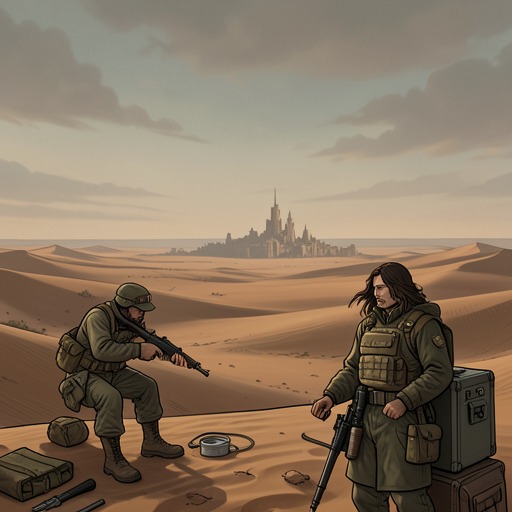
The city’s growth is visible in its uneven geography. In the west, unpaved streets run through poor neighborhoods of houses assembled from scrap; the old center has neglected buildings and plazas; and middle- and upper-class districts, the university, and shopping centers lie to the east. Farther north, abandoned factories and sheds give way to bars, souvenir shops, small hotels, and more poor neighborhoods. To the south, rail lines pass slum soccer fields and shacks, while two highways, a garbage-filled gully, and the distant silhouettes of industrial warehouses mark the city’s outward reach.
Expansion does not follow a clean division between rich and poor. Continuing east, the middle-class neighborhoods eventually give way to slums, as in the west, but amid a rougher terrain of hills, valleys, dry riverbeds, and remnants of old ranches. Around the industrial parks, poorer neighborhoods are already closing in. The city seems to grow by the second, spreading past established districts into open and marginal land rather than developing according to a coherent plan.
Growth without adequate infrastructure
Chucho Flores describes Santa Teresa as a large, fully fledged city with factories and maquiladoras, one of Mexico’s lowest unemployment rates, a cocaine cartel, and a constant flow of workers from elsewhere, including Central American immigrants. He sets that combination against the city’s inadequate urban infrastructure, which cannot support the pace of demographic growth. Money and poverty, bureaucratic systems and the desire for peaceful work, industry and violence all occupy the same urban frame; economic expansion has not brought a corresponding capacity to sustain urban life.
Flores’s account makes time, rather than any single missing resource, the crisis’s defining measure. Fate privately thinks of oil as the obvious absence, but Flores says what the city lacks is time. His formulation registers how growth seems to be outrunning the possibility of improvement: Santa Teresa has not yet become the more developed city its expanding economy might suggest, while it already bears the strains of a crowded, under-supported urban environment. The women’s faces Flores sketches in his notebook during the conversation—none smiling, several with closed eyes or turned heads—give the scene a quiet counterpoint to the city’s language of progress, without resolving the causes of the violence around them.
The border and the industrial landscape
Santa Teresa’s expansion is inseparable from its proximity to the United States. On the American side, Adobe, formerly the site of an adobe factory, has become a collection of houses and appliance stores strung along a main road that ends at the border post. Fate then proceeds a short distance to the Mexican crossing, where he leaves his car, opens his suitcase, presents documents, and fills out forms. The long fence and the separate checkpoints make the border a physical infrastructure of control, even as the city’s economy depends on movement across it.
The cross-border system also moves goods and capital at a much greater scale than the border scene’s individual formalities might suggest. Pedro Uribe owns more than one hundred cargo trucks carrying merchandise from maquiladoras in Hermosillo and Santa Teresa; his trucks cross the border every half hour or hour. He also owns property in Phoenix and Tucson. His brother Joaquin owns hotels in Sonora and Sinaloa and a chain of coffee shops in Santa Teresa. These details show how manufacturing, transport, property, and commerce extend beyond the city and across national lines, while Santa Teresa’s infrastructure remains strained by the people and activity concentrated there.
Urban crisis and the atmosphere of violence
Professor Kessler’s account gives the city’s social marginality a stark formulation: everyone living there is outside society, and the crimes have different signatures. He also recognizes the contradiction between an apparently booming city and the idea that its inhabitants should leave across the desert. His remarks connect urban growth and violence without reducing the murders to a single pattern or cause: even within an expanding city, residents remain exposed to conditions that do not offer the security or social inclusion that the appearance of development might imply.
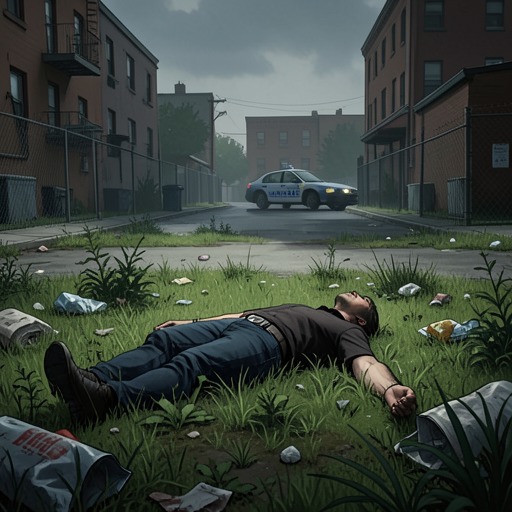
The city’s physical edges reinforce that contradiction. On the outskirts, poor neighborhoods recur after vacant lots and dumps; industrial parks are surrounded by settlement; and the maquiladora warehouses mark a horizon that combines employment with the pressures of rapid growth. Santa Teresa is therefore neither simply a failed city nor a straightforward success story. It expands, attracts workers, and moves merchandise across borders, but its infrastructure lags behind, leaving growth and abandonment side by side. This imbalance forms part of the novel’s setting for the femicides: not a sufficient explanation for the killings, but a concrete urban condition amid which violence, poverty, and institutional limits become difficult to disentangle.