Event 1
Strangling Undertaker murders

The [Strangling Undertaker murders](entity:event-recall-event-strangling-undertaker-m-f9b4f7e9095e) are a [Chicago](entity:location-recall-location-chicago-eb77a855d5aa) serial-killing case in which embalming and the deliberate placement of victims turn the bodies into both evidence and public spectacle. The killer’s method grows more controlled over time: early failures give way to increasingly refined preparations, while the investigators struggle to infer his process from scenes left in places used by thousands of people. The case’s central tension is between a pattern that can be read and a perpetrator who learns how to change it.
## First Victims and an Emerging Pattern
The case reaches federal attention after [Monique Silva](entity:character-recall-character-monique-silva-df434124122e), a prostitute from Chicago, is found in [Humboldt Park](entity:location-recall-location-humboldt-park-2e83b6a72fc4). In the photograph shown to [Tatum Gray](entity:character-recall-character-tatum-gray-3d4ed8f906a1), she stands on a wooden bridge above a stream, posed as if looking toward the water. Her pallid appearance makes the body seem strangely lifelike. [Christine Mancuso](entity:character-recall-character-christine-mancuso-689c58df126f) explains that Monique had been dead for five to seven days before discovery, although her pimp had reported her missing two weeks earlier. She is the second victim found embalmed and posed, making the repeated treatment of the bodies—not simply their deaths—a defining feature of the investigation.
The first victim, Susan Warner, represents a less accomplished beginning. She was an art student attacked in her home, where the killer remained to embalm her. Her body was found on April 12. The dress he tried to put on her tore; her limbs would not move into the position he wanted; and the final arrangement did not appear lifelike. In [Zoe Bentley](entity:character-recall-character-zoe-bentley-9aa073c6d79a)’s reconstruction, this is not just a difference in presentation but a failure the killer would try to correct. The almost three-month interval before the next known victim becomes meaningful in that light: Zoe interprets it as time spent learning and experimenting with ways to preserve flexibility and produce a more convincing appearance.
Monique’s case suggests a changed method of access. Unlike Susan, the second and third victims were prostitutes, whom Tatum reasons the killer could persuade to accompany him by posing as a client. His analysis distinguishes the initial attack at a victim’s home from the later pattern of bringing women to a safer place. He also argues that the women were bound while alive, making a street or alley attack less plausible than an encounter in a place the killer controlled. These are investigative deductions, not a complete account of what happened in each case, but they help define the sequence the team is trying to reconstruct.
## A Public Investigation
The [Chicago Police Department](entity:organization-recall-organization-chicago-police-d-a75824b356ea)’s Central Investigation Division gives the cases a dedicated situation room: detectives work around a large table, with photographs, timelines, and a Chicago map marked at two locations. The nickname The [Strangling Undertaker](entity:character-recall-character-strangling-undertak-dbc075aa5dae) has already spread through newspaper coverage. A reporter coined it only days earlier, and it quickly caught on. The label condenses the case into a memorable figure, even as the investigators still have to establish what the evidence actually supports.
The bodies’ placement in public areas makes the case difficult to contain. After another woman is found at [Ohio Street Beach](entity:location-recall-location-ohio-street-beach-488e28dc657d), spectators gather behind the crime-scene tape, some taking photographs, while television crews report from the scene. Tatum identifies her as the third victim; [Lieutenant Martinez](entity:character-recall-character-lieutenant-martinez-05c57496b5c3) confirms that only eleven days have passed since the previous one. The short interval turns the pattern into an immediate warning: the investigators fear another death before they can identify the killer. Public visibility brings pressure on the Chicago Police Department, which has asked for help. The bureau’s Chicago agents are occupied with a large impending arrest of [Latin Kings](entity:organization-recall-organization-latin-kings-6f02ef8646b1) members, leaving the case to be pursued with federal assistance from outside that immediate workload.
The investigative response initially follows the behavioral profile. Martinez says the suspect is thought likely to have worked in a funeral home, so detectives begin checking funeral-home records in the areas where the bodies have been found. Tatum questions whether watching the drop sites would help: they are busy public places, with thousands of people passing through. The exchange captures a practical difficulty at the heart of the case. A public dumping ground offers visibility after the crime, but its ordinary crowds make it hard to identify the person who used it.
## The Killer’s Process and Adaptation
Zoe’s reconstruction treats the murders as a process that changes in response to mistakes. Susan’s failed presentation points to a period of learning; Monique’s more controlled pose suggests that the killer has improved. Zoe also revisits the autopsy findings: marks on Monique’s throat and restraints on her wrists and ankles indicate strangulation and a struggle against being bound. The physical evidence helps her reason backward from the bodies to the practical circumstances of the crimes, rather than treating the poses as a fixed signature detached from how the killer obtained control.
Clothing offers another clue to the sequence before the murders. Susan’s wardrobe was available because she was killed at home, but the later victims wore clothes that did not fit the same way across their differing builds. Zoe points out that [Krista Barker](entity:character-recall-character-krista-barker-93a1b7a7a955) was taller than Monique and that [Lily Ramos](entity:character-recall-character-lily-ramos-6c34b2bd5fd5) was not as thin as either. She reasons that the killer may have taken victims shopping before killing them, presenting the outing as part of a client’s plans to dress them for the evening. Tatum follows the implication to a shopping mall. The hypothesis reframes the clothing as evidence of an earlier stage in the killer’s approach, not merely a detail of how the bodies were presented.
After the police come close to catching him, Zoe anticipates that he will change his routine. She believes he knows the mistake was leaving a phone with a victim, and predicts he will act faster during a later abduction and choose someone other than a prostitute, while still seeking a vulnerable target. Her conclusion is that future victims may no longer provide the most reliable route to him; investigators will need to trace the clues and errors in his earlier crimes. The distinction matters because the killer’s pattern is not static. In Zoe’s account, adaptation is itself part of the pattern, and each improvement can make the next crime harder to anticipate.
## Suspicion, Evidence, and Narrative Significance
The book places the Chicago investigation beside a separate [Maynard](entity:location-recall-location-maynard-e241b2fdf0d1) case to show how readily a suspect can be selected to fit a story. In that earlier investigation, [Rod Glover](entity:character-recall-character-rod-glover-0951089c4ae4) is ruled out of [Clara’s murder](entity:action-recall-action-clara-s-murder-d538404f36de) by an alibi: seventy-eight people were with him during the search for [Clara](entity:character-recall-character-clara-dd20800f9dca), and the timing corresponds with the time of death. The episode supplies a clear evidentiary contrast to suspicion based on impression. It does not establish a connection between Glover and the Chicago murders.
The same Maynard thread shows Zoe objecting when police reasoning turns [Manny Anderson](entity:character-recall-character-manny-anderson-f7d518fd7731)’s reserved personality, unusual cartoons, and Dungeons and Dragons games into an argument for guilt. At fourteen, she believes investigators dismiss her analysis as the reaction of a hysterical girl, even as she sees the weakness in their case against Manny. This separate storyline sharpens the Chicago case’s broader concern with how evidence is interpreted: a psychological profile may guide a search, but it cannot substitute for proof, and a vivid public label can outrun what investigators know. The murders are frightening not only because the killer refines his method, but because both the suspect and the explanation of the crimes can change faster than an investigation built on assumptions can keep up.
Event 2
Monique Silva murder case
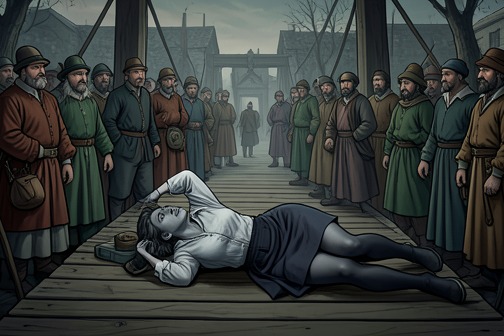
The [Monique Silva murder case](entity:event-recall-event-monique-silva-279e8707437d) became a decisive second case in the investigation of a killer who embalmed and displayed his victims. Silva, a 21-year-old prostitute working in Logan Square, was found on July 7 on a wooden bridge above a stream in [Humboldt Park](entity:location-recall-location-humboldt-park-2e83b6a72fc4), posed as if looking at the water. Her appearance and the deliberate public placement of her body made the case not simply a question of identifying a killer, but of understanding a repeated method.
## Discovery and Connection to the First Victim
Silva’s body was dressed in a skirt, stockings, and a long-sleeved shirt, with her eyes open and her mouth closed. Unlike the first victim, Susan Warner, whose skin appeared lifelike, Silva’s skin was gray. Investigators learned that the killer had probably used a different embalming-fluid mixture; red dye in the fluid used on Warner accounted for the more lifelike coloring. The contrast showed that the bodies had been treated by a method that could vary, rather than presenting an identical result each time.
Silva’s death was the second such case. The medical examiner estimated that she had been dead for five to seven days before her body was found. A man who identified himself as her cousin, and was known to police as a pimp, reported her missing the day before the discovery, while saying she had already been gone for at least a week. The delay between her disappearance and the report, alongside the public display of her body, complicated the timeline and drew attention to the case. [Chicago](entity:location-recall-location-chicago-eb77a855d5aa) authorities faced substantial public pressure, and the [Chicago Police Department](entity:organization-recall-organization-chicago-police-d-a75824b356ea) sought federal assistance while the Chicago field office was occupied with preparations for a large arrest of [Latin Kings](entity:organization-recall-organization-latin-kings-6f02ef8646b1) members.
## Reconstructing the Killer’s Method
The forensic findings linked Silva’s death to Susan Warner’s while also revealing a change in how the killer selected and handled his victims. Warner, an art student, had been attacked in her own home, where the killer remained to embalm her. Silva, by contrast, was a prostitute believed to have been taken from the street and brought to another location. Investigators reasoned that the killer could have presented himself as a client and persuaded her to accompany him to a safer place; they considered a street or alley attack less consistent with evidence that she had been restrained while still alive.
The autopsy established strangulation as the cause of death and recorded signs that Silva had been tied up. It also documented postmortem sexual assault. Investigators found no embalming fluid in her home, consistent with their belief that the killing and preparation had occurred elsewhere. The evidence therefore suggested a sequence distinct from Warner’s case: the killer did not rely on access to Silva’s residence, but moved her to a place where he could control the circumstances and prepare the body.
Later analysis treated the differences between the victims not as evidence against a connection, but as signs of adaptation. Warner’s failed presentation had left the killer with problems to solve; the investigation inferred that, during the long interval before Silva’s murder, he learned how to preserve flexibility after embalming and how to close the mouth. His methods and results could change as he pursued the same elaborate fantasy. The case thus marked both a connection between the murders and a progression in the killer’s ability to stage his victims.
Investigators also came to believe that the killer had taken the prostitute victims shopping before killing them. Their clothing did not appear to be cheap, generic outfits, and the victims differed in height and build; unlike Warner, Silva and the other women had not been killed in a home where an entire wardrobe was available. The proposed explanation was that the killer, posing as a client, offered to dress them for an evening and brought them to a shopping mall. This remained a reconstruction rather than a directly witnessed account, but it widened the investigative picture beyond the place where each body was found, toward the steps the killer may have used to gain access and control.
## Later Adaptation and Investigative Significance
The case also belongs to a pattern that investigators understood as changeable rather than mechanically repeated. The killer’s methods could be refined to serve his fantasies, so the differences between victims and scenes did not rule out a connection. As the investigation later closed in on him, he recognized that leaving a phone with a victim had been a serious mistake. He anticipated killing more quickly next time and abandoning the prostitute profile investigators associated with him, while still seeking someone vulnerable. Silva’s murder therefore formed part of an evolving sequence: its public display and the killer’s handling of the victim were clues to a method, but not a guarantee that the next crime would look the same.
## Forensic Leads and Limits
The physical evidence offered investigators clues without producing an immediate identification. The killer had left hardly any traceable DNA on Susan Warner, while samples recovered in Silva’s case produced no match in CODIS. The absence of a database match did not erase the cases’ forensic connections, but it limited what investigators could establish through that route and reinforced the importance of comparing the victims’ treatment, placement, and circumstances. Silva’s case thus contributed not a ready-made identity, but a pattern that had to be assembled across separate crimes.
Event 3
Krista Barker murder case
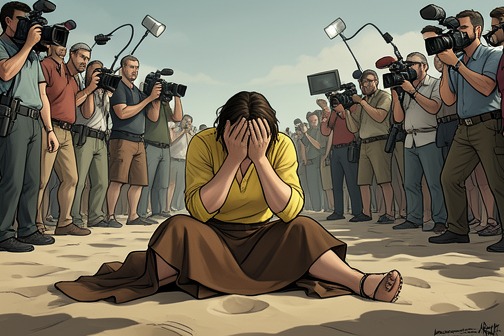
[Krista Barker’s murder](entity:action-recall-action-krista-barker-s-murder-8352b0f3bc49) was the third killing in the [Chicago](entity:location-recall-location-chicago-eb77a855d5aa) investigation and a turning point in how [Zoe Bentley](entity:character-recall-character-zoe-bentley-9aa073c6d79a) and [Tatum Gray](entity:character-recall-character-tatum-gray-3d4ed8f906a1) understood the emerging pattern. Found posed at [Ohio Street Beach](entity:location-recall-location-ohio-street-beach-488e28dc657d), Barker joined a sequence of victims whose bodies suggested not only a method of killing but an elaborate process of dressing and presentation. Her case gave investigators a new set of clues—and warned them that the killer might adapt before they could catch him.
## Discovery at Ohio Street Beach
The investigation’s immediate focus shifted when a police officer arrived during a tense case discussion to report another victim. At Ohio Street Beach, spectators crowded the yellow crime-scene tape, some raising their phones to take pictures, while two news crews worked nearby. Tatum followed [Lieutenant Martinez](entity:character-recall-character-lieutenant-martinez-05c57496b5c3) onto the sand with Zoe beside him, conscious of the public attention and irritated with her after their earlier disagreement. The crowd and cameras made the discovery a public event even as police tried to hold observers back.
Barker was sitting on the sand, her face covered by her hands in a pose resembling someone who was crying. She wore a long-sleeved yellow shirt and a brown skirt, and her feet were bare. The arrangement made the body appear still and composed, but it was plainly a staged image rather than an ordinary posture. Zoe stopped several yards away before approaching; Tatum asked whether she was all right and reminded her that she did not have to be there. His concern briefly interrupted the strain between them.
The discovery was distressing to Tatum. He examined the scene, then turned his attention to the water and the surrounding beach. The location was a public shoreline with a park nearby and the city’s buildings beyond it, but the beach’s ordinary recreational use was now shadowed by the knowledge that a woman had been left there. Tatum wondered how long it would be before residents returned to walk, run, or swim. The scene therefore carried two contrasting meanings: a familiar shared landscape and a place newly marked by violence.
## Position in the series and the evolving pattern
At the scene, Tatum identified Barker as the third victim. Martinez confirmed the pace of the investigation: she had been killed only eleven days after the preceding victim. The short interval intensified Tatum’s fear that another woman would be found before the police could identify the killer. The case was no longer a pair of murders to be compared at leisure; the third killing made the recurrence and urgency impossible to ignore.
Barker’s murder also added a geographically distinct point to the case map. She had worked the street in [Brighton Park](entity:location-recall-location-678b3af1b0f8) on the last night she was seen, while her body was found at Ohio Street Beach. Alongside the earlier locations, the marks showed Zoe that the killer was not concentrating on one Chicago neighborhood. The distance between the last-known location and the discovery site supported a working theory that he could approach victims in one setting and leave them elsewhere, rather than limiting his crimes to a single familiar area.
The investigators considered how Barker might have been approached and moved. Zoe contrasted the first victim, an art student attacked in her home, with the later victims, who were prostitutes and could plausibly have been persuaded to accompany a client. Tatum argued that the signs of restraint made a street attack less likely: it would have been difficult to control a victim there, whereas a killer could more easily induce her to go somewhere safer. These were investigative interpretations, not a complete reconstruction of Barker’s final hours, but they directed attention toward the encounter that preceded the murder.
## Clothing, staging, and what the body disclosed
Barker’s clothes and accessories became important evidence of preparation. Zoe noted that Barker wore clothing her friend said did not belong to her, as well as a ring that was not hers. This distinguished her case from that of Susan Warner, whose own wardrobe had been available to the killer because she was attacked at home. The differences in the victims’ bodies and clothing suggested that the killer was not simply dressing them in whatever they already owned.
A later discussion between Zoe and Tatum developed that clue into a specific hypothesis: the killer had taken Barker shopping before killing her, possibly presenting the outing as part of a client encounter. Clothing that could fit victims of different builds, rather than generic garments, supported the possibility that the selection had been made for each woman. The conversation connected Barker’s unfamiliar clothes to a possible stage in the crime before the killing itself. The hypothesis remained a reconstruction, but it offered investigators a practical lead: search for places along the route between a victim’s last-known location and the place where she was killed.
Barker’s presentation also reinforced a broader pattern. The first body, Susan Warner’s, had been dressed in an evening gown, but the attempt had gone wrong: the sleeve tore, the body was difficult to position, and the result did not appear lifelike. By contrast, the later victims showed signs of more deliberate dressing and posing. Zoe interpreted the contrast as evidence of learning and experimentation between murders. Barker’s case thus mattered not only for what it shared with previous killings, but for how it indicated that the offender’s handling of bodies was becoming more considered.
## Investigation, risk, and consequence
The case challenged the investigators to distinguish a meaningful pattern from assumptions that might narrow the search too soon. Earlier, Zoe had questioned whether the killer’s chosen locations demonstrated a wish for publicity or a game with police. She pointed out that the sites could be public while still being empty at night and lacking security cameras, and argued that the posing might carry significance of its own. Barker’s placement at a beach contributed to that inquiry, but did not by itself establish the killer’s motive or the meaning of the pose.
Nor did the investigation yet have a sharply discriminating suspect description. Martinez proposed staking out likely areas where prostitutes might be approached, while acknowledging that the team did not know exactly what to look for. The tentative profile—an apparently strong but not especially intimidating man with a reasonably good-looking car—was so broad that it could describe many men, including people in the department. Barker’s murder therefore increased the urgency without immediately solving the practical problem of identifying the offender.
Later developments made the danger of assuming a fixed victim type more explicit. Zoe reasoned that the killer knew the police suspected he was targeting prostitutes and might choose a different, still vulnerable victim after nearly being caught. She also believed he would act faster to prevent a victim from contacting anyone. That assessment transformed Barker’s murder from one entry in a sequence into evidence of a changing criminal process: the killer’s routines could provide clues, but pressure could also lead him to revise them. The case’s decisive significance lies in that double lesson. Barker’s clothing, pose, and locations helped expose a developing pattern, while the eleven-day interval and the possibility of adaptation made clear that understanding the pattern was not the same as stopping the next attack.
Event 4
Maynard serial killings
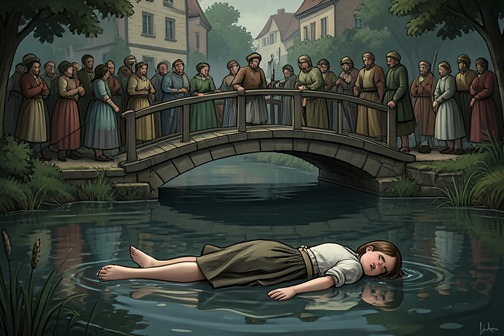
The [Maynard serial killings](entity:event-recall-event-maynard-317aab41ed74) are a series of murders that make a small town’s familiar routines feel unsafe and draw the young [Zoe Bentley](entity:character-recall-character-zoe-bentley-9aa073c6d79a) into an investigation she is not equipped to influence. The deaths of [Beth Hartley](entity:character-recall-character-beth-hartley-3d96a1fdf25b), [Jackie Teller](entity:character-recall-character-jackie-teller-f2936dc588ef), and [Clara](entity:character-recall-character-clara-dd20800f9dca) are not only crimes for Zoe to follow: they enter her life through school, family, and the community’s accumulating fear. As the case develops, the distance between what residents know, what they repeat, and what investigators can establish becomes central to its human cost.
## The first deaths and the limits of what is known
Zoe learns that a body has been found near the [White Pond Road Bridge](entity:location-recall-location-be2f1fa61a74) from [Heather](entity:character-recall-character-heather-c102c98231de), who heard her father and a neighbor discussing it. The early account is fragmentary: the victim is said to be a girl, and that she was naked. At school, the fragments multiply into more disturbing rumors, including claims about what had happened to the victim before her death. Zoe has no way to verify these details. Their force comes from circulation itself, and the lack of reliable information leaves room for frightening images to take hold.
The victim is eventually identified as Beth Hartley, a twenty-one-year-old secretary for a local accountant. Zoe sees Beth’s photograph in the newspaper and wonders whether she might have passed her around [Maynard](entity:location-recall-location-maynard-e241b2fdf0d1), a small town where a stranger could also be someone familiar from an ordinary errand. The paper offers little else beyond saying that an investigation is underway. At the [Assabet River](entity:location-recall-location-assabet-river-ace7e1d5c4e8), Zoe tries to separate the actual place from the stories she has heard about it. The contrast does not undo her fear; it leaves her with both fear and an unexpected agitation and thrill at the reality of a mystery unfolding nearby.
Five days before the family scene dated October 23, another young woman, Jackie Teller, has been killed. [Jackie](entity:character-recall-character-jackie-49ce74ddae0a) is connected to Zoe’s household: Zoe’s mother knew her through a book club and had attended Jackie’s sixteenth birthday, two years earlier. She has now also attended Jackie’s funeral. The second death makes the danger personal to Zoe’s mother, whose behavior changes as the family tries to protect the girls. She insists that they be driven to and from school, sets a time for Zoe to be home before dark, and panics when [Andrea](entity:character-recall-character-andrea-9846246a92e3) runs outside with a ball. Zoe comforts her younger sister after their mother brings her back indoors. With Halloween approaching, the town expects that trick-or-treating will not take place.
The account of Jackie’s death reaches Zoe through Roy, Heather’s nineteen-year-old brother, who took part in the search. Jackie had gone walking with her dog in the evening. When she did not return after an hour, her mother went out to look for her and later called the police. The dog came home hours afterward, still attached to its leash; a search party found Jackie that same night in the shallow water of [Durant Pond](entity:location-recall-location-durant-pond-4a05a6c0a1b3). Zoe learns that Jackie was naked and her hands were tied behind her back. The particulars are relayed at home before the adults can keep them from Heather, showing how information about the case moves through the town even when families try to shield their children.
## A town altered by fear
The two deaths turn Maynard’s anxiety into a collective condition. Zoe’s father says that the streets were empty when he drove to the supermarket; at night, residents stay inside. For Zoe, the thought that the killer remains at large is frightening, yet she cannot stop thinking about the case. Her habit of reading thrillers and mysteries becomes entangled with a real investigation unfolding close to home. She cuts a newspaper article out and tapes it into [Zoe’s Maynard scrapbook](entity:object-recall-object-zoe-s-maynard-scrapboo-89a8e14ec4a7), preserving the account and rereading it even as she is prepared to hide the scrapbook if her parents enter.
The case’s effects also appear in what Zoe cannot feel. When the principal announces that Clara, the older sister of Zoe’s schoolmate Nora, has been killed, students around her cry and react with shock. Zoe remembers having been friends with Nora when they were six and having visited her home; Clara, four years older than Zoe, remains in her memory as a beautiful girl Nora admired. At Clara’s funeral, Zoe tries to summon grief and worries that her emotional numbness means something is wrong with her. She has been borrowing books about serial killers and collecting articles about the murderer, and she fears that her lack of tears makes her like the person who killed Clara. The school counselor has told students that people grieve differently, but Zoe cannot make that reassurance fit her own response.
The funeral’s quiet details sharpen the separation between Zoe’s inner state and the grief around her. She sees Clara’s face in the coffin and thinks that Clara looks asleep, not as Zoe imagines a brutally murdered person should look. Andrea holds Zoe’s hand and later rests her head against Zoe’s arm in the car, playing with Zoe’s fingers as she sometimes does at night. Zoe says nothing. Her mother cries beside her, while Zoe experiences emptiness and disorientation rather than the feeling she believes the occasion requires. These reactions do not make her indifferent to the danger: they deepen her fear that her fascination with the killings has placed her outside ordinary sympathy.
## Investigation, suspicion, and uncertainty
The investigation does not give the town a clear answer. Newspaper coverage offers little detail about progress and no confirmed explanation for Beth’s death. When asked whether Jackie was killed by the same person, police say they are still investigating all possibilities. That caution matters: the public may speak of multiple murders as a single case, but the available reporting does not settle the connection. Zoe’s scrapbook and reasoning grow from a record that is both emotionally powerful and incomplete.
Later, Zoe names [Rod Glover](entity:character-recall-character-rod-glover-0951089c4ae4) to a person who checks a file and rejects him as a suspect. The reason offered is a list of seventy-eight people who took part in the search for Clara, including Glover; the search’s timing is said to correspond with the time of death, giving him an alibi. The response warns Zoe not to keep telling people that her neighbor is a serial killer and tells her to leave policing to adults. The scene establishes what officials believe and why they dismiss her accusation; it does not, by itself, verify every assumption behind the alibi. For Zoe, being brushed aside compounds the isolation of being a fourteen-year-old trying to make her observations count.
Another explanation gains traction around [Manny Anderson](entity:character-recall-character-manny-anderson-f7d518fd7731). [Officer Will Shepherd](entity:character-recall-character-officer-will-shephe-0579fec2cba9) describes him as a solitary young man with few friends, unusual cartoons in his notebooks, and a habit of playing Dungeons and Dragons with friends; he also notes that Manny has never had a girlfriend. Zoe sees no meaningful connection between those traits and the killings. She recognizes in the reasoning the danger of finding a person who loosely fits a suspicion and then making the available details support it. Her anger comes not from proving the case herself, but from seeing weak impressions treated as though they add up to evidence.
## Narrative significance
The killings are presented through their uneven passage into a child’s understanding: a neighbor’s conversation, a newspaper photograph, a searcher’s account, family precautions, and a funeral. Each source changes what Zoe can picture, but none supplies a complete or consistently reliable account. Rumor fills the gaps left by sparse reporting, while the police’s uncertainty and the town’s fear coexist rather than resolve one another. The result is a case experienced not only as a sequence of deaths but as a disturbance of everyday life and of the ways a community decides what it knows.
Zoe’s response is part of that disturbance. She is frightened by the murders and fascinated by them; she records articles and tries to reason from what she has gathered, even as adults discount her. At Clara’s funeral, she measures herself against the grief of others and worries that numbness makes her resemble the killer. Meanwhile, Andrea’s small gestures of trust and her mother’s attempts to keep the girls safe show the intimate relationships the murders unsettle. The Maynard serial killings thus become, for Zoe, both an external threat and a test of how she understands evidence, empathy, and her own reactions.
Event 5
Beth Hartley murder case
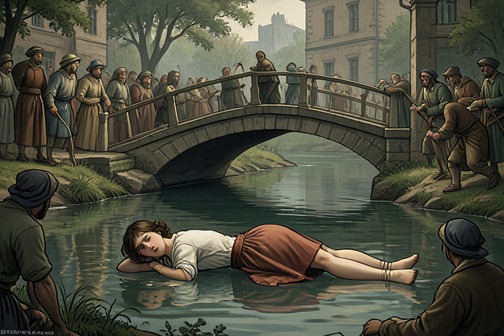
The [Beth Hartley murder case](entity:event-recall-event-beth-hartley-6f9dafd57e85) begins with the discovery of a young woman’s body near the [White Pond Road Bridge](entity:location-recall-location-be2f1fa61a74) and becomes the event that draws [Zoe Bentley](entity:character-recall-character-zoe-bentley-9aa073c6d79a) from fearful curiosity toward sustained scrutiny of crime. Beth, a 21-year-old secretary for a local accountant, is first known to Zoe through fragments of neighborhood and school talk; her identification gives those fragments a name and a life. The case also establishes a lasting tension in Zoe’s investigations: the distance between what people assume and what the evidence can actually support.
## Discovery and Identification
The news reaches Zoe indirectly. Her parents try to keep her from walking alone without explaining why, and [Heather](entity:character-recall-character-heather-c102c98231de) tells her that a body has been found by the White Pond Road Bridge. Heather’s information is itself secondhand, passed along from her father and a neighbor. The early account leaves the victim unidentified, while rumors at school add unverified claims about the circumstances of her death. Zoe is frightened by the talk, but it also makes the murder difficult to set aside.
Zoe breaks her promise to ride straight home after school and goes by bicycle to the bridge. She has been troubled by the thought of the victim and hopes that seeing the location might dispel the image she has formed. At the edge of the [Assabet River](entity:location-recall-location-assabet-river-ace7e1d5c4e8), she wonders whether this is where the body was found. The visit does not give her a fuller account of the crime: the newspaper has identified the victim as [Beth Hartley](entity:character-recall-character-beth-hartley-3d96a1fdf25b), stated her age and occupation, and reported that an investigation is underway, but provides no further details. In a small town, the ordinary possibilities of Beth’s life—being seen on a street or going about daily errands—make her death feel less remote to Zoe.
## The Site and Zoe’s Response
The bridge and riverbank become more than a place mentioned in a report. Zoe deliberately goes there to confront the setting, but the calm appearance of the water does not resolve what happened. Her fear remains, joined by an agitation and thrill she does not know how to interpret. That mixed response marks an important change: the murder repels her, yet it also intensifies her attention to crime and to the questions an investigation might answer.
The visit carries a small but telling breach of trust. Zoe’s mother has allowed her to bike to school because she is late for work, on the understanding that Zoe will ride with Heather and return directly home. Zoe does neither. Her choice is driven by a need to test the images and rumors in her mind against the physical place, though the visit cannot confirm the details circulating among her classmates. The case therefore introduces a distinction that will matter throughout Zoe’s later reasoning: a location can be examined, but gossip is not proof.
## From a Place to a Pattern
Zoe records locations in a scrapbook, marking both [Durant Pond](entity:location-recall-location-durant-pond-4a05a6c0a1b3) and the White Pond Road Bridge on a small map of [Maynard](entity:location-recall-location-maynard-e241b2fdf0d1). The two marks prompt her to wonder whether there will be a third. The map gives her a way to organize what otherwise arrives as rumor, fear, and isolated reports. It does not itself establish that the sites share a cause, but it shows Zoe beginning to look for recurrence rather than treating each location as incidental.
That habit develops into an argument about how a killer’s choices should be interpreted. Zoe challenges the assumption that public locations or posed bodies necessarily indicate a desire for attention or a game with investigators. Such places may be quiet at night and lack security cameras, she argues, while the posing may have significance within the killer’s own purpose. Her point is methodological: the apparent drama of a crime scene does not prove a motive, and competing interpretations should not be ranked as likely before alternatives are examined. The case thus becomes an early framework for her resistance to conclusions that outrun the available evidence.
## Suspects and the Cost of Assumption
The Maynard investigation later brings suspicion onto [Manny Anderson](entity:character-recall-character-manny-anderson-f7d518fd7731), a quiet high-school senior Zoe recognizes from the town library. The case against him, as relayed to Zoe, draws on his isolation, unusual cartoons, Dungeons and Dragons games, and lack of a girlfriend. Zoe objects that these traits do not establish guilt. She sees the police reasoning as a search for someone who can be made to fit a theory, rather than a demonstration that the theory is true.
Zoe’s own suspicion of [Rod Glover](entity:character-recall-character-rod-glover-0951089c4ae4) is also challenged. When she raises his name, a man checks papers and tells her that Glover was among 78 people in the search party for [Clara](entity:character-recall-character-clara-dd20800f9dca), including himself; the search’s timing corresponds with the time of Clara’s death, giving Glover an alibi for that killing. The exchange warns Zoe that a strong suspicion can be defeated by a concrete timeline. It also complicates her position: she resents being dismissed as an overemotional teenager, but the case requires her to distinguish justified doubt from proof against the person she suspects.
## Investigative Echoes
The book later shifts to separate [Chicago](entity:location-recall-location-chicago-eb77a855d5aa) investigations, where the same problem of reading patterns appears on a different scale. A task-force map places a crime scene at [Ohio Street Beach](entity:location-recall-location-ohio-street-beach-488e28dc657d) and a red mark in [Brighton Park](entity:location-recall-location-678b3af1b0f8), where [Krista Barker](entity:character-recall-character-krista-barker-93a1b7a7a955) had worked; their distance suggests that the offender is not confined to one neighborhood. In that investigation, the team considers vulnerable targets and the difficulty of knowing what to look for, while Zoe warns that an offender may adapt after nearly being caught. These events do not establish a connection between Beth’s killer and the Chicago crimes. Instead, they extend the book’s recurring concern with how investigators interpret locations, victim selection, and changing methods.
A later map exercise involving [Lily Ramos](entity:character-recall-character-lily-ramos-6c34b2bd5fd5) makes the contrast concrete: Tatum uses the known pickup point near Clark and Grand in [River North](entity:location-recall-location-river-north-d7d38801a065) and the destination on Huron Street to narrow the possible route between them. Beth’s case begins with Zoe asking what happened at a riverbank; later investigations turn maps into tools for testing routes and patterns. Across those distinct cases, the White Pond Road Bridge remains the point at which Zoe’s private unease first becomes an effort to reason from place, sequence, and evidence rather than rumor alone.
Event 6
Jackie Teller murder case
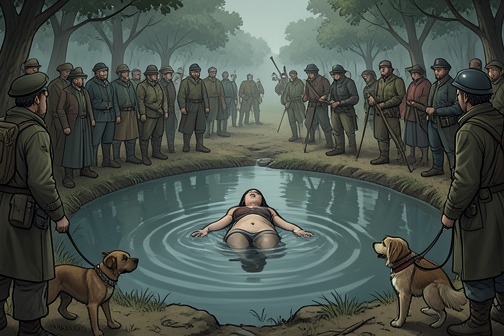
[Jackie Teller murder case](entity:event-recall-event-jackie-teller-a7bfc66036e2) was the killing of sixteen-year-old [Jackie Teller](entity:character-recall-character-jackie-teller-f2936dc588ef), whose body was discovered in [Durant Pond](entity:location-recall-location-durant-pond-4a05a6c0a1b3) after she went out walking her dog. The case became a public terror in [Maynard](entity:location-recall-location-maynard-e241b2fdf0d1) and a private rupture for Zoe’s family: [Jackie](entity:character-recall-character-jackie-49ce74ddae0a) was connected to Zoe’s mother through a book club, and her death helped turn the household’s ordinary routines into anxious restrictions and silences. The pond and the circumstances of the discovery also became objects of Zoe’s solitary investigation, as she tried to make sense of what had happened from fragments of news and what she could observe herself.
## Jackie’s Disappearance and Discovery
Jackie went walking with her dog in the evening and did not return. After waiting about an hour, her mother went out to look for her and then called the police. The dog came home a few hours later, still wearing its leash; Jackie did not. A search party found her that same night in the shallow water of Durant Pond. She was naked, with her hands tied behind her back. The account reaches Zoe through Roy, the nineteen-year-old brother of her friend [Heather](entity:character-recall-character-heather-c102c98231de), who had joined the search. Shaken, he blurted out what he had seen before the adults could move Heather out of earshot.
The dog’s return, the delay before the search, and the discovery at the pond form the known sequence of the case in Zoe’s account. The evidence does not establish what happened between Jackie’s departure and the search party’s discovery. Zoe can only imagine the possibilities: whether Jackie heard something, whether someone approached her, and whether that person was a stranger or someone she knew. Those questions remain questions, not answers, and give the case its unnerving gap between the ordinary start of an evening walk and the fatal outcome.
## A Death Close to Zoe’s Family
The murder was not an anonymous headline in the Bentley household. Zoe’s mother had known Jackie’s mother through her book club, had attended Jackie’s sixteenth birthday two years earlier, and later went to her funeral. That personal connection made the death part of the family’s immediate life, rather than a frightening event safely confined to newspaper coverage.
By Thursday, October 23, 1997, the household had settled into a pattern of hushed conversations, strained silences, and private grief. Zoe’s mother sometimes stared for long periods and did not seem to hear people speaking. She insisted that Zoe and [Andrea](entity:character-recall-character-andrea-9846246a92e3) be driven to and from school, and Zoe had to be home by five in the afternoon, before dark. When Andrea once ran outside with her ball, their mother rushed after her in alarm; Andrea began to cry, and Zoe hugged her and quietly reassured her. The scene shows fear moving through the family as a change in conduct: a child’s brief dash outdoors now prompted a panicked response.
Zoe’s father tried to preserve normality, but the effort could not restore it. Halloween was approaching, and the family expected there would be no trick-or-treating that year. Even the parents’ whispered conversations stopped as soon as Zoe entered the living room. The murder thus alters not only where the girls may go, but also what can be spoken openly at home.
## Maynard Under Threat
Jackie’s killing followed the death of another young woman five days earlier. The two deaths, as Zoe understood them, produced a collective sense of danger: the town’s streets were nearly empty at night, and her father described them as deserted when he drove to the supermarket. Residents stayed inside, making Maynard feel transformed by the fear of a killer still at large. The case’s significance lies partly in this movement from individual loss to public alarm; people who had not known Jackie nevertheless changed their behavior because they could imagine another disappearance.
The information available to Zoe was frustratingly incomplete. Newspaper coverage offered little detail about investigative progress, possible suspects, or why Beth had been killed. Police said they had made progress but remained open to the possibility that Jackie’s death was unrelated. That uncertainty matters: the community’s fear and Zoe’s efforts to connect the cases do not themselves establish that one person committed both murders.
## Zoe’s Return to the Pond
Unable to stop thinking about the case, Zoe collected what she could. She cut a newspaper article out and pasted it into her scrapbook, hiding the book beneath her bed and staying alert in case her parents entered her room. The careful concealment makes her inquiry both deliberate and secret: she preserves the public record even as her family tries to shield her from the danger surrounding it.
She later rode her bicycle to the Durant Pond trail, taking small streets to reach a path hidden from view. At the pond, she considered the route Jackie had walked with her dog and imagined the search party finding her. Zoe noticed that both bodies had been found in shallow water and wondered whether that shared circumstance meant anything, including whether the killer sought places near water. The resemblance gives her a line of inquiry, not proof of a common offender. The still, empty setting offered no answer; it sharpened the contrast between the calm place she saw and the violence she was trying to reconstruct.
Zoe’s visit also brings the case’s consequences back into view through Heather’s family: Heather had said that Roy cried behind his closed door each night, and his parents were seeking therapy for him. His presence in the search had made him the source of the account Zoe heard, but witnessing the discovery had also left him distressed. Jackie’s murder therefore reaches beyond the victim and her immediate family, affecting those who searched, those who heard what they had seen, and a town whose nighttime routines had narrowed under fear.
Event 7
Clara murder case
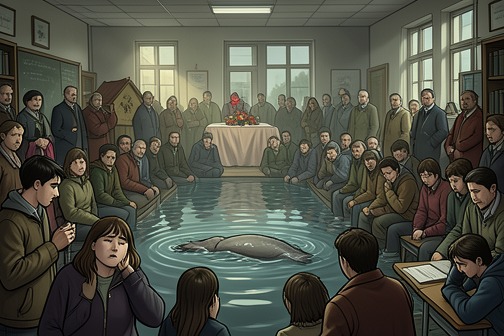
[Clara’s murder](entity:action-recall-action-clara-s-murder-d538404f36de) enters the account through its aftermath: a school announcement, a funeral, and [Zoe Bentley](entity:character-recall-character-zoe-bentley-9aa073c6d79a)’s struggle to understand why she feels no grief. [Clara](entity:character-recall-character-clara-dd20800f9dca) was Nora’s older sister and a victim of the [Maynard](entity:location-recall-location-maynard-e241b2fdf0d1) serial killer; her body was left in the [Assabet River](entity:location-recall-location-assabet-river-ace7e1d5c4e8). For Zoe, the loss is inseparable from a disturbing question about herself: whether her apparent lack of empathy places her on the killer’s side of a moral divide.
## The news and Clara’s place in Maynard
Two days before the funeral, the principal entered Zoe’s class and announced that Clara had been killed. The room responded with sobbing, cries, and shocked whispers. Zoe, instead of joining the children around her, watched the principal’s red eyes, struck by the fact that she had never seen him cry before. The announcement makes the death public and immediate, while Zoe’s attention settles on another person’s visible grief rather than on her own response.
Clara was Nora’s big sister. Nora was Zoe’s age and attended most of her classes; when they were six, the girls had been friends, and Zoe had visited Nora’s home three times. Her memories of Clara were hazy, but they included the image of a beautiful ten-year-old whom Nora idolized. This limited but personal connection distinguishes the loss from an impersonal news story: Zoe knew the family, remembered Clara as a child, and understood that Nora had lost her only sister.
The murder is associated with the Maynard serial killer and with the discovery of Clara’s body in the Assabet River. The account does not stage the crime itself. Instead, it gives its consequence through the news received at school and the funeral that follows, keeping attention on how the killing is understood by those left behind.
## The funeral and the absence of grief
At the chapel, Zoe tries to summon the reactions she assumes the occasion requires: grief, horror, and fear. What she actually notices is emptiness, along with regret that she had not gone to the bathroom earlier. The bluntly ordinary regret sits beside the gravity of the funeral, emphasizing the gulf between the solemn event and her internal experience.
Zoe’s mother cries beside her, and the chapel is full of people whose sobs echo through the hall. Zoe tries to imagine Nora’s pain and to make herself cry for a girl only four years older than she is, killed brutally and taken from her sister. The effort produces nothing. When it is time to approach the coffin, Zoe makes herself look at Clara’s face. Clara appears asleep rather than visibly marked by violence. That still appearance offers no emotional release: Zoe turns away to search the crowd for someone else who seems not to be crying, but sees tears or near-tears on the adults’ faces.
The scene sets public mourning against private blankness without treating the crowd as a measure that Zoe can simply imitate. The school counselor has told the students that grief takes different forms and that all reactions are normal, yet Zoe doubts that this reassurance includes feeling nothing. The question is not only why she fails to mourn in the expected way; it is whether that failure means something alarming about her character.
## Zoe’s fear of resemblance
Before Clara’s death, Zoe had been borrowing books about serial killers and reading about psychopaths. She had also been collecting articles that mentioned the Maynard killer. At the funeral, these interests sharpen her self-scrutiny: she knows that psychopaths are associated with an absence of empathy, recalls the estimate that they make up one percent of the general population, and wonders whether she is one of them. Her inability to cry for Nora’s suffering becomes, in her mind, possible evidence against herself.
That fear culminates in a harsh comparison. Zoe perceives herself as having no tears and no empathy, and concludes that she is like the killer. The comparison is her distressed judgment, not a finding established by the account: the same passage shows her worrying about Nora, trying to feel for her, and fearing what her own response might mean. Her fascination with murder and her numbness at the funeral therefore converge as questions she cannot resolve, rather than proof that she shares the murderer’s nature.
## [Andrea](entity:character-recall-character-andrea-9846246a92e3) and the journey home
Andrea walks beside Zoe and takes her hand, her face serious. She has been sleeping in Zoe’s bed every night, and Zoe recognizes that she knows something is wrong. Andrea’s quiet closeness provides a counterpoint to the public rituals of the funeral: she does not need Zoe to explain or display a particular emotion in order to stay with her.
Outside, snow covers the chapel yard, the trees, the grass, and the low wall beside the street. Zoe follows her parents to the car in silence and feels lightheaded, almost elsewhere. On the ride home, Andrea rests her head against Zoe’s arm and repeatedly strokes Zoe’s thumb, as she sometimes does at night. Zoe says nothing, even though the touch tickles. The car journey through the small town is quick, but after they get out, Zoe cannot understand why the world seems to tilt. The account ends this passage not with an answer to her fear, but with the physical disorientation of a child carrying an experience she cannot yet make sense of.
## Significance in Zoe’s story
Clara’s murder matters here through the contrast it creates between what the community can express and what Zoe believes she cannot. Her examination of the coffin, her search among the mourners, and her attempt to compare herself with the killer all turn the funeral into an inward test. The evidence does not show Zoe reaching a conclusion about her capacity for empathy. It shows her beginning to treat emotional numbness as a frightening possibility, while Andrea’s hand and presence offer a small, concrete form of companionship amid the unanswered question.
Event 8
Maynard serial murders

The [Maynard serial murders](entity:event-recall-event-maynard-serial-murders-71263af6db65) were a 1997 series of killings in [Maynard, Massachusetts](entity:location-recall-location-maynard-massachusett-2991349b29da), involving [Beth Hartley](entity:character-recall-character-beth-hartley-3d96a1fdf25b), [Clara](entity:character-recall-character-clara-dd20800f9dca), and [Jackie Teller](entity:character-recall-character-jackie-teller-f2936dc588ef). The case became a defining loss for [Zoe Bentley](entity:character-recall-character-zoe-bentley-9aa073c6d79a): although the police arrested [Manny Anderson](entity:character-recall-character-manny-anderson-f7d518fd7731) and treated his subsequent death in custody as the end of the investigation, Zoe came to understand Anderson as an innocent scapegoat and [Rod Glover](entity:character-recall-character-rod-glover-0951089c4ae4) as the killer who had escaped justice. Recalled years later, the case is not only a record of the murders but also of how a mistaken suspect could become an accepted answer while a young witness’s warning was dismissed.
## The Murders and Their Pattern
The case concerned three young women killed in [Maynard](entity:location-recall-location-maynard-e241b2fdf0d1) in 1997. Zoe later described the victims together as Beth Hartley, Clara, and Jackie Teller. In the details she had learned from the case files, all three were found naked, with a gray tie around the throat. She also remembered images of their bodies submerged in water. These repeated features became part of the pattern by which she recognized the killings as the work of one serial offender.
The murders remained personal for Zoe rather than becoming an abstract case history. She had been fourteen, knew Manny Anderson as a high school senior, and had seen him reading alone in the town library. A few weeks after Jackie Teller died, Zoe went alone by bicycle to [Durant Pond](entity:location-recall-location-durant-pond-4a05a6c0a1b3), staying only briefly. Her later account links the case to a young person trying to confront what had happened, even as the adults around her controlled which explanations were treated as credible.
## Manny Anderson and the Investigation
The police identified Manny Anderson as their suspect. [Officer Will Shepherd](entity:character-recall-character-officer-will-shephe-0579fec2cba9) privately told Zoe’s father that Anderson was suspected, asking him not to tell anyone because disclosure could damage the investigation. Shepherd’s account included claims that Anderson had followed Beth Hartley and had once asked Clara out. He also cited a teacher’s description of Anderson’s strange cartoons, his participation in Dungeons and Dragons, his isolation, and his lack of a girlfriend. To Zoe, these details did not establish guilt. She saw the reasoning as a search for a person who seemed to fit, followed by the selective assembly of details around that choice.
The public case against Anderson grew more consequential after his arrest. Police had found a picture of Beth Hartley in his home and what newspapers described as other suggestive evidence; the account Zoe recalls does not specify what that additional evidence was. Anderson and his parents maintained his innocence while his face appeared on local newspaper front pages alongside portraits of the three murdered women. His arrest thus became a public resolution before, in Zoe’s judgment, the evidence had truly resolved the case.
Anderson died in his cell after hanging himself with a bedsheet. The authorities treated the death as the end of the case, and the community could believe that the killer was gone. For Zoe, that apparent closure was instead irreversible: Anderson could no longer be cleared, and the investigation’s accepted conclusion left little room to pursue her suspicion of Glover. The loss had two connected consequences in her memory—the death of a young man she believed was innocent and the continued freedom of the person she believed had killed the women.
## Glover, the Alibi, and Zoe’s Warning
Zoe’s suspicion of Rod Glover collided with an apparently decisive alibi. When she named him, an adult consulted a file and told her he could not be the killer: seventy-eight people had been part of a search party when Clara disappeared, and Glover was on its list. The search took place at a time corresponding to the estimated time of death. The explanation was delivered as a reason for Zoe to stop accusing her neighbor, and it gave the police and community a concrete basis for rejecting her theory.
That rejection shaped the tragedy of the case as Zoe understood it. She could not explain how Glover had made the alibi hold, but she believed that he had raped and killed the three young women and had gotten away with it. She later recalled that no one believed he was the killer. Even after Glover came to the Bentley home and yelled at Zoe, police interpreted his behavior as embarrassment because she had seen his pornography collection, rather than as evidence of the danger she feared. Her mother, too, urged her to stop insisting that Glover was responsible, particularly once Anderson had been identified as the killer.
Zoe’s account therefore distinguishes an official suspect from the person she considered responsible. The case’s apparent pattern—the gray ties, the victims’ shared treatment, and Anderson’s supposed behavioral fit—did not, in her view, overcome the problem of the mistaken identification. Glover’s presence on the search-party list became the obstacle around which suspicion hardened, while the possibility that the alibi had concealed the killer remained unresolved for her.
## Aftermath and Retrospective Significance
The murders resurfaced years later when Zoe told [Harry Barry](entity:character-recall-character-harry-barry-4748ca99adf3) about the 1997 case: three young women had been raped and killed, a suspect had been arrested, and he had died while incarcerated. Her retelling made the distinction between arrest and proof central. To the public, Anderson’s death supplied a final answer; to Zoe, it removed the chance to establish his innocence and redirect scrutiny toward Glover. Her grief encompassed both what she believed had happened to the victims and what she believed the investigation had done to Anderson.
The case also became part of Zoe’s continuing effort to understand serial murder. She had filled her bookshelf with books on serial killings, psychopathy, and forensic psychology, no longer hiding that interest. In 2016, the Maynard killings remained consequential enough to enter the renewed inquiry: [Tatum Gray](entity:character-recall-character-tatum-gray-3d4ed8f906a1) traveled to Maynard, Massachusetts, where he met Chief of Police Nathan Price. That later return to the case places the old murders within a broader investigation, while Zoe’s recollection preserves the unresolved human cost of the original conclusion.
As Zoe tells it, Maynard’s serial murders ended officially with Anderson’s death but not in any meaningful sense for those who suspected the wrong man had been blamed. The closed case left a stark contrast between the certainty of the public conclusion and Zoe’s conviction that Glover had escaped accountability. Its lasting significance lies in that gap: a pattern of crimes could be recognized, a suspect publicly named, and an investigation declared finished, while the person Zoe believed responsible remained beyond its reach.
Event 9
Zoe's failed attempt to expose Rod Glover
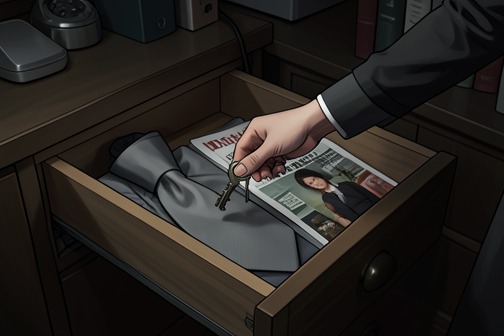
[Zoe's failed attempt to expose Rod Glover](entity:event-recall-event-zoe-rod-glover-e0310a4ddbc6) turns a set of troubling discoveries into a test of who is allowed to be believed. She finds apparent clues in Glover’s bedroom, carries them to the [Maynard Police Department](entity:organization-recall-organization-maynard-police-d-1a4ac916545f), and is told that an alibi rules him out. The rejection does not resolve the evidence: it leaves Zoe watching the investigation settle on [Manny Anderson](entity:character-recall-character-manny-anderson-f7d518fd7731) for reasons she considers far weaker than her own.
## The key and the bedroom
A year before Zoe’s search, her parents and [Rod Glover](entity:character-recall-character-rod-glover-0951089c4ae4) had exchanged spare keys in case of an emergency. Glover could use his to check whether Zoe’s mother had left the stove on; that practical arrangement had sometimes sent her mother home early. The same key now gives Zoe access to a room she believes may contain evidence. It is Monday morning, and Glover is at work. She knows the house from an earlier errand to retrieve a blender, but decides to avoid the kitchen and living room and concentrate on his bedroom.
The third dresser drawer changes the meaning of the search. Mixed among its contents are adult magazines and several videocassettes with handwritten labels, alongside at least ten plain gray ties. The ties might belong to Glover’s work clothes, but their placement among the other material strikes Zoe as significant. A bare, square-shaped patch in the dust on the drawer’s bottom suggests that something has been removed. The drawer offers no definitive identification, yet its assortment gives her several details to connect with what she knows about the killings.
Elsewhere in the room, a smudge of mud on a yellow cloth sharpens her suspicion. Zoe is convinced she may be standing in the bedroom of the [Maynard](entity:location-recall-location-maynard-e241b2fdf0d1) serial killer. As she pushes clothing back beneath the bed, she notices a rectangular shoebox there and reaches for it. Before she can establish what it contains, the front-door lock turns. She drops the lid, hurries to the bedroom door, and closes it quietly as someone enters the house. The search ends under pressure, with the box still offering no confirmed answer and Glover close enough to make discovery a danger.
## A report dismissed
On Monday, December 15, 1997, Zoe sits anxiously in front of [Officer Will Shepherd](entity:character-recall-character-officer-will-shephe-0579fec2cba9) at the Maynard Police Department. He finishes writing before asking what she needs. Zoe says she knows who the serial killer is and identifies her neighbor, Rod Glover. She explains that she has researched serial killers, describes how she believes Glover fits the traits she has studied, and raises [Durant Pond](entity:location-recall-location-durant-pond-4a05a6c0a1b3) and an interview with Son of Sam as part of her reasoning. She also tells Shepherd about entering Glover’s home with the spare key and about the drawer’s contents, including the ties and the shoebox.
Her insistence that she had a key is an attempt to make the search sound more defensible, though she is unsure whether that makes it lawful. More importantly, she has taken nothing from the house. What she can offer is her account of what she saw, not an object she has secured as evidence. Shepherd’s restrained responses and apparent doubt expose the gap between having a coherent suspicion and persuading an officer to investigate it. He treats details such as Glover’s wet socks as ordinary signs of carelessness rather than confirmation. Zoe grows tearful and pleads for the police at least to check him out; Shepherd tells her to let them do their job.
Shepherd then consults a file. He says Glover cannot be the killer because seventy-eight people were with him during the search for [Clara](entity:character-recall-character-clara-dd20800f9dca), including Shepherd himself, and the search time corresponds to the time of death. The list gives the officer a concrete basis for dismissing Zoe’s suspect. For Zoe, however, it does not settle whether the other details she found deserve examination. She suggests that Glover could have claimed to join the search and left, but Shepherd tells her to leave policing to the adults. The encounter ends not with a search of Glover’s home but with Zoe’s reasoning discredited and her age made part of the dismissal.
## The suspect the police choose
After the station visit, Zoe learns that Glover’s name is not the only suspect matter being kept from the public. Her father asks Shepherd to help put his daughter’s mind at ease, and Shepherd discloses that the police suspect Manny Anderson. Zoe knows Manny as a high-school senior who often reads alone in the town library, including when she has been there researching the killings. The disclosure makes the police’s direction of travel unmistakable: they have chosen another person while withholding that choice from her.
The gray ties make the contrast especially sharp. Zoe remembers that Glover had at least ten of them in his bedroom drawer. Her father explains that Manny’s father, Pete Anderson, wears gray ties to work and that the police believe Manny is using them to kill the girls. Zoe has not mentioned Glover’s ties to Shepherd. She fears that bringing them up now, after overhearing a private conversation, would sound like an attempt to escape blame for her earlier intrusion or would make the adults dismiss her further. The detail that seemed most striking in Glover’s room therefore remains outside the official discussion.
The police’s case against Manny, as Zoe hears it, draws on his isolation, unusual cartoons, his participation in Dungeons and Dragons, and the fact that he has never had a girlfriend. Zoe sees these observations as character judgments assembled into a suspect theory, not proof linking him to the crimes. Her anger comes from recognizing the same kind of premature pattern-making she believes the adults have accused her of: select someone who seems to fit, then interpret his traits to support the choice. The announced search-party alibi excludes Glover in the officer’s account; the case against Manny, by contrast, is presented through a cluster of social impressions.
## The cost of being unheard
The failed report establishes a conflict between Zoe’s close observation and the authority of an investigation that will not take her seriously. She is not simply ignored because she lacks a theory: she has gathered details, related them to her research, and asked for a specific check. But the information arrives from a fourteen-year-old who has entered a neighbor’s bedroom and cannot produce a recovered object. Her age and conduct make it easier for adults to treat her as frightened and unreliable, even as she notices a potentially important overlap between Glover’s ties and the police’s gray-tie theory.
The episode also makes an alibi do two kinds of work. Shepherd’s account of the Clara search is a concrete reason to remove Glover from consideration, but it also closes the conversation before Zoe’s other observations are tested. Meanwhile, Manny’s solitude and hobbies are allowed to accumulate as suspicion. The result is an unresolved imbalance: one person is cleared through a list of witnesses, while another becomes the focus through details that Zoe regards as irrelevant to guilt.
Across the wider investigations, Zoe repeatedly challenges conclusions built on assumptions rather than demonstrated links. She questions whether a killer’s use of public but empty locations proves a desire for fame, and argues that the chosen places and the posing of bodies may have meanings investigators have not yet understood. Later, when she and [Tatum Gray](entity:character-recall-character-tatum-gray-3d4ed8f906a1) trace the route between [River North](entity:location-recall-location-river-north-d7d38801a065) and Huron Street in the search for Lily, and when they insist on obtaining clothing-store security footage, her attention again turns toward concrete routes and observable evidence. Those later efforts do not change the outcome of her 1997 report, but they illuminate what is at stake in it: the difference between treating a profile as an answer and continuing to follow the details that resist it.
Event 10
Rod Glover's attempted attack on the Bentley sisters
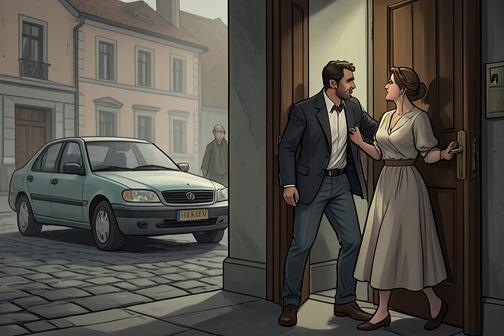
[Rod Glover](entity:character-recall-character-rod-glover-0951089c4ae4)’s attempted attack on the Bentley sisters turns [Zoe Bentley](entity:character-recall-character-zoe-bentley-9aa073c6d79a)’s suspicions into an immediate threat to her and [Andrea](entity:character-recall-character-andrea-9846246a92e3), while exposing how little the investigation has yet narrowed its search. Glover tries to enter Zoe’s room, threatens the sisters when she refuses to open the door, and vanishes after a neighbor calls the police. The encounter confirms the danger of Zoe’s deductions but ends without the arrest that might have stopped him.
## Background and Investigation
Before the confrontation, Zoe had challenged the assumption that the killer’s murders were a performance intended to win public attention or provoke a game of pursuit. No letters to newspapers or police supported that theory. She instead considered whether the locations had private significance: though public, the sites were likely to be empty at night and lacked security cameras, while the posing of the bodies appeared meaningful to the killer. In her view, the choice of place might be connected to that meaning. Her disagreement with Dr. [Bernstein](entity:character-recall-character-bernstein-8a9b5bf58c1e) was not simply over which theory sounded more persuasive; she insisted that contradictory explanations should be tested against one another rather than accepting either as probable by default.
The case remained difficult to map geographically. In a task-force meeting attended by Zoe, [Lieutenant Martinez](entity:character-recall-character-lieutenant-martinez-05c57496b5c3), and [Tatum Gray](entity:character-recall-character-tatum-gray-3d4ed8f906a1), a whiteboard displayed crime-scene photographs of [Krista Barker](entity:character-recall-character-krista-barker-93a1b7a7a955)’s body above a timeline. On a map, a red circle marked [Ohio Street Beach](entity:location-recall-location-ohio-street-beach-488e28dc657d) and a red X marked the [Brighton Park](entity:location-recall-location-678b3af1b0f8) neighborhood where Krista had worked the last night she was seen. Their separation showed that the killer was not concentrating on one [Chicago](entity:location-recall-location-chicago-eb77a855d5aa) neighborhood. Zoe proposed narrowing the suspect pool, but the locations offered little basis for doing so.
The difficulty extended to predicting whom he would approach. Martinez considered staking out likely areas, but acknowledged that the investigators did not know what to look for. Zoe could describe only a broad, weak profile: a strong man who was not especially intimidating and had a reasonably good-looking car. Martinez observed that the description could fit much of the police department. The uncertainty surrounding the killer’s methods and targets made Zoe’s recognition of Glover consequential, but did not mean the authorities were already positioned to protect her.
## The Attempted Attack
The confrontation takes place in [Maynard](entity:location-recall-location-maynard-e241b2fdf0d1) on Monday, December 15, 1997. Zoe recognizes that the man before her is not the goofy neighbor she had known through his enthusiastic conversations about Buffy and Angel. His eyes now seem cold and capable of anything; as he moves toward her, she breaks out of a dreamlike freeze, screams, shuts the door, and locks it. Andrea is in the room, watching as Zoe drags a large wooden desk across the floor to barricade the entrance.
Glover pounds against the door and tries to persuade Zoe that she has misunderstood something. When she pushes the desk against it, he kicks at the door, but the barrier holds. His appeal shifts into pressure: he says that opening the door would make matters easier for her. Zoe answers by invoking [Clara](entity:character-recall-character-clara-dd20800f9dca), [Jackie](entity:character-recall-character-jackie-49ce74ddae0a), and Beth, connecting the threat at her bedroom door to the women whose deaths have become central to the investigation. Glover distances himself from those crimes and points instead to [Manny Anderson](entity:character-recall-character-manny-anderson-f7d518fd7731) as the person the police are pursuing.
Andrea’s presence makes the danger immediate in a different way. Glover asks whether she is Zoe’s sister and promises that nothing will happen to her if Zoe opens the door, then leaves the implication of what might happen if she does not. Zoe moves from the desk to the bed and holds Andrea close. When Glover dismisses the magazines Zoe has found as adult material, she identifies what convinced her: the souvenirs he kept and the gray ties. His pause and question about the ties mark the moment her accusation reaches the evidence she has uncovered. Zoe tells him she has a phone and is calling the police.
## Exposure and Escape
Glover escalates by threatening to start with Andrea if Zoe does not let him in. Zoe opens the window and calls out for help, asking for the police. The pounding and insults continue as she shouts from the room. The scene’s balance of power briefly shifts when Mrs. Ambrose, a neighbor, comes to her window, sees Zoe calling for help, and understands that something is wrong. Zoe tells her to call the police; Mrs. Ambrose hurries away and telephones, repeatedly glancing back toward the window.
The call creates the possibility that the police might arrive while Glover is still there. Instead, the house suddenly goes quiet. He is no longer trying to persuade Zoe, threaten her, or force the door, and he has disappeared. The sisters have survived the immediate confrontation, but the intervention does not produce an arrest. Glover’s escape leaves Zoe’s identification and evidence unconverted into police custody of the suspect.
## Aftermath and Significance
Nearly six months later, Zoe is still living with the effects of the night. In the early-morning summer light, she pauses while putting on a shoe, caught in memory. Her nightmares have diminished to two or three nights a week, an improvement over the weeks after the attack, when she could not sleep for more than four hours at a time. The passage of time changes the frequency of the fear, not the fact that the event continues to interrupt ordinary activity.
The failed encounter sharpens the contrast between Zoe’s ability to connect clues and the authorities’ incomplete grasp of the case. She has named the souvenirs and gray ties that implicate Glover, and she recognizes the threat he poses while he is at the door. Yet the police are still pursuing Manny Anderson, and Glover leaves before they can catch him. The attack is therefore both a direct assault on the sisters’ safety and a near-exposure that fails to end the danger: Zoe’s insight is validated, but recognition alone cannot secure their protection.
Event 11
Manny Anderson's arrest and death in custody
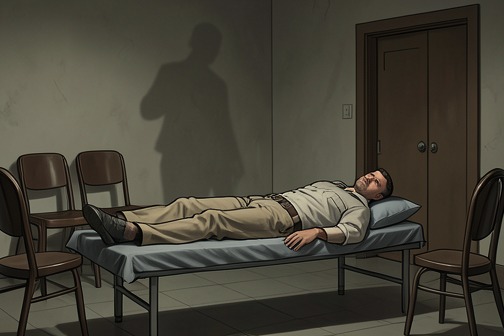
[Manny Anderson's arrest and death in custody](entity:event-recall-event-manny-anderson-206650c2391c) became the apparent resolution of the [Maynard serial killings](entity:event-recall-event-maynard-317aab41ed74), but for [Zoe Bentley](entity:character-recall-character-zoe-bentley-9aa073c6d79a) they confirmed a terrible investigative failure. Police settled on a teenage suspect through a cluster of circumstantial details, then treated his death as closure. Zoe believed the actual killer, [Rod Glover](entity:character-recall-character-rod-glover-0951089c4ae4), had escaped justice, and that the conviction of the town's suspicions had cost Manny his life.
## Background and a narrowing investigation
The case involved victims whose circumstances differed, complicating any simple account of the killer's routine. The first victim was an art student attacked at home; the next two were prostitutes whom Zoe reasoned the killer could have paid to accompany him to a safer place. She also interpreted the first victim's badly executed presentation as a failure that the killer might learn from. In her reconstruction, the months that followed included experimentation, and later murders showed a more refined approach. The investigation thus had to account for an offender who could change his methods rather than repeat one fixed pattern.
That uncertainty shaped the police response. In a case discussion, Zoe challenged the assumption that the murders demonstrated a search for fame or a game with investigators. The chosen places were public but likely to be empty at night and lacked security cameras; she thought the body’s presentation and the location might have meaning to the killer. Later, a task-force map marked [Ohio Street Beach](entity:location-recall-location-ohio-street-beach-488e28dc657d) and [Brighton Park](entity:location-recall-location-678b3af1b0f8), making clear that the sites did not point to a single [Chicago](entity:location-recall-location-chicago-eb77a855d5aa) neighborhood. [Lieutenant Martinez](entity:character-recall-character-lieutenant-martinez-05c57496b5c3) considered staking out areas where prostitutes might be at risk, but acknowledged that investigators had little idea what they were looking for. The difficulty of building a usable profile formed the backdrop to [Maynard](entity:location-recall-location-maynard-e241b2fdf0d1)'s later rush toward a suspect.
## How suspicion settled on Manny
The suspicion was disclosed in a private conversation between [Officer Will Shepherd](entity:character-recall-character-officer-will-shephe-0579fec2cba9) and Zoe's father. Shepherd identified Manny as the suspect and said that Manny had been known to follow [Beth Hartley](entity:character-recall-character-beth-hartley-3d96a1fdf25b) before her murder. A student had also testified that Manny once asked [Clara](entity:character-recall-character-clara-dd20800f9dca) out. Shepherd added that Manny's father wore gray ties to work every day, and investigators believed Manny was using those ties in the killings. These details gave the suspicion an apparent pattern: proximity to victims, an attempt at social contact, and access to an object associated with the murders.
Zoe recognized the gray-tie detail as potentially pointing elsewhere. Rod Glover had gray ties in a drawer containing pornography, but she feared that speaking up after overhearing the conversation would make her look as though she were inventing an excuse for her own accusations. She had already tried to identify Glover as the killer and expected not to be believed. The detail that investigators treated as support for the case against Manny therefore intensified Zoe's conviction that they had overlooked a different suspect.
Other traits added to the impression of a coherent case without establishing guilt. Manny kept to himself, had few friends, drew unusual cartoons in his notebooks, played Dungeons and Dragons, and had never had a girlfriend, according to information Shepherd relayed. Zoe regarded these characteristics as irrelevant: in her view, the police had selected someone who seemed to fit and then connected the case to him. Her judgment was sharpened by her knowledge that Glover had been present with seventy-eight people, including the man who later checked the records, during a search for Clara at the time that corresponded with her death. That search party gave Glover an apparent alibi, which Zoe believed had allowed him to evade suspicion.
## Arrest and public closure
Manny was arrested on suspicion of the murders. Police found a picture of Beth Hartley in his home and what was described as other suggestive evidence, though Zoe did not know what that evidence consisted of. She wondered whether the authorities might have treated his Dungeons and Dragons collection as incriminating, but the account does not establish that it was among the evidence. Manny and his parents maintained his innocence as his face appeared on the front page of local newspapers alongside portraits of the three murdered young women.
The public presentation of the arrest made the case seem settled. The suspected killer now had a name, a photograph, and a set of details that could be assembled into a plausible story. Yet the elements Zoe heard about Manny did not dispel her doubts; they exemplified what she saw as a pattern of confirmation, in which ordinary or ambiguous traits were recruited to support an existing suspicion. The arrest did not resolve the contradiction between the evidence against Manny and Zoe's belief that Glover was responsible. It gave the town a suspect around whom the uncertainty could be closed.
## Death in custody and aftermath
Manny died by suicide in his cell, using a bedsheet. His death was treated as the end of the Maynard case: the killer was considered gone, and people could sleep again. The apparent closure was irreversible. With Manny dead, Zoe believed there was no longer a way to prove his innocence and redirect suspicion toward Glover. She could not explain how Glover's alibi had held, but remained convinced that he had raped and killed three young women and escaped consequences.
Zoe cried for hours after learning of Manny's death, grieving for him and for herself. She imagined that, if she had been older or possessed even a little authority, Glover might have been jailed and Manny might still be alive. The scene links the investigative mistake to Zoe's own powerlessness: she believed she had recognized the danger, yet her age and lack of standing kept her from changing the official account. Her shelves of books on serial murder, psychopathy, and forensic psychology remained in view, no longer hidden, as she put on her other shoe and faced another day.
Manny's arrest and death thus function as more than a false ending to the Maynard investigation. The event contrasts an apparent solution, accepted by the police and community, with Zoe's unresolved knowledge and suspicion. Its cost is measured not only in the death of a wrongly accused teenager, as Zoe understood it, but also in the possibility that the real killer remained free. The case's closure silenced the inquiry without answering the question that mattered most to her: why had the authorities trusted a thin accumulation of suspicion over the alternative she had tried to make them see?
Event 12
Chicago Strangling Undertaker serial murders
The [Chicago Strangling Undertaker serial murders](entity:event-recall-event-f3b360555a4f) are linked by the killer’s evolving methods of selecting victims, preparing and positioning their bodies, and avoiding detection. The chronology traced in the investigation suggests that the murders were preceded by a period of experimentation and that the intervals between victims may have shortened as the series progressed.
## Early Pattern and Escalation
The investigation treated Susan Warner’s death as a turning point in the pattern. She was estimated to have been killed on April 5, 2016, give or take a day, and was found on April 12. Unlike the later victims, she was attacked at home, where the killer remained to embalm her. The result appeared to fall short of what he intended: her clothing and position did not fit the presentation he was attempting. [Zoe Bentley](entity:character-recall-character-zoe-bentley-9aa073c6d79a) interpreted the discrepancy as evidence of failure rather than a finished method.
The gap after Warner’s death became part of that interpretation. Nearly three months passed before the next known murder. Zoe considered the possibility that the killer used the intervening period to learn how to preserve and arrange a body more successfully. That hypothesis was informed by a separate pattern of embalmed cats and dogs reported in [West Pullman](entity:location-recall-location-west-pullman-a0916ea0e349). The earliest reports were sporadic: two in July 2014, one in August, two in September, and one in October. After a report-free stretch, cases appeared again in March 2015, followed by repeated reports through the year. The record then rose sharply, with five embalmed pets found in West Pullman in March 2016. Zoe read the increase as a sign that the killer’s activity was intensifying, though the reports could not establish how many animals had been taken or when.
The murders that followed brought the earlier incidents into sharper focus. [Monique Silva](entity:character-recall-character-monique-silva-df434124122e) was estimated to have been killed around July 1, 2016; [Krista Barker](entity:character-recall-character-krista-barker-93a1b7a7a955) was killed on July 10 or 11. Their deaths were separated by only about nine days. The victims and their circumstances differed from Warner’s: Monique and Krista were prostitutes, whom Zoe thought the killer could persuade to accompany him to a more secluded place. The first victim, an art student attacked in her own home, had therefore not established a fixed target type. In Zoe’s reconstruction, the killer’s approach shifted with the opportunity: a home in the first case, then victims he could bring with him in the later ones.
The short interval between Monique and Krista raised the possibility of acceleration, but Zoe acknowledged that the available timeline was incomplete. She could not be certain that the pace was increasing, or how soon another victim might be at risk. The chronology nonetheless made the cases more than a collection of separate discoveries: the animal reports, Warner’s death, and the closely spaced murders of Monique and Krista suggested a changing process whose earlier failures might help explain its later form.
## Earlier Cases and the Emerging Link
The investigation’s scope widened when Zoe Bentley searched older unsolved cases for the same combination of strangulation, body placement, and other recurring features. One early lead was [Veronika Murray](entity:character-recall-character-veronika-murray-05f481428533), a twenty-one-year-old woman found dead in an alley in West Pullman on April 21, 2014. Her death was attributed to strangulation, the case remained open, and the body had been discovered six days after the estimated time of death. The location also mattered to Zoe: pets began disappearing in West Pullman three months later, placing the unresolved murder near the area where the animal cases would emerge.
Zoe’s review of [Chicago](entity:location-recall-location-chicago-eb77a855d5aa) records from 2008 identified two more unsolved murders, seven months apart. Shirley Wattenberg was found in the [Little Calumet River](entity:location-recall-location-little-calumet-river-9d1adf0e1bf6) beneath a bridge on Woodlawn West Avenue; the object used to strangle her was missing. [Pamela Vance](entity:character-recall-character-pamela-vance-d4c71fbde120) was found in [Saganashkee Slough](entity:location-recall-location-saganashkee-slough-00374ce38904) with a tie around her neck. Although the cases were separated in time and place, both victims had been strangled, and their discovery scenes recalled the arrangement of bodies in the 1997 [Maynard](entity:location-recall-location-maynard-e241b2fdf0d1) murders. In Shirley’s case, the throat marks suggested a broad, smooth, flexible ligature. A detective had considered a belt, but the absence of buckle marks left room for Zoe’s theory that a tie had been used.
Pamela’s case supplied a further point of comparison. The autopsy described signs of a struggle and overlapping ligature marks, indicating that the first attempt to strangle her had not succeeded. The findings also documented sexual assault. Zoe read the case alongside the 1997 Maynard murders and the later Chicago killings, looking not for an identical method in every detail but for a recurring combination of method and signature. In her reconstruction, the three Maynard murders, the two Chicago cases from 2008, and the five murders between 2014 and 2016 formed a sequence of related episodes, even though the suspected killer had never been convicted in the earlier case and the intervening years contained no known murders in the pattern.
The proposed connection was not based on chronology alone. Zoe also had to account for the gray ties sent to her and for the killer’s apparent fixation on her, while presenting similarities that could distinguish a genuine link from resemblance. The old cases therefore changed the investigative question: rather than treating the recent murders as an isolated series, Zoe argued that investigators should examine whether the same offender’s methods had persisted across years, with periods of apparent inactivity and changes in victim, location, or execution.
## Opportunity, Presentation, and Adaptation
Zoe’s developing profile emphasized how the killer’s choices could serve practical needs as well as private meaning. The sites were public, but she noted that they were likely to be empty at night and lacked security cameras. She questioned whether the crimes showed a search for fame or a deliberate game with investigators; body placement, in her view, seemed meaningful, and the selected locations might have been connected to that meaning. This remained an interpretation, not a confirmed motive. At a task-force meeting, the map marked [Ohio Street Beach](entity:location-recall-location-ohio-street-beach-488e28dc657d) and the [Brighton Park](entity:location-recall-location-678b3af1b0f8) area where Krista Barker had worked on the night she disappeared. Their distance from one another suggested that the killer was not concentrating on a single Chicago neighborhood.
The victims’ differing circumstances also shaped the reconstruction of how he gained control. Susan Warner, the first victim in the recent sequence, was attacked at home, where the killer could remain and work on the body. Zoe reasoned that Monique Silva and Krista Barker, both prostitutes, could instead have been persuaded to accompany him to a safer location. She challenged the possibility that they had been attacked in a street or alley: the evidence that they had been restrained while still alive made that scenario less plausible to her. On this reading, the change in victim type was accompanied by a change in approach, from exploiting access to a home to arranging a private encounter away from the street.
The way the bodies were dressed suggested another step in that process. Zoe and [Tatum Gray](entity:character-recall-character-tatum-gray-3d4ed8f906a1) considered the differences in the women’s heights and sizes, and the fact that the later victims had only the clothes they were wearing, unlike Susan, whose wardrobe was available in her home. They inferred that the killer might have taken the women shopping before the murders, presenting the trip as part of a client’s plans for the evening. Tatum then traced [Lily Ramos](entity:character-recall-character-lily-ramos-6c34b2bd5fd5)’s known route from the corner of Clark and Grand in [River North](entity:location-recall-location-river-north-d7d38801a065) to Huron Street, reasoning that a clothing store along the way—or near the eventual location—might have captured the pair on surveillance footage. Zoe pressed a store employee to provide the footage, arguing that the man was a serial killer who might approach another worker there. The proposed shopping trip remained an investigative theory, but it offered a concrete way to search for evidence of the killer’s movements before an attack.
The approach was vulnerable to disruption because it depended on repeated choices: whom to approach, where to take them, and how much time to spend preparing the scene. After the investigation nearly caught him, the narrative presents the killer as recognizing that he had left a victim’s phone behind, a mistake that could not safely be repeated. He would kill more quickly and might seek someone vulnerable outside the group investigators expected him to target. Zoe consequently warned that future victims might no longer expose his pattern as clearly; investigators would have to work backward from the traces left in earlier crimes. The series thus turns adaptation into both a threat and a source of evidence: each refinement could make the next offense harder to anticipate, while prior errors remained available for comparison.
## Investigative Limits and Personal Stakes
The case’s emerging pattern did not immediately yield a practical way to prevent another murder. [Lieutenant Martinez](entity:character-recall-character-lieutenant-martinez-05c57496b5c3) proposed staking out likely areas where prostitutes might be approached, but admitted that investigators did not know what to look for. Zoe Bentley could offer only a broad sketch of a strong man who was not especially intimidating and had a reasonably good-looking car; Martinez observed that this could describe much of the department. The contrast between a growing theory of the killer’s methods and the absence of a distinctive suspect profile left the investigation with risk but little precision.
For Zoe, the search was also bound up with a neighbor she had already tried to identify as dangerous. Her parents and [Rod Glover](entity:character-recall-character-rod-glover-0951089c4ae4) had exchanged spare keys a year earlier, so Glover could check on her mother; what had once seemed a sensible arrangement now meant that he could enter their home. Zoe used her own key to enter his house and look through his bedroom, drawing on details she had observed there as well as her research into serial killers. When she later described her suspicions to an officer, she carefully explained the reasoning behind them, including Glover’s connection to [Durant Pond](entity:location-recall-location-durant-pond-4a05a6c0a1b3) and what she had found in his home. She knew that her word alone might not persuade police to search the house, and framed the account in the hope that it would prompt them to investigate.
The inquiry’s procedural bottlenecks recur in the effort to obtain clothing-store surveillance footage. Zoe and Tatum Gray reasoned that Lily Ramos might have been taken shopping before her murder, but a store employee resisted providing the recording. Tatum insisted that investigators needed to see it, while Zoe warned that the suspected killer might approach another worker. The scene makes the search for evidence an urgent contest over access: a route reconstructed from known locations could point toward a recording, but the recording had to be secured before it could test the theory.
As the crimes continued, the killer’s changing behavior made the past more useful than a simple forecast of his next target. After nearly being caught, he recognized that leaving a victim’s phone had exposed a mistake; Zoe anticipated that he would act faster and choose someone outside the group police expected him to target. Her conclusion was that investigators would have to trace the evidence backward through earlier crimes rather than rely on future victims to reveal a stable pattern. The murders therefore leave the inquiry in an uneasy position: each linked case sharpens the account of what the offender has done, but his capacity to adapt makes that account an increasingly uncertain guide to what he will do next.
Event 13
Lily Ramos's abduction and the failed police rescue
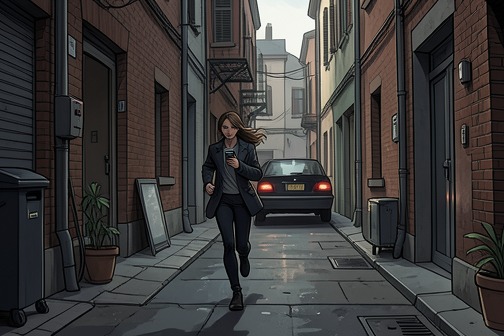
[Lily Ramos](entity:character-recall-character-lily-ramos-6c34b2bd5fd5)’s abduction and the failed police rescue turn a possible escape into a devastating loss. A phone left unnoticed in her bag gives her a narrow route to help; the call brings [Zoe Bentley](entity:character-recall-character-zoe-bentley-9aa073c6d79a) and the police close to her location, but they do not reach her in time. Lily is later found dead in an alley, and the captor gets away. The episode’s central reversal is brutally simple: the communication that should have made rescue possible instead alerts the killer to the danger closing around him.
## Background and the opening for help
The investigation had already distinguished among the earlier victims. Zoe’s working account was that the first victim, an art student, had been attacked at home, while the second and third victims were prostitutes whom the killer probably paid to accompany him before killing them somewhere secure. That difference suggested the killer could change how he approached and controlled his victims. Other evidence pointed to an ongoing process of learning and experimentation, including efforts to understand how to preserve flexibility in a body after embalming. Lily’s case unfolds against that established pattern, but the mistake that creates an opening is unexpectedly ordinary: the captor takes her work phone from her handbag and overlooks her personal phone.
Lily has set the personal phone to vibrate because interruptions are unwelcome while she is working. In the darkness, she first registers its humming and the fading light before understanding that the sound is the phone. It is not the device she has watched her captor take. The call creates a fragile opportunity, but the phone alone cannot tell her rescuers where she is or guarantee that she can speak freely. The distinction between her two phones—one removed, one overlooked—becomes the practical hinge on which the rescue attempt turns.
## The call and the search
The call reaches people trying to locate her. Mel Parks reacts sharply while Zoe is prioritizing information, and Zoe hears a high, strained sound whose meaning she recognizes. The woman’s voice can no longer be heard after the captor picks up the phone. He nevertheless responds as if someone is on the other end and begins a letter-by-letter method, asking the caller to stop him when he reaches the right letter. The attempt to communicate is careful and constrained; it also reveals that the captor has taken control of the phone and that the rescuers’ link to Lily is precarious.
The police work from a location estimate placing Lily within one mile of 805 North Trumbull Avenue. Zoe predicts that the captor will try to flee and take Lily with him. Martinez orders a helicopter over the neighborhood and roadblocks to stop vehicles moving north from Huron Street to [Chicago](entity:location-recall-location-chicago-eb77a855d5aa) Avenue and south from Huron Street to West Ferdinand Street. The response is not passive: officers narrow the area and seek to intercept a moving vehicle. But a search zone and blocked roads are not the same as access to the room where Lily is being held, and the episode keeps that difference in view as the seconds pass.
At the holding location, the captor realizes the radio outside the door has gone quiet and hears footsteps approaching. He picks up the phone from the floor, ends the call, and attacks Lily. In parallel, he imagines that betrayal has ruined the possibility of trust and a lasting bond. He is upset as he moves her toward the embalming table, but abandons the preparation he had intended: he decides to take her as she is and imagines they might have a few days together before she is gone. Sirens sharpen the pressure. The scene presents his attachment not as a relationship Lily shares, but as a fantasy that collapses as soon as outside authorities threaten his control.
## The rescue failure and its aftermath
The captor reaches a roadblock and looks for a way around it, spotting an alley. The police operation has brought him to a point of immediate risk, yet it has not secured Lily or prevented his escape. Just before midnight, Martinez receives a call. Zoe watches his posture change as he listens: his shoulder slumps, his grip loosens, and the color drains from his face. The news confirms the outcome the officers had been trying to avert.
Lily’s body is found in an alley under flashing police lights. Officers and detectives press ahead, while Zoe does not try to force her way to the front. She sees only glimpses of Lily among the people gathered around her. Martinez observes that there is no blood at the scene and concludes that Lily did not die there. Zoe notes that Lily had been restrained and identifies a mark on her neck as consistent with strangulation. The evidence establishes that the alley was where the body was discarded, not where the fatal attack occurred. It also leaves the precise sequence between the captor’s attack inside and the disposal outside distinct from what the officers can establish at the scene.
The failure is made more painful by how close the team had come. Only hours earlier, Lily had been alive on the phone, and the investigators had been closing in on her location. Zoe considers whether greater speed or better decisions might have saved her and perhaps led to the killer’s arrest. The passage does not turn that possibility into certainty; it records the painful gap between having a lead and reaching a victim in time. Martinez’s reaction and Zoe’s counterfactual reflection make the loss an institutional failure as well as a personal one.
## Adaptation and significance
The captor’s response after the escape attempt shows that the failed rescue changes his methods. He identifies leaving Lily’s phone behind as a major mistake and resolves not to repeat it. Next time, he plans to kill more quickly, before a victim can contact anyone, and to move away from targeting prostitutes toward a different kind of vulnerable woman. His reflection converts a near-capture into practical adjustments: the phone becomes a lesson, the rescuers’ approach becomes a warning, and his victim selection becomes something he intends to revise.
That adaptation echoes the investigation’s earlier recognition that the killer varied his approach and treated killing and embalming as processes he could refine. Later, [Tatum Gray](entity:character-recall-character-tatum-gray-3d4ed8f906a1) recognizes that taking victims shopping may be part of the pattern, while another scene returns to preparation of an embalming table. Those details belong to the wider investigation rather than proving that Lily experienced each stage. Their relevance is structural: the failed rescue belongs to a continuing sequence in which the killer learns from each encounter and the investigators try to reconstruct his methods. Lily’s overlooked phone briefly interrupts that sequence, but it does not end it. Her death marks both the consequence of the failed interception and the point at which the killer deliberately changes his next move.
Event 14
Zoe discovers Glover's link to the Chicago murders
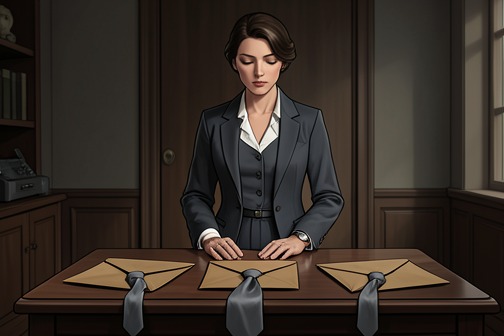
Zoe’s discovery begins with three brown envelopes that bring an old, private threat into the present [Chicago](entity:location-recall-location-chicago-eb77a855d5aa) investigation. The gray ties inside them become the first concrete bridge between her history with [Rod Glover](entity:character-recall-character-rod-glover-0951089c4ae4) and the murders under review; the connection is compelling, but she knows she must establish it through evidence rather than rely on her past suspicion.
## The Envelopes and the First Connection
When Zoe is summoned to the front desk, a man introduces himself as a fan of her work and produces three brown envelopes. Each bears her name but no address, and the handwriting matches envelopes she has kept at home in [Dale City](entity:location-recall-location-dale-city-3c84a6b94f4d). The man says he found them separately: one at [Foster Beach](entity:location-recall-location-foster-beach-5a7534da60f1), another in [Humboldt Park](entity:location-recall-location-humboldt-park-2e83b6a72fc4), and the third at [Ohio Street Beach](entity:location-recall-location-ohio-street-beach-488e28dc657d). Zoe recognizes the pattern before she answers. When she turns the envelopes over, three gray ties fall onto the table, resembling the ties sent to her before. The objects make the encounter more than an unsettling delivery: their repeated appearance at Chicago locations associated with the investigation suggests that someone knows both her history and the significance she attaches to the ties. Zoe suspects Glover, but the envelopes alone do not prove who sent them or establish that he is responsible for the current murders.
## Reconstructing the Pattern Across Time
Rather than take her instinct as proof, Zoe works through the records. With [Scott](entity:character-recall-character-scott-68956c304a08)’s help, she searches the CLEAR system for Chicago cases involving rape or strangulation from 2002 onward; the database cannot reach back to 1998, when Rod Glover disappeared from [Maynard](entity:location-recall-location-maynard-e241b2fdf0d1). The work is taxing, and after dozens of reports she has to pause before continuing. The search eventually yields two unsolved murders from 2008, seven months apart, that bring the older case and the present investigation into the same frame.
Shirley Wattenberg was found in the [Little Calumet River](entity:location-recall-location-little-calumet-river-9d1adf0e1bf6) beneath the bridge on Woodlawn West Avenue. The means of strangulation was missing, but the marks described in the report suggested a wide, smooth, flexible ligature; a detective had considered a belt, though the evidence did not show a buckle. [Pamela Vance](entity:character-recall-character-pamela-vance-d4c71fbde120) was found in [Saganashkee Slough](entity:location-recall-location-saganashkee-slough-00374ce38904) with a tie around her neck. Both women had been found in water, and the photographs of Wattenberg’s body—naked and partly submerged—recalled the way the Maynard victims had been discovered. For Zoe, the missing ligature in one case and the tie in the other are not incidental differences so much as a possible variation within a repeated method.
The case history also gives her a way to understand the long gap between the killings. She finds no additional cases through 2016, but does not treat the pause as proof that the killer stopped permanently: a serial offender might go months or years without a known murder, conceal a body, or kill elsewhere. Her working sequence is three Maynard murders in 1997, two Chicago murders in 2008, and five further murders between 2014 and 2016, with the later cases linked in method and signature to the 2008 pair. She sees the pattern as a stronger basis for approaching [Tatum Gray](entity:character-recall-character-tatum-gray-3d4ed8f906a1) and [Lieutenant Martinez](entity:character-recall-character-lieutenant-martinez-05c57496b5c3) than her old accusation alone, though she remains aware that the gray ties and her belief about Glover’s identity still require a careful, evidentiary explanation.
When she eventually tells Tatum about the two Chicago victims, she connects them to the Maynard killings: in both cases, women were strangled and found in or beside water, and the earlier investigation ended without a conviction after the man taken into custody died in his cell. Tatum considers whether the two periods might reflect the same underlying need. Zoe rejects that as too general an explanation; her conclusion is that the same man committed the murders. The discovery therefore moves from a suggestive resemblance to a specific accusation, while leaving her with the task of persuading others that the timeline and recurring details can withstand scrutiny.
## The Earlier Warning and Its Afterlife
The connection to Maynard carries a history of failed recognition. At fourteen, Zoe had already named Rod Glover as a possible serial killer to an officer, carefully setting out the research behind her suspicion: how Glover seemed to fit traits associated with psychopaths, why she had visited [Durant Pond](entity:location-recall-location-durant-pond-4a05a6c0a1b3), and what she had noticed inside his home. She described the pornography, underwear, and shoebox she had seen there, while emphasizing that she had possessed a key. The officer showed some interest, but treated her account as a frightened teenager’s accusation rather than a lead demanding a search.
The decisive obstacle was an alibi. Glover had joined a search party for [Clara](entity:character-recall-character-clara-dd20800f9dca), and the officer told Zoe that all seventy-eight people on it—including himself—were accounted for at the time of Clara’s death. He warned her not to keep calling her neighbor a serial killer. The explanation closed the matter for the police, but not for Zoe: she remained convinced that Glover was responsible and had already learned how readily an official account could turn suspicion into dismissal.
The alternative suspect made that failure harder to accept. [Officer Will Shepherd](entity:character-recall-character-officer-will-shephe-0579fec2cba9) described [Manny Anderson](entity:character-recall-character-manny-anderson-f7d518fd7731) as an isolated young man whose teacher had mentioned strange cartoons, frequent Dungeons and Dragons games, and the fact that he had never had a girlfriend. To Zoe, those details established nothing; the police had found someone who loosely matched a stereotype and begun fitting the case to him. She saw a bitter reversal in being called hysterical when her own case against Glover had been grounded in deliberate research, while weak assumptions about Anderson were treated as persuasive.
The old accusation thus shapes the present investigation as well as Zoe’s judgment of it. She fears that raising Glover’s name will make her seem fixated on the man she accused as a girl, or jeopardize her place on the case. Meanwhile, the envelopes have kept the earlier encounter active across years of silence: whenever another arrived, the threat seemed to reach back toward the fourteen-year-old Glover had once intimidated. Now she believes he is in Chicago and killing again, and the possibility that she was right before intensifies both her resolve to prove the connection and her fear that she will again be ignored.
## The Claim Reaches Beyond the Case File
Zoe’s suspicion is not confined to the evidence she can present to investigators. She tells her sister, [Andrea Bentley](entity:character-recall-character-andrea-bentley-ecb360b3b1fa), that Glover may be in Chicago. [Andrea](entity:character-recall-character-andrea-9846246a92e3) remembers the night he nearly killed them: she and Zoe were locked in Zoe’s room while he shouted from the other side of the door. As a child, Andrea had trusted her older sister to protect her and soon moved on from the terror of that night; Zoe, by contrast, had carried its implications forward. Now Andrea asks whether Zoe has seen Glover. Zoe has not, and can offer only reasons for suspecting he is nearby—a distinction that keeps her claim unresolved even within her family.
The discovery therefore leaves Zoe with two burdens that the evidence cannot collapse into one: establishing that the Chicago murders belong to the same pattern as Maynard’s, and persuading others that the man she accused years earlier is the link. The recurring ties give her a material trace, while the old night with Glover supplies the personal history behind her certainty. Neither, by itself, settles the case. The tension between what Zoe recognizes and what she can prove turns the connection into an ongoing test of credibility, not a completed identification.
Event 15
1997 Maynard serial murders

The [1997 Maynard serial murders](entity:event-recall-event-1997-maynard-serial-mur-ea752738459a)—the killings of [Beth Hartley](entity:character-recall-character-beth-hartley-3d96a1fdf25b), [Jackie Teller](entity:character-recall-character-jackie-teller-f2936dc588ef), and [Clara Smith](entity:character-recall-character-clara-smith-a8b8df32771e)—became a case of apparent closure built on a disputed timeline. A suspect was arrested after [Clara](entity:character-recall-character-clara-dd20800f9dca) disappeared and later died in custody, and the killings stopped. Years afterward, [Zoe Bentley](entity:character-recall-character-zoe-bentley-9aa073c6d79a) argued that the man responsible for the [Maynard](entity:location-recall-location-maynard-e241b2fdf0d1) murders was also killing in [Chicago](entity:location-recall-location-chicago-eb77a855d5aa). A closer examination of Clara’s estimated time of death, however, unsettled the old account without conclusively establishing who the killer was.
## The killings and the apparent resolution
The three victims were young women killed in [Maynard, Massachusetts](entity:location-recall-location-maynard-massachusett-2991349b29da), in 1997. Zoe, who was fourteen at the time, later described the killings to [Harry Barry](entity:character-recall-character-harry-barry-4748ca99adf3) as a local serial-murder case in which a suspect was arrested and died by suicide while incarcerated. The suspect was never brought to trial. Maynard’s police chief, Nathan Price, later described him as the primary suspect and treated the end of the killings after his arrest as confirmation that the case had been solved.
That conclusion had considerable force in a town where, as Price observed to Agent [Tatum Gray](entity:character-recall-character-tatum-gray-3d4ed8f906a1), there were few murders to discuss. When Gray raised the Maynard cases, Price readily named Beth Hartley, Jackie Teller, and Clara Smith, distinguishing them from an older Mill Pond murder. His account showed how firmly the three killings had become associated with the arrested suspect, even though that suspect had never stood trial and could not be questioned after his death.
The surviving record did not settle every victim’s case in the same way. Looking through an old file, Zoe told Gray that [Jackie](entity:character-recall-character-jackie-49ce74ddae0a)’s death might be described by police either as unresolved or as the work of [Manny Anderson](entity:character-recall-character-manny-anderson-f7d518fd7731), a teenager who was dead and could no longer answer the accusation. The competing descriptions—an open case or a case assigned to Anderson—revealed that the apparent resolution of the Maynard murders had not produced an uncontested account of what happened.
## Clara’s disappearance and the search-party timeline
Clara’s disappearance prompted a quickly organized search party. Seventy-eight people were listed as having been with [Rod Glover](entity:character-recall-character-rod-glover-0951089c4ae4) during the relevant period, and Glover himself had participated in the search. An account Zoe received treated the search-party record as an alibi: the time of the search appeared to correspond with the time Clara was believed to have died. On that timeline, Glover could be ruled out.
Tatum’s later conversation with [Dr. Foster](entity:character-recall-character-dr-foster-ca87afc35e5d) challenged the certainty of that reasoning. He said that the real killer had been in the search party, but that the time-of-death estimate had supplied the killer with an apparently secure alibi. Tatum further alleged that Foster changed the estimate after Price told her it could not be right. He suggested two possible explanations for the delay: Price may have needed time to persuade her, or he may have needed time to verify that Anderson lacked an alibi. The evidence does not establish which explanation is correct; Foster answered that the cold weather had made the estimate difficult.
Tatum’s central claim was that Anderson had never killed anyone and that the revised estimate made him prosecutable. His reconstruction transforms the search party from evidence that seemed to exclude a participant into the setting in which the actual killer could have been present. It also makes the estimated time of death—not merely the list of searchers—a decisive part of the case’s history. The exchange raises the possibility of a wrongful accusation and of an investigation shaped by pressure to identify a suspect, while stopping short of a courtroom resolution or a definitive identification of the killer.
## Zoe’s connection to the Chicago investigation
Zoe introduced the Maynard case to Harry as more than a childhood memory. She said she believed the man who had killed the three women in 1997 was the serial killer then murdering in Chicago, a killer publicly labeled the [Strangling Undertaker](entity:character-recall-character-strangling-undertak-dbc075aa5dae). She rejected the nickname’s implication that he was an undertaker, describing him instead as a killer governed by fantasies and urges. Her claim made the Maynard murders a possible earlier chapter in the Chicago investigation, not a confirmed link established by a trial or forensic finding in the evidence presented.
The connection mattered because Zoe resisted treating a pattern as proof of a single motive. In discussing the Chicago crimes, she questioned whether the killer sought publicity or wanted to play a game of cat and mouse with police: he had sent no letters to newspapers or police, and the selected public locations were likely to be empty at night and lacked security cameras. She considered whether the chosen places instead carried meaning for him, particularly because he posed his victims. Her reasoning made the Maynard history a question to test against the later crimes, rather than a ready-made explanation.
The Chicago investigation also suggested why a past case could be difficult to recognize as part of a continuing series. Zoe reasoned that the killer had changed his methods as his fantasies developed: after an early failure, he had time to learn and experiment, and his later techniques grew more refined. She warned that after nearly being caught, he would adapt again, act more quickly, and might choose someone other than a prostitute. These observations concern the Chicago crimes, but they shape the significance of Maynard in her theory: changes in method or victim selection would not, by themselves, disprove continuity.
## A case reopened without a final answer
The Maynard murders endure in the narrative as both a possible origin point and a warning about the limits of apparent closure. The arrest, the suspect’s death, and the cessation of killings had made a settled explanation seem natural. Yet the case’s most consequential detail—the search-party alibi—depended on an estimate later challenged by Tatum. If that estimate was altered under pressure, a suspect could have appeared excluded while Anderson became vulnerable to blame.
The evidence presented does not name Maynard’s killer with certainty or prove that the same person committed the later Chicago murders. Instead, it places Zoe’s cross-case belief beside the history that complicated it: three victims, an untried suspect who died in custody, an accusation against Anderson, and a time-of-death estimate that Tatum said had distorted the meaning of the search party. The unresolved space between those facts is precisely what makes Maynard consequential to the Chicago investigation.
Event 16
Manny Anderson's wrongful accusation and death in custody
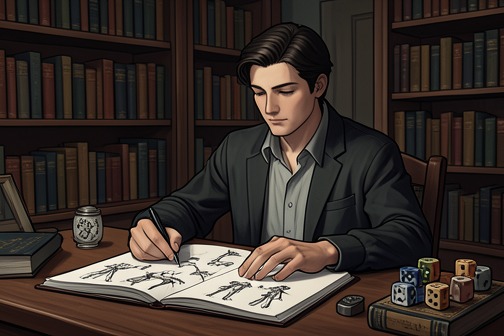
[Manny Anderson](entity:character-recall-character-manny-anderson-f7d518fd7731)’s wrongful accusation and death in custody expose how a mistaken suspect can be made to fit a case when weak character judgments are reinforced by a crucially altered time-of-death estimate. In the investigation into [Clara Smith](entity:character-recall-character-clara-smith-a8b8df32771e)’s murder, Manny’s isolation and hobbies were treated as signs of guilt, while the forensic timeline that could have excluded him was revised. The killings’ apparent cessation then hardened suspicion into a convenient conclusion, with devastating consequences for Manny and his family.
## Background and the Suspect Narrative
Manny was a high school senior who often sat alone in the town library. [Zoe Bentley](entity:character-recall-character-zoe-bentley-9aa073c6d79a) had seen him there while researching the killings. When [Officer Will Shepherd](entity:character-recall-character-officer-will-shephe-0579fec2cba9) privately identified him as the suspect, the news astonished Zoe: she knew Manny as a solitary young person, not as someone implicated in violence. The case against him, as it was described to her, rested partly on his keeping to himself, his unusual cartoons, his participation in Dungeons and Dragons, and the fact that he had never had a girlfriend. Shepherd presented those details as if they added up. Zoe recognized instead a familiar investigative shortcut: once police had selected a person who seemed to fit, ordinary traits were being arranged to support the suspicion.
The official theory, later recounted by Nathan Price, supplied a possible sequence but not a verified one. [Clara](entity:character-recall-character-clara-dd20800f9dca) had supposedly gone to see a boyfriend her mother did not know about after leaving school; on her way home, the theory went, Manny seized or coerced her, took her somewhere secluded, and killed her. Yet investigators never found the supposed boyfriend. Price acknowledged that they could not account for what Clara had been doing between leaving school and the estimated time of death. The gap was not resolved by evidence about the boyfriend; it was filled by a narrative that placed Manny in it.
## The Timeline and Its Revision
Manny’s location on the day Clara disappeared made the timing central. During his interrogation, investigators learned that he had been at the library until four o’clock. Clara had been missing since two, when she did not come home from school. The medical examiner’s later estimate placed her death between six and seven in the evening, a window that left room for the theory that she had encountered Manny after leaving school. The file, however, contained a consequential discrepancy: the report establishing that estimate was dated two days after the murder, while reports in the [Beth Hartley](entity:character-recall-character-beth-hartley-3d96a1fdf25b) and [Jackie Teller](entity:character-recall-character-jackie-teller-f2936dc588ef) cases had been dated only hours afterward.
When [Tatum Gray](entity:character-recall-character-tatum-gray-3d4ed8f906a1) revisited the case, he used that delay to question the original reasoning. He told [Dr. Foster](entity:character-recall-character-dr-foster-ca87afc35e5d) that Nathan Price had said her first estimate was earlier, then asked her to recall what it had been. Foster explained that the body had been left in water on a snowy day and had cooled quickly, making the time difficult to determine. Under further questioning, she acknowledged that her initial estimate had been earlier and confirmed that it had changed from around two o’clock to a window between six and seven. Tatum’s account was that the first estimate had been revised after pressure from Price, who was not yet chief, and that the later timing allowed Manny to be prosecuted. Foster did not clearly confirm the alleged pressure; she returned to the difficulty of assessing a body that had cooled in the cold. The scene leaves the precise reason for the delay unsettled, while making the change itself—and its effect on the case—plain.
## The Alibi and the Cost of Confirmation
The changed estimate did more than make the prosecution’s theory possible. During the renewed inquiry, Tatum told Foster that the real killer had been part of the search party looking for Clara, which had been organized soon after she disappeared. The killer’s presence in that party became an alibi under the revised time of death. A separate recollection makes the consequence concrete: when Zoe named [Rod Glover](entity:character-recall-character-rod-glover-0951089c4ae4), a man from her past, she was told that seventy-eight people had been with him during the search and that its timing corresponded to Clara’s death. On that basis, Glover was ruled out. The account thus shows how the altered timeline could shield the actual killer even as it kept suspicion on Manny.
In the [Maynard](entity:location-recall-location-maynard-e241b2fdf0d1) investigation, the belief in Manny’s guilt also drew strength from the apparent fact that the killings stopped. Price recalled that conclusion in the clipped logic that the crimes had ceased, so the suspected boy must have been responsible. But an apparent pause did not independently establish who had killed Clara. When Tatum considered telling Foster about the [Chicago](entity:location-recall-location-chicago-eb77a855d5aa) killings in 2008, he thought instead of Manny’s parents: they had lost their only son and spent years trying to prove he was innocent. Their grief and persistence reveal the lasting human cost of treating the end of a crime series as confirmation rather than asking whether the original suspect had truly been identified.
## Reassessment and Significance
Tatum’s later examination of the records turns a local accusation into a study of investigative confirmation. A teenager’s solitary habits and hobbies were made to look like a profile; an unlocated boyfriend remained an untested part of the theory; and an uncertain medical judgment shifted in a direction that made the accusation viable. Each element could be presented as plausible in isolation. Together, they formed a case whose apparent coherence depended on treating suspicion as a guide to the evidence rather than a claim the evidence still had to prove.
The story does not establish every step behind Foster’s changed estimate: she points to the cold and the difficulty of judging the time of death, while Tatum suggests that pressure and the search for a prosecutable suspect shaped the revision. What it establishes is the discrepancy, the direction of the change, and the way the later estimate altered the meaning of both Manny’s library attendance and the search party’s presence. Manny’s death in custody closes off any possibility that he could answer the accusation himself; his parents’ long effort to clear him becomes the remaining measure of what the error cost. The case’s central reversal is therefore not simply that police chose the wrong person, but that the details used to make Manny appear guilty could also conceal the person the investigation failed to recognize.
Event 17
2008 Chicago serial murders
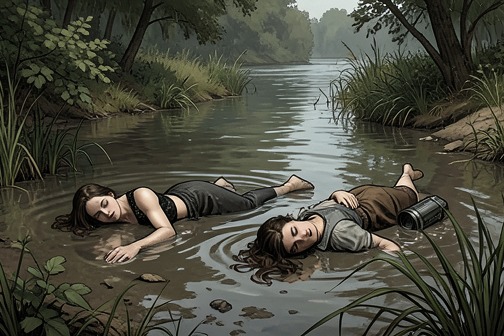
The [2008 Chicago serial murders](entity:event-recall-event-2008-7972fed45db5) are a pair of killings whose later investigation turns on a difficult distinction: [Rod Glover](entity:character-recall-character-rod-glover-0951089c4ae4) may have killed both victims, yet the crimes may not belong to the same series as the murders involving embalmed bodies. Years afterward, [Zoe Bentley](entity:character-recall-character-zoe-bentley-9aa073c6d79a) returns to one victim’s waterside scene to reconstruct the circumstances, while the available evidence leaves the attribution unresolved.
## Background and Victims
The case involved two women murdered in [Chicago](entity:location-recall-location-chicago-eb77a855d5aa) in 2008: [Pamela Vance](entity:character-recall-character-pamela-vance-d4c71fbde120) and Shirley Wattenberg. Their bodies were found at separate waterside locations, Pamela at [Saganashkee Slough](entity:location-recall-location-saganashkee-slough-00374ce38904) and Shirley at the [Little Calumet River](entity:location-recall-location-little-calumet-river-9d1adf0e1bf6). The evidence presented does not establish a complete account of how either woman was approached or killed, and the circumstances Zoe considers at the scenes remain questions rather than confirmed findings.
The case acquires fresh importance when investigators consider it alongside later murders involving embalmed victims. [Tatum Gray](entity:character-recall-character-tatum-gray-3d4ed8f906a1) eventually argues that Glover probably killed the two women in 2008, but that the person killing and embalming women in the other series was someone else. This separates a possible connection between Glover and the 2008 deaths from the broader theory that one offender committed all the murders under discussion.
## Reconstructing the Scenes
Eight years after Pamela’s death, Zoe makes a point of visiting the crime scenes, drawn to the places where the killer had stood in the hope that the landscape might clarify his thinking. At Saganashkee Slough, she plans to continue afterward to the Little Calumet River, where Shirley’s body was found, but the lowering sun forces her to leave the second visit until the next day. She checks a printed map against the map on her phone to locate the spot as accurately as she can.
Pamela’s kayak had been found near her body. Looking across the water and along the shore, Zoe considers several possibilities: Glover might have known Pamela was kayaking there, noticed her from the road, or met her beforehand and joined her. The case file does not say whether the kayak had one seat or two, so Zoe marks the crime-scene photographs for later review rather than treating her speculation as fact.
The terrain sharpens the question of opportunity. Part of the shore lies plainly visible from the road, while farther east the bank recedes behind thicker foliage. Zoe reasons that an exposed stretch would not have offered the privacy needed for an attack and walks toward the more screened shoreline, where branches increasingly block the road from view. Her examination makes the site’s changing visibility relevant to the reconstruction, but does not prove how Pamela came to be there or where the crime occurred.
## Suspect Attribution and Competing Cases
The proposed link to Glover emerges as a qualified judgment, not a settled identification. Tatum tells Zoe that Glover probably killed the two women in 2008 and notes that Glover had admitted killing one of them without being prompted by her. At the same time, Tatum rejects the inference that Glover must also be the offender responsible for the women whose bodies were embalmed. In his view, the 2008 killings and the embalming murders may have different perpetrators.
That distinction matters because the investigations do not produce one confirmed, continuous pattern. The possibility that Glover committed both 2008 murders does not, by itself, establish that the same person committed the other Chicago killings. The evidence leaves the precise relationship between the cases open: a suspected offender for the earlier deaths, a separate proposed offender for the embalming murders, and no definitive resolution tying the series together.
## Aftermath and Significance
Zoe’s return to Saganashkee Slough is an effort to turn a broad suspicion into a spatial reconstruction. She studies the waterline, the road, the foliage, and the position of Pamela’s kayak, while acknowledging gaps in the case file and reserving unanswered details for further checking. The scene offers constraints and possibilities, not a recovered sequence of events.
The case therefore functions as both an investigative lead and a caution against collapsing distinct crimes into a single signature. Glover’s possible responsibility for the two 2008 deaths gains weight from his admission, but Tatum’s assessment keeps that conclusion separate from the embalming series. The murders remain significant to Zoe’s search precisely because their location, suspect, and connection to the other killings are still matters to be tested rather than assumed.
Event 18
Chicago serial murders involving embalmed and posed bodies
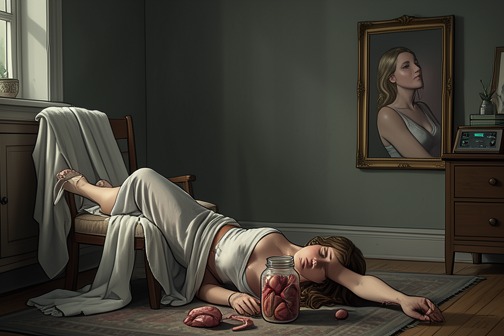
The [Chicago serial murders involving embalmed and posed bodies](entity:event-recall-event-67dd8d4dc372) are defined not only by the victims’ deaths but by what happened to their bodies afterward: the killer treated preservation, clothing, and pose as parts of a private fantasy. The investigation’s central challenge was to distinguish a stable pattern from methods that changed as he learned and came under pressure. [Zoe Bentley](entity:character-recall-character-zoe-bentley-9aa073c6d79a)’s eventual interpretation recasts the scenes as an attempt to manufacture companionship, while the case’s accumulating evidence shows how that fantasy left practical clues—and how quickly the killer could alter his approach.
## Background and Investigative Pattern
The first victim discussed in Zoe’s analysis was an art student attacked in her home. The killer remained there to embalm her. The next two victims were prostitutes, whom Zoe believed he had probably paid to accompany him to a safer location. This difference in circumstances mattered: the killings did not follow one simple approach, even as the treatment of the victims suggested a developing ritual.
The initial scene involving Susan Warner appeared, in Zoe’s assessment, to be a failed attempt at that ritual. Warner was found on April 12. Her evening dress had not been put on successfully, and the pose did not achieve the lifelike effect the killer seemed to seek. Zoe reasoned that the nearly three months before [Monique Silva](entity:character-recall-character-monique-silva-df434124122e)’s murder gave him time to learn and experiment with ways to preserve and arrange a body more effectively. The interval was therefore not simply a gap in the timeline: it suggested a process of refinement between crimes.
Investigators could not rely on a clear geographical signature. On the task force’s map, a red circle marked [Ohio Street Beach](entity:location-recall-location-ohio-street-beach-488e28dc657d), where [Krista Barker](entity:character-recall-character-krista-barker-93a1b7a7a955)’s body had been found, while a red X marked [Brighton Park](entity:location-recall-location-678b3af1b0f8), where Barker had worked the street on the last night she was seen. Their separation made it apparent that the killer was not concentrating on one [Chicago](entity:location-recall-location-chicago-eb77a855d5aa) neighborhood. Zoe also questioned whether he was seeking publicity or playing a deliberate game with police. The locations were public, but could be empty at night and lacked security cameras; to her, the placement of the bodies seemed more likely to carry private significance than to advertise the crimes.
## A Fantasy of Companionship
As the investigators compared the cases, the pattern took on a more personal meaning. At Zoe’s home office, [Tatum Gray](entity:character-recall-character-tatum-gray-3d4ed8f906a1) helped remove material about the [Maynard serial killings](entity:event-recall-event-maynard-317aab41ed74) and the 2008 Chicago killings so that she could reconsider five victims together. Three of the five had been embalmed. The revised display let her test whether the recent murders formed an arc of increasingly accomplished attempts to realize the same fantasy, rather than treating each crime scene as an isolated set of details.
Zoe’s interpretation turned on the contrast between the time the killer spent with some victims and the way he ultimately left them. If the posed expressions simply reflected death, she reasoned, he would have abandoned the bodies soon after embalming them. Instead, the missing interval suggested that he had kept them with him before leaving them in poses that seemed to express sadness at being left behind. The presentation thus implied a story with two stages: an imagined relationship maintained in private, then an ending imposed by the killer’s decision to abandon the victim.
The clothing added another clue. Susan Warner had been found in an evening dress and wearing an engagement ring, details that made the scene resemble a formal date. Zoe proposed that the killer was not seeking only sexual access or a single act of violence. In her account, embalming served his desire for a lasting relationship with someone who could remain in his home. She connected this imagined intimacy to loneliness and to a need for control that would make a reciprocal relationship difficult. This was an interpretation of the evidence, not a statement established by the scenes themselves, but it gave the investigators a way to connect preservation, pose, and clothing as parts of one fantasy.
## Methods, Clues, and Adaptation
The practical sequence Zoe and Tatum reconstructed extended beyond the killing and the later presentation of the body. [Lily Ramos](entity:character-recall-character-lily-ramos-6c34b2bd5fd5) had been picked up near Clark and Grand in [River North](entity:location-recall-location-river-north-d7d38801a065) and taken toward Huron Street. Because victims’ clothes did not fit them uniformly, and because the prostitutes would have had only the clothes they were wearing, Tatum and Zoe inferred that the killer may have taken them shopping beforehand and bought new outfits. That hypothesis offered a specific route for investigation: search for a shopping mall along the journey between the pickup point and Huron Street, or near the place where Lily was killed.
The case also contained less interpretive forms of evidence. Investigators collected cigarette butts, a candy wrapper, and a piece of string from a crime scene. Recent tire marks showed that vehicles had reversed toward the opening of an alley; the broad tires suggested vans, although rain complicated the photographs used to compare the marks with vehicles nearby. A smudged footprint and security footage from nearby businesses might also prove useful, even though investigators initially lacked a clear indication of what to look for. These details did not explain the fantasy, but they offered possible ways to test suspects and reconstruct movement.
The investigation’s working assumptions carried their own risks. [Lieutenant Martinez](entity:character-recall-character-lieutenant-martinez-05c57496b5c3) said prostitutes were the highest-risk group and suggested staking out likely areas, while acknowledging that the team had little idea what a suspect would look like. Zoe’s profile—of a strong but not especially intimidating man with a reasonably good-looking car—was too broad to distinguish him from many people. More importantly, she believed the killer could adapt. After nearly being caught, he would recognize that leaving [Lily Ramos’s phone](entity:object-recall-object-3ae40ed33ac5) with her had been a serious mistake. Zoe predicted he would move faster during a future abduction and might choose someone vulnerable who was not a working prostitute, since investigators expected him to target that group. Her conclusion shifted the inquiry away from relying solely on the next victim and toward tracing mistakes in earlier crimes.
## Connections and Aftermath
The inquiry widened beyond the recent Chicago deaths. Zoe’s analysis linked the murders to the 2014 murder of [Veronika Murray](entity:character-recall-character-veronika-murray-05f481428533), and Lieutenant Martinez assigned that case for investigation in light of the new information. At the same time, the task force was checking reports that Tiffany Styles and Amber Dew had gone missing. Amber Dew had reportedly been seen entering a dark Ford Focus, a lead that prompted an alert to dispatch. These developments kept the possibility of further victims present without establishing that either missing woman had been killed by the same offender.
A later newspaper headline, reported as reading [Strangling Undertaker](entity:character-recall-character-strangling-undertak-dbc075aa5dae) Arrested, gives the case a sharp public-facing endpoint, but the surrounding events complicate any suggestion that the murders had been conclusively solved. [Jeffrey Alston](entity:character-recall-character-jeffrey-alston-9987ff523494) had survived and been arrested after holding [Laura Summer](entity:character-recall-character-laura-summer-1fd5cffb3b1a) and her children hostage; the account does not establish that this arrest identified the killer behind the embalmed and posed victims. The headline therefore records a public claim of arrest, not, by itself, proof that the underlying series was resolved. Across the investigation, that distinction echoes the larger problem: a striking scene or apparent pattern could guide the search, but each theory still had to be tested against what the evidence actually connected.
Event 19
Rod Glover's attack on Zoe Bentley
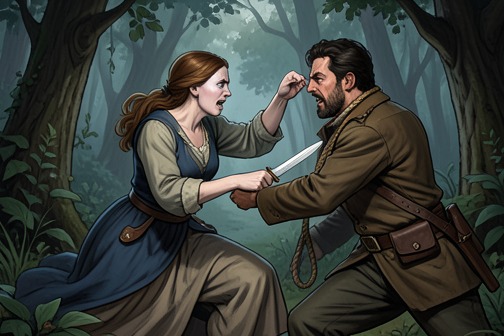
[Rod Glover](entity:character-recall-character-rod-glover-0951089c4ae4)’s attack on [Zoe Bentley](entity:character-recall-character-zoe-bentley-9aa073c6d79a) turns a long-held suspicion into a direct confrontation: she recognizes the man she remembers from the [Maynard](entity:location-recall-location-maynard-e241b2fdf0d1) killings, survives his assault, and names him to investigators as a suspect in the [Chicago](entity:location-recall-location-chicago-eb77a855d5aa) murders.
## Background and Recognition
Before the attack, Zoe had been examining the shoreline and considering what the location might reveal about the killings. The water’s edge grew more secluded where foliage blocked the view from the road. As she turned to leave, a man approached quietly, watching his steps. At close range she recognized Rod Glover, now in his mid-forties and physically changed from the lanky teenager in her memory, but unmistakable to her because of his eyes.
## Resistance and Escape
Glover blocked Zoe’s route toward the road and caught her when dense foliage disrupted her attempt to reach safety. He forced her to the ground and threatened her with a knife, then used a noose to strangle her. As she began to lose consciousness, he deliberately loosened it, keeping her alive while he continued the assault. The pause gave her a chance to strike backward and break his hold; she then fought him off with a rock, although the struggle left her badly weakened.
When Glover lunged again, Zoe used a knife to slash his thigh. The injury changed the balance between them: he hesitated, then fled. Zoe could not pursue him and collapsed once he was out of sight, but she had survived the attack and driven him away.
## Identification and Investigative Significance
After the confrontation, Zoe gives [Tatum Gray](entity:character-recall-character-tatum-gray-3d4ed8f906a1) and [Lieutenant Martinez](entity:character-recall-character-lieutenant-martinez-05c57496b5c3) the name she had kept tied to the Maynard killings: Rod Glover. She identifies him not merely as the man who attacked her, but as a serial killer, and says she believes he is responsible for embalming the women in the Chicago cases. She explains the connection directly: Glover killed three women in Maynard years earlier. Her recognition therefore supplies investigators with a concrete suspect and links the present murders to a case rooted in her own past.
The identification also gives new weight to the way Zoe had been reading the Chicago scenes. She had questioned the assumption that the killer was seeking publicity or playing a game with investigators: he had sent no letters to newspapers or police, and the locations, though public, were quiet at night and lacked security cameras. She argued that the places and the posed bodies might carry meaning for him. The task-force map, with marks at [Ohio Street Beach](entity:location-recall-location-ohio-street-beach-488e28dc657d) and in [Brighton Park](entity:location-recall-location-678b3af1b0f8), showed that the crimes were not confined to one Chicago neighborhood. Glover’s connection did not resolve every question about the scenes, but it turned Zoe’s analysis into a focused lead rather than a profile of an unknown offender.
The attack thus changes the investigation in two directions at once: Zoe has firsthand recognized the man she associates with the Maynard murders, while the investigators now have to test her identification against the Chicago evidence. Her survival allows her to make that connection explicit; the final words she gives the team are not a general description, but Glover’s name.
## The Killer’s Adaptation
The attack also sits within an investigation already confronting the killer’s ability to change. After a near-capture, Zoe concluded that he would regroup, avoid repeating the mistake of leaving a victim’s phone behind, and kill his next victim more quickly. Because he knew investigators suspected he was targeting prostitutes, she warned that he might choose a different kind of vulnerable victim. Her conclusion was that the task force could no longer depend on predicting whom he would target; it would have to trace errors left in his earlier crimes. That shift gives the confrontation a wider significance: identifying Glover brought the investigation closer to its answer, but did not make his future actions predictable.
Event 20
Jeffrey Alston holds the Summer family hostage and is arrested
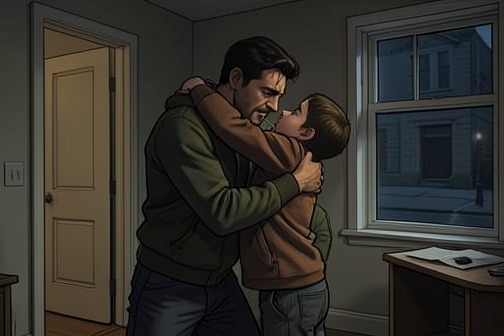
[Jeffrey Alston holds the Summer family hostage and is arrested](entity:event-recall-event-jeffrey-alston-laura-su-a5b61ae268f8) in a confrontation that exposes the intimate logic behind the [Strangling Undertaker](entity:character-recall-character-strangling-undertak-dbc075aa5dae)’s violence: Alston imagines a family as something he can possess and arrange, while treating its members as obstacles or instruments. When that fantasy turns against [Laura Summer](entity:character-recall-character-laura-summer-1fd5cffb3b1a) and her children, [Zoe Bentley](entity:character-recall-character-zoe-bentley-9aa073c6d79a) and [Tatum Gray](entity:character-recall-character-tatum-gray-3d4ed8f906a1) must act without the protection of a fully coordinated police response. Zoe’s dangerous attempt to redirect Alston’s attention helps make the family’s survival—and his arrest—possible.
## Investigative Context
The crisis follows an investigation shaped by uncertainty over what the killer’s choices mean. Zoe had challenged the assumption that the murders were intended to win publicity or provoke a chase. The selected scenes were public places, but likely to be empty at night and without security cameras; she argued that the placement of bodies, and perhaps the locations themselves, held meaning for the killer. Her approach was to keep competing interpretations open rather than treat one as established fact.
The investigation had also considered the victims’ exposure to danger. When the team discussed whether prostitutes would remain the target, [Lieutenant Martinez](entity:character-recall-character-lieutenant-martinez-05c57496b5c3) described them as a high-risk group, but acknowledged that the investigators did not know what to look for in a suspect. The map in the task-force room, marking [Ohio Street Beach](entity:location-recall-location-ohio-street-beach-488e28dc657d) and [Brighton Park](entity:location-recall-location-678b3af1b0f8), showed that the crimes were not confined to one part of [Chicago](entity:location-recall-location-chicago-eb77a855d5aa). The weak profile and scattered geography left the team with few immediate ways to predict where the killer would strike.
The killer, meanwhile, had recognized that leaving a victim’s phone behind was a serious mistake. He planned to kill his next victim sooner and shift away from targeting a working girl, choosing someone vulnerable who would not fit the investigators’ expectations. Zoe concluded that the killer would adapt again and that future victims might no longer provide a reliable route to him; the team would have to work backward from mistakes in earlier crimes. That change in method helps frame the danger surrounding the Summer family: the investigation is pursuing a murderer whose choices are not fixed.
## Finding the Trail
The search for the killer’s movements becomes concrete when Tatum uses a map to consider the route between the place where [Lily Ramos](entity:character-recall-character-lily-ramos-6c34b2bd5fd5) was picked up, at Clark and Grand in [River North](entity:location-recall-location-river-north-d7d38801a065), and Huron Street, where she was taken. He reasons that the killer would have travelled somewhere between those points, or near the place where he killed her. The route-based approach directs attention to possible traces in ordinary commercial spaces rather than only to the crime scenes.
At a business where the killer was said to visit often, Tatum insists that they need to see the security footage. Zoe tells the proprietor that the man is the serial killer and warns that he might return for another woman. The demand is part of a pressured investigation, not a completed evidentiary result in the available account: the footage is sought, but the scene does not establish what it shows. In a later step, Zoe and Tatum approach [Sorenson’s Plumbing](entity:location-recall-location-sorenson-s-plumbing-119d544cbd57) without a warrant or permission. Tatum reminds her to remain calm; she proposes entering to ask more questions, since calling Lieutenant Martinez at that moment would accomplish little beyond ending their work in Chicago. Their uncertainty about legal authority sits beside their fear that delay will allow the killer to act again.
## The Hostage Situation
At Laura Summer’s home, Alston has restrained and gagged Laura and her two children. He imagines himself as the father of the little girl, picturing a shared domestic life in which he would treat her better than his own mother treated him. The fantasy is revealing in its selectiveness: he wants a daughter he can dress and care for, but regards the toddler boy as unwanted labor and an impediment to taking the children away. He considers killing the boy, threatens him with a knife, and then pauses. The children are not participants in his imagined family on equal terms; Alston sorts them according to the roles he wants them to fill.
When Tatum enters the house, he finds the children still alive, but hears that Laura is in immediate danger. He moves to the room and encounters Alston using Laura as a shield. Alston threatens her, first demanding that Tatum put down his gun and then using a knife to maintain control. Tatum cannot safely take a clear shot and understands that neither choice offers a straightforward resolution. Police squads are on their way, but the standoff leaves him trying to keep Alston occupied until they arrive.
Zoe reaches the doorway as Tatum lowers his weapon. Rather than challenge Alston directly, she offers to go with him, presenting herself as an easier person to take and suggesting that Tatum can handcuff her. She uses the appearance of compliance to draw Alston’s attention away from Laura and the children. When she dives to the floor, Tatum gives her the key to the cuffs. Zoe frees herself and goes to Laura, removes her gag, and reassures her that the children are safe. Laura has been injured, but the threat to her life has passed.
## Arrest and Aftermath
The confrontation ends with Alston wounded but alive. Tatum tends to him instead of leaving him without aid, pressing cloth against his wound while Zoe attends to Laura. The detail matters to the outcome: Alston survives and is placed under arrest, rather than escaping or dying at the scene. Zoe and Tatum have rescued the family, but they have also acted outside ordinary lines of authorization. Tatum’s earlier decision to proceed without backup or consultation leaves him exposed to professional consequences even as the immediate rescue succeeds.
Lieutenant Martinez had been told about the discoveries in general terms while Zoe and Tatum were travelling to the Summer home. He was furious about the FBI agents’ conduct, yet recognized that taking the serial killer off the street had to come first; he would deal with their actions later. Laura’s account then provides an important consequence of the encounter: she credits Zoe and Tatum with saving her life and the lives of her children, and supports the judgment that they did what the circumstances demanded.
The public aftermath further complicates the agents’ position. [Christine Mancuso](entity:character-recall-character-christine-mancuso-689c58df126f) confronts Tatum about his conduct and points to the fact that Alston survived, was arrested, and was connected to a successful rescue. She also produces the [Chicago Daily Gazette](entity:organization-recall-organization-chicago-daily-ga-944e4bc2ae65), whose front-page headline announces the Strangling Undertaker’s arrest; the article runs four pages. The case’s resolution therefore arrives through both a private act of protection and a public account that may shape how the agents’ breach of procedure is judged. Alston’s arrest closes the immediate threat to the Summer family, while the circumstances of the rescue leave professional accountability unresolved.