Rutulians
AeneidThe Rutulians are the principal Italian opponents of Aeneas and the Trojans in the war for Latium. Their collective identity is defined less by a single genealogy than by their political and military alignment around Turnus, whose challenge to the Trojan settlement turns local resistance into an international conflict. Across the poem, they appear as a people capable of fierce combat but also of negotiation, ritual observance, and submission to a peace whose terms will reshape the future of the land.
Identity and Political Position
The Rutulians, also associated with the Daunians, belong to the Italian world that confronts the displaced Trojans after their arrival in Latium. Their opposition is therefore rooted in a conflict over settlement, sovereignty, and marriage rather than in a random encounter between armies. Turnus stands as their champion and war leader, converting the broader unease surrounding the Trojan newcomers into open armed resistance.
The poem places the Rutulians within a crowded coalition of Italian peoples. Their cause is strengthened by allies who march in disciplined formation under Messapus, with cavalry, armor, and a glittering train. This allied movement across the plain shows that the Rutulian side is not merely a band gathered around one warrior: it possesses the scale, organization, and political reach of a serious regional power.
Military Organization and Warfare
The Rutulians are repeatedly represented through the material vocabulary of war. Their campaign depends on armed leaders, allied contingents, horses, weapons, and the ordered movement of troops. Turnus himself prepares for combat in layered defensive armor: tempered steel and scaled brass cover his back and breast, while greaves protect his powerful thighs. His equipment makes him the visible martial expression of the Rutulian cause, and his preparation signals that the people’s fate has been concentrated in a single champion.
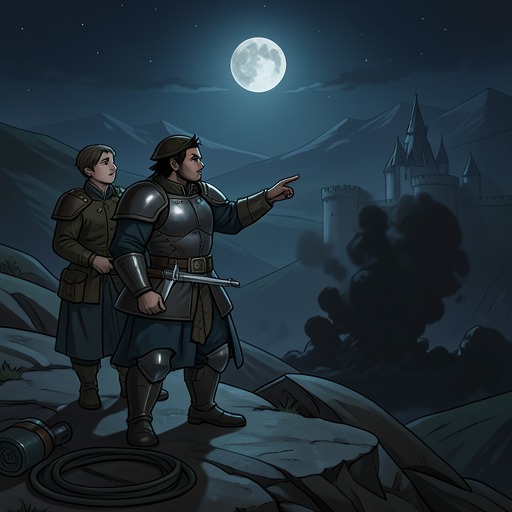
Their military identity is also defined by contrast with the Trojans’ earlier experience of exile and improvisation. The Trojans cut timber near Antandros and at the foot of Mount Ida, building a fleet while still uncertain where a permanent home might be found. Later, after a period of hardship, the remaining fighting men repair their oars, benches, and cables and prepare to establish a city. Against this mobile, reconstructive Trojan community, the Rutulians represent the force already embedded in the Italian landscape and prepared to defend it by arms.
The poem does not reduce the conflict to courage alone. Its martial world includes tactical discipline, coalition-building, weapons manufacture, and the capacity to replace damaged resources. The Rutulians’ opposition thus belongs to a wider contest between two modes of political existence: a people defending an inherited territory and exiles whose labor, leadership, and divine authorization seek to turn movement into a new homeland.
Diplomacy, Truce, and the Limits of Violence
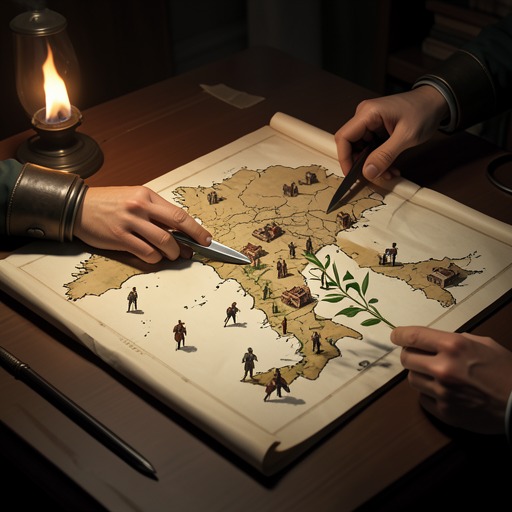
Although the Rutulians are the enemies of the Trojans in battle, their relationship to the war is not exhausted by violence. Suppliants sent from Laurentum approach with olive branches and ask for a truce. Their appeal is presented as just, and Aeneas grants it. The request demonstrates that the Rutulian and Latin war effort can recognize a distinction between battlefield hostility and the obligations owed to the dead, the living, and the wider political community.
Aeneas answers the embassy by condemning the causeless quarrels that have drawn the Latian state into war against an unoffending man. He also speaks in the name of the Greeks who came to destroy Troy, excluding those already killed in battle. This speech widens the conflict beyond the immediate Rutulian cause: the present war is measured against the ancient violence of Troy, and the survivors of that earlier struggle are made to confront the cost of beginning another one.
The Rutulians therefore occupy an important place in the poem’s developing legal and ritual order. Their war is conducted under the pressure of public appeals, truces, vows, and obligations. When peace is finally tied in public view, solemn vows are sworn on both sides and all required holy rites are performed. Peace is not represented as a private change of feeling; it is a collective act that binds political communities through ritual speech and reciprocal observance.
Defeat and the Political Reordering of Latium
The Rutulians’ fortunes depend heavily on Turnus. As long as he remains armed and defiant, their resistance retains a focal point; when the conflict narrows toward the confrontation between Turnus and Aeneas, the fate of the people becomes inseparable from the outcome of that duel. The Rutulian cause is consequently transformed from a broad communal resistance into a test of whether its champion can withstand the Trojan founder.
The decisive reversal comes when Turnus is defeated and yields. Aeneas appears ready to strike but restrains his hand in deep suspense. The moment exposes the difference between conquest and settlement: the enemy has been overcome, yet the final act must determine whether victory will end in annihilation or become the foundation of a new political order. The Rutulians’ defeat is therefore both military and constitutional. Their independent resistance collapses, while the future of Latium moves toward incorporation into a postwar Trojan-Latin union.
Earlier images of settlement foreshadow this outcome. The Trojans’ rebuilding of ships, their search for a seat in foreign lands, and the prince’s design of a city with the plow all present political community as something made through labor after displacement. The Rutulians stand in the path of that process, but their eventual defeat does not simply erase them from the story. Their opposition helps define the cost, legitimacy, and scale of the settlement that follows.
Narrative and Thematic Significance
The Rutulians give the epic’s founding narrative its necessary resistance. Without them, the Trojan arrival in Italy would be a sequence of divinely guided migrations ending in uncomplicated possession. Their presence forces the poem to stage the founding of a future people as conflict between newcomers and inhabitants, between inherited claims and a destiny that promises a different political future.
Their collective role also sharpens the poem’s contrast between furor and ordered rule. Turnus’s armor, defiance, and readiness for combat make him the concentrated image of heroic violence; the embassies, truce, public vows, and final hesitation introduce another standard by which the war must be judged. The Rutulians are thus not merely obstacles to Aeneas. Through their resistance, the poem tests whether empire can emerge from violence without abandoning ritual, clemency, and political obligation.
The Rutulians’ ending is deliberately ambivalent. They lose the war that defines their public identity, but the peace that follows is sworn by both sides and performed through recognized rites. Their defeat becomes part of the foundation of a larger order rather than a wholly private catastrophe. In this way, the Rutulians occupy the tragic boundary between the old Italian sovereignty and the future Roman destiny: they are the people whom the new world must overcome, but also the people whose opposition gives that new world its historical and moral weight.