Volscians
AeneidThe Volscians are a warlike people of Italy whose military identity is concentrated in the figure of Camilla, their “virgin leader.” In the final campaign, they enter the conflict as an organized force aligned with Turnus, and their fate is tied closely to the survival of the commander who embodies their courage, discipline, and independence.
Identity and Origin
The Volscians are presented as a distinct Italian people rather than as an anonymous mass of soldiers. Their territory is associated with the lowlands and waters near the river Ufens and the Pomptine marshes, a regional setting that places them within the varied geography of Italy’s peoples. Their most memorable representative is Camilla, who comes from the Volscians and leads their troops as a warrior woman.
The poem sharply defines Camilla’s difference from conventional feminine labor. She is described as untrained in spinning and unskilled at the loom, distinctions that separate her from domestic expectations and establish her as a military figure. Through her, the Volscians acquire an identity founded not on household production but on martial action, speed, command, and loyalty in battle.
Military Role in the War
The Volscians join the forces of Turnus and participate in the defense of the Italian cause against Aeneas and the Trojans. Their presence enlarges the conflict beyond a private rivalry or a single city’s resistance: the war gathers the peoples of Italy into a coalition, with the Volscians contributing a force led by their own renowned commander.
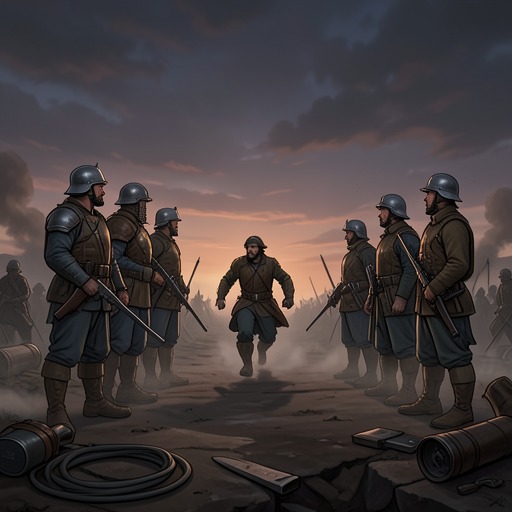
Their organization is most visible when Camilla appears outside the gate. The Volscians wait with their virgin leader for the prince’s final commands, showing that they operate within a clear chain of command and that Camilla’s authority is publicly recognized. The scene combines ceremony and readiness: the troops are assembled, their leader is mounted and prepared, and the army’s immediate action depends upon her orders.
The Volscians’ military identity also contrasts with the older heroic traditions remembered elsewhere in the poem. Trojan and Greek lineages, ancient founders, and the celebrated names of earlier warriors provide the epic’s inherited background, while the Volscians represent a living Italian power drawn into the struggle that will shape the future of Latium. Their role therefore links local Italian resistance with the poem’s larger movement toward the formation of Roman destiny.
Camilla and Collective Loyalty
Camilla is not merely a member of the Volscians; she is the figure through whom the people become narratively legible. Her command gives the Volscians a recognizable center, and her presence transforms them from a geographic or ethnic designation into an active military community. The description of the troops waiting for her final commands makes their dependence on her leadership explicit without reducing them to passive followers.
That dependence becomes decisive when Camilla is killed. The Volscians lose not only a battlefield commander but the person who organizes their courage and gives direction to their action. The poem thus makes leadership a collective condition: while Camilla lives, the Volscians stand as a coherent force; once she is gone, their unity begins to dissolve.
Defeat and Aftermath
After their leader is lost, the Volscians leave the field. Their withdrawal is presented as part of a wider collapse in Turnus’s army: unsupported by Camilla, the chiefs serving Turnus yield, and frightened soldiers follow when their captains flee. The sequence emphasizes the difference between an army that is merely assembled and one sustained by effective leadership. The Volscians’ defeat is not described as a slow change of allegiance but as an immediate consequence of the loss of their commander.
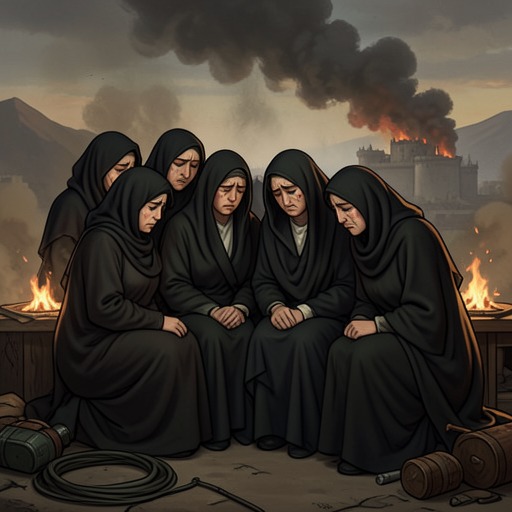
Their retreat also alters the balance of the war. Camilla’s death removes one of the coalition’s most formidable forces, while the departure of the Volscians helps expose Turnus’s position to renewed pressure. The people survive as a named community, but their military presence has been broken at the moment when their leader falls.
Narrative Significance
The Volscians embody the strength and vulnerability of a regional power drawn into a larger imperial conflict. Their independent identity, distinctive homeland, and warrior leadership give the Italian side breadth and variety; their sudden collapse after Camilla’s death reveals how the epic converts individual heroism into collective consequence. The Volscians do not determine the final outcome, but their rise under Camilla and their retreat after her loss mark one of the war’s clearest reversals.
Their portrayal also complicates the poem’s gendered and ethnic hierarchy. Camilla’s rejection of the loom and her command of armed troops make her exceptional within the social order represented by the epic, yet her exceptional status is not detached from communal belonging: she leads the Volscians, and their fortunes are bound to hers. The group’s final defeat therefore carries a double force. It is the defeat of an Italian people in the coalition against Aeneas, and it is the destruction of a form of military identity centered on a woman whose authority had made that people formidable.