Twelve-day truce
AeneidThe Twelve-day truce is the temporary suspension of the war between the Trojans and the Latins for the burial of the dead. Its decisive significance lies in the way it places funeral obligation inside the machinery of war: the battlefield is not made peaceful by reconciliation, but it is made answerable, for a limited period, to the claims of mourning, burial, and sacred observance.
Causes and Diplomatic Recognition
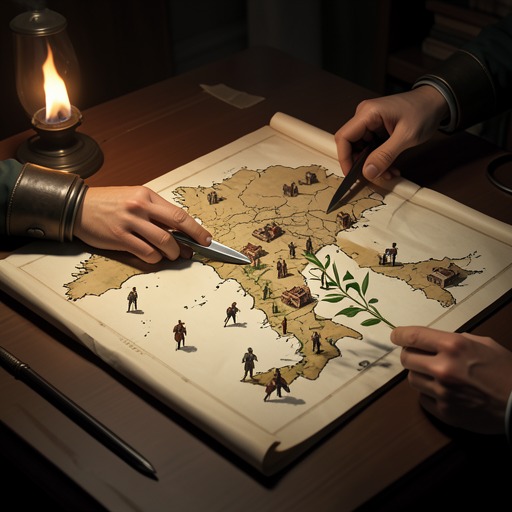
The truce begins when suppliants from Laurentum approach Aeneas carrying olive branches. Their gesture marks them not as another attacking force but as petitioners who ask clemency and request time for the dead. Their appeal is strengthened by dynastic and personal precedent: they hope that a king will heed the request of another king, especially one whose son Aeneas had once been called and whose guest he had once been. The petition therefore combines the public language of kingship with the reciprocal obligations of former hospitality.
Aeneas accepts the request because he regards it as just rather than merely advantageous. He condemns the severe fate that has drawn the Latian state into causeless quarrels and armed it against an unoffending man, presenting the war as a political misjudgment rather than an unavoidable moral necessity. His response gives the truce an ethical foundation: mercy is not weakness, and the right to bury the dead can interrupt even a conflict sustained by collective anger.
The negotiations acquire wider political force through Drances. His words persuade the other authorized leaders, and the Latin side soon empowers the agreement. The truce thus depends on more than Aeneas’s private compassion. It becomes a decision of the governing community, showing that the suspension of violence requires both a claimant who asks and authorities capable of binding the wider population.
Terms and Ritual Practice
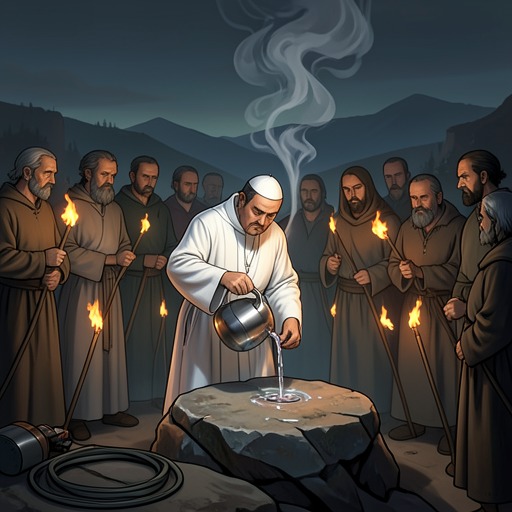
The agreed term is twelve days. During this defined interval, Latins and Trojans, no longer acting as foes, enter the woods together to prepare funeral pyres. The woods become a provisional space outside ordinary combat: the same peoples who have met in violence now share the labor of rendering the dead into ritual care. The truce does not erase their separate identities, but it temporarily changes the relation between them from enemy to fellow mourner.
The arrangement is also connected to the restoration of ordinary time. Dawn dispels the shades of night and restores the light, while the Trojan king and the Tuscan chief command the raising of pyres along the winding strand. Morning does not simply begin another day of fighting; it makes possible the labor that war had interrupted. Light, command, timber, and shore combine to turn death from an abandoned battlefield fact into a publicly ordered ceremony.
The truce reaches its fullest formal expression when peace is tied in public view with solemn vows sworn on both sides. All dues required by holy rites are performed. This language makes the agreement more than a practical pause for corpse disposal. It is a sacred and quasi-legal compact, witnessed publicly and ratified through reciprocal ritual obligations. Its authority rests simultaneously on political consent, religious observance, and the shared recognition that the dead possess claims the living must honor.
Funeral Community and Political Consequences
The immediate consequence is that both camps can prepare funeral piles without attack. The truce gives the dead a protected interval and gives survivors the means to mark loss collectively. In this sense, mourning becomes a temporary common ground. Trojans and Latins remain opponents in the larger war, but the burial work reveals a limit to enmity: neither side can be treated as wholly outside the moral order when both require rites for their dead.
The pause also creates room for political speech. Drances’s success shows that the funeral interval can alter the balance of public judgment. By making the cost and apparent injustice of the war speakable, the truce allows a critic of the conflict to influence the assembled leaders. A measure initially prompted by grief therefore becomes a moment of deliberation about the war’s legitimacy and about whether the Latins should continue to sustain it.
The truce does not produce lasting peace. Its very definition as a twelve-day term preserves the war’s underlying structure, and the narrative continues to distinguish between temporary cessation and final settlement. Yet its limited duration does not make it insignificant. By setting a precise boundary around violence, the agreement establishes that warfare is not absolute: political communities may suspend force, recognize obligations to enemies, and perform sacred duties before returning to combat.
Relation to the Wider War
The truce stands within a larger cycle of military escalation, diplomacy, alliance, and attempted restraint. Elsewhere, Venulus is sent to Diomede to seek aid for Ausonia, while Aeneas cuts through the night toward the Tyrrhenian camp and Tarchon’s tent after leaving Evander. These movements show the war expanding through embassies and alliances even as the funeral agreement temporarily contracts it. The twelve-day pause is therefore not an isolated humanitarian gesture; it interrupts an active political contest over reinforcements, leadership, and the future of Latium.
Its later echoes reveal how fragile the boundary between peace and combat remains. Aeneas subsequently raises his arm as a sign of peace and calls for the Rutulians and Latin troops to withdraw, attempting once again to make a public gesture interrupt violence. At the final confrontation, the Trojan hero appears ready to strike a yielded man but represses his hand in suspense before the decision is completed. Against these later moments, the Twelve-day truce becomes part of a recurring pattern in which gestures, vows, submission, and mercy struggle against the momentum of war.
The truce’s deepest meaning lies in this tension. It does not sentimentalize the conflict or claim that ritual can undo death. Instead, it shows the political community temporarily rebuilding order around the dead: petitioners invoke obligation, Aeneas grants the request, leaders authorize it, enemies share funeral labor, and sacred vows bind the interruption in public. For twelve days, burial takes precedence over victory. The pause cannot prevent the war’s return, but it makes visible the moral and ritual limits that war must repeatedly cross—and repeatedly acknowledge.