Love Boats
Afterburn“Love Boats” was the amused nickname the news media gave Navy vessels amid experiments with women serving aboard ship. The label turned a prolonged institutional and legal struggle into a joke, while the story’s shipboard scenes show the practical demands and frictions behind that public shorthand.
Origin and Historical Context
The phrase arose during what the Navy was still calling “The Great Experiment”: the effort to place women aboard ships and in combat roles, an issue that had troubled the service for decades. In 1978, Federal District Court Judge John Sirica ruled that barring women from serving aboard ship violated their Fourteenth Amendment rights. That ruling led to further experiments and more vessels that the media called “Love Boats.” The Supreme Court eventually overturned the civil-rights ruling, but the Navy continued the process; the account identifies 1993 as the point when it took what it calls the final step.
The Nickname and Shipboard Reality
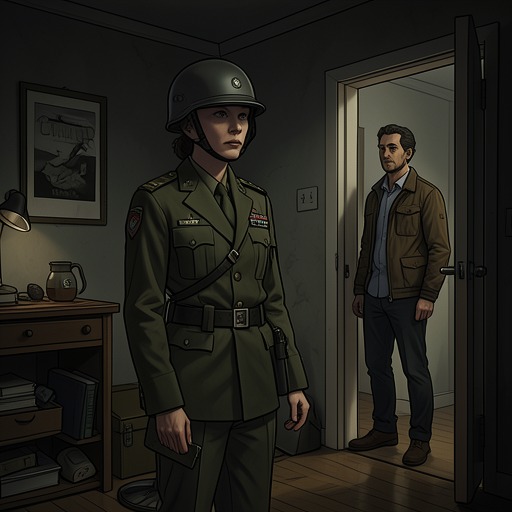
The nickname’s levity sits uneasily beside the conditions that made mixed-gender service a continuing institutional problem. The account notes that even carefully screened crews did not ensure that nothing would go wrong. Aboard the ship, Lieutenant Commander Tricia Conway appears in a women’s shower, while Will Grant checks whether the sign marked WOMEN is posted by the hatch or lying on the deck. Because there were too few female enlisted personnel to staff the ready-room watch on every shift, the sign also points to an everyday allocation problem: formal integration depended on facilities and staffing that were not always readily available.
Service, Friction, and Inclusion
The story places the media label against women’s individual efforts to establish themselves in naval aviation. Cat Garrity had fought harassment, prejudice, and the sneers and jibes of fellow aviators to earn an assignment as a naval flight officer and radar intercept officer. Her experience makes clear that entry into a role did not remove the barriers surrounding it. At the same time, Admiral Tarrant specifically wanted women on a flight, including a senior officer with flight status; Joyce “Tomboy” Flynn met both criteria. Together, these details show women’s service as neither a simple publicity experiment nor a settled achievement: it involved operational inclusion, continuing resistance, and practical arrangements aboard ship. “Love Boats” is the media’s teasing shorthand for that larger transition, not a complete account of it.