Fog of war
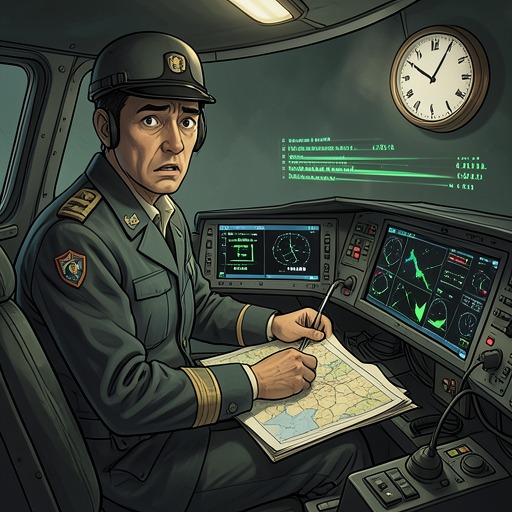
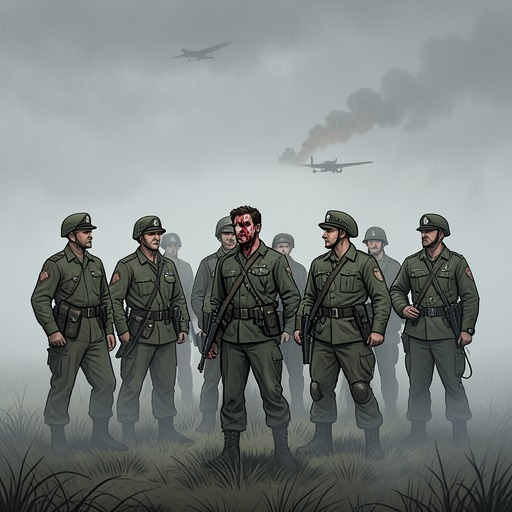
AfterburnThe fog of war is the uncertainty that makes mistaken identification possible even amid modern military technology. The book uses the expression both to frame combat error as an enduring condition and, through the later phrase “fog of water,” to show how the language of uncertainty can enter political explanations of military action.
Meaning and Historical Reach
The expression appears as a corrective to the assumption that contemporary surveillance and electronics have made the battlefield fully legible. Ground-support aircraft have misidentified vehicles on the ground, and the press has agonized over such incidents; the passage counters that reaction by invoking the experience of combatants, for whom mistakes are inevitable. It then places the electronic battlefield in a long historical continuum, comparing its uncertainty with warfare in the days of Napoleon and Sargon the Great. The comparison makes technological change a matter of scale and instruments, not an end to uncertainty.
Misidentification in Combat
In the passage, the fog of war is tied to a concrete failure of recognition: aircraft mistake vehicles below them. The term does not make the error harmless, but it supplies a frame for understanding how it can occur under combat conditions. Its force comes from the contrast between the electronic battlefield’s apparent precision and the fallibility that remains beneath it. The text also recalls an earlier incident involving two U.S. Air Force fighters, presenting the current situation as part of a recurring problem rather than an unprecedented consequence of modern warfare.
Political Language and “Fog of Water”
Later, an official statement describes attacks as cases of mistaken identity and accidents, calling them products of the well-known “fog of water.” The altered phrase echoes the established expression while shifting its image to obscured conditions at sea. In the same statement, regret is paired with a declaration of resolve and an insistence that foreign powers must not hinder the government’s purpose. That juxtaposition leaves the explanation politically charged: uncertainty is invoked to characterize the attacks as accidental, even as the statement maintains a forceful political position. The phrase thus recalls the battlefield’s genuine limits of perception while drawing attention to how those limits can be named in public rhetoric.