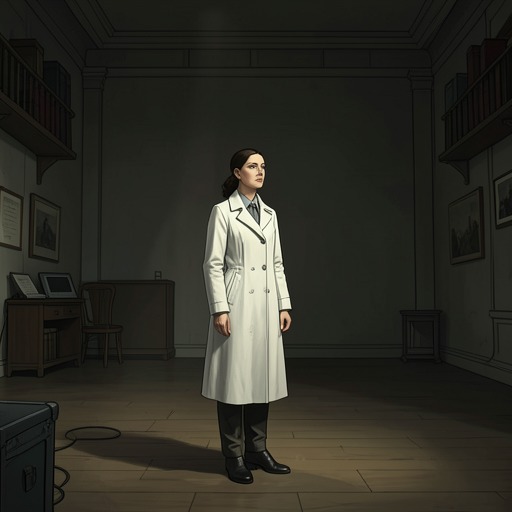
Isagel Stops Aniara from Racing Toward a Star
AniaraIsagel Stops Aniara from Racing Toward a Star is a moment of private intervention at the edge of an otherwise open-ended voyage. When Aniara comes rather near an unknown, half-extinguished sun, Isagel seeks Mimarobe’s judgment about whether to proceed. He counsels keeping the ship at a distance from the star, which the poem imagines as a cremator; Isagel then acts without the benumbed cohort’s knowledge and spares Aniara from that last resort. The episode turns an abstract question of possibility into an immediate choice between approaching and surviving.
The Near Approach
The danger begins with a specific encounter in space: the travelers come rather near an unknown sun, described as a half-extinguished neighbor of the one that shines in Dorisdale. The poem gives no navigational measurements or explanation of how the proximity occurred. Its emphasis falls instead on the decision the approach demands. The sun is not simply a distant object to contemplate; it has become close enough to offer itself as a cremator.
That image makes the stakes stark without making the outcome inevitable. The star is dangerous, but the account presents distance as still possible: the travelers might keep the ship some way from the flame. The event is therefore not a collision or a completed disaster. It is a near approach in which the choice to continue, pause, or hold back remains consequential.
Isagel’s Consultation
Isagel comes to Mimarobe and asks whether they should go on, framing the decision as a direct yes-or-no question. Her appeal makes the moment an exchange between two people even though its consequences concern everyone aboard. The poem does not describe a formal council or a collective debate; the decision is presented through this brief, intimate consultation.
Mimarobe answers that the time is ripe, but that space remains an open-ended game. His response holds two judgments together: the opportunity may be real, yet there is no need to treat it as the last possible one. He advises keeping the ship some distance from the flame for the moment. The caution is temporal as well as practical: delay does not mean that every future possibility has closed. The star’s nearness may invite a final act, but the openness of space argues against letting urgency decide for them.
The poem’s moth-and-flame comparison gives this advice its concentrated force. Aniara is figured as a moth, while the star becomes a flame capable of cremation. The image presents attraction and danger as inseparable: moving toward the light would also mean moving toward destruction. Mimarobe’s counsel is to resist that fatal pull, at least for now.
A Decision Made in Secret
Isagel leaves the discussion at that, but the apparent end of the exchange is not the end of her response. Her eyes seem to phosphoresce with anger, an anger the narrator calls holy. This bodily detail registers an intensity that is not explained away by her silence. She does not continue arguing with Mimarobe, and the text does not specify the means by which she acts; instead, it moves from the charged look to the consequence.
Behind the backs of the benumbed cohort, Isagel spares Aniara from the last resort. The secrecy distinguishes her intervention from a decision reached openly by the passengers. The cohort is described as benumbed, while Isagel’s anger appears alert and morally charged. The contrast gives her action a solitary character: she protects the ship without waiting for collective recognition or agreement. The poem does not identify a particular maneuver, so the decisive fact is the outcome it states—Aniara is spared from the final approach.
The Event’s Place in the Narrative
The scene is narrated by Mimarobe, who records both his own answer and the consequences of Isagel’s choice. His account does not claim that his advice alone saved the ship. He counsels distance; Isagel’s subsequent action, taken behind the cohort’s backs, is what the poem identifies as sparing Aniara. The difference preserves her agency rather than folding her intervention into his judgment.
The episode also sets restraint against the pressure of a seemingly momentous opportunity. A nearby sun might have made a decisive end appear available, but the ship’s continued distance keeps that ending from being chosen. The poem’s language makes the alternative feel physical—the moth held back from the flame—while its account of the decision remains spare. Isagel’s holy anger and secret action give that restraint its human force. Immediately afterward, the poem turns to the breaking down of her splendid mind, placing the rescue beside a stark change in her trajectory without stating that the two events caused one another.