The Aniarans’ Permanent Exile
AniaraThe Aniarans’ Permanent Exile begins as an organized evacuation and hardens into a condition with no route back. Fleeing a radioactive Earth, the passengers are carried aboard the Aniara under the promise of temporary quarantine and later resettlement. An asteroid damages the ship’s steering irreparably, however, and the refugees drift farther from the planet instead of reaching the labor camps planned for them on Mars or Venus. When Earth is consumed by nuclear destruction, the place they might have returned to is gone as well. Their exile is both the consequence of a failed transport and the lasting human condition of a voyage severed from home.
From evacuation to unplanned flight
A mass of refugees boards the Aniara because radiation has rendered much of Earth uninhabitable. The voyage belongs to a larger system of displacement: people are being transferred to labor camps on Mars or Venus until their planet can be detoxified. This is presented not as a sudden emergency but as an old and familiar story, an established routine of moving populations in response to planetary ruin. The passengers enter the journey as evacuees with assigned destinations, not as explorers choosing to leave their world behind.
That distinction disappears when an asteroid knocks the Aniara off course and its steering mechanism is irreparably damaged. The vessel becomes a ghost ship: a functioning enclosure for people who can no longer direct their passage. They do not reach the camps, and their movement away from Earth continues without the practical purpose that had made it an evacuation. Meanwhile, the planet itself explodes in the final nuclear war. The possible return is therefore closed not only by the ship’s mechanical failure but by the destruction of the world to which return would have led.
The machinery of displacement
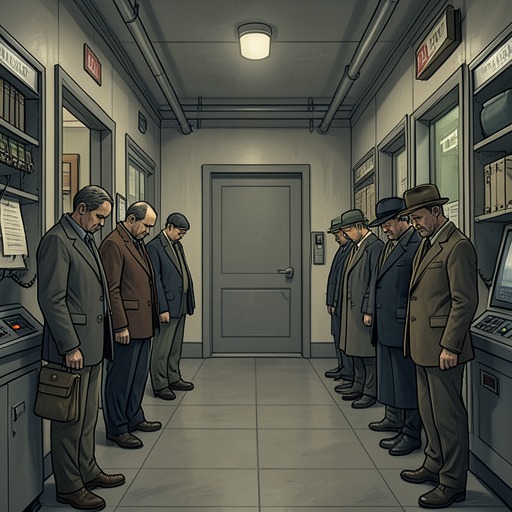
The book shows migration as a chain of administrative acts before it becomes cosmic abandonment. In the concourse, a woman fills in cards, her five small nails glinting in the twilight, and instructs someone to sign a line. The smallness of the gesture sets the scale of the process: mass flight is handled through forms, identification, and orderly procedures. Later, a tale of transport measures evacuation in years, with the transfer to Tundra Three taking nine years and the evacuation of Gond taking ten. Such durations make displacement a prolonged structure of life, not a single passage between safe places.
The selection process is also presented as technological and impersonal. Fast talk is used to quiet disquiet while punch-cards are matched to souls identified by prior testing; microrolls record every loss and win. The passengers are lifted into a cosmic field and sent toward different destinations: some toward a tundra kingdom, others toward the marshy shore of Venus. The appearance of sorting and record-keeping suggests a system able to classify people and move them efficiently. It does not mean that those moved are protected. The planned destinations include confinement and labor, and the procedures that organize evacuation also prepare people for control.
In the mines, whole nations are shut away and used as though they were things without souls; those rejected are expelled. Elsewhere, glass-equipped surveillance ducts look into the Chambers, while a transparent keep at the cesium quarry in Antalex is built around rational surveillance. The account of these places complicates any simple division between rescue and punishment: the infrastructure that transports displaced people can deliver them into carceral spaces. The refugee’s loss of agency begins before the Aniara goes astray, in a system that assigns destinations and treats people as units to be tested, recorded, and deployed.
Life aboard the Aniara
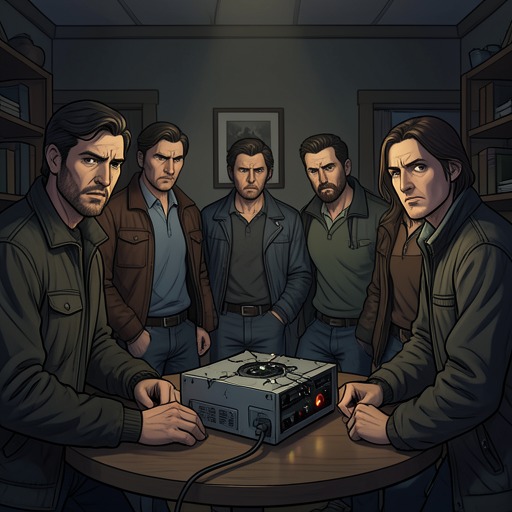
Once the ship has lost its course, exile becomes an inward as well as spatial condition. The passengers are described as travelling toward certain death through spaces without land or coasts. In that setting, Mima gains the power to soothe souls. The machine’s comfort does not restore a destination or reverse the damage to the ship; it gives the stranded community a means of enduring a voyage whose outcome is already understood as fatal. The contrast is stark: there is no shore ahead, yet consolation remains possible within the vessel.
The passengers also come to ride in their sarcophagus in silence. Their departure no longer offers violence to the planet or spreads deathly quiet among their own kind. The image makes the ship at once a means of transport and a coffin-like enclosure. Its silence marks a change from the original evacuation, when the passengers could still imagine themselves as people being carried somewhere. Now the voyage itself is the condition they inhabit, and the craft that holds them also figures their confinement.
The poem registers that change against the memory of home. The speaker’s former intention had been to make an Edenic place for the passengers, but they had already left the home they destroyed; the only home remaining becomes the night of space. The imagined refuge cannot be recreated aboard the ship. Instead, the Aniara holds a displaced population in an immense sarcophagus as it passes through empty seas, with cosmic night forever divided from day. The movement continues, but movement no longer promises arrival.
Meaning and aftermath
The exile’s permanence rests on the convergence of three losses: the refugees’ assigned destinations become unreachable, the Aniara cannot steer back, and Earth is destroyed. Each closes a different possibility. Mars and Venus represent the official future of resettlement, but their labor camps are not a return to ordinary life; the ship’s failure then removes even those destinations; and the final nuclear war eliminates Earth as a place of refuge. The passengers are not simply far from home. The conditions that would make homecoming meaningful have been extinguished.
The poem gives that abstract catastrophe material form through cards, punch-cards, microrolls, surveillance ducts, mines, and the silent sarcophagus. These objects and systems trace a passage from regulated migration to unbounded drift without suggesting that official order ever guaranteed safety. The passengers are carefully processed, assigned, and watched, yet none of that apparatus can protect them from the consequences of planetary violence or repair their broken course. Their story turns the promise of evacuation inside out: escape from an uninhabitable world becomes permanent separation from every world they knew.
As the voyage continues into the empty seas of cosmic night, the passengers’ shared condition becomes more than a failed relocation. They are a community carried forward after the destruction of both destination and origin, living inside the remnant of a transport system that has outlasted its purpose. The Aniara’s drift is therefore the physical shape of their exile: direction without control, distance without a reachable elsewhere, and survival measured against the disappearance of home.