Jacqueline
AnimalsJacqueline is a former colleague of Laura who has built a life with her young daughter, Daisy. In Laura’s visit to her home in Chorltonville, Jacqueline becomes a point of comparison and a candid interlocutor: her account of choosing motherhood gives Laura a partial answer to questions about desire, social pressure, and uncertainty.
Identity and Introduction
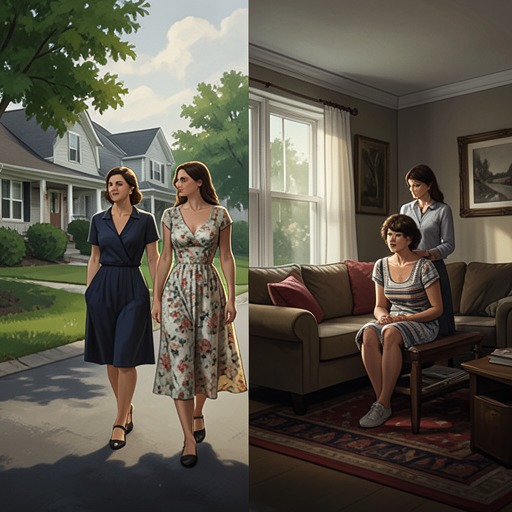
Jacqueline welcomes Laura into her calm, carefully ordered house. She greets her warmly, kisses her on both cheeks, and briefly holds her hands. Yet the physical welcome does not create the connection Laura is hoping for: Laura longs for a feeling of shared maturity or camaraderie, but finds that nothing of the kind passes between them. The gap between courteous intimacy and actual closeness shapes the visit.
Jacqueline has a young daughter, Daisy, who is in the lounge when Laura arrives. Their household offers a contrast to Laura’s unsettled questions about what she wants from life, though the encounter does not establish that Jacqueline’s domestic circumstances have made those questions easy to answer.
Work and Conversation
Jacqueline tells Laura that she left the Red Room not long after Laura did, estimating that the interval was four or five months. She recalls the strain of finishing work at three in the morning, then asks Laura what she has been doing since. Laura says she works in a call centre. The exchange places their shared work history alongside the different lives they now lead.
Laura asks how Jacqueline knew she wanted a baby. She wonders whether the desire was wholly her own or shaped by the fear of failing or missing out, and whether Jacqueline loved Daisy while she was still pregnant. Laura also voices her own uncertainty about how to know why she is making choices. Jacqueline answers that she thinks she felt she might be missing out on something.
Significance and Limits
Jacqueline’s answer gives Laura a point of recognition, but not a resolution. Laura says she understands Jacqueline to some extent, then questions whether the impulse to have everything might be a form of childish wanting; she adds that she is not judging Jacqueline and describes herself as a brat too. Their exchange leaves the motives for parenthood open to scrutiny rather than treating motherhood as either an unquestioned fulfillment or a simple social obligation.
Jacqueline’s role in the episode is therefore defined less by a broad account of her life than by the careful limits of what she can offer Laura: a warm reception, a shared past at the Red Room, and an honest, tentative explanation of her own decision. The visit does not deliver the easy solidarity Laura had hoped to find, but it gives her a concrete response against which to test her own fears.