Kirsten
AnimalsKirsten is a recurring but briefly seen character in Laura’s account, associated with an awkward reunion in Stockholm and with an encounter that Laura watches closely at a classical-publishing gathering. The scenes establish her through gestures, appearance, and fragments of speech, while leaving her circumstances largely outside Laura’s knowledge.
Introduction and Reunion
When Kirsten appears unexpectedly in Stockholm, Laura has not seen her for months. Kirsten comes around the corner carrying her cello and keeps hold of it as she reaches Laura and Jim. Laura registers the awkward atmosphere and struggles to make the meeting sound ordinary, greeting Kirsten with an upbeat expression of surprise and asking how she is.
The reunion is presented through Laura’s immediate response rather than through Kirsten’s account of her own life. Her cello is the one concrete sign of what she has brought into the encounter; the scene supplies no explanation of her visit or of the tension Laura senses.
At the Classical-Publishing Gathering
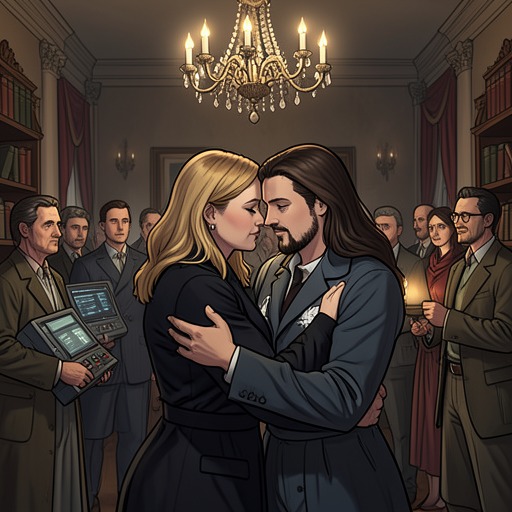
Later, Laura and Jim enter a gathering where Jim explains that signing new composers is rare and that the occasion is important. Laura drinks champagne and looks across the room, where she spots Kirsten standing by a pillar and speaking with a man in a tuxedo. Kirsten appears relaxed, with her hair loose and a black dress moving as she talks.
The sight changes Laura’s attention: instead of looking toward Jim, she focuses on Kirsten. Jim notes that Kirsten is already speaking with someone. The scene gives no account of the man’s identity or Kirsten’s relationship to him, so her presence remains something Laura observes rather than understands.
Private Speech and Narrative Perspective
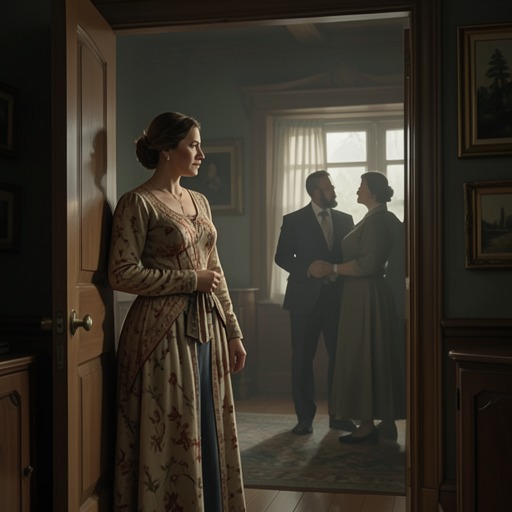
In a later passage, Laura sits in a bathroom stall, staring at the door while her phone vibrates in her bag. She gradually recognizes voices outside, first identifying Kirsten and then making out her words. Kirsten says she has been deeply upset about something; another speaker answers with a familiar, affectionate form of address. The passage does not disclose what Kirsten is upset about or who the other speaker is.
Kirsten’s characterization is therefore shaped by partial access. Laura notices her physical presence, reads the room as awkward or charged, and catches only a fragment of a more private exchange. Across these appearances, Kirsten draws Laura’s attention, but the narrative withholds enough context to make her motives or situation certain.