Marty Grane
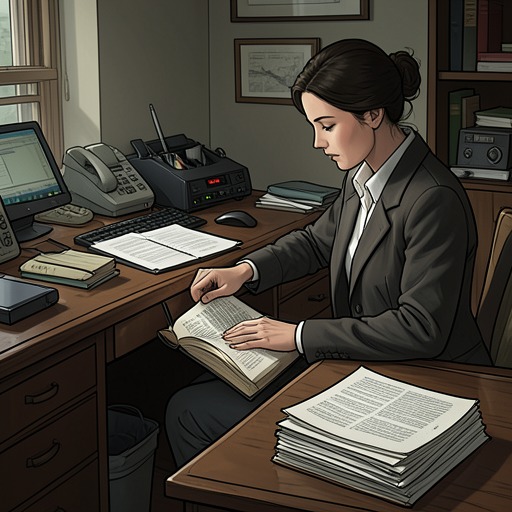
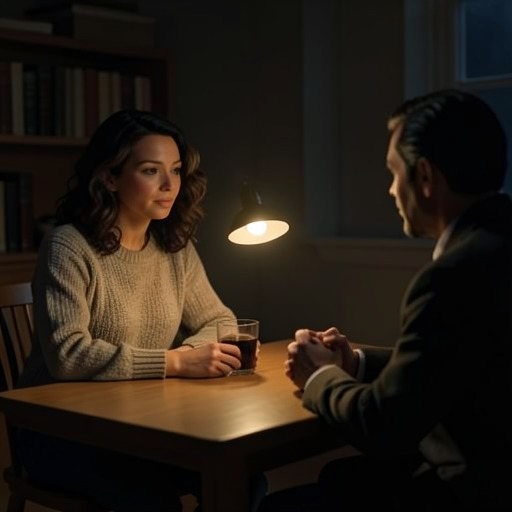
AnimalsMarty Grane is a professor and author whose polished literary identity becomes entangled with sexual pursuit. First introduced through a lecture flyer, he attracts Laura with talk of poetry and wine, then presses on the fact that she is engaged. Their later encounter turns coercive: Marty follows Laura into a bathroom, locks the door, gets hold of her, and tells her to undress and bend over. His return also surprises Tyler, who greets him as someone she knows well.## Identity and Literary BackgroundMarty is introduced publicly as Professor Marty Grane, giving a lunchtime lecture on the later works of W. B. Yeats. The flyer places the event at the Georgian Library on Mosley Street, in London, and advertises it as a free talk. His academic identity is paired with a modest literary history: he enjoys his teaching job well enough, lives in Islington, and published a book called Widening Gyres ten years earlier, to little effect. The contrast matters. The flyer gives him the authority and ceremony of a lecturer, while the account of his book makes clear that professional presence has not translated into literary success.Marty’s first appearance is mediated by a paper object passed to Laura: the flyer, wrapped around crystals and read in a cubicle. Its formal announcement promises a discussion of Yeats; for Laura, its arrival is personally charged, and she wonders whether Tyler has given it to her as a joke. This indirect introduction makes Marty at once a public figure and a private provocation before Laura has met him.### The Lecture and Laura’s EngagementAt the lecture, Marty introduces himself with a handshake, simply saying, “Marty.” Laura gives her name in return. Their conversation moves quickly from her description of the talk as inspiring to her own writing and desire to write. Marty asks whether she likes wine, and they sit opposite each other in an anteroom furnished with heavy-legged tables and standing lamps whose shades are emerald, crimson, and gold. Bookshelves line its walls. The setting feels cosy and clever, an intimate extension of the literary world in which they have just met.Over two bottles of wine, Marty identifies Laura as engaged, despite her not wearing a wedding ring. When she asks how he knows, he explains that he is attracted only to women who are irreversibly attached. The remark makes his interest explicit while treating her engagement not as a boundary but as part of what attracts him. He says he will kiss her if she keeps talking as she is. Laura recognizes that she could object, but instead ignores the advance. That moment establishes the unevenness of their encounter: her failure to object is not the same as an invitation, and his flirtation has already been framed around her unavailability.### A Shared Past with TylerMarty’s identity shifts when he appears again in Tyler’s company. Laura first waves to him across a room; Tyler follows her gaze, recognizes him, and exclaims his name. Marty runs over, adjusting his glasses, and identifies Tyler as Tyler Johnson. Their excited exchange makes clear that they are not strangers, though these moments do not explain the history between them. The reunion connects Marty’s separate encounters with Laura and Tyler, and shows that Laura’s connection to him is entangled with a prior relationship in Tyler’s life.The scene’s energy contrasts with Marty’s first meeting with Laura. There, he controls the pace of a private conversation and tests the limits of her engagement; here, Tyler’s recognition is immediate and mutual, and the exchange is openly exuberant. The novel gives no further explanation in these moments, so the recognition itself carries the information: Marty is not merely a lecturer Laura met by chance, but someone already known to her closest friend.### The Photograph and the Bathroom EncounterMarty also becomes the subject of a penis photograph that Laura sees. The narration identifies the image as Marty Grane’s, and describes it as taken from above, with him apparently seated in an armchair, his trousers lowered to his knees and patterned fabrics surrounding him. Laura is shocked and transfixed. The account supplies no circumstances for how the photograph was made or came to be seen, so it cannot establish Marty’s intention in relation to Laura. Its narrative effect is instead to make his body, previously encountered through literary conversation and flirtation, abruptly visible and difficult for her to ignore.Later, Marty follows Laura to the bathroom and locks the door. He gets hold of her as they stand face to face, close enough that their faces are only centimetres apart. The narration registers the encounter as a physical rush, but the next exchange makes its coercive circumstances plain: Marty tells her to take off her knickers and bend over, and Laura responds, “What?” The scene does not establish what happens after that command. It does establish a decisive change in the encounter: Marty has moved from suggestive verbal pressure to controlling the space and physically holding Laura, while issuing a sexual order.### Narrative Role and SignificanceMarty’s appearances are linked less by a developing account of his inner life than by the different kinds of access he claims to other people. At the lecture, he uses literary conversation and wine to cultivate intimacy with Laura, while openly describing his attraction to engaged women. With Tyler, the story offers the reciprocal signs of an existing familiarity but leaves its history unstated. In the bathroom, the private intimacy of their earlier conversation is recast as a situation in which Marty controls the door and Laura’s physical position.The shifts in how he is presented—academic, flirtatious, familiar to Tyler, the subject of a sexual image, and finally physically coercive—prevent his literary credentials from serving as a complete account of him. His book and teaching job are concrete parts of his identity, but the plot’s sharper revelation lies in how he behaves when desire meets another person’s limits. The gap between the cultivated lecturer and the man who locks the bathroom door is not resolved by the text; it is the tension that gives his role its force.