Koichi Sakakibara–Mei Misaki relationship
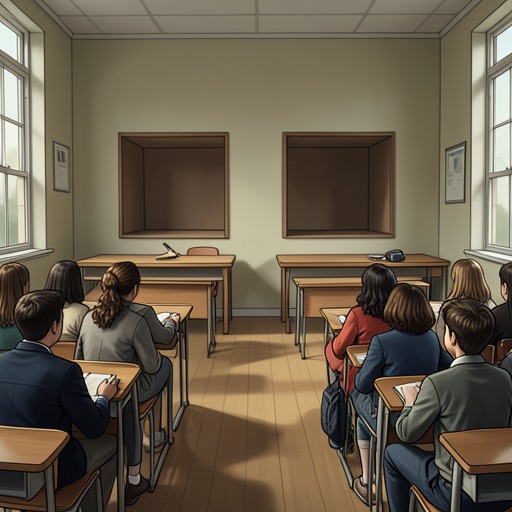
AnotherThe Koichi Sakakibara–Mei Misaki relationship is formed under the “Not There” Strategy, when an entire class treats both students as if they do not exist. What begins as mutual resistance to an unnatural social order becomes a partnership of trust, investigation, and emotional recognition. Their bond matters because it creates a private human connection inside a system designed to deny both of them social existence, while also binding them to the search for the “extra person” and the means of stopping the disasters.
Identity and Formation
Koichi Sakakibara and Mei Misaki first draw together because the class’s collective response places them on the same social margin. Every student and teacher treats both as absent, while Koichi and Mei respond by treating everyone else as absent in return. The arrangement is intellectually comprehensible to Koichi but emotionally intolerable, and his discomfort becomes the first pressure pushing him toward Mei rather than toward compliance.
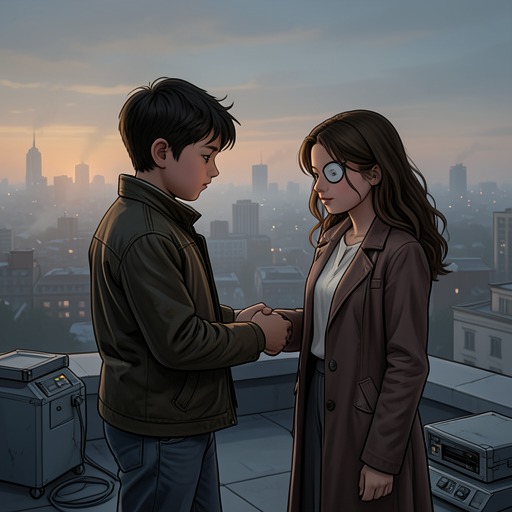
Their alliance is therefore not initially romantic or openly intimate. It begins as a shared refusal: neither accepts the class’s demand that the other be erased. Because the two “non-existers” cannot comfortably eat with the rest of the class, they often go to the roof of Building C on dry days and sometimes share lunch there. Koichi brings his grandmother’s homemade lunch; Mei usually nibbles bread and drinks tea from a can. The repeated privacy of these meals gives their relationship a concrete rhythm, transforming a disciplinary arrangement into companionship.
Companionship and Discovery
Mei’s suggestion that they inspect the art club room extends their relationship from private refuge into joint action. On a rainy Thursday, June 18, they leave the classroom together after fourth period because neither wants to eat among classmates who are pretending not to see them. Mei’s invitation gives their exclusion a new use: instead of merely enduring the rules, they begin moving through the school as observers and investigators.
Koichi also learns that Mei’s exclusion has interrupted her ordinary life. She explains that she had attended the art club a few times in April but could no longer go once she became “not there” in May. Her absence is not a personal withdrawal from the club but a consequence of the label imposed on her. Koichi’s attention to this distinction strengthens the relationship’s ethical basis: he sees the social mechanism that isolates Mei rather than treating her reserve as proof that she wants isolation.
Their solidarity becomes visible when they tell a teacher that everyone would feel better if Koichi and Mei were not present, and the teacher accepts this as the correct decision. The exchange exposes the strange privilege and violence of the arrangement. Koichi and Mei can move together because both have been denied ordinary participation, but the very recognition of their absence confirms how thoroughly the class has surrendered individual judgment to the “Not There” Strategy.
Trust, Solitude, and Suspicion
Mei’s conversations with Koichi repeatedly move beyond school procedures toward a bleak account of human connection. She tells him that, no matter how closely linked people appear to be, everyone is ultimately alone: herself, her mother, Koichi, and Misaki Fujioka. The statement does not dissolve their bond; instead, it defines its seriousness. Their companionship does not promise that loneliness can be eliminated. It offers recognition between two people who understand that no relationship can completely abolish solitude.
Mei nevertheless expresses a desire to see Koichi’s house, an unexpectedly personal wish that contrasts with her guarded manner. She also remains willing to communicate with him directly during the investigation, asking him to report anything discovered through the search or the photograph to the phone number she gives him. Later, Koichi tells Mochizuki that he has already told Mei most of what he learned from Katsumi Matsunaga’s cassette tape and that Mei wants to hear the recording herself. Information therefore passes through their relationship as a form of trust: Koichi does not merely investigate alongside Mei; he keeps her included in the chain of discovery.
The relationship is also tested by suspicion. When the class begins treating Mei as someone who is “there,” the change appears superficially normal but unsettles Koichi because it reverses the social reality around which their alliance had formed. Naoya Teshigawara even suggests that Mei herself may be the year’s “extra person.” Mei answers with restrained uncertainty rather than indignation, leaving suspicion suspended between them and the wider class. The possibility that the person Koichi trusts might be responsible for the disasters gives their intimacy a dangerous ambiguity.
The Color of Death and Mutual Recognition
Mei’s doll’s eye provides a private basis for distinguishing the innocent from the “extra person.” When she removes her eye patch and looks at Koichi, she cannot see the “color of death” on him; consequently, she concludes that he is neither the “extra person” nor the casualty. She adds that Koichi can know she is not the extra person for the same reason. This exchange converts suspicion into reciprocal assurance, though it does not make the surrounding danger disappear.
The importance of the moment lies in its mutuality. Mei is not simply an uncanny observer who judges Koichi from a distance. She allows him to understand the condition by which she judges herself and others, and she places their identities on equal ground. Their connection is sustained not by unquestioning faith but by a shared method of testing the threat that surrounds them.
When Akazawa later addresses both of them sharply at dinner, calling out “Misaki” and then “Sakakibara,” the public naming reverses the class’s earlier refusal to acknowledge them. The relationship is thereby dragged from private solidarity into collective conflict. Mei remains calm while Koichi watches the confrontation, a contrast that emphasizes their different responses to pressure: Koichi is emotionally exposed and reactive, whereas Mei’s composure functions as both protection and a source of unease to those around her.
Change and Continuing Future
By the end of the account, Koichi’s relationship with Mei has moved beyond the temporary alliance created by the classroom’s rules. After his hospitalization and the revelation that Reiko Mikami was the “extra person,” he asks Mei when she knew, showing that he still depends on her as a trusted participant in the truth rather than as a mysterious figure standing outside it. Their shared experience has survived accusation, the investigation, and the disasters that made ordinary companionship appear impossible.
Their ending is deliberately modest. Mei agrees that Koichi may call her sometimes, provided that “sometimes” remains an accurate description. Koichi considers inviting her to visit art museums in Tokyo but swallows the words. The withheld invitation matters because it marks a change in his relation to the future: earlier, he had felt apprehension about how far away an undefined future might be, whereas now he believes that he and Mei will meet again one day, even after he leaves Yomiyama the following spring and even if their immediate connection is somehow broken.
The relationship thus ends neither with a fully secured romance nor with separation as final loss. Its promise is conditional, understated, and stronger for not being formalized as a grand declaration. Koichi and Mei have learned to recognize one another against a culture of enforced absence. Their bond begins in the denial of presence, passes through suspicion and shared danger, and closes with the conviction that a connection can endure beyond the town, the class, and the immediate crisis.