Return the dead to death
AnotherReturning the casualty to Death is the lethal countermeasure proposed for the Yomiyama phenomenon. It describes killing the extra person—the dead person who has returned to the living world and been inserted into Third-Year Class 3—so that the casualty is restored to Death, the numbers of the living and the dead once again match, and the disasters of the year come to an end. In the novel, the principle is both a piece of occult knowledge and a terrible decision forced upon people who can rarely know with certainty whom they are supposed to kill.
Origin in Matsunaga’s Confession
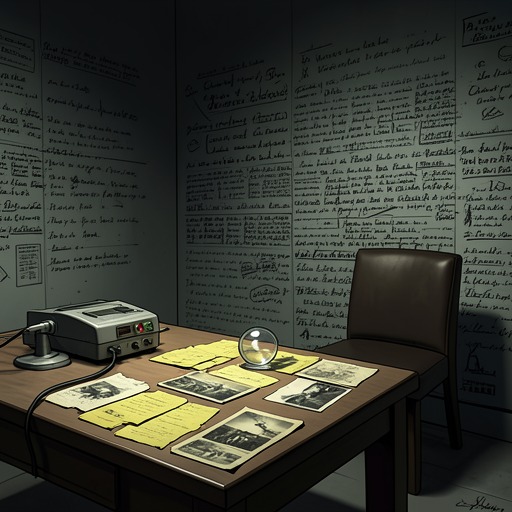
The principle is explained most clearly through Katsumi Matsunaga’s recording. Matsunaga admits that he caused a classmate’s death and says that he killed him, a fact that has not changed. Yet he also calls the act a form of salvation because, by chance, killing the extra person saved everyone else in the class. Once the extra person died, the disasters for that year stopped. Matsunaga identifies the decisive proof as a change in memory. Beginning the day after the killing, teachers, students, parents, and other people connected with the class no longer remembered that the dead boy had belonged to it since April. Their memories had been repaired or reconfigured to match the restored truth. The boy was not merely forgotten in the ordinary sense: returning the casualty to Death corrected the modifications produced by the phenomenon, and the world’s order was reestablished. Matsunaga also explains why the knowledge itself is unstable. Because he was profoundly involved in the killing, he remains the only person who still remembers the extra person clearly, but he expects even that memory to disappear. He therefore hides his confession on a tape in the classroom while his recollection is still intact. The recording is intended for future underclassmen who may face the same disasters, and its final advice is uncompromising: the extra person must be killed, because that is the only way to stop the disasters after they have begun.
From Theory to Dangerous Inference
The principle does not provide an easy method of identification. Naoya Teshigawara worries that the extra person may have accompanied the class to the summer location and wonders whether some small sign might reveal the identity. His suspicion turns toward Tomohiko Kazami after Kazami fails to remember childhood experiences that Teshigawara considers shared and important, including their secret base beside the river and an abandoned bicycle trip toward the ocean. That reasoning is mistaken. As Koichi Sakakibara understands from Mei Misaki and Tatsuji Chibiki’s explanations, the returned casualty is not an imitation that can be exposed by testing personal memories. The dead person comes back as the real person, without awareness of having already died, and slips into the world as though nothing were wrong. A forgotten childhood episode therefore proves nothing. Teshigawara’s error demonstrates the danger built into the countermeasure: once the group accepts that someone must be killed, ordinary gaps in memory can be transformed into supposed evidence.
The Principle in Practice
The same logic is invoked during the crisis at Sakitani Memorial Hall. After blood is discovered and the building catches fire, Koichi encounters a situation in which violence, confusion, and the disasters have destroyed the ordinary safeguards against a wrong judgment. The fire is not the cause of the deaths later established by the inquest. Kensaku Numata is stabbed in the neck with numerous metal cooking skewers before being burned, while Manabu Maejima, Yonemura, Sugiura, and Nakao die from blood loss after being stabbed and cut repeatedly. Izumi Akazawa dies after her spine breaks in a fall from the second-floor balcony. Mieko Numata is determined to have caused the six deaths and to have spread kerosene through the kitchen before dying by suicide after Mr. Chibiki restrains her. Against this background of genuine murder and apparent disaster, the maxim about the casualty becomes an instrument for another act of violence. Koichi repeats that Matsunaga’s old confession says the casualty must be returned to Death. The words convert an obscure rule into an immediate command, but they do not make the target’s identity certain.
Koichi’s Decision and Its Cost
Koichi’s target is Reiko Mikami. The only direct evidence that she is the year’s extra person comes from Mei’s special ability, the doll’s eye, which can perceive the color of death. Everything else is circumstantial: a pattern of deaths, the operation of the class’s phenomenon, and the need to explain why Reiko appears to occupy the forbidden position. Koichi recognizes that he cannot rely on an unshakable conviction and that accepting the judgment means overriding his own memories of Reiko. He nevertheless chooses to believe Mei—or, more precisely, chooses that he wants to believe her. That distinction matters. The act is not presented as the calm application of a proven rule but as a decision made under unbearable uncertainty, where trust becomes the only available basis for action. Koichi swings a pickax into Reiko’s back despite her scream, driving the blow through her flesh toward her heart. The physical pain that follows rebounds through his own body, recalling the image of his damaged lung after its third collapse and binding the supposed restoration of cosmic order to bodily suffering and moral injury.
Meaning and Consequences
Returning the casualty to Death attempts to solve the contradiction at the center of the Yomiyama phenomenon: a person who is dead is nevertheless present, while the class is forced to live inside a reality whose memories and relationships have been altered to accommodate that impossibility. The remedy restores order by making death final again. It is therefore described as salvation, but only in the narrow, horrifying sense that one person’s death may stop the deaths of many others. The principle also exposes the instability of any order founded on incomplete knowledge. Matsunaga’s confession treats the killing as both murder and rescue; Koichi’s decision treats Mei’s perception as both evidence and an act of faith. The disasters may end when the extra person is killed, yet the method demands that frightened students assume the authority to execute someone they love or remember as living. Its apparent effectiveness cannot erase the possibility of error, and its logic turns the desire to protect the group into the mechanism by which another death is deliberately produced. As a recurring formula, the maxim links memory, identity, and death. The casualty is not simply a victim to be mourned but a disruption that must be returned to the condition from which the phenomenon removed them. The phrase thus gives the novel’s supernatural rule a ritual shape: death is treated as an order, resurrection as contamination, and killing as the act that restores the boundary. Yet the violence required to repair that boundary leaves Koichi with no uncomplicated sense of triumph. The world may be restored, but the person who performs the restoration must continue living with the knowledge that salvation was achieved through an uncertain killing.