Antigone’s tomb
AntigoneAntigone’s tomb is the cave where Creon confines Antigone alive, making the state’s sentence a sealed space beneath the earth. It is at once the intended alternative to a public execution and the final setting of the tragedy: Antigone names it her resting place, but when the wall is opened, Creon finds her dead and Haemon beside her. The attempt to contain death outside the city instead brings the consequences of the decree into the cave and leaves Creon confronting what cannot be undone.
The Cave as Sentence
A Guard tells Antigone that, to avoid defiling the city with her blood, the authorities plan to wall her up in a cave. The arrangement gives her death a deliberately enclosed form: the city keeps her blood from its streets, while the stones close her off from the living. The cave is not presented as a refuge or a way out of the sentence. It is the place where the sentence will be carried through.
That confinement is the political consequence of the conflict between Antigone and Creon. Antigone has insisted that she can refuse what she does not accept and that the choice is hers, even though Creon’s power allows him to have her put to death. In the cave, that contest takes material form: her refusal has not been persuaded away, and the authority that condemns her determines the walls and conditions of her final confinement.
Antigone’s Naming of the Place
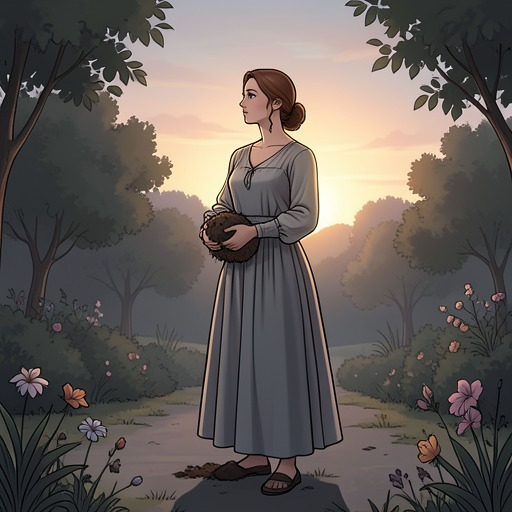
Antigone calls the cave her tomb, bridal bed, final resting place, and eternal home beneath the earth. These names hold different meanings together without making the cave any less a place of punishment. “My tomb, my bridal bed” joins anticipated death to the language of marriage, while “My eternal home beneath the earth” makes the sentence seem to define where she will belong. The naming gives her a way to speak of the imposed destination in her own terms, even as the scene leaves her alone there.
The contrast between her words and her physical isolation is stark. She sits by herself in a large, empty room, wraps her arms around herself, and murmurs that she is all alone. Her speech gives the cave an intimate, almost domestic vocabulary; the stage direction instead emphasizes its emptiness and her separation. The place is both the home she names and the enclosure from which no ordinary return is offered.
The Opening of the Wall
After Antigone has been thrown into the cave, the final blocks are being rolled into place when a cry comes from within. Those outside fall silent to listen; the Messenger stresses that it is not Antigone’s voice. Creon is the first to understand the significance of the sound and orders the stones removed. The burial wall, just completed, becomes an obstacle he must help undo.
The slaves throw themselves against the stonework, and Creon works with them, sweating and bleeding at the hands. The stones move only far enough for the smallest man to squeeze through before another is shifted to let Creon enter. This reversal makes the cave’s boundary consequential: the ruler who authorized Antigone’s confinement now labors to cross into it, but the delay built into the sealed space has already made rescue impossible.
Death and Consequence
At the back of the cave, Antigone is found dead, hanging from the cords of her sash. Haemon is on his knees beside her, holding her and mourning. The scene makes the cave the place where Antigone’s sentence ends not in isolation but in a discovery that draws her betrothed into the same catastrophe.
Creon tries to raise Haemon and pleads with him. Haemon first ignores him, then turns to face his father, spits at him, and draws his sword. He does not attack Creon; after staring at him, he plunges the sword into his own stomach and collapses against Antigone. The cave thus holds the consequences of Creon’s decree in a form he cannot reverse: Antigone is dead, Haemon has chosen death beside her, and Creon enters only after the wall has been opened too late.
The Tomb’s Dramatic Function
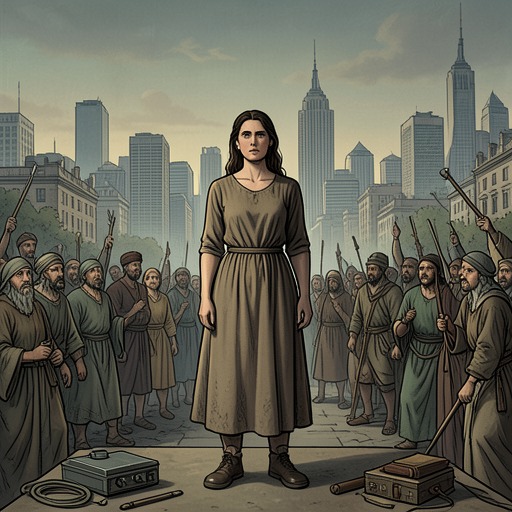
The cave gathers the play’s conflict over refusal, authority, and the cost of political action into a single stage location. Earlier, Antigone describes the roles as already cast: Creon must have her put to death, and she must bury her brother. Her insistence that she must do what she can, followed by her refusal to say yes to Creon’s demands, leads toward a place where choice and power meet in irreversible consequence. The tomb is not simply a background for that argument; it is where the argument is made physical through confinement and belated entry.
Creon has defended the need for someone to say yes and steer the endangered ship of the state. The cave’s final scene exposes the personal cost contained in that political account: the ruler’s effort to restore order reaches the tomb only after the people nearest to him have been lost. Antigone’s named “eternal home” becomes the setting for a conclusion that extends beyond her own death, binding the decree’s consequences to Haemon and leaving Creon among the survivors.