Hades
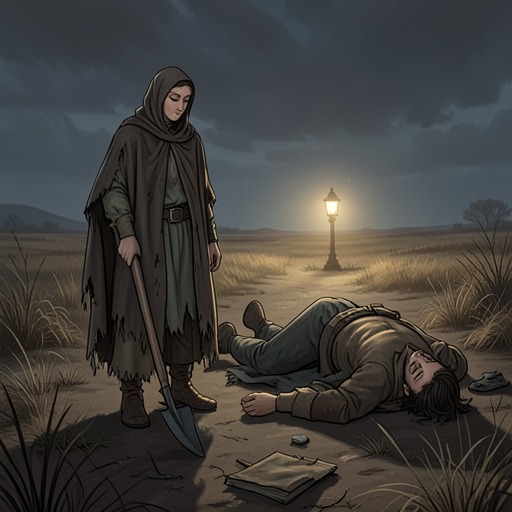
AntigoneHades is named as the caves beyond the city gates where Antigone is to be walled up. In the brief exchange about her sentence, the name turns a physical place of confinement into an image of proximity to death, while the guards’ matter-of-fact discussion keeps that threat within the practical routines of the city.
The Caves Beyond the City
A guard tells Antigone that he has heard she will be shut inside a cave so that her blood will not defile the city. The explanation links the punishment to the city’s effort to keep bloodshed outside its boundaries, while making Antigone’s own body the reason for the sentence’s chosen form. The cave is therefore not simply a hidden place: it is where the city sends the condemned person rather than allowing her death to stain its public space.
A Place and a Sentence
Antigone describes the destination as the caves of Hades, outside the city gates, and specifies that the confinement is to take place in the middle of the day, in the sun. The juxtaposition is stark: a name associated with the realm of the dead is set against the exposed, ordinary world beyond the gates. Hades is not presented as a visited afterlife; it is the language through which the cave and Antigone’s impending fate are understood.
The City’s Order and Its Cost
The guards discuss who will receive the assignment, first saying that it had been given to the army. Their practical concern contrasts with the consequence of the sentence: the cave is a place where Antigone is to be removed from the city and left to die. Hades thus gathers the scene’s tension between administrative procedure and mortal outcome, without erasing the distinction between the named underworld and the earthly caves used for the punishment.