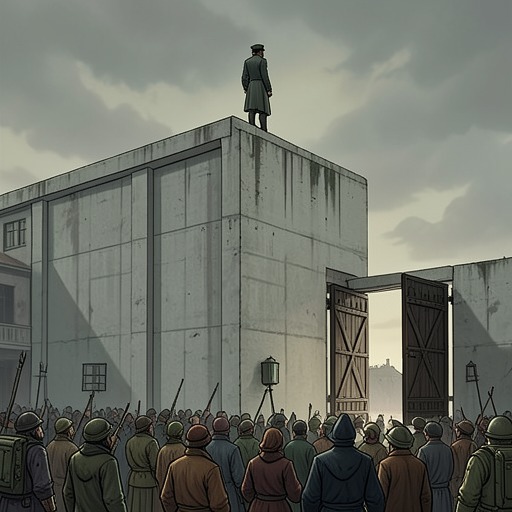
Seven Against Thebes
AntigoneSeven Against Thebes is the assault on the city that leaves the brothers Eteocles and Polynices dead and sets the play’s central conflict in motion. The attack fails to take Thebes, but its aftermath becomes a struggle over how the dead will be treated: Creon honors one brother with a state funeral and denies the other burial.
Background and Rivalry
The conflict begins with an agreement that Eteocles and Polynices, the two sons of Oedipus, would rule Thebes in turn, each holding the throne for a year. At the end of the first year, Eteocles refuses to yield power to Polynices. Their dispute over succession becomes a fight outside the city walls, where the brothers kill one another.
Polynices has secured the support of seven foreign princes. Their force is defeated before the seven gates of Thebes, and the city is saved. The play presents this outcome alongside the brothers’ deaths: Thebes survives the attack, but the ruling family’s conflict has destroyed both claimants to the throne.
The Attack and Its Aftermath
The battle leaves the two brothers on opposing sides of a newly sharpened political and moral division. Creon, now king, orders a grand funeral for Eteocles, whom he designates the good brother. Polynices, by contrast, is declared a villain and traitor, and Creon orders that he remain unmourned and unburied.
The prohibition carries an explicit threat: anyone who performs sacred funeral rites for Polynices will be put to death. Thus the military defeat does not settle the conflict. It turns the brothers’ unequal treatment after death into a law enforced by the new ruler, and makes burial—and defiance of Creon’s order—the crisis that follows.
Narrative Significance
The play’s introductory account establishes a compact chain of causes: Eteocles refuses to surrender the throne; the brothers fight and die; Polynices’ foreign allies are defeated; and Creon uses the outcome to impose a decisive distinction between the brothers. The battle is therefore both the immediate catastrophe and the political background for the drama that follows.
Its aftermath also places civic order against funeral obligation. Creon’s decree makes the treatment of a dead enemy a test of obedience, while the stated punishment gives that choice lethal stakes. The attack is over before the main action begins, but its consequences remain active in the conflict between the king’s command and the sacred rites he has forbidden.