Antigone’s execution and death
AntigoneAntigone’s execution and death bring her refusal of Creon’s authority to its irreversible conclusion: condemned for burying her brother, she is sealed inside a cave rather than killed in public, and is found dead when the tomb is opened. The sentence gives physical form to the conflict that has governed her choices—Creon insists that someone must preserve the state, while Antigone insists that she will not consent to what she rejects.
Causes and Stakes
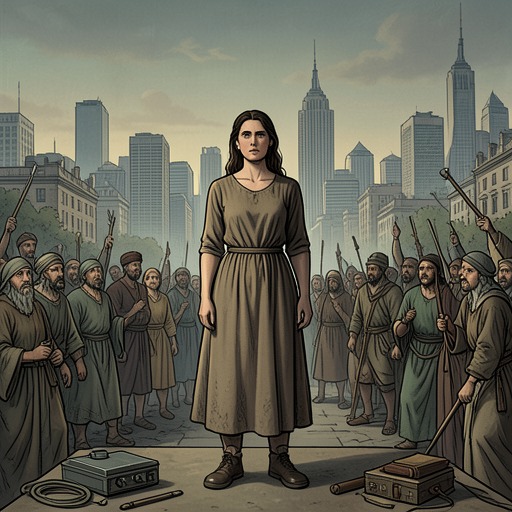
Antigone describes the opposing actions as roles already assigned: Creon must have her put to death, and she and Ismene must bury their brother. In that framing, the burial is not a negotiable political gesture but an obligation that she believes she must carry out. She accepts the limits of what she can do, yet insists that doing what remains possible is necessary.
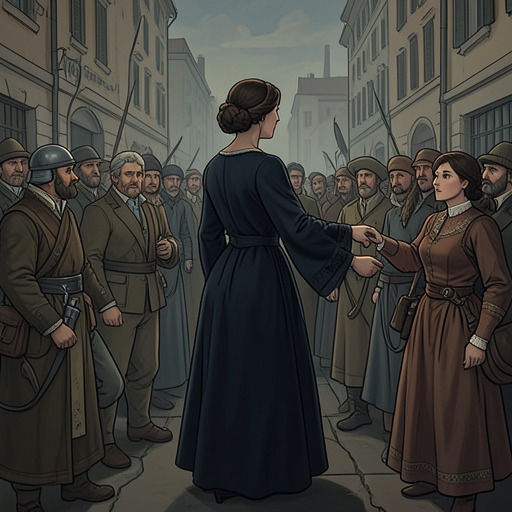
Her resistance becomes explicit when she tells Creon that she has not said yes. She dismisses his politics, obligations, and explanations as grounds that cannot make her accept his terms; the choice to refuse, she says, remains hers alone. Creon can command her death through his crown and guards, but her refusal exposes the difference between his power to impose an outcome and her power not to consent to it.
Creon answers from the standpoint of political responsibility. He pictures a ship taking on water from every side: crime, poverty, and misery threaten it; the crew plunders the hold, officers prepare a raft for themselves, and the vessel risks going down. In that emergency, he argues, someone must say yes, take the wheel, and issue orders, even when distinctions and individual costs cannot be carefully weighed. The ship is his image for a shared political order in danger; Antigone’s refusal makes visible the human price of the decisiveness he defends.
The Sentence
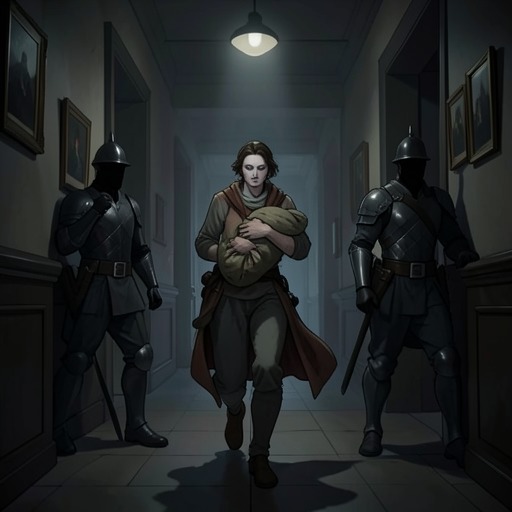
When Antigone asks how she will be put to death, the Guard says he has heard that the authorities intend to wall her up in a cave so that her blood will not defile the city. The explanation presents the sentence as an attempt to keep the city physically separate from her death, but it does not change the result: she is confined alive, removed from the community while still subject to the power that condemns her.
The cave turns a public decree into an enclosed, delayed ending. Antigone’s death does not occur before the city in an openly described execution; it is concealed behind the stones. The choice of burial-like confinement also sharpens the play’s concern with burial and the treatment of the dead: the person who insisted on burying her brother is herself placed in a tomb while still alive.
Discovery in the Tomb
The Messenger reports that Antigone has just been put into the cave and that workers are rolling in the last blocks of stone when a cry comes from within. Those present fall silent to listen. The sound is not Antigone’s voice; its unexpected arrival from the depths of the tomb makes the audience and characters confront a further catastrophe before its source is known.
The crowd looks to Creon, who understands first and orders the stones taken away. The workers hurry to the wall, and Creon labors with them, his hands bleeding as they shift the blocks. The smallest man can finally squeeze through the opening. Inside, Antigone is found at the back of the tomb, while Haemon kneels beside her, holding her and grieving. The scene confirms that the sentence has ended in Antigone’s death and brings Haemon’s presence into the crisis as more than a witness to its aftermath.
Consequences and Significance
Creon tries to raise Haemon and pleads with him, but Haemon ignores him. He turns toward his father, spits at him, draws his sword, and then kills himself beside Antigone. The attempt to reverse the sentence by opening the tomb comes too late to save her, and Creon’s effort to reach his son cannot prevent a second death. Antigone’s execution thus produces a consequence beyond the intended punishment: the political order Creon sought to protect is confronted with the loss of his son as well as Antigone.
The ending makes the conflict between refusal and rule concrete without reconciling it. Antigone maintains that she must do what she can and will not say yes to what she rejects; Creon maintains that someone must take responsibility for steering a threatened ship. The cave, the wall of stones, and the belated order to remove them mark the distance between possessing authority and being able to undo its consequences.