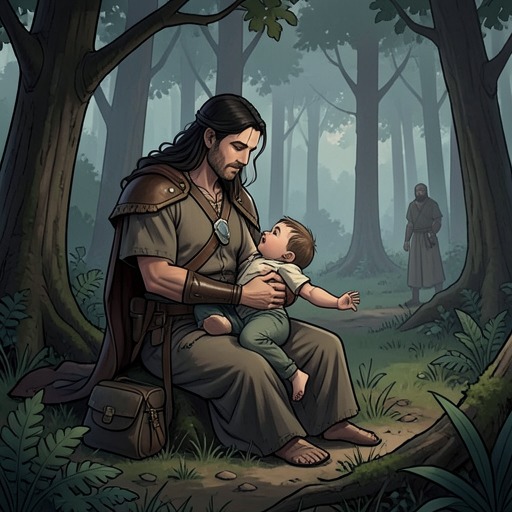
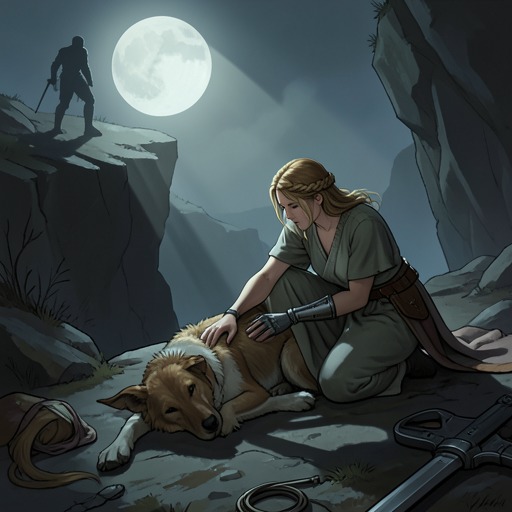
Artemis accidentally kills Callisto
ArtemisArtemis accidentally kills Callisto when she shoots the bear-form Callisto, not knowing that the animal is her former lover. Hera’s influence helps drive the mistake, but recognition comes too late: the arrow is fatal, and Artemis’s grief follows the moment she understands whom she has killed.
The Hunt and Its Reversal
After many months and years of wandering as a bear, Callisto hears hunters approaching. They are her former companions, but they no longer recognize her. Artemis, meanwhile, is traveling by chariot with her band and does not intend to hunt that day. When the girls spot a gigantic bear by a lake, however, the goddess feels moved to take up her bow.
Hera, still bitter, urges Artemis to aim at the fleeing bear. As Callisto tries to escape through the foliage, another band arrives from the other side of the lake and leaves her trapped. Artemis draws an arrow, looking for an opening at the bear’s exposed neck, while Hera continues to urge her to shoot. What begins as an unplanned encounter thus becomes a pursuit shaped both by Callisto’s desperate flight and by Hera’s intervention.
A Recognition Not Yet Made
Artemis’s hand trembles as she prepares to shoot, an unfamiliar hesitation whose cause she does not understand. Callisto, tiring from the chase, sees Artemis and stops. She turns toward her former lover, who looks as Callisto remembers her. Grief opens in Callisto at the sight, but she also accepts that her fate has been irrevocably altered. She rises onto her hind legs, her eyes wet with tears, and faces the likelihood that she will die.
Artemis sees only a bear that will not run. Frustrated and confused, she tells it to run, while Hera’s persistent words continue to press upon her. Callisto’s stillness and gaze do not reveal her identity to Artemis in time. The contrast is the scene’s central reversal: Callisto recognizes the goddess, but the goddess does not yet recognize Callisto.
The Fatal Shot and Discovery
Artemis releases the arrow, and it pierces Callisto’s heart. The strike is quick and painless for Callisto, but its consequence for Artemis is immediate and devastating. Only after the shot does Artemis understand what she has done. She drops her bow, hurries to the fallen bear, kneels beside her, and calls her by name through her tears.
With a shaking hand resting on Callisto’s snout, Artemis finally learns the truth. The other maidens gather, realize what has happened, and stand back in silence. Callisto wishes she could wipe away Artemis’s tears but cannot; as her strength ebbs and drowsiness overtakes her, Artemis embraces her large form and weeps. In her sorrow, the goddess calls on Zeus to redeem his deed.
Tragic Significance
The killing turns a hunt into a recognition scene: the same gaze that fails to make Artemis identify Callisto becomes, after the arrow falls, the focus of her grief. Artemis’s trembling hand foreshadows a hesitation she cannot interpret, while Hera’s influence helps push the goddess toward the decision that makes recognition irreversible. The tragedy depends on the gap between the former lovers’ knowledge: Callisto knows whom she faces, but Artemis learns only after the fatal act.
The scene also brings their changed circumstances into direct collision. Callisto approaches Artemis as the bear she has become, yet remains inwardly the former companion who remembers and loves her. Artemis responds first to the animal before her and only afterward to Callisto herself. The ending leaves the immediate loss unanswered: Artemis appeals to Zeus for redemption as Callisto’s strength fails, while the gathered maidens can only watch in silence.