The translator dances in shackles
Babel“The translator dances in shackles” is a metaphor for the translator’s double condition: translation demands creative movement, but that movement is governed by an original text whose meanings and formal effects cannot simply be discarded. Robin Swift uses the expression to distinguish translation from composition and to describe the translator as an artist whose freedom exists within obligations of accuracy, judgment, and form.
The Argument Behind the Expression
Robin Swift introduces the image while discussing whether translation is harder than original composition. He argues that a poet composing an original work is free to choose among the resources of the language: word choice, word order, and sound can be arranged according to the poet’s own purposes. In poetry, these elements are interdependent; removing any one of them may cause the whole structure to fall apart. The original poet therefore runs “untrammelled across the meadow,” moving without the prior formal demands imposed by another writer’s text.
The translator faces a more complicated task because the work already exists in another language. The translator must first read the original closely enough to understand the machinery operating within it, then convey its meaning with as much accuracy as possible, and finally rearrange that meaning into an aesthetically convincing structure in the target language. Translation consequently requires several roles at once: translator, literary critic, and poet. Its difficulty lies not in the absence of creativity but in the necessity of exercising creativity without treating the source text as raw material for unrestricted invention.
The Metaphor of Constraint and Movement
The expression joins two images that appear opposed. Dancing suggests grace, rhythm, invention, and bodily freedom; shackles suggest restraint, weight, and imposed limits. Their combination captures the translator’s central paradox. A successful translation must move enough to become living language in its new setting, yet remain bound closely enough to the original that its meaning and artistic machinery are not lost. The metaphor therefore rejects the idea that fidelity and creativity are simple alternatives. The translator’s art consists in making constraint productive.
Robin’s formulation also gives form to the difference between writing and rewriting. The poet’s freedom is represented spatially, as an unimpeded run across an open meadow. The translator’s freedom is represented theatrically and physically, as a dance performed under restriction. The contrast makes translation visible as skilled action rather than mechanical substitution: every step is chosen, but every step is taken within limits established elsewhere.
The Scene in Which It Is Spoken
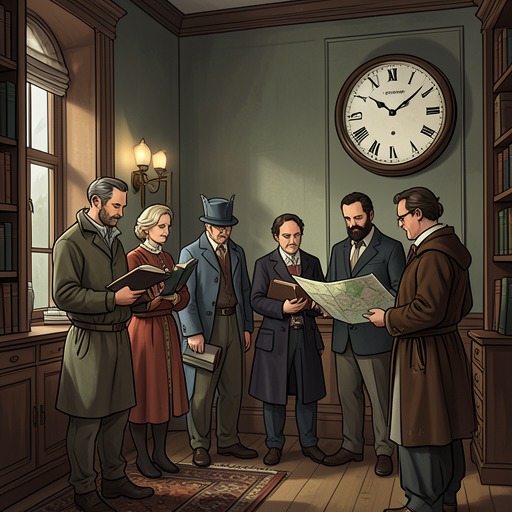
Robin arrives at the expression after first dismissing the suggestion that he cannot know much about poetry because he is not a poet. He fidgets with the stem of his glass, then decides to continue speaking. What begins as an anxious defense becomes an extended and intellectually assured explanation of translation. By the end of it, Pendennis and his friends stare at him with slack-jawed bemusement, uncertain how to respond. Woolcombe eventually identifies the phrase itself as beautiful, repeating “Dancing in shackles” as an appreciative judgment.
The reception matters because Robin’s account changes the social balance of the conversation. He had been concerned with how he appeared, including whether his jacket was properly buttoned and whether crumbs remained at the side of his mouth. Once he has articulated the metaphor, that anxiety disappears. He no longer seeks Pendennis’s approval or cares about the approval of the other boys. The expression is therefore not only a theory of translation; it marks Robin’s movement from self-conscious performance to intellectual self-possession.
Literary and Thematic Significance
The phrase gives translation an ethical as well as an aesthetic dimension. Accuracy is not presented as passive obedience, since the translator must judge how the original’s meaning can be made persuasive in another language. Nor is aesthetic fluency presented as permission to erase the source. The translator remains answerable to both languages, balancing the demand to preserve the original against the demand to produce a coherent and pleasing work in the target language.
Its final force comes from the tension between beauty and bondage. Woolcombe hears the phrase as lovely, while Robin’s image insists that the loveliness is achieved under pressure. Translation can produce elegance precisely through the disciplined negotiation of limits, but those limits never disappear. “The translator dances in shackles” consequently becomes a concise statement of translation as betrayal and fidelity at once: the translator must alter the original in order to make it live elsewhere, yet cannot escape the obligations that make the alteration a translation rather than an independent composition.