Preemption Acts
BarkskinsThe Preemption Acts are federal land laws that let settlers claim public land and then buy it cheaply. In the novel, their promise of accessible ownership becomes a tool for corporate expansion: Duke Logging uses staged settlement and false claims to acquire huge tracts, cut the timber, and leave the land behind. The law’s low-price entry point gives the scheme its appearance of legitimacy, while its beneficiaries manipulate the difference between a genuine homestead and a performance staged for the Land Office.
Purpose and Operation
During the Civil War era, the preemption laws allowed settlers to take up land and purchase it for $1.25 per quarter section, identified in the account as 180 acres. The provision made public land available through settlement followed by purchase, linking the claim to the appearance of occupation. In practice, that requirement could be reduced to a few gestures and props: a claimant needed to present a dwelling and other signs of having established a home.
Duke Logging’s Method
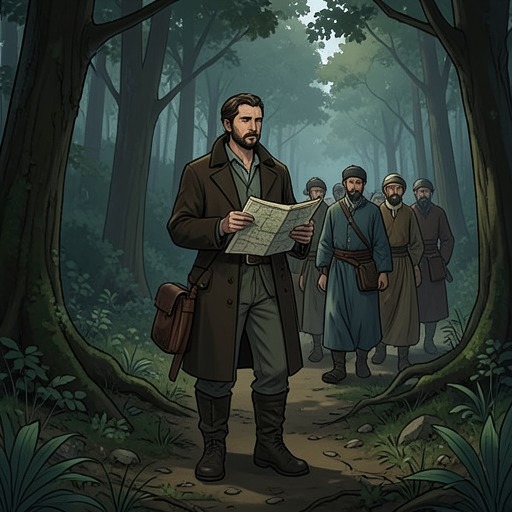
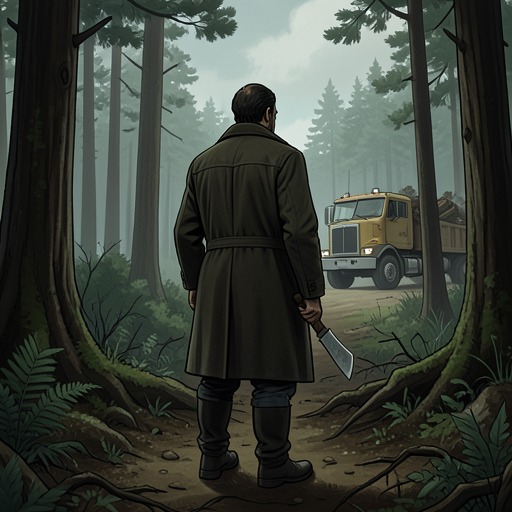
The company’s landlookers selected desirable timber tracts, while hired dummy claimants pretended to settle them and then transferred their deeds to Lawyer Flense. Brokers helped move claims through the process, and federal land agents could be bribed. Duke Logging thus used the law’s purchase mechanism not to establish lasting farms but to secure forest land cheaply for rapid extraction.
The sham homesteads varied in their theatrical detail. Some claimants stayed on the land for only a few days, nailed together a flimsy shack, inserted two empty whiskey bottles as windows, and scuffed the earth to suggest a well. Others carried a dollhouse to the Land Office and described its dimensions as fourteen by sixteen without acknowledging that the measurements were inches, not feet. A small shanty on skids could be hauled from claim to claim and presented repeatedly as a livable dwelling. Once the deeds had passed to the company, Duke Logging cut the timber and abandoned the homestead rights.
Profit, Risk, and Significance
The scheme flourished amid wartime expansion and a market hungry for lumber. The company’s shipments had quadrupled as the Union Army built forts and prison camps, while Duke Logging’s inner circle accepted payment for warped and knotty lumber as though it were clear. Flense defended the land practices by arguing that the government could not prove the claims had not been made in good faith. His indifference to older ideals of landownership stands against James Duke’s earlier practice of buying timberland outright: where James had paid for land, the company now exploited statutory purchase provisions and fraudulent settlement to obtain it at giveaway prices.
The law’s cheap purchase price did not mean the process was harmless or genuinely open. The company’s agents and brokers converted public rules into a competitive advantage, while small loggers faced violence, sawmill fires, and large-scale timber theft that made selling out to Duke seem preferable to continuing alone. The novel presents the Preemption Acts as an instrument whose formal language could lend a legal appearance to dispossession and forest extraction: settlement was staged, ownership concentrated, and timber removed before the claims were surrendered.