Massachusetts court’s provincial-jurisdiction rule
BarkskinsThe Massachusetts court’s provincial-jurisdiction rule asserted that the court’s authority extended to laws and events within the province, not to enforcing a royal order treated as a foreign judgment. It emerged from the John Frost–William Leighton mast-tree trespass case, where a Crown procurement license collided with a privately held land title, and turned a dispute over pine into a challenge to imperial jurisdiction.
The mast-tree dispute
In 1730, the Crown granted Ralph Gulston a five-year license to procure mast pines from Maine lands that had belonged to the Crown in 1691. Gulston hired the colonial logger William Leighton, who cut and hauled pines through the winter of 1733–34 without objection. But title had passed since 1691 to John Frost of Berwick, Maine. When Frost sued Leighton for trespass in spring 1734, he relied on his legal title; the court found in his favor.
The conflict set royal claims to timber against a later private title. The pines were intended for the Royal Navy, making their procurement a matter of imperial policy, while Frost’s successful suit treated the land’s current ownership as legally consequential. The case therefore raised not only who could cut the mast trees, but whose authority could determine the answer.
The court’s jurisdictional position
After the court ruled for Frost, Gulston used his influence with the King, and a royal order arrived in Boston. The ensuing motion was not heard until June 1738. The court then declared that it lacked authority to execute the order: its jurisdiction, it maintained, was to make laws and hold courts for events occurring within the province. It classified the royal order as a foreign judgment rather than a command it was empowered to enforce.
That reasoning drew a boundary inside the empire. The court did not simply revisit the timber claim; it denied that the royal order could override its provincial jurisdiction through the procedure before it. The account presents the ruling as an implicit refusal to obey the King, even though the court framed its position in terms of the limits of its own authority.
Colonial significance
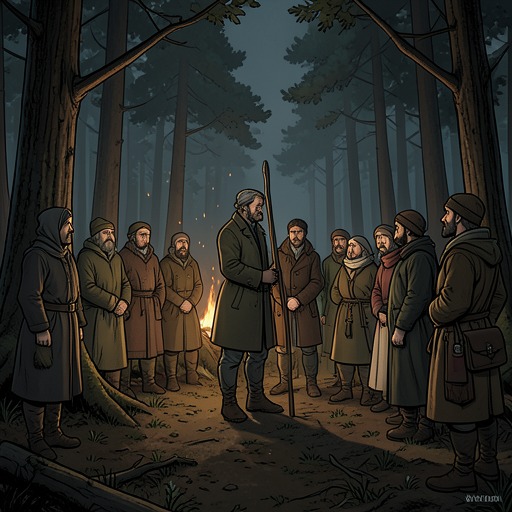
The episode is retold among colonists debating whether to side with England or France. Its interpretation makes the jurisdictional argument openly political: the judge describes the court’s stance as a triumph for the independent American spirit, and the remark prompts Jan to warn of possible agents listening. The danger attached to saying aloud what the decision implied—the King, in this account, had been treated as a foreigner with no authority over the provincial court’s action.
The rule’s significance lies in the tension between legal form and political effect. A dispute over a Crown license and a pine-cutting trespass produced a ruling that limited the reach of royal command, while its later retelling turned provincial jurisdiction into evidence of colonial independence. The narrative links control over forests to control over law: imperial power sought the timber, but the court claimed the authority to decide what could be done within the province.