La tigre di panno
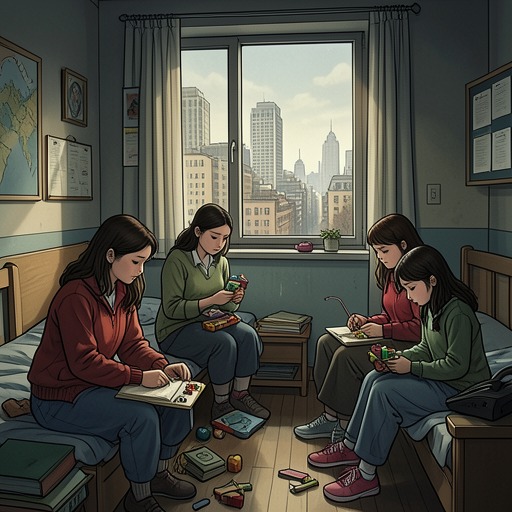
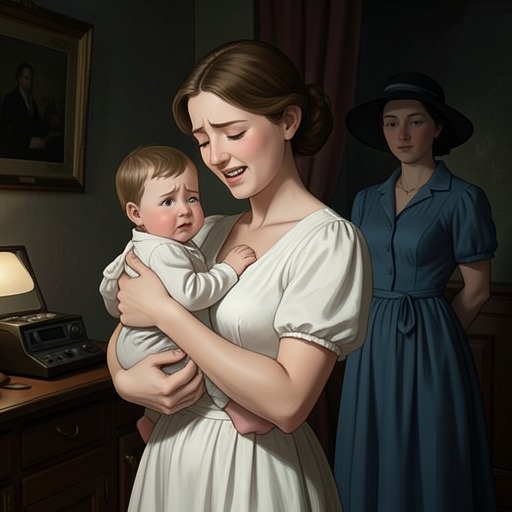
BlondeLa tigre di panno is a handmade cloth tiger that gathers several layers of Norma Jeane Baker’s life into one small object: a childhood memory she cannot quite verify, a theft committed in a moment of celebration, and the first toy she chooses for her unborn Baby. Its importance lies not in a stable origin but in the way its meaning shifts as it passes through her hands—from something seen in a shop window to a treasured possession, a paid-for gift, and finally something abandoned when she flees a dangerous relationship.
Appearance and Uncertain Memory
The tiger appears in the window of Henri’s Toy Shop, a small store specializing in handmade toys. As Norma Jeane Baker, Cass Chaplin, and Eddy G. Robinson Jr. pass it late one night, she recognizes it as resembling a tiger she remembers from childhood. Her memory does not settle into a single account: she wonders whether it is the same kind of cloth tiger as the Christmas present stolen from her at the orphanage, whether the one in the shop is larger and more finely made, or whether she is confusing it with the tiger she once stitched from remnants for Irina. The object’s first significance is therefore inseparable from uncertainty. It seems to offer a solid thing to hold, while its connection to the past remains unresolved.
That uncertainty also links distinct forms of care. The remembered orphanage gift belongs to a childhood in which a toy could be taken away; the handmade tiger for Irina belongs to Norma Jeane’s own effort to make something for a child. The shop-window tiger resembles both without being definitively identified as either. The novel makes resemblance, rather than a confirmed history, carry the emotional connection between these objects.
Theft, Guilt, and Purchase
The tiger’s place in the present changes abruptly when Eddy G. Robinson Jr., with Cass Chaplin watching, punches through the shop window and calmly takes it. The act turns the toy from merchandise behind glass into stolen property, and Norma Jeane’s delight at finding an object that feels familiar is entangled with the damage done to Henri’s shop. Eddy G. Robinson Jr. presents the tiger as Baby’s first toy. Norma Jeane keeps it under her pillow through the night, but by morning the pleasure of possessing it has given way to guilt, a hangover, and nausea. She carries the tiger back to the shop in her shoulder bag, unsure whether the previous night’s breakage feels real until she sees the damaged window and its rough wooden repair.
Rather than admit that Eddy G. Robinson Jr. broke the glass and took the toy, Norma Jeane tells Henri that she found it in an alley behind her home. She presents the tiger as dirty and offers to buy it, reasoning that Henri could not sell it in that condition. Her explanation makes the return possible without disclosing what happened, but it does not erase the harm: Henri speaks of the damage to the shop, his sister’s sadness, and his weakened trust in human nature. The tiger is thus the means by which Norma Jeane tries to repair a wrong while concealing its cause.
Henri sees her as a kind-hearted young woman and offers the tiger for ten dollars, discounted from fifteen. The small tag attached to it, however, gives a pencilled price of $8.98. Relieved that she can leave with the toy, Norma Jeane takes out her wallet, then insists on paying the full price because it is for her first child. Her decision turns the tiger from stolen goods into a purchased gift, though the circumstances of the theft remain hidden from Henri. The gesture repairs the exchange on her own terms: she will not accept a special discount for a toy whose return has already placed a cost on someone else.
Baby and the Object’s Changing Place
The tiger’s role as Baby’s first toy gives it a future-facing meaning that distinguishes it from the uncertain memories attached to Norma Jeane’s childhood. Her insistence on paying the full price makes the choice concrete: she is not simply recovering a lost keepsake but acquiring something for the child she expects to have. The toy brings together the childhood experience of having a gift stolen and her own impulse to make or choose something for a child. Yet that hoped-for future does not resolve the losses and separations threaded through her history; it gives them a new object to gather around.
Later, while recalling that she had loved Cass Chaplin and Eddy G. Robinson Jr. but decided in anger to live alone, Norma Jeane remembers that she had to flee the three-person relationship and take only essentials, including her special books. She left the rest behind, including the cloth tiger. Its departure is not described as a deliberate rejection of Baby’s gift. Instead, the object is caught in the practical rupture of escape: what had been carried home, kept close, and paid for as a child’s first toy becomes one of the things she cannot take with her.
Narrative Significance
The tiger’s meaning develops through changes in possession and circumstance. It begins as an object in a shop window that seems to answer a fragmentary memory; Eddy G. Robinson Jr.’s action exposes it to theft and violence; Norma Jeane’s return makes it an occasion for guilt and attempted restitution; her full-price payment makes it a gift for Baby; and her later flight leaves it behind. Each change gives the same handmade toy a different relation to care, harm, and loss.
The episode also makes the material object more than a private symbol. The broken window, the makeshift boards, Henri’s concern for his sister, and the disputed price keep the tiger attached to the consequences of what people do around it. It moves through a real transaction and a real injury even as Norma Jeane’s memory gives it an uncertain past and her hopes give it an imagined future. Its final absence matters for the same reason: the tiger cannot preserve the future she associated with Baby, and it cannot be carried intact through every break in her life.