June 1, 1926
Birth and Rejection
[Norma Jeane Baker](entity:character-recall-character-norma-jeane-baker-a8492af91754) was born in a [Los Angeles](entity:location-recall-location-los-angeles-11eff639bdf5) County hospital while her mother, [Gladys Mortensen](entity:character-recall-character-gladys-mortensen-f0793e152e6a), was absent and refused at first to hold her. An unfamiliar nurse had to teach Gladys how to support the newborn, while the infant’s father remained unnamed and distant.
The novel makes this beginning the seed of Norma Jeane’s lifelong fear of being unwanted. She would come to measure her existence through other people’s attention, while inventing and revising the identity she hoped might make them stay.
Infancy and early childhood
The Mirror Friend
Gladys learned to look at her daughter indirectly, often through a mirror, and Norma Jeane found a magical companion in her own reflection. She experienced her body and face as things first made visible by the gaze of another person.
That split between the self inside and the image outside later fed the creation of [Marilyn Monroe](entity:character-recall-character-marilyn-monroe-b58cb0a34aeb). The mirror promised clarity and control, but it also taught Norma Jeane to depend on being seen.
June 1, 1932
The Birthday Photograph
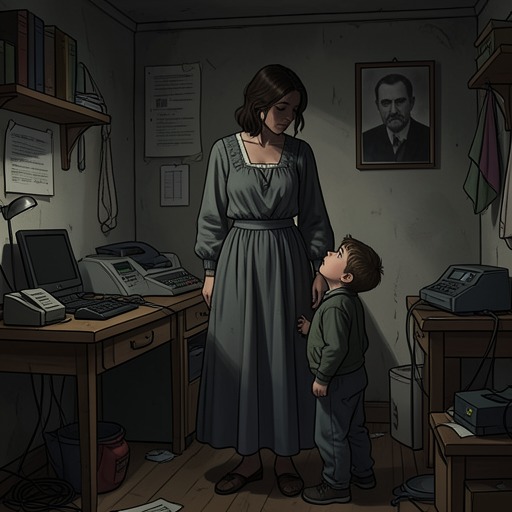
On her sixth birthday, Norma Jeane visited Gladys in a new apartment. Gladys announced that a photograph on the bedroom wall showed the girl’s father, then spun an elaborate story about his acting career, his travels, and his promise to return for them.
The photograph became a substitute for the father Norma Jeane had never known. Gladys demanded that the revelation remain secret, leaving the child with hope but no way to test the story against reality.
June 1, 1932
The Doll in the Drawer
Gladys gave Norma Jeane a beautiful blonde doll and told her that, as an infant, she had slept in a dresser drawer because her mother could not afford a cradle. The child loved the doll, though its loose limbs and vacant glass eyes unsettled her.
The doll became an enduring companion and a mirror for Norma Jeane’s own fears of being fragile, nameless, or abandoned. Gladys’s gift mixed tenderness with a disturbing demand that the child take responsibility for it.
June 1, 1932
The Scalding Bath
That evening Gladys bathed Norma Jeane in water that was painfully hot, entering the tub with her and speaking of the dead as spirits seeking new bodies. A key turned in the apartment door while mother and daughter struggled in the overflowing bath.
For Norma Jeane, the scene fused intimacy with danger. The bath became one of the memories through which later bodily fear, nightmares, and her difficulty distinguishing a remembered scene from a film would return.
Early childhood, before August 1934
Della’s Protection
Norma Jeane’s grandmother, [Della Monroe](entity:character-recall-character-della-monroe-aa40439f2ad4), provided the most dependable care in her early life. She made the girl work, took her to feed birds, and warned her to watch Gladys’s changing moods, while still speaking sharply of her own daughter.
Della’s love was practical and imperfect, but it offered a rare protection without the same volatility Norma Jeane experienced with Gladys. The hummingbirds and other birds they watched together became lasting images of freedom and vulnerability.
October 1934
The Wildfire Escape
During the devastating Santa Ana fires, Gladys woke Norma Jeane and drove toward the burning [Hollywood](entity:location-recall-location-hollywood-3ce8b1af5069) Hills rather than away from danger. She spoke calmly of a supposed refuge connected to the absent father, resisted police orders, and eventually turned back after officers blocked the road.
The journey exposed the instability of Gladys’s judgment and left Norma Jeane with a lasting lesson: a mother’s confident voice did not guarantee safety. Fires, desert, and the imagined father became entangled in the child’s sense of fate.
1934, after the summer call
Della’s Death
After hiding from Della when her grandmother called her home, Norma Jeane returned to find Della collapsed and dying in the bathroom. Della managed to tell the girl that she loved her and bless her before she died.
Norma Jeane blamed herself for hiding, while Gladys insisted that Della had simply reached her turn to die. The loss removed the child’s most reliable protector and intensified her fear that love could not keep people alive.
Autumn 1934
Gladys’s Breakdown
After Della’s death, Gladys brought Norma Jeane to live with her in [Highland Avenue](entity:location-recall-location-highland-avenue-df4ec1513868). As the fires and wider economic distress weighed on her, Gladys became increasingly unstable, isolated the child, and eventually tried to immerse her in scalding water before setting bedding alight.
Neighbors and ambulance workers restrained Gladys and took her to [Norwalk State Hospital](entity:location-recall-location-norwalk-state-hospit-e6f1ed7f15ee). Norma Jeane was left without her mother, while the adults around her struggled over what to do with a child whose only parent was institutionalized.
Autumn 1934
Abandonment at the Orphanage
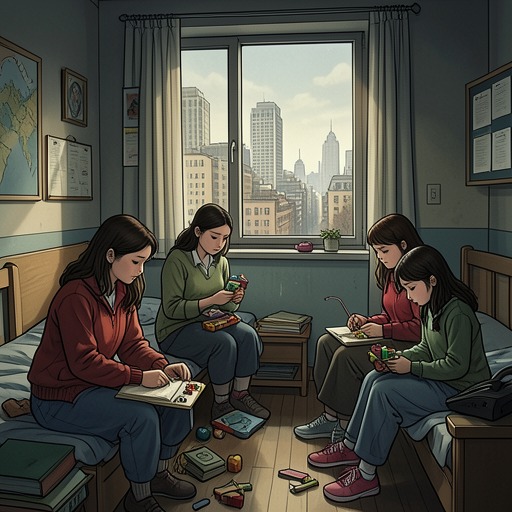
[Jess Flynn](entity:character-recall-character-jess-flynn-af86c16ab4c0) and [Clive Pearce](entity:character-recall-character-clive-pearce-6e208df23f54) drove Norma Jeane to a children’s home, telling her she was going to visit her mother in hospital. Instead, they left her at the orphanage, where she cried that she was not an orphan and insisted that she had a mother and a father.
The institution became a new world of crowded dormitories, strict rules, and children carrying their own histories of abandonment. Norma Jeane’s promise to become pretty enough for her father to come for her took shape there.
Christmas, 1934
Christmas at the Orphanage
A public [Christmas](entity:time-recall-time-christmas-a573265d0167) celebration brought a prince and princess to distribute gifts to the children. Norma Jeane was briefly lifted onto the stage, photographed beneath the lights, and given a small cloth tiger that she treasured.
The gift did not protect her from the orphanage’s harshness: sweets and toys were stolen, and the tiger disappeared soon afterward. Yet the scene fed her lasting conviction that cinema could transform an ordinary child into someone seen and celebrated.
1935–1937
The Adoption Refusals
Several couples sought to adopt Norma Jeane, including the Mounts, but Gladys repeatedly refused permission. One couple imagined the girl as their dead daughter reborn; another offered her the first experience of being called “Mamita.” Each possibility vanished when Gladys withheld consent.
The refusals sharpened Norma Jeane’s sense that her mother neither wanted to raise her nor would let another family do so. The child prayed and hoped, then learned to hide her disappointment from the adults who controlled her future.
October 1937
Gladys’s Letter
Norma Jeane wrote to Gladys asking permission to be adopted, describing her school, friends, and hopes for a new family. Gladys replied with anger, calling the request an insult and insisting that she would never allow her daughter to be adopted.
The letter deepened Norma Jeane’s sense of rejection. She continued to seek safety through prayer and [Christian Science](entity:organization-recall-organization-christian-scienc-606a2c70c38f), even as the doctrine’s denial of physical pain conflicted with her own body and experiences.
September 1938
Puberty and the First Period
At school, Norma Jeane began menstruating and tried to deny what was happening, refusing aspirin and sanitary supplies because she believed faith should conquer physical distress. Her friends eventually confronted her with the reality of the blood and pain.
The episode marked a painful passage into a body increasingly noticed and discussed by others. It also established a pattern of treating illness as moral weakness and trying to overcome pain through will alone.
November 1938
The Pirig Foster Home
Norma Jeane left the orphanage for foster care with Elsie and [Warren Pirig](entity:character-recall-character-warren-pirig-64b9f41aeec0) in [Van Nuys](entity:location-recall-location-1632b5c11ec6). She worked in the household, tried to be an ideal daughter, and found a kind of temporary family, even as Warren’s attention and Elsie’s suspicions made the home uneasy.
At school she struggled to speak confidently and failed to win roles in student productions. Her longing to be accepted continued to express itself through performance, while the adults around her treated her beauty as both a risk and a responsibility.
Late 1941
The Marriage Ultimatum
Elsie told the fifteen-year-old Norma Jeane that she should marry before she could be sent back to the orphanage. Warren’s interest in the girl, the household’s need for space, and the rules governing foster care all converged in the proposal.
Norma Jeane protested that she was too young and did not love anyone, but the threat of returning to institutional care overwhelmed her objections. Marriage was presented as protection, even though it narrowed her choices rather than expanding them.
Spring 1942
Meeting Bucky
Elsie arranged for Norma Jeane to meet [Buchanan Glazer](entity:character-recall-character-buchanan-glazer-26cc7395b906), known as Bucky. He was a robust young man working at [Lockheed](entity:organization-recall-organization-lockheed-1ed117d9fbfe) and as an assistant embalmer. At first he had little interest in the shy fifteen-year-old, but her beauty and attentiveness soon drew him in.
Norma Jeane admired Bucky and hoped that marriage would give her the secure family she had never known. Their courtship unfolded quickly under the pressure of wartime uncertainty and the belief that young men might soon be sent overseas.
June 19, 1942
Marriage to Bucky
Just after her sixteenth birthday, Norma Jeane married Bucky in [Mission Hills](entity:location-recall-location-771e59fe7fb6). The ceremony was attended mainly by his family and the Pirigs; her mother and father were absent. Norma Jeane wore a borrowed dress and entered marriage hoping she had finally been chosen.
The wedding seemed to promise safety, but the couple were children playing at adulthood. Norma Jeane called Bucky “Daddy,” while he welcomed her devotion and expected her to become a perfect wife.
1942–1943
Domestic Life and the War
Norma Jeane devoted herself to cooking, cleaning, and caring for Bucky. He worked long hours at [Lockheed](entity:organization-recall-organization-lockheed-1ed117d9fbfe) and at the funeral home, while she measured her worth through his appetite, affection, and approval.
The war made their private life inseparable from public events. Bucky followed the news and eventually enlisted, while Norma Jeane’s own ambitions—to work, travel, and serve—were curtailed by the family’s expectations of a wife.
1942–1944
Irina and the Lost Family
Norma Jeane became deeply attached to [Irina](entity:character-recall-character-irina-00c87d1c7eb1), the infant daughter of [Harriet](entity:character-recall-character-harriet-9ce5f2664d7b), a fellow tenant. She took the baby for walks, made her a cloth tiger, and imagined herself as the child’s mother while Harriet withdrew into grief over her missing husband.
When Harriet disappeared with Irina, Norma Jeane was devastated. The loss reawakened her own abandonment and left her with a recurring fear that a child could vanish without warning or explanation.
April 1944
Bucky Enlists
Bucky joined the [United States Merchant Marine](entity:organization-recall-organization-7d9c14b3681c) and prepared to sail for [Australia](entity:location-recall-location-29432536e761). Norma Jeane watched him depart with his family, displaying composure while feeling that she did not truly belong to the Glazers.
She soon left their home and began supporting herself. The war, which had taken her husband away, also gave her access to paid industrial work and a first taste of independence.
1944
Factory Work and Discovery
Norma Jeane found work at the [Radio Plane Aircraft](entity:organization-recall-organization-radio-plane-airc-d909a56a3f17) factory in [Burbank](entity:location-recall-location-d4fb3edfbe48), assembling aircraft components and later spraying paint. The work was hazardous and exhausting, but it gave her wages and a life beyond marriage and foster care.
Photographer [Otto öse](entity:character-recall-character-otto-se-6142580f5798) saw her at the factory and photographed her for a wartime publication. His camera made her visible to a wider world, beginning the transformation of an anonymous worker into a pin-up and aspiring actress.
1945–1947
The Modeling Years
Norma Jeane became a model for the [Preene Agency](entity:organization-recall-organization-preene-agency-d36bab8a35f3), appearing in advertisements and publicity photographs. She learned to pose, alter her hair, and present herself as a marketable image, while worrying about money, illness, and the possibility that her career would disappear.
The camera offered a route out of obscurity but also made her body a commodity. She increasingly depended on the gaze of photographers and clients to confirm that she existed and mattered.
1947–1950
The Playwright’s Trial
The unnamed playwright had resisted political pressure to cooperate with the [House Un-American Activities Committee](entity:organization-recall-organization-house-un-america-25077bfad5af) and had relied on [I. E. Shinn](entity:character-recall-character-i-e-shinn-a1ddeff514ee) to help him avoid a damaging public hearing. Shinn later used the playwright’s debt to secure an audition for his client.
The episode reveals how [Hollywood](entity:location-recall-location-hollywood-3ce8b1af5069) careers depended on private bargains during the blacklist era. The playwright’s public image as a principled artist coexisted with compromises he preferred not to examine.
1950–1951
The Orphanage Classmate
At a poetry class, the playwright met a quiet student named Gladys Pirig, who was in fact [Marilyn Monroe](entity:character-recall-character-marilyn-monroe-b58cb0a34aeb). He recognized her after seeing a photograph and learned that the shy woman in class had become a screen actress.
Her reading of George Herbert’s “The Altar” revealed a voice and intensity he had not expected. The discovery connected her present fame to the abandoned child he had once known as Norma Jeane.
1952
The Nude Photo Scandal
A newspaper uncovered the old calendar photograph of [Marilyn Monroe](entity:character-recall-character-marilyn-monroe-b58cb0a34aeb) posing nude as “[Miss Sogni d’Oro](entity:expression-recall-expression-miss-sogni-d-oro-aa8fcfed26c0).” The revelation threatened her studio contract and turned a private act of desperation into a national scandal.
Rather than deny the photograph, Monroe admitted that she had posed for money when she was poor and said she was not ashamed. The episode both endangered her career and intensified public fascination with her.
1952–1953
The Niagara Breakthrough
In Niagara, Monroe played [Rose Loomis](entity:character-recall-character-rose-loomis-ed01d9fbc57e), a sensual and dangerous wife whose presence dominated the film. She argued for changes to the character and repeatedly asked to reshoot scenes, pushing beyond the studio’s conception of her as a simple blonde ingénue.
The film made Monroe a major star, but its success deepened the split between her private self and the image [Hollywood](entity:location-recall-location-hollywood-3ce8b1af5069) sold. Rose’s sexuality and calculated menace became part of the public mythology surrounding her.
1953
Pregnancy with Baby
While involved with [Cass Chaplin](entity:character-recall-character-cass-chaplin-a3da035a0f38) and [Eddy G. Robinson Jr.](entity:character-recall-character-eddy-g-robinson-jr-1cdea66c69db), Norma Jeane learned that she was pregnant. She imagined the child as a chance to belong to a family and to become the mother she had long wanted, and she told the two men with hope and excitement.
The pregnancy also exposed the fragility of the Gemini relationship. Cass and Eddy were frightened and uncertain, even as they tried to share her joy and discuss a future together.
1953
The Cloth Tiger Returned
Norma Jeane discovered that Cass had kept the cloth tiger she had once cherished at the orphanage. Its return seemed to link her childhood losses to her present hope of motherhood.
The gift reinforced her belief that the men loved her and that a child might make their fragile household permanent. Yet the old tiger also carried the memory of stolen toys and abandoned children.
Summer 1956
Miscarriage in Maine
During the filming of The Misfits in [Nevada](entity:location-recall-location-b7e551c34d78), Norma Jeane miscarried. She had privately hoped to have a child with the playwright, but the loss left her physically ill and emotionally devastated.
The miscarriage intensified her longing for motherhood and her fear that her body had betrayed her. The experience also strained her marriage, as the playwright and Norma Jeane struggled to meet each other’s needs while both were in crisis.
1956
The Misfits Production
On the set of The Misfits, Monroe played Roslyn, a woman whose apparent softness concealed anger and moral force. She challenged the script and insisted that the character’s motives be made more complex, while her co-star [Clark Gable](entity:character-recall-character-clark-gable-0d6b248b3a01) and director [John Huston](entity:character-recall-character-john-huston-52bc78d55147) struggled with her intensity and delays.
Her performance became one of the most personal of her career. She saw Roslyn as a vessel for her own fears and desires, even as the film’s production became a public sign of her deteriorating marriage and health.
1956
Gladys Escapes Lakewood
Gladys escaped the [Lakewood](entity:location-recall-location-lakewood-69e0f66a5e4c) clinic and was found in a church several miles away. Norma Jeane hurried to her, relieved that she had been found alive but shaken by the reminder that her mother’s illness remained unpredictable.
The visit brought their unresolved history back into the room. Norma Jeane wanted to care for Gladys and to be recognized by her, but Gladys’s illness kept their relationship suspended between tenderness, fear, and confusion.
Late 1950s
The Playwright’s Letter
Norma Jeane received a letter from a man claiming to be her father. He praised her career, condemned [Hollywood](entity:location-recall-location-hollywood-3ce8b1af5069), and expressed regret for years of absence, promising to meet her in person.
The letter revived the childhood fantasy built around the photograph Gladys had shown her. Its self-justifying tone left the truth uncertain, while the promise of a reunion offered a hope that could still be withdrawn.
1956
Divorce from the Playwright
Norma Jeane and the playwright’s marriage deteriorated after the miscarriage and years of emotional strain. They eventually divorced in Mexico, ending a relationship that had once offered her a sense of intellectual and emotional intimacy.
She lost not only a husband but also a hoped-for family and a partner who had helped her believe in her artistic seriousness. Their separation left her more dependent on the public identity of [Marilyn Monroe](entity:character-recall-character-marilyn-monroe-b58cb0a34aeb) and more fearful of being alone.
1956
The Divorce Press Conference
After the divorce, Monroe faced reporters and tried to present the separation as a private matter. The press treated her marriage as a spectacle, while she struggled to distinguish her own feelings from the public story being written about her.
The episode reinforced her sense that fame made even intimate losses into material for strangers. She remained determined to work, but the cost of being watched and interpreted was growing harder to bear.
1956
The House on Fifth Helena
Monroe acquired a home at [12305 Fifth Helena Drive](entity:location-recall-location-12305-fifth-helena-d-902b4fb78429) in [Brentwood](entity:location-recall-location-brentwood-d8bc970bbd97), a place she hoped would give her privacy and a stable base. She furnished it gradually and imagined a future in which Gladys might live with her and a child might fill the house.
The home became both refuge and stage: the place where she tried to build a private life while the public continued to claim her image. Its rooms would later be associated with her fear, her isolation, and the end of her story.
1950s, before 1962
The President in Palm Springs
Monroe met the President during a private gathering in [Palm Springs](entity:location-recall-location-3613664e2d05) and came to believe that he might be her father. Their encounters mixed political power, sexual attention, and her hunger for paternal recognition.
The novel keeps the relationship uncertain and filtered through Monroe’s imagination. For her, the President’s attention became another possible route to protection and love, while his political world made her increasingly vulnerable to secrecy and surveillance.
1950s, before May 1962
The New York Meeting
Monroe traveled to [New York](entity:location-recall-location-7a11f2949ca3) hoping to meet the President, but the planned encounter was cancelled. Her longing and embarrassment remained, and she returned to the uncertainty of a relationship whose promises were never dependable.
The episode deepened her tendency to interpret powerful men as possible rescuers and to treat their attention as proof of her existence. It also foreshadowed the dangerous overlap between her private life and political secrecy.
1962, before the final months
A Secret Encounter with the President
In the novel’s account, Monroe met the President privately in [New York](entity:location-recall-location-7a11f2949ca3). The encounter was coercive and left her shaken, while the surrounding political and studio machinery ensured that the event remained concealed.
The experience intensified her confusion about consent, power, and the men who claimed to protect her. It also fed her conviction that her life was being watched and used by people whose motives she could not control.
1956
The Loss of Baby
At [Captain’s House](entity:location-recall-location-a854cee541a3) in [Maine](entity:location-recall-location-63a11a4e2b26), Monroe lost the pregnancy she had hoped would give her a child and a lasting family. The miscarriage left her with grief, guilt, and the haunting sense that she had failed the child she had already imagined.
The loss became a recurring wound in her later life. Her desire for motherhood did not disappear; instead it grew more urgent, intertwined with her fear of abandonment and her belief that a child might make her impossible to reject.
1953–1956
The Golden Globe of Fame
After Niagara and Gentlemen Prefer Blondes, Monroe became one of [Hollywood](entity:location-recall-location-hollywood-3ce8b1af5069)’s most recognizable stars. Publicity, interviews, photographs, and awards made “[Marilyn Monroe](entity:character-recall-character-marilyn-monroe-b58cb0a34aeb)” an increasingly powerful persona, even as Norma Jeane felt less able to control it.
She continued to seek serious roles and artistic respect, but the studio’s commercial image depended on her sexuality. Fame brought money and opportunity while intensifying her sense of being watched, packaged, and separated from her private self.
1953
The Bel Air Party
At a lavish [Bel Air](entity:location-recall-location-bel-air-721eb29dd6fc) gathering, Monroe was surrounded by studio figures and powerful men. She felt both admired and objectified, and the attention of the crowd brought back her fear that her body was public property.
She briefly encountered [Robert Mitchum](entity:character-recall-character-robert-mitchum-c067b87d4de5), who remembered her from the wartime factory and Bucky’s photographs. His recognition connected her [Hollywood](entity:location-recall-location-hollywood-3ce8b1af5069) image to her earlier life and its private humiliations.
1953
The Gemini Oath
Cas Sly and Eddie G. Robinson and [Marilyn Monroe](entity:character-recall-character-marilyn-monroe-b58cb0a34aeb) made a blood oath, calling themselves the Triple Star Trio, and promised to stay together forever even after death. The three were obsessed with this idea, believing their bond could transcend usual family and social rules
1953
The I Cipressi Visit
While visiting the mansion of I·Chipresi, Kas experienced terrifying hallucinations. Marilyn saw his fear and tried to comfort him; Eddie remained in this unstable family. This clearly shows that Kas's mental and physical condition is deteriorating. Marilyn's loyalty to him deepens, but the situation
After the pregnancy loss, 1956
The Gemini Breakup
After the miscarriage, as the pressure on the three-person relationship intensified, Monroe separated from Caspar Van Dien and Edward G. Robinson. The once-familial bond between the three could no longer bear the pain, jealousy, and unstable state of the two men
1950s
Gladys’s Escape
After escaping from the [Lakewood](entity:location-recall-location-lakewood-69e0f66a5e4c) Asylum, Gladys was found in a church. Marilyn visited her, brought gifts, and tried to help her return to normal life, but Gladys still found it difficult to be close, sometimes even not recognizing her daughter. The visit was a mixture of love and
1954
The Marriage to the Ex-Athlete
[Marilyn Monroe](entity:character-recall-character-marilyn-monroe-b58cb0a34aeb) began dating a famous retired baseball star, known as the one who proposed to Norma Jean, later they got married. He promised her a traditional family life free from [Hollywood](entity:location-recall-location-hollywood-3ce8b1af5069)'s interference; she hoped to be a wife and mother
1954–1955
The Ex-Athlete’s Violence
The jealousy and anger of a retired baseball star eventually turned into multiple acts of physical violence. Marilyn hid her injuries and continued to appear publicly; the cruelty in her marriage contrasted sharply with the glamorous image of this [Hollywood](entity:location-recall-location-hollywood-3ce8b1af5069) couple. She feared losing the stability that this marriage seemed to offer on the surface
1955
The Marriage Ends
[Marilyn Monroe](entity:character-recall-character-marilyn-monroe-b58cb0a34aeb)'s marriage to a retired baseball star broke down. She left him, although she still held the belief that if he loved her enough, he would not abandon her. This separation caused her to lose the ordinary family life she had once hoped to build. She returned to work, trying
1955
The New York Retreat
Marilyn went to [New York](entity:location-recall-location-7a11f2949ca3) to study acting and tried to escape the constraints of the [Hollywood](entity:location-recall-location-hollywood-3ce8b1af5069) star-making system. At the New York Dramatic Artists Theatre, she met the playwright again and read for his new play "The Golden Girl." This encounter revived a long-forgotten, unfinished affection
Before the 1955 meeting
The Playwright’s Dream
The playwright dreamed of returning to La Wye, New Jersey, to the humiliating poor life of his youth. In the dream, his father's washing machine and his unfinished works sank into the sewage
1955
The Reading of Magda
At the reading of "The Golden Girl," [Marilyn Monroe](entity:character-recall-character-marilyn-monroe-b58cb0a34aeb) performed the role of [Magda](entity:character-recall-character-magda-04673b189ca0) in a trembling and fragile manner. The playwright realized that she gave the character a vitality beyond his expectations
1955–1956
The Affair Begins
The playwright and Marilyn began a secret relationship. She saw him as the first man who could understand her thoughts and performance needs; while he saw in her both Maggie and the woman he once loved when young
1950s
The Playwright’s Political Persecution
The playwright continued to face pressure from the [Hollywood](entity:location-recall-location-hollywood-3ce8b1af5069) anti-communist investigations. He had refused to turn in his colleagues and was worried that the political climate would destroy his career and harm those around him
1956
The Playwright’s Proposal
The playwright spoke with Marilyn about the future of marriage and shared life, but he was still bound by his marital relationship with [Esther](entity:character-recall-character-esther-b91ff5ee0c38) and the responsibilities as a husband and father. Marilyn longed for a child and hoped that their love would allow them to build a family. Their feelings were sincere, but the
1956
Marriage to the Playwright
After divorcing a retired baseball star, Marilyn married a playwright. For a while, she believed she had finally found a partner who respected her intelligence and appreciated her beauty. The marriage did not eliminate the distance between them. He needed solitude and work; she needed comfort and closeness. The loss of
Summer 1956
The Miscarriage in Maine
During the making of The Misfits in [Maine](entity:location-recall-location-63a11a4e2b26), Monroe miscarried. The loss shattered her hopes of becoming a mother and intensified her dependence on the playwright, even as he struggled to respond to her grief.
The event also became a private source of guilt and recurring images of blood, death, and failed protection. The public saw only the troubled actress; the novel presents the private catastrophe beneath that image.
1956
Divorce from the Playwright
The marriage ended after the miscarriage and the accumulation of emotional strain. The playwright and Monroe divorced in Mexico, although each had once imagined the other as a possible partner for life.
Monroe’s loss was not only the end of a marriage but also the collapse of a hoped-for future with a child. She returned to the public world of [Hollywood](entity:location-recall-location-hollywood-3ce8b1af5069) while carrying grief that she could neither explain nor resolve.
Late 1950s
The Gemini Triangle Breaks
[Cass Chaplin](entity:character-recall-character-cass-chaplin-a3da035a0f38) and [Eddy G. Robinson Jr.](entity:character-recall-character-eddy-g-robinson-jr-1cdea66c69db) drifted in and out of Monroe’s life, their old blood oath unable to withstand addiction, instability, and betrayal. Monroe remembered the three of them as a family but increasingly feared that their love had been an illusion.
The loss of Cass, who later died, left her with a sense of unfinished grief and the conviction that she had failed to protect the people she loved. Eddy’s continued presence did not repair the damage.
1959
The 1959 Suicide Crisis
After emotional and professional setbacks, Monroe took an overdose of sleeping pills and nearly died. She later vomited the pills and survived, but the attempt deepened her dependence on medication and her fear of being left alone.
The crisis exposed the distance between the public image of a confident star and the private woman who could not find a reason to keep living except through love and work.
1953
The 1953 Tokyo Visit
While touring [Japan](entity:location-recall-location-820f849a273a) with the Ex-Athlete, Monroe was greeted by crowds who had come specifically to see her. She was surprised by the intensity of their attention and by the name “[Mon-chan](entity:expression-recall-expression-mon-chan-fd01795b5b58)” that the Japanese used for her.
The episode showed her that the public image of [Marilyn Monroe](entity:character-recall-character-marilyn-monroe-b58cb0a34aeb) had become independent of her own intentions. She could be adored as a symbol even when she felt uncertain and unseen as a person.
1954
The Korea Performance
Monroe traveled to Korea to entertain American troops. She performed in the cold for thousands of servicemen, who greeted her with overwhelming enthusiasm.
The experience brought her a powerful sense of purpose and belonging, even as it intensified the divide between the performer whom the troops adored and the private woman who felt fragile and alone.
1955
The Divorce from the Ex-Athlete
Monroe’s marriage to the former baseball star ended in divorce. The relationship had promised stability but had become controlling and violent, leaving her frightened and emotionally depleted.
She tried to remake herself after the separation, but the marriage’s injuries persisted in her body and in her belief that love could abruptly turn into punishment.
1955
The Seven Year Itch Premiere
At the [Hollywood](entity:location-recall-location-hollywood-3ce8b1af5069) premiere of The Seven Year Itch, Monroe’s fame reached a new peak. The subway-grate image became one of the most recognizable pictures of her career, transforming her body into a public spectacle.
The image’s popularity also intensified her fear that the public loved only the manufactured blonde. The crowd’s attention made the distinction between Marilyn and Norma Jeane harder to maintain.
1956–1960
The Misfits and Gable’s Death
During the making of The Misfits, Monroe struggled with the role, her health, and her marriage to the playwright. [Clark Gable](entity:character-recall-character-clark-gable-0d6b248b3a01) died shortly after filming, an event that left the cast shaken and deepened the sense that the film had been made under a shadow of loss.
Monroe’s performance as Roslyn became the final work of Gable’s career and one of the last major roles of her own. The film’s troubled production blurred the boundary between the characters’ despair and the actors’ lives.
1956
The Public Divorce
Monroe and the playwright divorced in Mexico, and their separation was followed by a public press conference. She tried to keep the collapse of the marriage from becoming another [Hollywood](entity:location-recall-location-hollywood-3ce8b1af5069) spectacle, but the press quickly turned it into one.
The separation left her without the family she had hoped to create. Her longing for a child and her fear of being abandoned continued to shape her choices.
1956
A Home in Brentwood
Monroe bought a house at [12305 Fifth Helena Drive](entity:location-recall-location-12305-fifth-helena-d-902b4fb78429) in [Brentwood](entity:location-recall-location-brentwood-d8bc970bbd97). She imagined it as a place of privacy and stability, and hoped that Gladys might one day live with her there.
The house became a refuge from the studio and from the press, but it also held her alone with her memories and fears. Its privacy could not keep the outside world—or her own past—away.
Late 1950s–early 1960s
The Secret President Meeting
Monroe’s connection to the President remained secret and uncertain, mixing attraction with her longing for paternal recognition. She believed he might understand or protect her, while his political position made their encounters dangerous and impossible to speak about openly.
The relationship contributed to her sense that powerful men could offer rescue and then disappear. The novel presents the encounters through her unstable memories, leaving their exact meaning ambiguous.
1962
The President’s New York Visit
Monroe was expected to meet the President in [New York](entity:location-recall-location-7a11f2949ca3), but the meeting was cancelled. She was left waiting for a promise that would not be kept, and the disappointment reinforced her sense that she could never rely on the men who had power over her.
The cancelled encounter also deepened her isolation at the moment when her public fame was greatest. The woman adored by strangers could still be abandoned by the person whose attention mattered most to her.
1962
The President’s Secret Encounter
The novel depicts a private encounter between Monroe and the President in [New York](entity:location-recall-location-7a11f2949ca3) as coercive and disorienting. She experienced it through a mixture of desire, fear, and confusion, unable to separate the man from the father figure she had long imagined.
The encounter remained secret, and the political machinery around both of them helped ensure that no public account could settle what had happened. It intensified Monroe’s vulnerability and her suspicion that she was being watched and used.
May 1962
The Birthday Performance
At [Madison Square Garden](entity:location-recall-location-6f38c0d5ca47), Monroe sang “Happy Birthday” to the President in a glittering gown. The performance was brief but became an iconic public image, blending celebrity spectacle with political intimacy.
For Monroe, the event confirmed that Marilyn had become a public symbol beyond her control. The crowd’s adoration was both intoxicating and unsettling, especially because the private relationship behind the performance remained concealed.
1962
The Something’s Got to Give Crisis
Monroe’s work on Something’s Got to Give was disrupted by illness, missed days, and conflict with the studio. The production fired her, and the public argument over her reliability became another struggle over control of her image and career.
She wanted to be treated as an actress rather than a commodity, but the studio could suspend or dismiss her at will. The conflict deepened her isolation and left her increasingly dependent on medication and on promises of protection that often failed.
August 3, 1962
The Final Package
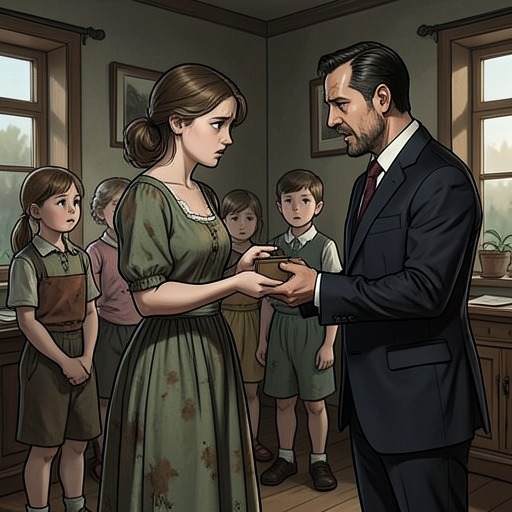
A courier arrived at Monroe’s [Brentwood](entity:location-recall-location-brentwood-d8bc970bbd97) home with a small package marked for “MM.” The narrator describes the delivery as Death arriving on a bicycle, while Monroe accepted the parcel and signed for it without hesitation.
The package’s sender and contents remain undisclosed in the scene, leaving the delivery suspended between gift and threat. Its arrival frames the final movement of the novel with the sense that Monroe’s past, her public image, and her approaching death have converged.
August 1962
The Final Night
By the novel’s final movement, Monroe is isolated in her [Brentwood](entity:location-recall-location-brentwood-d8bc970bbd97) home, surrounded by memories and by the people who have claimed, used, or abandoned her. She struggles to distinguish the woman she is from the figure called [Marilyn Monroe](entity:character-recall-character-marilyn-monroe-b58cb0a34aeb) and from the lost child she still carries within her.
Her death is presented within the novel’s invented, dreamlike world rather than as a settled historical account. The ending leaves her life suspended between public legend and private terror, with the image of a woman whose need to be loved was never answered.