Marilyn Monroe’s reproductive loss and infertility
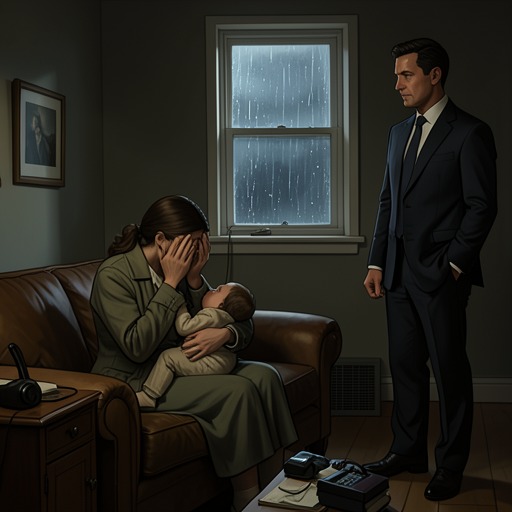
BlondeMarilyn Monroe’s reproductive loss and infertility shape a story in which the hope of motherhood persists beside bodily injury, concealment, and grief. A dream places Baby safely beneath her heart, while a doctor tells The Playwright that repeated brutal abortions have left her uterus badly damaged and that conceiving at all was a miracle. The diagnosis is withheld from her; the loss in Maine then becomes a lasting wound in the marriage, experienced by the two spouses in different, increasingly isolating ways.
The imagined pregnancy and medical disclosure
At Captain’s House, Marilyn moves barefoot through a waking dream, excited and hopeful. She knows Baby has not yet left her: the child remains curled beneath her heart, in an imagined pouch, and her belly swells around a baby the size of a medium melon. The scene gives pregnancy a consoling future tense. Baby may one day leave to become an actor and embark on mysterious journeys, but that imagined abandonment lies far away; for now, the child is still with her. The dream’s reassurance depends on a simple distinction: the devastating separation has not yet happened.
The fantasy is not secure. Its point of view slips between Marilyn’s dream and the possibility that the dream belongs to Baby, who might already dream in the womb. That uncertainty folds a mother’s hopes together with a child’s imagined consciousness, even as the narrative gestures toward Marilyn’s own beginnings and the life she may have dreamed before birth. Pregnancy is therefore presented not as a stable fact but as a fragile imaginative shelter, one that can be entered from more than one perspective.
Within this dream, Marilyn picks up papers on the desk of the man she lives with and is married to, although she knows she is not supposed to touch them. The words on the page become male voices: a doctor first warns The Playwright that he has bad news, then says Marilyn should recover from the recent abortion apart from occasional pain and bleeding. The reassurance gives way to the finding that her reproductive organs, especially her uterus, are badly damaged. Asked to explain, the doctor says she has had several abortions, all brutal, and that her ability to conceive at all is a miracle. The Playwright refuses to believe that his wife has ever had abortions, but the doctor insists on what he has found.
Because the disclosure arrives through papers discovered in a dream and words heard as voices, medical knowledge enters the scene in a divided form: it is both a diagnosis and something Marilyn is not meant to know. The Playwright receives the explanation, but Marilyn does not. The narration allows the reader to hear what the wife cannot, setting up a consequential imbalance between what her body experiences and what her husband understands—and what he chooses to tell her.
Physical aftermath and the loss in Maine
The later pregnancy loss in Maine changes the couple’s life permanently. Its impact is described as a woman’s enduring, wearing grief, not as a sorrow that can be set aside once the immediate event has passed. The Playwright interprets Marilyn’s suicidal tendencies as arising only from the loss of their child. His certainty narrows her distress to one cause, even while the story has already established a wider history of reproductive injury and information withheld from her.
The bodily consequences continue after the Maine loss. As the doctor had predicted, Marilyn suffers frequent uterine pain and bleeding that frightens her. Her menstruation remains painful and irregular, extending the injury into ordinary, recurring bodily experience. The narrative does not treat the damaged uterus as a single revelation that ends with the consultation: pain, bleeding, fear, and irregular cycles keep the diagnosis present in her life, though she has never been told what the doctor said about her condition.
The Playwright deliberately keeps that explanation from her. He knows that the doctor called her uterus badly damaged and described her earlier abortions as brutal; Marilyn does not know that he possesses this knowledge. The secret thus becomes more than the content of a medical report. It divides the spouses into the one who knows and the one who is excluded from knowing, while Marilyn must encounter the effects through pain and alarming bleeding without access to the diagnosis that might explain them.
Marriage, silence, and divergent grief
After the loss in Maine, the marriage is changed beyond repair in the Playwright’s understanding. By the time they reach Reno, Marilyn no longer wants him in her bed. He nevertheless believes she still wants a child, perhaps more intensely now that she is a year older and her health has become less stable. That belief places desire and bodily vulnerability side by side: he imagines her longing for motherhood growing as her physical condition worsens, but the narrative does not make that longing a simple remedy for grief.
Her refusal of the shared bed marks a change in intimacy that he can observe but cannot fully interpret. The secret diagnosis deepens that distance. He carries knowledge about her reproductive history without telling her, while she lives with symptoms whose cause remains concealed. Their suffering is therefore not shared in equal terms: the loss is common to the marriage, but the medical explanation belongs to the husband alone, and her physical aftermath continues without the understanding he could have offered.
During the filming of The Misfits, the Playwright sees the film becoming the tomb of their marriage rather than the love-gift he had hoped it would be. As Marilyn’s work with Clark Gable intensifies, he thinks she grows brusque and even rude toward him; he wonders whether his response is simply jealousy. He also watches her take increasing amounts of medication and lie about what she takes and how much. These observations belong to his perspective and do not establish that reproductive injury alone causes her behavior. They do show how the pregnancy loss and its aftermath sit inside a broader marital estrangement, where he feels unable to care for her and increasingly remains at a distance, watching.
Roslyn and the persistence of the wound
The film gives this private crisis a parallel in Roslyn, Marilyn’s role in The Misfits. On the set, Roslyn’s scene is built around a woman who drinks too much, dances alone, and runs into the darkness to embrace a tree. The men’s frustrated, sad, and angry gazes are to be recorded as hope, devotion, and love. The scene belongs to Roslyn, but the film’s emotional arrangement also exposes the distance between being watched as the object of men’s feeling and being reached as a person.
The Playwright had hoped to contain Marilyn’s luminous beauty in Roslyn; instead, he experiences the production as the grave of their marriage. His attention to her work with Gable, her medication, and her withdrawal from him makes the set a place where artistic intimacy and personal failure overlap. Roslyn does not erase the reproductive loss, and the evidence does not make her a direct substitute for Baby. Rather, the role gathers the film’s troubled marriage and Marilyn’s continuing life into a figure the Playwright both writes and watches.
Later, at her home on 12305 Fifth Helena Drive in Brentwood, Marilyn recognizes that everything Roslyn was had been her life. That retrospective identification gives the role a significance beyond the film set: Roslyn becomes a way to recognize experience that had been lived but not fully understood at the time. In the reproductive-loss narrative, the parallel is especially resonant because so much remains unspoken. The doctor’s diagnosis is hidden from Marilyn, the pain recurs without explanation, and the Maine loss leaves a grief that permanently changes her marriage. The story thus presents reproductive injury as physical damage and as a condition of unequal knowledge, fractured intimacy, and persistent longing for the child who is imagined first as safely present and then mourned as irretrievably lost.