Avoncliff
BloodhoundsAvoncliff is the canal-side setting of Milo Motion’s lost keys, a small incident whose apparent irretrievability later gives way to physical recovery. The stretch of water above the Cross Guns, before the Avoncliff Aqueduct, links an ordinary evening ashore to evidence that helps Peter Diamond recognize what the divers have found.
Setting and the evening at the canal
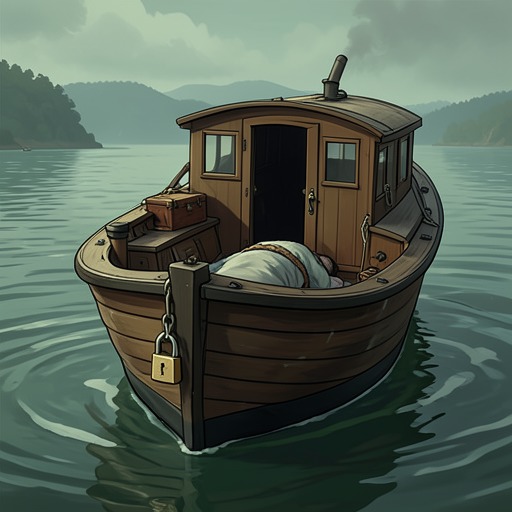
Milo had his boat tied at a mooring just above the Cross Guns, on the canal stretch before the Avoncliff Aqueduct. He described the pub as particularly appealing on a summer evening and had gone there for a meal and several beers. The outing was unusual for him, and by the time he returned after dark he had been drinking enough to be worse for it. As he opened the boat and stumbled while pulling the door, the keys slipped from his hand and went over the side. Milo was alone. He initially took comfort in having spares for all the keys, so the loss seemed inconvenient rather than disastrous; the canal, however, had taken the original set out of reach.
The loss and its presumed finality
Asked whether he tried to recover the keys the next morning, Milo said he had not. He considered the attempt hopeless because the keys would have sunk into the mud. Avoncliff thus became more than the location of an accidental drop: it was the place where a recoverable everyday object passed, in Milo’s understanding, into concealment beneath the water and silt. The episode also fixes the circumstances of the loss with unusual precision: after dark, following a meal and beers at the Cross Guns, while Milo was opening his boat at its mooring. Those details later made the reported location meaningful to Peter Diamond. What Milo had treated as a private mishap had left an object in the canal that could still be retrieved.
Recovery and significance
Much later, a report that someone was at Avoncliff prompted Diamond to remember the divers. Their work was complete, and the reason they had contacted the police was that they had recovered the keys Milo had dropped into the canal. Diamond produced the rusty bunch from his desk and identified it to Julie Hargreaves. The recovered object converted Milo’s account from an unrecoverable loss into material evidence. Avoncliff’s narrative importance rests on this change in status. First it is a pleasant evening mooring, then the site of a momentary accident and presumed disappearance, and finally the place associated with the divers’ successful recovery. The interval between the keys sinking and their appearance on Diamond’s desk gives the location a quiet investigative function: remembering Avoncliff supplies the connection between the divers’ report and Milo’s earlier account.