1961
Chilmark’s Secret Romance
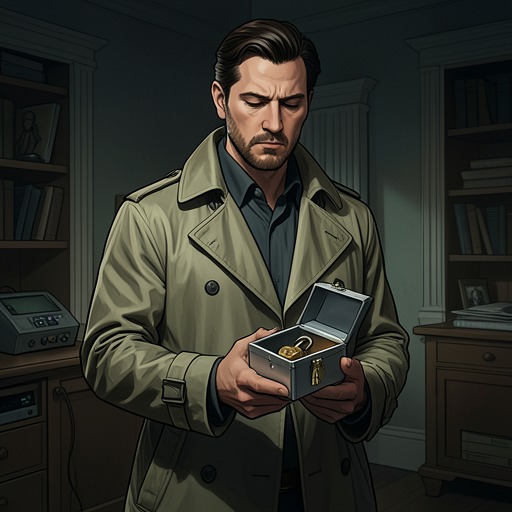
After her parents died in a car crash in France, twenty-six-year-old [Hilda Chilmark](entity:character-recall-character-hilda-chilmark-b6e8ead32146) relied on a young solicitor to settle the family’s affairs. A Valentine and a celebratory dinner drew her into a private romance with him, though she later learned that he was already married.
When she became pregnant, he refused marriage and urged her to end the pregnancy. Hilda arranged an illegal adoption through a cousin in Exmouth, gave birth, and returned to [Bath](entity:location-recall-location-bath-480b336e0c30) without learning who had adopted her son.
1989
The Bloodhounds Begin
[Polly Wycherley](entity:character-recall-character-polly-wycherley-6e498afdddd5) and [Milo Motion](entity:character-recall-character-milo-motion-d43361298c88) founded the [Bloodhounds](entity:character-recall-character-bloodhounds-bb0860ecd98d) after meeting fellow crime-fiction enthusiasts at a dinner in [Bath](entity:location-recall-location-bath-480b336e0c30). The informal group grew through chance encounters and invitations, eventually moving from a hotel bar to a meeting room in the crypt of [St Michael's](entity:organization-recall-organization-st-michael-s-6edb6dc29d0f).
Its members shared a love of crime writing but disagreed sharply about what made it worthwhile: fair-play puzzles, literary ambition, or unvarnished depictions of real violence. Those divisions would later turn the club into both the setting for a criminal challenge and a circle of suspects.
January 1993 and the years before the main events
The House Changes Hands
Facing depleted savings and poor investment advice, [Hilda Chilmark](entity:character-recall-character-hilda-chilmark-b6e8ead32146) sold her family house in the Paragon for £330,000, retaining the right to live in its basement for life. In later years she drew roughly £1,000 a week in cash, spending down the proceeds while keeping up appearances of inherited gentility.
About two years before the main events, someone who knew the story of her pregnancy contacted her and claimed to be her son. Hilda believed him and gave him money, but the true identity behind the claim remained uncertain; the payments would eventually bring the police to [A.J.](entity:character-recall-character-a-j-6b1fa6fcef52) and expose a separate deception.
Monday afternoon before the first Bloodhounds meeting
The Saltford Shooting
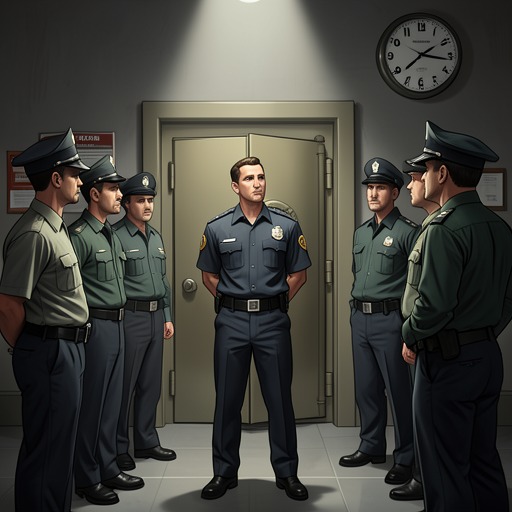
Detective Superintendent [Peter Diamond](entity:character-recall-character-peter-diamond-3709076ee2ce) was returning from court in a police car when an emergency call sent him racing toward [Saltford](entity:location-recall-location-765b32c8b966). Outside the bank, chief clerk Routledge told him that manager Bellini had been shot dead in his office.
Routledge then revealed that he himself had fired the fatal shot, describing the victim as a man who had made his life miserable. The abrupt confession left Diamond with a murder case that seemed simple, even tedious, and a suspect already in custody.
Monday evening, the same day as the Saltford shooting
Shirley-Ann Joins
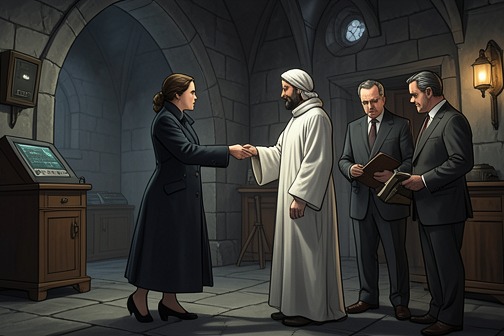
[Shirley-Ann Miller](entity:character-recall-character-shirley-ann-miller-c0671001e4b3) arrived at the crypt of [St Michael's](entity:organization-recall-organization-st-michael-s-6edb6dc29d0f) hoping to join the [Bloodhounds](entity:character-recall-character-bloodhounds-bb0860ecd98d), anxious that she might have found the wrong place. [Milo Motion](entity:character-recall-character-milo-motion-d43361298c88) and [Miss Chilmark](entity:character-recall-character-miss-chilmark-5c48cbb33606) tested her reading credentials before [Jessica](entity:character-recall-character-jessica-f1d7f2924a7f) welcomed her and helped her feel less out of place.
Shirley-Ann explained that she had recently moved to [Bath](entity:location-recall-location-bath-480b336e0c30) and that her partner [Bert](entity:character-recall-character-bert-edc68866069c) worked evenings at the sports centre. Her voracious reading and familiarity with crime writers quickly showed that she could contribute to the group, even if its members’ social tensions were already apparent.
Later that Monday evening
A Club of Opposites
As the members gathered, Shirley-Ann assembled an early impression of the club: Polly was its capable organizer, [Miss Chilmark](entity:character-recall-character-miss-chilmark-5c48cbb33606) a formidable enthusiast, [Jessica](entity:character-recall-character-jessica-f1d7f2924a7f) its lively specialist in female detectives, Milo a pedantic puzzle devotee, Sid a near-invisible newcomer, and [Rupert](entity:character-recall-character-rupert-d1c14ade5ea7) a provocative regular who had yet to arrive. Polly’s late entrance and Sid’s startling appearance from behind a pillar gave the meeting its loose, slightly chaotic character.
Milo described the group’s origins and their habit of recommending books, while Shirley-Ann learned that the members often met over competing tastes rather than a settled program. Jessica invited her to the pub afterward, an easy welcome that would later make Polly wary.
During the first Bloodhounds meeting
The Puzzle Versus Reality
The [Bloodhounds](entity:character-recall-character-bloodhounds-bb0860ecd98d) argued over whether crime fiction should prize the puzzle, literary quality, or realism. [Jessica](entity:character-recall-character-jessica-f1d7f2924a7f) criticized classic whodunits for contrived tricks, while Milo defended the Golden Age challenge and the locked-room mystery; [Rupert](entity:character-recall-character-rupert-d1c14ade5ea7) rejected genteel puzzles in favor of violent stories rooted in social realities.
Shirley-Ann found herself drawn into the debate, and Sid unexpectedly spoke of having been burgled. Milo promised to bring John Dickson Carr’s The Hollow Man and read its celebrated locked-room lecture at the next meeting, a choice that would soon become central to the real crimes.
Near the end of the first Bloodhounds meeting
Marlowe’s Disruptive Entrance
[Rupert](entity:character-recall-character-rupert-d1c14ade5ea7) arrived with [Marlowe](entity:character-recall-character-marlowe-fb13c659b050), whose wet coat shook water across the circle and briefly dissolved the meeting into complaints and laughter. [Miss Chilmark](entity:character-recall-character-miss-chilmark-5c48cbb33606) objected to the dog, while Rupert defended it as the only member enjoying its evening.
Once order returned, the argument resumed, with Rupert calling classic detective stories fairy tales and Shirley-Ann defending the pleasure of restored order. The dog’s presence sharpened Miss Chilmark’s irritation and foreshadowed a more serious confrontation at the next gathering.
After the first Bloodhounds meeting
Jessica’s Warning
[Jessica](entity:character-recall-character-jessica-f1d7f2924a7f) took Shirley-Ann to the [Moon and Sixpence](entity:location-recall-location-moon-and-sixpence-9b5830255d62) and described the group as a collection of potential murderers: people who knew plots, forensic conventions, and the imagined mechanics of killing. She warned that readers could mentally participate in the crimes they followed.
Shirley-Ann treated the claim as provocative talk, but Jessica’s seriousness unsettled her. The conversation also established Jessica as a perceptive, confident woman with a gallery, a complicated marriage, and a knack for reading the people around her.
The following Thursday
Bumblebee’s New Assignment
At a hastily convened police meeting, the Assistant Chief Constable disclosed a tip that someone planned a major theft in [Bath](entity:location-recall-location-bath-480b336e0c30). The target was J. M. W. Turner’s watercolor of Bath Abbey, displayed in the [Victoria Gallery](entity:organization-recall-organization-victoria-gallery-e3a3d678c6b2) and valued at more than a million pounds.
[John Wigfull](entity:character-recall-character-john-wigfull-ae80a75b306e) proposed using [Operation Bumblebee](entity:organization-recall-organization-operation-bumble-cc924180c436) to stake out the gallery rather than merely advertise stronger security. The Assistant Chief Constable approved the trap, and Wigfull selected officers from Diamond’s murder squad, including [Julie Hargreaves](entity:character-recall-character-julie-hargreaves-076cb5fbe430), to help guard the painting.
Friday morning, before the stamp theft became public
The Turner Riddle
At breakfast, [Peter Diamond](entity:character-recall-character-peter-diamond-3709076ee2ce) heard [BBC Radio Bristol](entity:organization-recall-organization-bbc-radio-bristo-a39777853fbd) broadcast a four-line riddle beginning with the initials J.M.W.T. and declaring that the speaker would soon come to Victoria. He wrote it down, suspecting a threat to the Turner but recognizing that the wording might admit another interpretation.
Wigfull treated it as a direct warning about the painting and grew angry that the message had been broadcast to the city. Diamond offered to inspect the gallery’s security, partly to help Wigfull and partly to reclaim Julie from the stakeout.
Friday morning
The Gallery Stakeout
At the [Victoria Gallery](entity:organization-recall-organization-victoria-gallery-e3a3d678c6b2), Diamond found uniformed and private security staff watching a grand, windowless room. The Turner was fixed to a central display unit but, in his opinion, was not an especially impressive painting; the building’s visible safeguards did not eliminate the possibility of a determined theft.
Julie had officers stationed on the roof and inside the gallery. Diamond persuaded Wigfull to release her to help with the [Saltford](entity:location-recall-location-765b32c8b966) bank inquiry, leaving the painting under the existing operation while the real target remained unidentified.
Friday morning, during the Turner stakeout
The Penny Black Is Stolen
A thief entered the [Postal Museum](entity:location-recall-location-postal-museum-35fd516bcd1a) through an upstairs window, apparently disguised as a window cleaner, and stole the world’s most valuable [Penny Black cover](entity:object-recall-object-penny-black-cover-72ee6496e640). The audacious daytime approach let the intruder carry a ladder and bucket through the street without attracting notice.
Police learned that the cover had been displayed on loan in a secured cabinet. The theft exposed the Turner operation as a diversion and left Wigfull facing a major crime that had happened under the city’s attention and apparently in plain sight.
Friday afternoon
The Riddle’s True Target
When the theft became known, Diamond revisited the morning’s rhyme. He realized that “Victoria” could mean the Queen on the [Penny Black](entity:object-recall-object-penny-black-574a832c1796), not the [Victoria Gallery](entity:organization-recall-organization-victoria-gallery-e3a3d678c6b2), and that the Turner warning had successfully drawn the police toward the wrong object.
Diamond warned Wigfull to expect questions from the press and advised him to describe the theft as a carefully planned crime without speculating about ransom. Wigfull accepted the help, though the revelation made clear that the thief had deliberately manipulated the police and the news media.
The morning after the stamp theft
Shirley-Ann Meets Polly
[Polly Wycherley](entity:character-recall-character-polly-wycherley-6e498afdddd5) invited Shirley-Ann for coffee at Le Parisien and asked whether the first meeting had put her off. Polly rehearsed the [Bloodhounds](entity:character-recall-character-bloodhounds-bb0860ecd98d)’ history and the many people who had left, presenting herself as the group’s indispensable center.
Her warm manner cooled when she learned Shirley-Ann had gone for a drink with [Jessica](entity:character-recall-character-jessica-f1d7f2924a7f). Polly cautioned that Jessica was “deeper” than she appeared, then became distracted by police examining the nearby [Postal Museum](entity:location-recall-location-postal-museum-35fd516bcd1a). Shirley-Ann left liking Polly less and uncertain what lay behind the warning.
The afternoon after the stamp theft
A Second Riddle Arrives
A second poem reached [BBC Radio Bristol](entity:organization-recall-organization-bbc-radio-bristo-a39777853fbd), asking where Victoria had gone, invoking the “Grand Old Queen,” and directing listeners to find a lady in a locked room at seventeen. Police officers and senior staff struggled to identify its references, while Diamond warned that a number like seventeen could point to countless unrelated things.
Wigfull considered a young woman, an address, or a time, but no interpretation produced a useful lead. The riddle’s later connection to chapter seventeen of The Hollow Man would make it seem precise in retrospect, while at the time it offered no practical way to prevent the coming events.
The next Monday evening
The New Meeting Turns to Crime
At the next [Bloodhounds](entity:character-recall-character-bloodhounds-bb0860ecd98d) meeting, [Miss Chilmark](entity:character-recall-character-miss-chilmark-5c48cbb33606) proposed that the members apply their detective-fiction knowledge to the real [Penny Black](entity:object-recall-object-penny-black-574a832c1796) theft. [Jessica](entity:character-recall-character-jessica-f1d7f2924a7f) and Shirley-Ann debated whether a collector or ransom seeker might be responsible, while the others examined the riddles and their literary echoes.
The conversation turned to the second poem’s “locked room” and “seventeen,” but the group could not settle on a meaning. Shirley-Ann, preparing to speak about Stanley Ellin, watched the old rivalries and small alliances with increasing attention.
During the second Monday meeting
Miss Chilmark’s Panic
[Marlowe](entity:character-recall-character-marlowe-fb13c659b050) burst into the room and leapt toward [Miss Chilmark](entity:character-recall-character-miss-chilmark-5c48cbb33606), who tipped backward in her chair and began hyperventilating. [Jessica](entity:character-recall-character-jessica-f1d7f2924a7f) recognized the attack, asked for a paper bag, and used it to help restore Miss Chilmark’s breathing; Sid supplied the bag from his carrier, where he had wrapped a book.
[Rupert](entity:character-recall-character-rupert-d1c14ade5ea7) removed Marlowe, and Miss Chilmark stayed after a break, satisfied that the dog had been sent away. The incident created a brief moment of disorder in which the paper bag passed from Sid to Jessica, a small object that would later mislead the police.
Later that Monday evening
Shirley-Ann Reads Ellin
Shirley-Ann read Stanley Ellin’s “The Blessington Method” to the [Bloodhounds](entity:character-recall-character-bloodhounds-bb0860ecd98d). The story’s chilling treatment of people deemed unfit unsettled Polly and drew an approving response from [Rupert](entity:character-recall-character-rupert-d1c14ade5ea7), who saw crime fiction as a means of confronting social cruelty.
The argument reignited the group’s competing ideas about fiction before Milo redirected attention to his promised reading from The Hollow Man. Sid followed closely, unusually engaged by the subject of locked-room mysteries.
Near the end of the second Monday meeting
The Penny Black Reappears
As Milo opened The Hollow Man at chapter seventeen, a faded envelope fell from its pages. It bore a [Penny Black](entity:object-recall-object-penny-black-574a832c1796) and the [Bath](entity:location-recall-location-bath-480b336e0c30) postmark dated [2 May 1840](entity:time-recall-time-2-may-1840-1a40d73a26ac): the missing cover from the [Postal Museum](entity:location-recall-location-postal-museum-35fd516bcd1a).
Milo insisted he had never seen it and said the book had stayed in his possession throughout the meeting. The discovery transformed the book’s locked-room chapter into an apparent real-life puzzle and made Milo the focus of immediate suspicion.
Immediately after the Penny Black discovery
Milo Chooses the Police
The [Bloodhounds](entity:character-recall-character-bloodhounds-bb0860ecd98d) split over what Milo should do. [Rupert](entity:character-recall-character-rupert-d1c14ade5ea7) and [Jessica](entity:character-recall-character-jessica-f1d7f2924a7f) were willing to keep quiet, while Polly and [Miss Chilmark](entity:character-recall-character-miss-chilmark-5c48cbb33606) urged him to report the cover; Shirley-Ann left the choice to Milo, and Sid said he could remain silent.
Milo ultimately decided to take the stamp to the police. The meeting ended early, and he left alone with the cover concealed inside his book, unaware that the discovery had set in motion a second crime.
Late Monday night
Sid’s Body in the Boat
Milo reported the [Penny Black](entity:object-recall-object-penny-black-574a832c1796) to the police, and Wigfull questioned him for hours before accompanying him to the Mrs. Hudson at [Dundas Boatyard](entity:location-recall-location-dundas-boatyard-08ebca43896a). The stern door had been padlocked; Milo opened it with his own key, and they found [Sid Towers](entity:character-recall-character-sid-towers-4d498efce772)’s body inside the cabin.
The boat appeared to have been secured, with the opposite door bolted from within and no obvious route through its narrow windows. Sid had been struck on the head, and Milo recognized his clothes but could not explain why the [Bloodhounds](entity:character-recall-character-bloodhounds-bb0860ecd98d)’ quietest member had come aboard.
The following morning
Diamond Takes the Murder
[Peter Diamond](entity:character-recall-character-peter-diamond-3709076ee2ce) assembled the murder squad and identified the victim as [Sid Towers](entity:character-recall-character-sid-towers-4d498efce772), a security guard who had been alive in central [Bath](entity:location-recall-location-bath-480b336e0c30) shortly before the meeting ended. Milo’s police-station alibi made it impossible for him to have traveled to the boatyard and killed Sid in the available time.
Diamond separated responsibilities: Wigfull’s team retained the stamp theft, while the murder squad investigated the killing. He directed officers to interview all the [Bloodhounds](entity:character-recall-character-bloodhounds-bb0860ecd98d) about the meeting, their relationships, and Sid’s behavior, suspecting that the answer lay within the club.
The morning after the murder
Sid’s Ordered Flat
Diamond and Julie searched Sid’s small flat beneath the railway viaduct. Its immaculate rooms and bare walls suggested a life arranged around work and solitude, while the living room revealed shelves full of John Dickson Carr and Carter Dickson novels.
The books were mostly inexpensive reading copies rather than valuable first editions. Sid had no obvious family or social circle, but his devotion to locked-room puzzles and his employment with [Impregnable](entity:organization-recall-organization-impregnable-46ace5619f89) made him more capable than his shyness had suggested.
The day after Sid’s murder
The First Interview Round
Police interviews confirmed that Sid had been a solitary but reliable security guard, accustomed to working alone. Diamond learned that the group’s members knew Milo planned to bring The Hollow Man to the meeting and open chapter seventeen, narrowing the possible stamp plan to people who knew about it.
Milo explained that Sid had brought his own copy of the same novel, published in America as The Three Coffins. The two books at the meeting were not a coincidence: Sid had wanted to follow Milo’s reading, a fact that further connected him to the locked-room challenge.
The day after Sid’s murder
The Boat’s Missing Windlass
Diamond returned to the Mrs. Hudson with Milo to check for a possible murder weapon. The boat’s security arrangements remained apparently intact, and Milo maintained that he had locked it before leaving for the meeting.
A windlass used to operate the canal lift-bridge was missing from an exterior locker. Its weight and shape made it a plausible weapon, linking the boat’s ordinary equipment to the fatal head injuries, though its absence did not yet explain how the killer had entered and left.
After the boat inspection
A Theory of Two Crimes
Diamond considered that Sid himself might have stolen the [Penny Black](entity:object-recall-object-penny-black-574a832c1796), then returned to the boat to examine the locked-room trick or leave another clue. In that scenario, someone surprised him during the visit and killed him; the murderer might have been a Bloodhound or an unrelated passerby.
Julie urged Diamond to treat the stamp thief and the killer as one person, since both crimes seemed to require access to the same locked boat. Diamond remained cautious, unwilling to assume that the elegant puzzle and the physical murder necessarily shared an author.
The following Wednesday morning
Diamond Questions Jessica
Diamond and Julie visited [Jessica Shaw](entity:character-recall-character-jessica-shaw-e64dbd79b7ac) at the [Walsingham Gallery](entity:location-recall-location-walsingham-gallery-e5aa02b81efa) while she prepared for a private view. [Jessica](entity:character-recall-character-jessica-f1d7f2924a7f) described the [Bloodhounds](entity:character-recall-character-bloodhounds-bb0860ecd98d) as eccentric and divided, recalling the tensions around [Rupert](entity:character-recall-character-rupert-d1c14ade5ea7), [Miss Chilmark](entity:character-recall-character-miss-chilmark-5c48cbb33606), and Sid.
Diamond asked about the paper bag used during Miss Chilmark’s attack. Jessica remembered keeping it in her handbag in case the symptoms returned, and then produced it; she did not appear to know that its surface carried writing. Her memory established how Sid’s bag had ended up in her possession.
Wednesday, during Diamond’s visit to the gallery
The Rhyme Lists Surface
The paper bag carried handwritten lists of rhyming words, including words that echoed “black,” “Motion,” and “room.” Diamond suspected they were working notes for another riddle and initially treated them as evidence that Sid had composed the poems.
[Jessica](entity:character-recall-character-jessica-f1d7f2924a7f) had not volunteered the bag, but she had kept it after the meeting and eventually handed it over. Diamond’s attention to this seemingly trivial object would later reveal that the clue might have been planted or deliberately left to support a false conclusion.
Wednesday night
Shirley-Ann Suspects Jessica
After the gallery’s private view, someone sprayed [“She did for Sid”](entity:expression-recall-expression-she-did-for-sid-672e8f66bf80) across the [Walsingham Gallery](entity:location-recall-location-walsingham-gallery-e5aa02b81efa) window. [Jessica](entity:character-recall-character-jessica-f1d7f2924a7f) was furious, but [Barnaby Shaw](entity:character-recall-character-barnaby-shaw-5da7fa8f59c1) and [A.J.](entity:character-recall-character-a-j-6b1fa6fcef52) persuaded her to have the writing cleaned off rather than call the police and disrupt the event.
At home, Shirley-Ann discussed the episode with [Bert](entity:character-recall-character-bert-edc68866069c) and imagined that Jessica and Sid might have conspired to steal the [Penny Black](entity:object-recall-object-penny-black-574a832c1796). She wondered whether Jessica had killed Sid when he threatened to expose their plan, but the theory was speculation rather than knowledge.
The day after the gallery party
Rupert’s Record
Julie checked the police database and found that [Rupert Darby](entity:character-recall-character-rupert-darby-b123570296ba) had served prison terms for obtaining money by deception, along with convictions for drunkenness and indecency. Diamond initially considered whether Sid might have used his security work to uncover [Rupert](entity:character-recall-character-rupert-d1c14ade5ea7)’s past and blackmail him.
The records gave the investigators a plausible motive to test, but Rupert’s open, irreverent manner and lack of shame about his convictions would soon undermine the theory. Meanwhile, Shirley-Ann began to suspect that Rupert’s beret might connect him to the gallery graffiti.
Thursday evening
Shirley-Ann’s Graffiti Clue
During questioning, Shirley-Ann admitted that she had seen tiny white spots on [Rupert](entity:character-recall-character-rupert-d1c14ade5ea7)’s beret at the gallery party. She thought they might be spray paint, and remembered possibly noticing specks on his shoulders as well.
Diamond asked her not to repeat the observation to anyone. The clue appeared to implicate Rupert in the graffiti, but the investigators did not yet know that the same paint had been used elsewhere or that the marks might have another source.
Thursday afternoon
The Third Riddle
A third poem reached the local media: “To end the suspense, as yours truly did, / Discover the way to Sydney from Sid.” The police recognized its resemblance to the earlier riddles, but its reference to Sydney sent them toward [Bath](entity:location-recall-location-bath-480b336e0c30)’s streets and landmarks.
Wigfull wondered whether the [Holburne Museum](entity:location-recall-location-holburne-museum-3e3410d628f1) in [Sydney Gardens](entity:location-recall-location-sydney-gardens-d5a80803aa9e) might be the next target, and the police arranged a guarded watch. Diamond saw that the riddle might become meaningful only after an event had occurred, but he had not yet identified what “ending the suspense” would mean.
Thursday afternoon
Miss Chilmark’s Financial Secret
Diamond and Julie interviewed [Miss Chilmark](entity:character-recall-character-miss-chilmark-5c48cbb33606) at her basement home in the Paragon. She described her feud with [Rupert](entity:character-recall-character-rupert-d1c14ade5ea7) and recalled proposing that the [Bloodhounds](entity:character-recall-character-bloodhounds-bb0860ecd98d) investigate the real stamp theft, while concealing that she no longer owned the house she still presented as a family possession.
Diamond learned that she had sold it in 1993 and spent much of the proceeds. Julie’s inquiries uncovered regular large cash withdrawals, making blackmail or financial exploitation a possibility. The investigation now had to distinguish a genuine threat from the costs of Miss Chilmark’s long-hidden private life.
Thursday night into Friday morning
The Holburne Stakeout
Wigfull personally supervised six officers guarding the [Holburne Museum](entity:location-recall-location-holburne-museum-3e3410d628f1) through the night, convinced that the third riddle pointed to a theft in [Sydney Gardens](entity:location-recall-location-sydney-gardens-d5a80803aa9e). The building’s multiple approaches made the task difficult, but no intruder appeared.
Near dawn, Wigfull left the museum after checking on the officers. His attention was briefly diverted by a poodle carrying a black beret, which he recovered after a dispute with the dog’s owner, a gardener. He did not realize that the morning’s more important discovery was still ahead.
Friday morning
Rupert Found Hanging
A jogger discovered a man hanging beneath a canal bridge in [Sydney Gardens](entity:location-recall-location-sydney-gardens-d5a80803aa9e). The dead man was [Rupert Darby](entity:character-recall-character-rupert-darby-b123570296ba), and a constable found a padlock and keys in his pockets, immediately connecting the death to the boat murder.
The scene initially resembled suicide, and Wigfull thought the paint-spotted beret recovered nearby implicated [Rupert](entity:character-recall-character-rupert-d1c14ade5ea7) in the gallery graffiti. Diamond rejected the assumption that Rupert’s death had been a last-minute suicide: the third riddle seemed to have predicted a hanging and the investigators had misunderstood its reference to Sydney.
Friday morning
The Substitute Padlock Theory
Wigfull presented a theory that Sid had secretly replaced Milo’s padlock and substituted a matching key. By taking the original key from Milo’s coat at a [Bloodhounds](entity:character-recall-character-bloodhounds-bb0860ecd98d) meeting, Sid could have installed his own lock on the boat and entered whenever he wished.
Diamond praised the explanation, which accounted for the locked cabin and appeared to confirm Sid as the thief. The apparent breakthrough emboldened Wigfull, but it rested on the assumption that the lock recovered from the boat had actually been exchanged.
Friday, during the investigation
A.J.’s Identity Emerges
While [Miss Chilmark](entity:character-recall-character-miss-chilmark-5c48cbb33606) was away from home, Diamond learned that [A.J.](entity:character-recall-character-a-j-6b1fa6fcef52) was [Ambrose Jason Smith](entity:character-recall-character-ambrose-jason-smith-c7de37e42252), a man in his early thirties whom she believed to be the son she had given up for adoption. His mother had been supporting him with large payments, and he had helped finance [Jessica](entity:character-recall-character-jessica-f1d7f2924a7f)’s gallery.
The supposed family connection offered a possible motive for the spending and brought A.J. closer to the case. Diamond doubted that A.J. had proved his identity, since the adoption arrangements had deliberately withheld names, but Miss Chilmark’s belief was real and left her vulnerable to him.
After the keys are recovered
Wigfull’s Solution Collapses
Divers recovered Milo’s lost keys from the canal at [Avoncliff](entity:location-recall-location-avoncliff-914fe68dedaa). One of them opened the original padlock from the Mrs. Hudson, proving that Sid had not replaced it with a different lock as Wigfull had proposed.
Diamond used the recovered key to demonstrate that the padlock was the same one Milo had always owned. The apparent solution failed, returning the police to the locked-room problem and depriving them of the theory that had seemed to identify Sid as the stamp thief.
Later that Friday
The Automatic Lock Trick
Diamond showed that Milo’s padlock did not need a key to lock: its shackle snapped shut when pressed into place. A criminal could have quietly substituted a similar-looking padlock while Milo was aboard, leaving Milo to secure the boat with the impostor when he departed.
The criminal could then enter the cabin using the key to the substituted lock, carry out the murder, and restore Milo’s original padlock before he returned. The trick explained both the apparently untouched lock and Milo’s genuine belief that he had secured his home.
After she is found at Lucknam Park
Miss Chilmark’s Confession
Diamond found [Miss Chilmark](entity:character-recall-character-miss-chilmark-5c48cbb33606) at Lucknam Park, where she had fled after the murder investigation exposed her financial trouble. She confessed that years earlier she had given birth to a son and arranged his adoption, and that a man who claimed to be that child had recently found her and asked for money.
Hilda insisted she believed the claimant was her son and refused at first to identify him. Diamond named [A.J.](entity:character-recall-character-a-j-6b1fa6fcef52) as the likely person, and her distress confirmed that she recognized the name; whether A.J. was truly her son remained unproved.
Friday afternoon
The Paint Predates the Party
A check with the Volks established that [Rupert](entity:character-recall-character-rupert-d1c14ade5ea7)’s beret had paint on it before the [Walsingham Gallery](entity:location-recall-location-walsingham-gallery-e5aa02b81efa) party. Rupert had complained after a man with what he thought was hairspray accidentally sprayed him at the [Lansdown Arms](entity:location-recall-location-lansdown-arms-0a63a5e172fc).
The discovery weakened the case that Rupert had written [“She did for Sid”](entity:expression-recall-expression-she-did-for-sid-672e8f66bf80) at the gallery. It also suggested that someone had deliberately marked him with paint earlier, perhaps to manufacture evidence and make the later graffiti seem to be his work.
Saturday, during the follow-up interviews
The Gallery’s Hidden Financier
Diamond questioned [Barnaby Shaw](entity:character-recall-character-barnaby-shaw-5da7fa8f59c1) about the gallery, the graffiti, and [A.J.](entity:character-recall-character-a-j-6b1fa6fcef52) Barnaby revealed that A.J. had a substantial financial stake in the [Walsingham Gallery](entity:location-recall-location-walsingham-gallery-e5aa02b81efa) and a private income, while Barnaby himself helped fund occasional events.
Barnaby insisted that [Jessica](entity:character-recall-character-jessica-f1d7f2924a7f) and A.J. were not lovers, describing their closeness as intellectual flirting rather than a sexual affair. He also confirmed that he and A.J. had helped persuade Jessica to erase the graffiti instead of reporting it, a decision that now looked more consequential than a simple effort to preserve a party.
Saturday, after Diamond’s interviews
Jessica Is Taken In
Diamond questioned [A.J.](entity:character-recall-character-a-j-6b1fa6fcef52) at the [Walsingham Gallery](entity:location-recall-location-walsingham-gallery-e5aa02b81efa) and learned that he lived in Queen Square, had an inheritance, and helped pay the gallery’s overheads. A.J. denied being responsible for the riddles or for the graffiti and claimed to have spent the previous evening dining alone.
When [Jessica](entity:character-recall-character-jessica-f1d7f2924a7f) returned from meeting an art dealer, Diamond arrested her for questioning. He suspected that she had written the rhyming lists on Sid’s paper bag and used them to steer the investigation toward the dead security guard.
Saturday evening
Jessica Denies the Riddles
At the station, Diamond confronted [Jessica](entity:character-recall-character-jessica-f1d7f2924a7f) with the paper bag and argued that its lists were her working notes for the [Penny Black](entity:object-recall-object-penny-black-574a832c1796) riddles. He said that because Sid was dead when the third riddle appeared, the lists could not prove that Sid had composed the poems.
Jessica denied writing any of the riddles and denied killing anyone. Diamond argued that she had allowed the police to find the bag and conclude that Sid wrote the notes, perhaps to protect someone else; when he suggested [A.J.](entity:character-recall-character-a-j-6b1fa6fcef52), her involuntary reaction told him that he had struck close to a secret.
Saturday afternoon
Jones Vanishes With Julie
Julie went to the [Bath Sports and Leisure Centre](entity:location-recall-location-bath-sports-and-leis-19b0afc0b963) to interview [Bert](entity:character-recall-character-bert-edc68866069c) Jones, who had once belonged to the [Bloodhounds](entity:character-recall-character-bloodhounds-bb0860ecd98d) under the name Gilbert. She failed to report back, and her car remained in the car park with [Marlowe](entity:character-recall-character-marlowe-fb13c659b050) inside.
Diamond ordered a building-wide evacuation and search, then realized the suspect might still be on the premises. As officers swept the sports centre and its roof, Diamond feared that his decision to send Julie alone had placed her in mortal danger.
Saturday evening
Julie Makes the Arrest
The search reached the roof and the adjoining rugby stand. Diamond heard Julie calling for help, only to discover that she had already restrained [Bert](entity:character-recall-character-bert-edc68866069c) Jones in an armlock and needed officers to take him away.
Julie explained that Jones had become aggressive when she asked about computer records that might verify his claimed working hours. He ran, she followed, and their chase ended on the stand roof. Her survival and composure relieved Diamond and established that she had been investigating Jones, not helplessly waiting for rescue.
Saturday night
Jones Admits the Stamp Plan
Under questioning, [Gilbert Jones](entity:character-recall-character-gilbert-jones-a92d1132c9a3) revealed that he had once joined the [Bloodhounds](entity:character-recall-character-bloodhounds-bb0860ecd98d) as a James Bond enthusiast but quit after the group dismissed his preferred books as pulp. He remained bitter for years and seized on Shirley-Ann’s reports of the club’s discussions as an opportunity to prove himself cleverer than its members.
Jones admitted stealing the [Penny Black](entity:object-recall-object-penny-black-574a832c1796) as a stunt rather than for money. He had learned that Milo would bring The Hollow Man to the meeting and planted the cover there by secretly substituting a padlock on the boat, intending to frame Milo and demonstrate his own ingenuity.
The night of the stamp theft’s discovery
Sid Dies in the Cabin
Jones said that he was replacing the boat’s padlock when Sid arrived along the towpath. Jones hid inside the cabin, grabbed the windlass, and struck Sid from behind as he entered; he claimed that he meant only to escape, but the blow killed him.
The murder was not part of the original theft plan. It converted Jones’s elaborate demonstration into a deadly cover-up and left him needing to make the police believe that Sid had been the thief and that anyone could have entered the boat.
During the final investigation
The Paper Bag Was a Plant
Diamond reconsidered the paper bag after learning that [Jessica](entity:character-recall-character-jessica-f1d7f2924a7f) had kept it and could have written on it herself. The lists might have been designed to implicate Sid as the author of the riddles, allowing the police to mistake him for the mastermind.
The bag’s route—from Sid’s possession, to Jessica during [Miss Chilmark](entity:character-recall-character-miss-chilmark-5c48cbb33606)’s attack, and then into her handbag—made its authorship uncertain. Jessica later acknowledged creating the misleading evidence to protect [A.J.](entity:character-recall-character-a-j-6b1fa6fcef52), who she had worked out was responsible for the first crimes.
After Rupert’s death
The Hanging Is Exposed
Diamond doubted that [Rupert](entity:character-recall-character-rupert-d1c14ade5ea7) had killed himself, noting that the third riddle appeared to predict a body suspended in [Sydney Gardens](entity:location-recall-location-sydney-gardens-d5a80803aa9e). The padlock found in Rupert’s pocket could have been planted to make him appear responsible for Sid’s murder and to close the case.
A postmortem and further inquiries were needed, but Diamond believed the hanging was part of a deliberate attempt to frame Rupert. The unexplained presence of a second padlock, together with the paint planted on Rupert’s beret, pointed toward a carefully staged second killing.
After Rupert is found
The Riddle’s Real Sydney
Diamond interpreted “To end the suspense” as a reference to a hanging and “the way to Sydney from Sid” as a route from Sid’s name to the bridge in [Sydney Gardens](entity:location-recall-location-sydney-gardens-d5a80803aa9e). The lines had predicted [Rupert](entity:character-recall-character-rupert-d1c14ade5ea7)’s death, not an attack on the [Holburne Museum](entity:location-recall-location-holburne-museum-3e3410d628f1).
The police had guarded the wrong Sydney and failed to prevent the killing. Diamond accepted that the clue had been difficult to read in advance, but he refused to accept that Rupert’s death was therefore a suicide or that the case had been settled.
The day after Rupert’s death
Jones’s Padlock Trick Is Proved
Diamond compared the padlock found on [Rupert](entity:character-recall-character-rupert-d1c14ade5ea7) with the lock from Milo’s boat. Though the keys differed, the similar locks demonstrated how an impostor could have been substituted while Milo was aboard without his noticing.
When Milo left, he could secure the door simply by pressing the borrowed lock shut; he never needed to use his key. The criminal could later enter with the matching key and restore Milo’s own lock before he returned. The simple automatic mechanism explained the apparently impossible locked cabin.
After the padlock solution
The Suspects Are Reassessed
Diamond and Julie reviewed the remaining suspects and motives. [Miss Chilmark](entity:character-recall-character-miss-chilmark-5c48cbb33606)’s cash withdrawals suggested exploitation, [Jessica](entity:character-recall-character-jessica-f1d7f2924a7f)’s finances and closeness to [A.J.](entity:character-recall-character-a-j-6b1fa6fcef52) invited questions, and Sid might have discovered a private secret through his security work; none of these possibilities yet explained the whole sequence.
A new interpretation emerged: Sid might have gone to the boat simply because the [Penny Black](entity:object-recall-object-penny-black-574a832c1796)’s appearance in chapter seventeen fascinated a locked-room enthusiast. If he discovered the person changing the padlock, he could have been killed to keep the theft secret. Diamond’s inquiry shifted from puzzle-solving toward the human motive behind the violence.
The morning after the gallery graffiti
Rupert’s Beret Recovered
Wigfull recovered [Rupert](entity:character-recall-character-rupert-d1c14ade5ea7)’s black beret from a gardener’s dog in [Sydney Gardens](entity:location-recall-location-sydney-gardens-d5a80803aa9e). The beret carried white spray paint, apparently confirming that Rupert had marked the gallery window and then taken his own life in remorse.
Diamond did not accept that conclusion. He emphasized that the riddle had predicted the hanging and that paint on the beret did not establish when the paint had been applied. Later, Julie found similar spray marks on [Marlowe](entity:character-recall-character-marlowe-fb13c659b050), proving that the aerosol had been used at another time and further undermining the assumed link.
After the paint evidence is questioned
The Gallery Conspiracy Is Rebuilt
Diamond concluded that [Jessica](entity:character-recall-character-jessica-f1d7f2924a7f) had hidden evidence to protect [A.J.](entity:character-recall-character-a-j-6b1fa6fcef52) and that the pair had moved from covering up Sid’s accidental death to planning [Rupert](entity:character-recall-character-rupert-d1c14ade5ea7)’s murder. The graffiti blamed Jessica, while paint on Rupert’s beret made him look responsible; the third riddle then offered a false impression of a guilty man’s suicide.
Their apparent intimacy was not a sexual affair, according to Barnaby, but a game of intellectual provocation and mutual display. Diamond suspected that the crimes had been an attempt by A.J. to impress Jessica, with the [Penny Black](entity:object-recall-object-penny-black-574a832c1796) stunt designed to make the [Bloodhounds](entity:character-recall-character-bloodhounds-bb0860ecd98d) and the police look foolish.
During the investigation into Rupert’s death
Miss Chilmark Runs Away
[Miss Chilmark](entity:character-recall-character-miss-chilmark-5c48cbb33606) disappeared from [The Paragon](entity:location-recall-location-the-paragon-d5a778b4aa79) and was traced to Lucknam Park, where she had checked into an inn with a small suitcase. Diamond arranged for her to be brought back and learned that she feared the man she regarded as her son was draining her resources.
Her flight was unrelated to the murders, but it exposed how thoroughly she had been manipulated. Diamond eventually challenged [A.J.](entity:character-recall-character-a-j-6b1fa6fcef52) about her history and finances, while continuing to investigate him as a criminal rather than treating the claimed family relationship as established fact.
Before Rupert’s death, revealed during Jones’s confession
Jones Frames Rupert
Jones admitted that after Sid’s death he grew afraid that the police would identify him. He chose [Rupert](entity:character-recall-character-rupert-d1c14ade5ea7) as a convenient stranger, sprayed him and his beret, and wrote [“She did for Sid”](entity:expression-recall-expression-she-did-for-sid-672e8f66bf80) on the [Walsingham Gallery](entity:location-recall-location-walsingham-gallery-e5aa02b81efa) window to direct suspicion toward [Jessica](entity:character-recall-character-jessica-f1d7f2924a7f).
He then arranged for Rupert to be intoxicated and killed, staged the hanging as suicide, and circulated a riddle that appeared to predict it. The plan aimed to make the police stop investigating, but Diamond’s doubts about the beret, the padlock, and the poem prevented the frame from holding.
During Diamond’s visit to Lucknam Park
Miss Chilmark’s Son Is Named
Diamond identified [A.J.](entity:character-recall-character-a-j-6b1fa6fcef52) as [Ambrose Jason Smith](entity:character-recall-character-ambrose-jason-smith-c7de37e42252) and explained that Hilda’s supposed son could not be verified through the adoption records. The arrangement had concealed both the child’s name and the adoptive family, leaving room for a clever impostor to claim the relationship.
Hilda reacted with anguish when Diamond named A.J., and he believed the money had been used to sustain him and the gallery. Whether A.J. was truly her son remained a side issue to the murder case, but the revelation clarified the leverage he had over her.
Saturday evening
Jones Is Arrested
After learning that Julie had not returned from interviewing [Bert](entity:character-recall-character-bert-edc68866069c) Jones, Diamond organized a large search of the [Bath Sports and Leisure Centre](entity:location-recall-location-bath-sports-and-leis-19b0afc0b963). Julie was eventually found alive on the rugby stand, having pursued Jones across the roof and restrained him herself.
In the recorded interview, Jones admitted his old grievance against the [Bloodhounds](entity:character-recall-character-bloodhounds-bb0860ecd98d), the [Penny Black](entity:object-recall-object-penny-black-574a832c1796) theft, the padlock substitution, and Sid’s death. He also confessed to killing [Rupert](entity:character-recall-character-rupert-d1c14ade5ea7) and staging the hanging, explaining that he had needed a dramatic diversion once the police began closing in.
After Jones’s arrest
The Crimes Are Explained
Jones’s confession established the full chain: he had stolen the [Penny Black](entity:object-recall-object-penny-black-574a832c1796) to retaliate against the [Bloodhounds](entity:character-recall-character-bloodhounds-bb0860ecd98d) for dismissing his James Bond expertise, planted it in Milo’s book, and killed Sid when Sid interrupted the padlock trick. [Jessica](entity:character-recall-character-jessica-f1d7f2924a7f) later fabricated the bag clue to shield [A.J.](entity:character-recall-character-a-j-6b1fa6fcef52), though she had not planned the original theft.
Jones’s second crime was deliberate: he framed [Rupert](entity:character-recall-character-rupert-d1c14ade5ea7) with paint and graffiti, then murdered him and staged his death as suicide. His desire to prove his intelligence had overwhelmed any sense of proportion, turning a stunt meant to embarrass readers and police into two killings.
After Rupert’s death
A New Home for Marlowe
With [Rupert](entity:character-recall-character-rupert-d1c14ade5ea7) dead and [Marlowe](entity:character-recall-character-marlowe-fb13c659b050) left alone at the neglected house on [Hay Hill](entity:location-recall-location-hay-hill-c88b497b9003), Julie refused to send the old dog to a home. She took him in despite already having two dogs, trusting that her household would manage.
Diamond had first treated the dog as an inconvenience, but Marlowe’s paint-speckled coat had supplied the clue that helped undo the case against Rupert. The animal’s future offered a small, humane consequence after the investigation’s calculated cruelty.
At the novel’s close
The Case Comes Together
With Jones’s confession, the apparently separate puzzles resolved into one sequence of revenge, vanity, and panic. The [Penny Black](entity:object-recall-object-penny-black-574a832c1796)’s theft and return, the locked boat, the paper bag, the misleading graffiti, and [Rupert](entity:character-recall-character-rupert-d1c14ade5ea7)’s staged suicide had all been arranged to frustrate the police and punish the people Jones believed had belittled him.
[Peter Diamond](entity:character-recall-character-peter-diamond-3709076ee2ce)’s persistence overruled premature explanations, while Julie’s observations repeatedly redirected the investigation. The [Bloodhounds](entity:character-recall-character-bloodhounds-bb0860ecd98d)’ debates about fictional puzzles and real crime ended in a reality harsher than any member had anticipated: the puzzle had been real, but the people caught inside it were not characters in a book.