The Penny Black theft and planting
BloodhoundsThe Penny Black theft and planting was the opening spectacle in Gilbert Jones’s revenge against the Bloodhounds: he stole a valuable stamp, arranged for it to appear at one of their meetings, and used riddles and a padlock switch to frame Milo Motion. Jones wanted recognition for outsmarting the group, not money from the stamp. The scheme’s carefully staged cleverness became dangerous when Sid Towers’s interest in the locked-room puzzle brought him to the boatyard while Jones was changing the lock.
Motive and intended audience
The theft belonged to a larger attempt by Jones to impress Jessica. He had already given her most of the money he had taken from Miss Chilmark, but that was not enough to achieve the effect he wanted. A spectacular stunt, rather than ordinary financial gain, became the means by which he sought to demonstrate his ingenuity. His plan depended on an audience: the Bloodhounds, whose own enthusiasm for detective fiction would make them appreciate the apparent puzzle and, in Jones’s view, recognize his superiority.
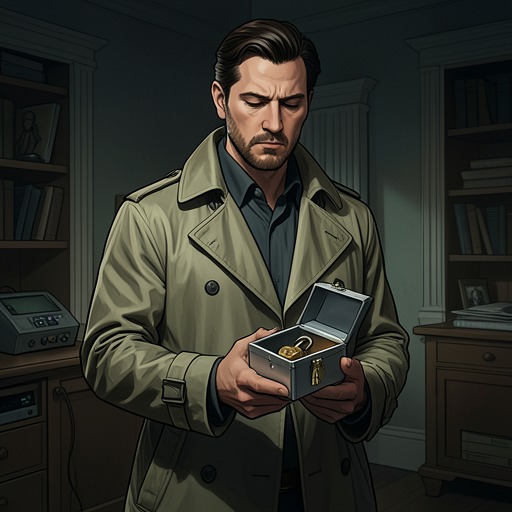
The Penny Black was suited to that performance because its disappearance and reappearance could be made to look like the opening moves of a mystery. Jones arranged for the stolen stamp to turn up at a Bloodhounds meeting. The theft therefore served two purposes at once: it removed a prized object from the museum and gave Jones material for a public demonstration. He later accepted that the stamp theft was his work and insisted that it had not been undertaken for personal gain. In Diamond’s account, proving a point, rather than making a profit, was the governing aim.
The theft and the first riddle
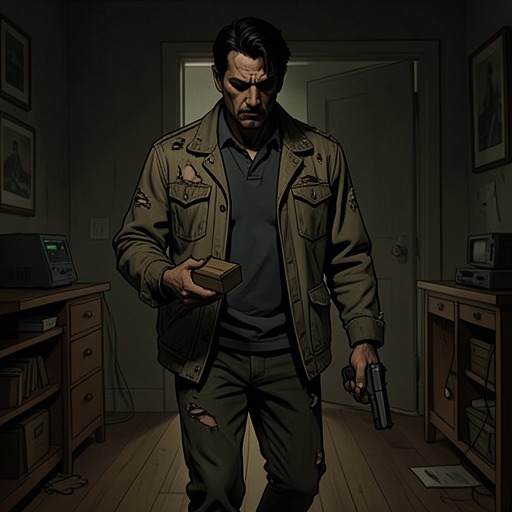
Jones chose a morning when window cleaners were out in force. Because he regularly went jogging in the mornings, his partner would have little reason to suspect that this particular outing concealed a burglary. Before the theft, he had visited the museum and identified a weak point in its security. On the chosen morning he took a ladder and a bucket, set the ladder against a window, entered the museum, and came away with the Penny Black. The practical details made the crime look like an extension of an ordinary routine, while the cleaning activity helped provide cover for the unusual equipment and access.
The theft was followed by a riddle that helped turn the stolen stamp into part of a designed plot. Jones composed the first riddle on his computer at work and printed it that evening, when nobody else was about. He was willing, even eager, to claim responsibility for the cleverness of both the stamp theft and the riddle. Their combination supplied the performance he wanted: the audience was invited to treat the crime as a puzzle, while Jones could regard its successful construction as proof that he was smarter than the people he meant to challenge.
Framing Milo Motion
Jones selected Milo as the person who would bear the suspicion. At the Bloodhounds’ meetings, Milo had said that the riddles were written for people with sick minds. Jones took offense and made that judgment the personal basis for revenge. The theft was thus not a random attempt to embarrass the group: it singled out a member whose criticism had wounded him, while placing the stolen stamp in a plot designed to make Milo look responsible.
The frame-up extended from the Penny Black to an apparent locked-room puzzle aboard Milo’s boat. Jones obtained an extra padlock from Foxton’s and switched the locks while Milo was aboard, a change that would allow Jones to unlock the boat later. When the Bloodhounds agreed to discuss the locked-room puzzle, Jones treated the opportunity as an invitation to stage a real example of the sort of fictional trick they enjoyed. He wanted to show that a reader of James Bond could use one of their favorite plots to frame the whole group, with Milo as the fall guy. The padlock mechanism was therefore not incidental equipment: it connected the stamp stunt to a second, more dangerous deception.
Exposure and consequences
Jones’s design nearly succeeded as a perfect crime, but the lock switch attracted precisely the kind of attention a puzzle-maker could not control. Sid Towers was interested in locked-room mysteries and wanted to investigate what had happened. He drove to the boatyard as Jones was replacing the original padlock. That encounter disrupted the planned sequence and exposed Jones to an unexpected witness. The stamp’s staged reappearance and the riddles had begun as a bid for admiration; the boat’s altered locks made the performance vulnerable to real-world curiosity.
The contrast is central to the event’s significance. Jones treated theft, riddles, and padlocks as components of an intellectual game, and the appearance of the Penny Black among the Bloodhounds seemed to confirm that he could control both the clues and their interpretation. But his opponents were not merely pieces in a puzzle, and an actual lock could not guarantee the safety of the person manipulating it. Sid’s arrival turned the clever scheme toward violence. The theft and planting thus mark the point at which Jones’s desire to prove his superiority ceased to be a private exercise in ingenuity and became part of a chain of crimes with fatal consequences.