Murder of the Saltford bank manager
BloodhoundsThe Murder of the Saltford bank manager begins as an urgent police response and turns, almost at once, into an unusually direct confession: chief clerk Routledge tells Peter Diamond that he shot manager Mr. Bellini. The killing initially raises a practical question about whether an armed man is still inside the bank; the later forensic confirmation removes that uncertainty, while the bank’s many aggrieved customers show how readily suspicion might otherwise have spread.
The call and arrival
Before reaching the bank, Diamond is travelling against the sound of a siren and the blur of roadside trees. Only that morning, sitting in court, he had thought police work in Bath was easy. Now the speed and urgency of the response have replaced that complacency with physical disorientation. His passing complaint about banks charging customers for going overdrawn sits beside the immediate destination: a bank where one of its own managers has been killed. The juxtaposition gives the arrival an irony that the case will sharpen, though it does not establish any connection between Diamond’s remarks and the murder.
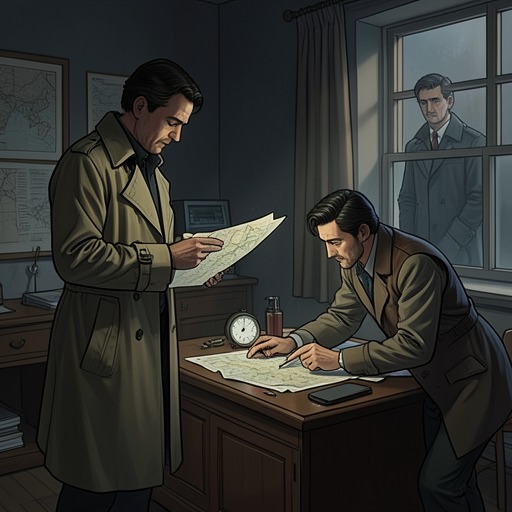
The police car comes to a screeching halt outside a branch on the A4 in Saltford. Diamond observes that they appear to be first and notices a man in the doorway, uncertain whether he belongs to the police or the bank. The man’s grey pinstripe three-piece suit and wave make him seem more likely to be a bank employee. He approaches while Diamond is still levering himself out of the car and introduces himself as Routledge, the chief clerk. His offer of a handshake, delivered as if Diamond had arrived to open an account, gives the encounter a curiously ordinary surface in the midst of a fatal emergency.
The first account of the killing
When Diamond asks what has happened, Routledge says that Mr. Bellini is dead and specifies that he was shot through the head. His delivery is clipped and controlled, as though he were suppressing emotion. The precise manner of death establishes the killing’s violence, while Routledge’s restrained account leaves open the immediate questions that would ordinarily shape the response: who fired, whether the person responsible escaped, and whether danger remains inside.
The uncertainty becomes more pointed when the discussion turns to whether anyone saw a man come out of the bank. Routledge doubts that they did, suggesting that people may have ducked behind the counters. Diamond works through the consequence of that missing observation: if nobody saw the gunman leave, there is no basis for assuming he is outside. His question is not merely about reconstructing an exit; it tests whether the presumed attacker might still be inside with Bellini. At this moment the scene retains the tension of a potentially unresolved threat.
Routledge’s confession
Routledge answers with a shrug and a self-effacing smile: he shot Bellini himself. The admission abruptly overturns the initial uncertainty. The question of an unseen gunman leaving the premises gives way to the fact that the man already speaking to Diamond is the shooter. Routledge adds a personal judgment of Bellini, calling him a total fool, but the exchange does not by itself explain the history or precise cause of their conflict. His contempt is evidence of hostility, not a complete account of motive.
The confession also changes the apparent shape of the case. The bank’s chief clerk does not offer a suspect to be pursued; he identifies himself as the person who fired the fatal shot. That revelation makes the killing less a puzzle about an unseen assailant than an investigation into an admitted act and its circumstances. The abruptness is central to the event’s effect: a question posed to assess the danger inside receives an answer that collapses the distinction between witness and killer.
Investigation and aftermath
The later investigation reveals that Bellini had left a trail of resentment among the bank’s staff. As the week progresses, each clerk tells a story of meanness, injustice, or slight inflicted by the former manager. The bank appears crowded with possible suspects, and customers with grievances might also have entered the reckoning. Those complaints supply a wider background of ill feeling, but they do not displace the central fact established at the scene: Routledge confessed to firing the shot.
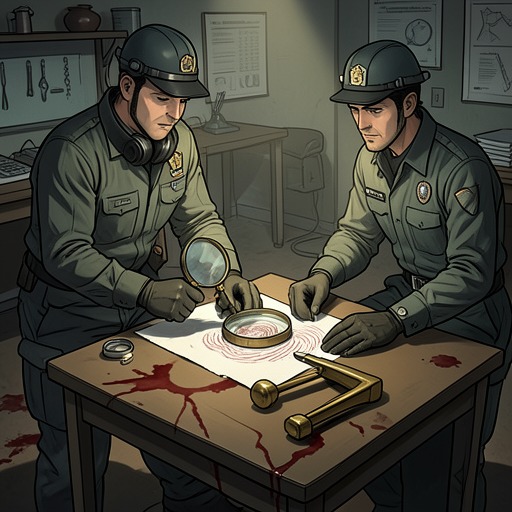
Forensic examination confirms Routledge’s statement. The evidence therefore supports the confession rather than leaving the identity of the killer suspended among the bank’s many dissatisfied employees and customers. By Friday, Diamond is so bored with the business that he tells Julie Hargreaves to finish up at Saltford without him. He spends the day in the office dealing with the pile of paperwork spilling from his in-tray across his desk. The aftermath is a marked reversal in scale: a murder call that began in haste and uncertainty becomes, for Diamond, routine work whose remaining tasks can be delegated. The contrast does not make Bellini’s death less serious; it shows how the dramatic question of who fired the shot is answered early, leaving the investigation with a less compelling field of grievances and procedure.