Stella
BluebackStella is a marine biologist whose life joins Abel Jackson’s international scientific work to the care of Longboat Bay. Raised far from the ocean, she comes to love it as an adult, travels with Abel to study seas around the world, and finally chooses to remain at his family home when Dora Jackson can no longer manage alone. Her story makes partnership a form of environmental commitment: knowledge gained abroad returns to the bay as work, care, and protection.
Identity and Introduction
Abel meets Stella after beginning his university studies in marine science. She is described as sleek as a seal and funny, with shiny black hair. Her childhood was shaped by a striking distance from the water: she grew up in the desert and did not see the ocean until she was twelve. By the time Abel brings her to Longboat Bay, she loves the sea and shares his professional interest in it.
Their arrival at the Jackson home unsettles Abel more than Stella. He worries that she and Dora Jackson might not like one another, and recognizes that his mother can read his anxiety from his expression. The visit also makes him see Dora’s age with new clarity: beside Stella, her face seems lined and papery, and he realizes that his long absences have kept him from noticing how much she has changed. Stella’s introduction therefore alters Abel’s sense of time at home as well as establishing her place in the family.
Partnership and Marriage
Stella and Abel’s relationship grows within the setting that has formed Abel’s attachment to the sea. On a moonlit night in the bay, Dolphins jump and call; Abel later remembers the scene as a good omen because that was the night he asked Stella to marry him. The moment links their commitment to one another with the living water around Longboat Bay, without making the ocean a mere backdrop to their relationship.
They marry and become marine biologists. Together they travel and study in oceans and seas around the world. Their work takes them far from home, including to a Greek island where Abel encounters the damage dynamite fishing and pollution have done to an underwater landscape. He later watches news of an oil tanker breaking apart off Longboat Bay from abroad, then sees the slick burn and disperse in foul weather before the ship is towed to port. No oil reaches the shore, but the near-disaster makes the vulnerability of the coast unmistakable. Abel calls Dora after seeing the reports; the episode belongs to the wider work and distance that Stella and Abel share, though it is Dora who calls the event a warning.
Scientific Work and Distance from Home
As a professional pair, Stella and Abel travel to coral atolls, polluted estuaries, and unfamiliar countries and oceans. Abel becomes an expert invited by foreign governments to give lectures and take part in study tours, while still feeling that scientific methods have not answered every question he has about marine life. The account presents their work as extensive and mobile, but it does not suggest that travel dissolves their connection to Longboat Bay. Abel thinks about home throughout the year, and the big blue fish, Blueback, continues to appear in his dreams.
That mobility has a cost. Dora writes and calls, but the couple are often too occupied with work to return home much. Meanwhile, the weather grows more erratic, a leopard seal reaches the beach from Antarctica, salmon fail to appear one year, and five dead Dolphins are found caught in the cliffs at Robbers Head. Dora also struggles with the orchard, animals getting into the garden and henhouse, arthritis, and engines she can no longer manage. The narrative places Stella within this strain not as its cause, but as one half of an often-absent professional couple whose work competes with the immediate needs of home.
Choosing to Stay
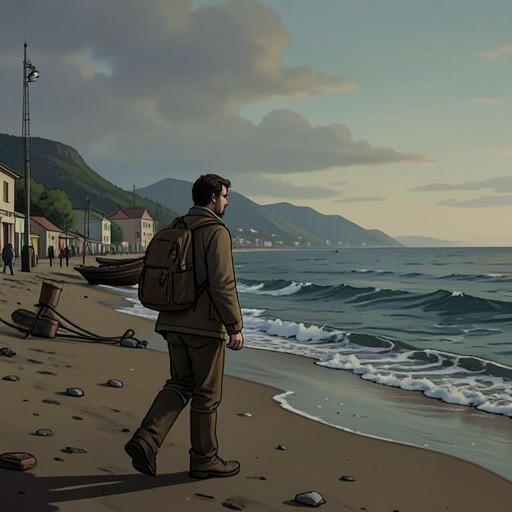
The decision changes when Abel and Stella receive word that Longboat Bay has been declared a marine sanctuary, protecting its living things by law. They are away on an expedition in a lagoon when the fax arrives. Stella goes up to the bridge and calls for a helicopter; Abel goes below to pack. Their response is immediate, and the news draws them back from their travelling life toward the place whose protection Dora has fought to secure.
On the journey home, Abel dreams that Dora is dead and sinking into the bay, with Blueback following her into the deep. When Abel later says that Dora cannot manage alone, Stella answers that this is why they are staying. The exchange gives her choice its clearest form: she does not treat the sanctuary’s legal protection as the end of responsibility, because Dora still needs practical help and the bay needs people present to care for it.
Life at Longboat Bay and Significance
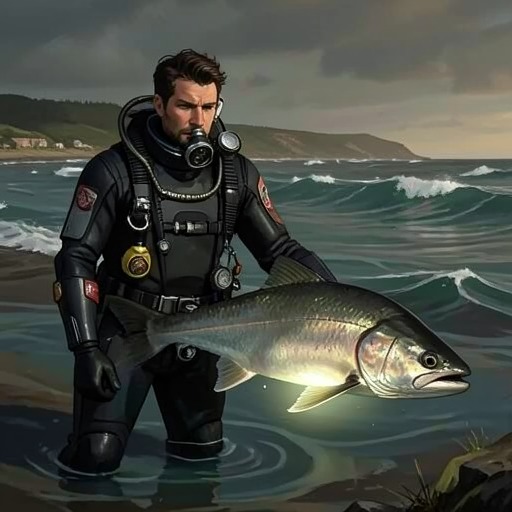
Abel brings Dora home to a freshly painted house, where he and Stella help nurse her back to health. As Dora recovers, the couple make a life there rather than simply visiting. They supervise the bay and keep an eye on summer visitors, write papers on the breeding habits of Abalone, walk in the forest, and watch migrating whales from the ridge. They also take divers out to see Blueback feeding on crabs and moving around his reef. Their work combines research, local oversight, and public encounters with the marine life that draws visitors to the area.
Stella and Abel share the household’s ordinary labor as well: they mend nets, bottle fruit, smoke fish, and tell stories while they work. Their daughter is born at Longboat Bay on a cold winter night and is named Dora after her grandmother. Stella’s presence thus belongs to both the scientific future of the bay and the family continuity Dora has sustained there. Her defining action is not a single discovery but a choice of where to put her work and attention: after years of travel, she stays, helping make protection a lived practice rather than only a declaration.