Abel’s father
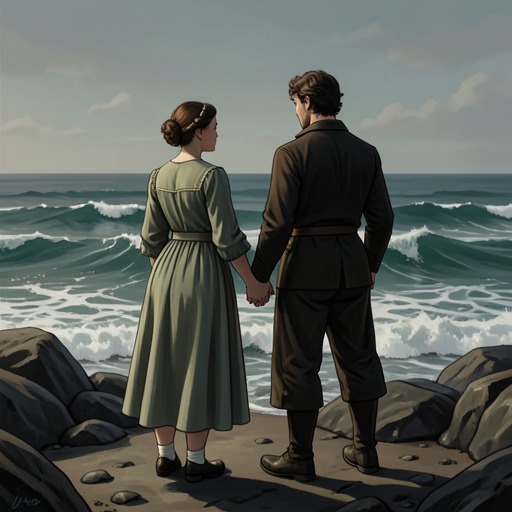
BluebackAbel’s father is a pearl diver whose body was never recovered after a tiger shark killed him in Roebuck Bay. His absence shapes the household Abel Jackson shares with Dora Jackson, yet it is more than a private grief: his story belongs to a family history of drawing a livelihood from the sea and suffering its losses. As Abel grows older, the father he barely remembers becomes both an inheritance carried through places and habits and a measure of the years he himself has been given.
Identity and Work
Abel’s father worked as a pearl diver, travelling north each year for the pearling season. He returned with the year’s money and swore he would not go back, describing the work as boring; nevertheless, he went again. The repetition gives his absence a pattern before it becomes permanent: each departure belonged to a seasonal livelihood, and each return seemed to promise that the cycle would continue.
The family’s connection to the sea reached further back than his own work. Abel’s mother tells him that his father’s family, the Jacksons, came to Longboat Bay as whalers. The family land dates to whaling times, while the surrounding country is national park. His father’s pearling belongs to a later generation of sea-based work, but the sea remains both sustenance and danger across these histories.
Death and the Family’s Memory
One year, a tiger shark took him while he was diving. The crew of the lugger hauled in his air hose and found no one at its end. They found his fins on the murky bottom of Roebuck Bay, but never recovered his body. Abel was two when his father died, too young to retain a clear memory of him. The family cemetery behind the orchard has a cross for him, but no body lies beneath it: the marker gives the missing man a place in the landscape without resolving his disappearance.
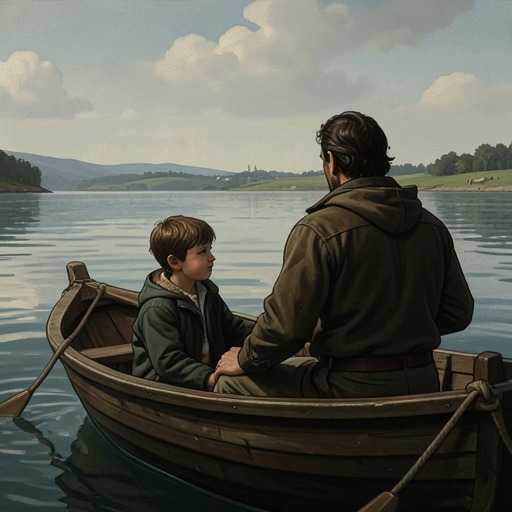
Dora remembers him daily. Near the orchard, at an old peppermint tree with a deep fork, she keeps a candle, pearl shells, and a dolphin Abel carved from driftwood. At times she stays there for hours, crying, thinking, and remembering. Abel understands his father partly through his mother’s presence: the bay, garden, and house feel like memories of the dead man, and Dora’s way with boats and motors and her tough working hands seem to carry something of him. This is not a store of remembered conversations or shared scenes; it is an inheritance Abel reads in the life continuing around him.
A Life Reimagined in Dreams
The limits of Abel’s childhood memories do not stop him wondering about the dead. In one dream, Blueback leads him down a cold, pale-blue crevice among drowned sailors and children. At the end, Abel finds Mad Macka in his wetsuit beside the ragged body of his father. The dream gives physical form to what the family has never been able to recover: Abel sees a hole in his father’s side and grey skin, yet the young man looks peaceful, almost asleep.
Abel reaches to touch him and wants to bring him back. Blueback swims upward, keeping the boy from reaching his father, and Abel watches the body grow smaller as they rise toward warmer water and the surface. He wakes crying in a dim dormitory with no one to go to and no one to tell. The dream offers neither reunion nor explanation. It stages the desire to retrieve his father, then makes the separation unavoidable.
Age, Inheritance, and the Sea
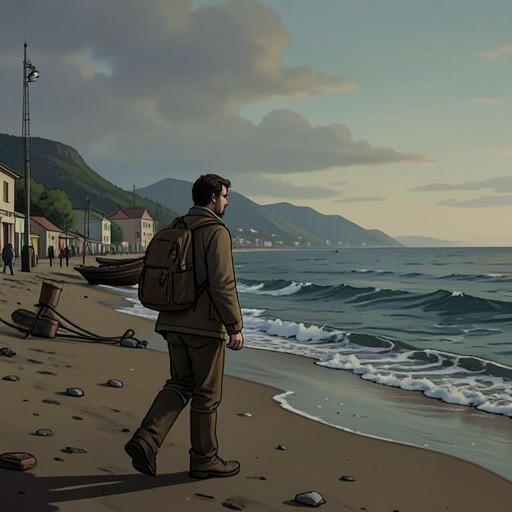
Years later, while diving among the damaged waters of the Greek islands, Abel realizes he has become older than his father ever was. The discovery comes as a cold shock: his father remains fixed as a young man, stopped at the moment the tiger shark came out of the murk. Abel’s life has passed the boundary his father could not cross. The difference between them is not only the age Abel has reached, but the future that the death left open for him.
The sea’s history holds other signs of what it has taken. Fishing among right whales, Abel and his mother recall the Jacksons’ whaling past; she reflects that the sea has taken its share of the family. Later, a storm exposes thousands of whale bones along Longboat Bay, remains buried beneath the sand for a century or more. Dora sees the bones as evidence of the family’s history of whaling and sealing, and decides it is time to protect the bay so the sea can live. These events do not make Abel’s father a whaler; they place his death within a longer story of the family’s dependence on the sea and its costs.
Abel eventually stays at Longboat Bay with Stella, and the protected bay grows rich with marine life. He and Stella continue their scientific work, but Abel accepts that the sea’s secrets remain beyond complete discovery. His father’s death gives that uncertainty a personal edge: the sea sustains the family, preserves traces of its past, and remains capable of taking what cannot be brought back. Abel’s father endures in the cross without a body, Dora’s acts of remembrance, Abel’s dreams, and the knowledge that his own life has carried him beyond the age his father reached.