Right whales
BluebackRight whales are both living animals in the waters off Longboat Bay and reminders of the history that brought the Jackson family to the coast. Their appearance beside Abel Jackson and his mother joins an intimate encounter at sea to a longer account of whaling, inherited responsibility, and the effort to protect the bay.
Encounter at Sea
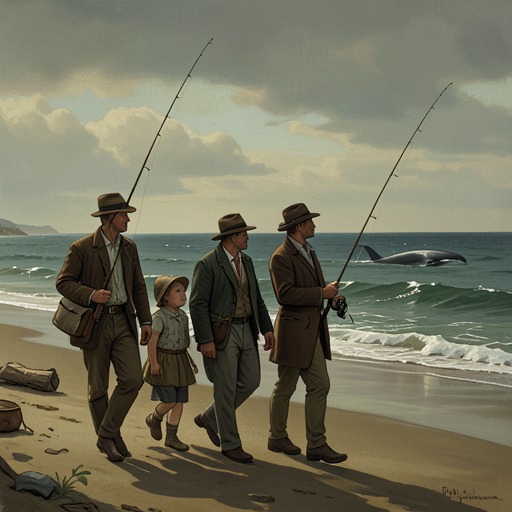
About three o’clock, while Abel Jackson and his mother were fishing offshore, a huge snort sounded beside their boat, followed by more across the bow and off the stern. A foul mist rose around them; glistening right-whale backs surrounded the boat. The encounter abruptly displaced the work of fishing. Abel and his mother stopped and watched rather than continuing to haul their lines.
His mother explained that the Jacksons had once hunted whales. When a lookout on the ridge saw a pod passing, the family’s forebears rowed out in longboats and harpooned them. Abel wondered whether the whales remembered being hunted. His mother could not know, and hoped they did not. Her answer leaves the animals’ experience beyond human certainty, even as the family’s history makes the question unavoidable.
One whale passed with its mouth open, straining water through its baleen as it rolled to feed. Abel responded with a joke about being glad not to be plankton. The moment brings the scale of feeding into the boat’s immediate world: the whale moves through the water as an animal following its own need, while the people who once pursued whales now watch. Abel’s mother admitted that she had felt bad about the old hunts, though they happened before her time; she also reflected that the sea had taken its share of the family. Abel thought of the crosses behind the orchard, linking the whales’ history with the deaths remembered on land.
Whaling and the Jackson History
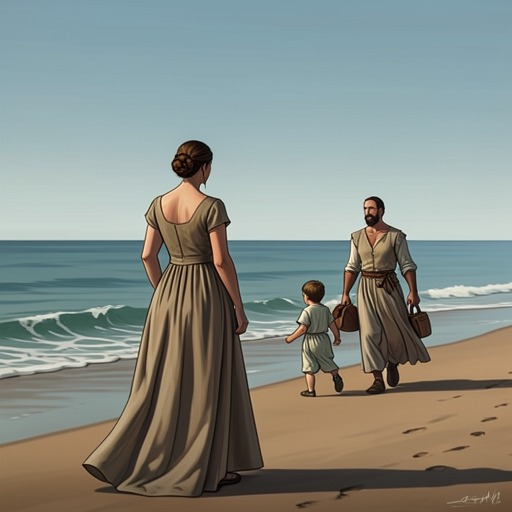
Longboat Bay is not just a setting for this encounter. Abel and his mother live from the sea and the land, and the Jacksons have been there for more than a hundred years. Their land dates from whaling times, when the family came to the coast in wooden ships. The passage therefore places the right whales within a lived-in landscape shaped by generations of human use, rather than presenting them as scenery separate from local history.
Whaling helped pay for the Jacksons’ land over time. Blubber oil and baleen, along with seal fur and fish, supported the family’s settlement. The account makes the right whales’ presence carry an economic history: the same sea that sustains the family also supplied materials and income through the killing of marine animals. Abel’s mother’s discomfort about that past does not erase the fact that it preceded her; instead, it shows how an inherited livelihood can remain morally present after the practice has ended.
The Bones Exposed by the Storm
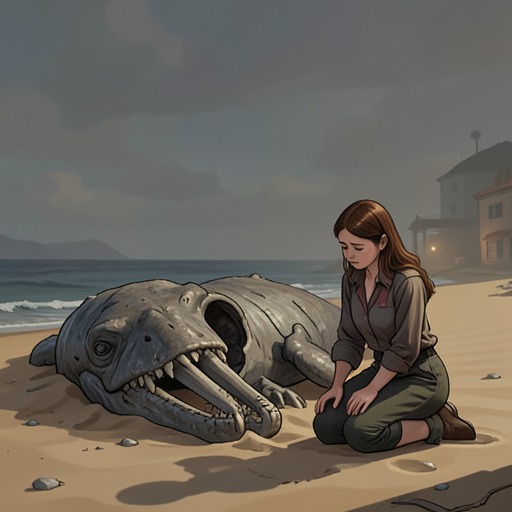
Decades later, a fierce storm stripped away part of Longboat Bay’s shore. Dora Jackson went down to the beach and found thousands of whale bones exposed in the sand, standing like posts, broken teeth, and tombstones. They had lain buried for a century or more. Dora had walked over that ground for forty years without knowing what was beneath it, and the sudden disclosure felt like history unearthing itself.
The narrative identifies these remains as whale bones, but does not specify that they belonged to right whales. Their importance to the right-whale story lies in the history they make visible: the Jacksons’ whaling past was not only a remembered account of lookouts, longboats, and harpoons, but also a material presence under the beach. Dora sat among the bones and recognized that whaling and sealing had helped establish the family on this coast. With only her and Abel left of the generations who had lived there, she concluded that their inheritance now carried an obligation to help the sea live.
Protection and Significance
Dora acted on that recognition by writing hundreds of letters to politicians, business leaders, scientists, and newspaper editors. Her campaign eventually helped secure Longboat Bay’s designation as a marine sanctuary, where marine life was protected by law. The book does not present this designation as a specific recovery program for right whales. Rather, it places the whales within the larger change in the family’s relationship to the sea: a history of taking from it gives way to a determination to protect the life it holds.
The bay later becomes richer with marine life under sanctuary protection: seagrass, coral, and sponges thrive, abalone grow in abundance, and fish, dolphins, sharks, and sea lions return or flourish. These are described as broader ecological changes, not as evidence that right whales themselves returned. Together with the earlier sighting and the bones exposed on the shore, that recovery gives the whales’ place in the narrative its force. They connect a living, unknowable animal presence to the coast’s human past, while the sanctuary marks a different future for the sea.