Bluebeard’s forbidden-room rule
BluebeardBluebeard’s forbidden-room rule turns a single excluded space into the center of a story: a husband allows his new wife access to his castle except for one room, and the prohibition drives her to discover the secret behind its door. Rabo adapts that tale to his locked potato barn, describing his studio as a forbidden chamber for Circe Berman even as he denies that it hides anything like Bluebeard’s secret.
The Tale and Its Prohibition
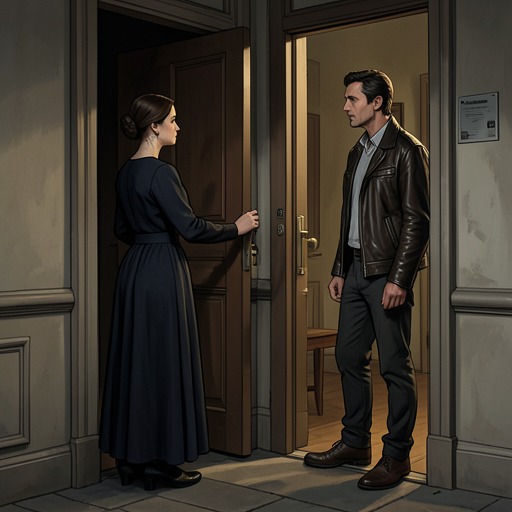
Bluebeard is a fictional figure in an old children’s tale, perhaps loosely based on a murderous nobleman. After marrying again, he brings his latest wife to his castle and permits her to enter every room except one, whose door he points out. The exception gives the room its force: it is not merely inaccessible, but the one place the wife is told not to explore.
The tale presents the prohibition as a test of curiosity and a mechanism of suspense. Bluebeard may be a poor psychologist, because the ban makes his wife fixate on the room, or a great one, because he understands how strongly a forbidden space can command attention. She enters when she believes he is away, but he is still at home. He catches her looking at the bodies of his murdered former wives. The first wife, the story adds, was killed for another reason; the others were killed for looking behind the forbidden door.
Rabo’s Locked Studio
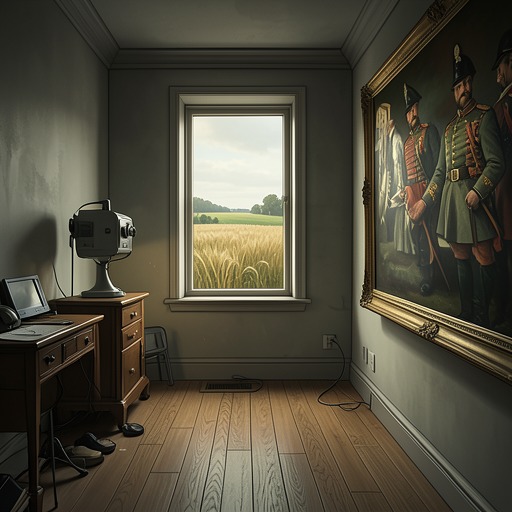
The rule becomes an explicit analogy in Rabo’s account of his relationship with Circe Berman. Among those who know about his locked potato barn, she finds the mystery particularly intolerable. She repeatedly presses him to reveal where its six keys are. Instead of disclosing their whereabouts, Rabo tells her that they are buried in a golden casket at the foot of Mount Ararat.
When Circe asks again, Rabo directs her to think about something else and identifies himself with Bluebeard: his studio, he says, is her forbidden chamber. The comparison casts the barn’s locked door as a boundary between Rabo and the woman eager to know what lies within. Its effect depends less on what Rabo explains than on what he withholds: the repeated requests and the fanciful answer keep the hidden studio present as an unresolved mystery.
The Secret and the Difference
Rabo immediately qualifies the analogy. Despite the Bluebeard story, he says, there are no bodies in his barn. The qualification distinguishes his actual locked studio from the tale’s chamber of murdered wives, while confirming that he deliberately uses Bluebeard’s rule to frame Circe’s curiosity and his refusal to open the space to her.
The episode makes the forbidden room a figure for secrecy without establishing that the room contains a crime or anything else specific. The tale’s prohibition promises a terrible discovery; Rabo’s denial rejects that expectation, but does not itself reveal what is in the barn. In that tension, the rule serves both as a playful explanation for the locked studio and as a device that keeps its contents out of view.