Coimbra University’s Anti-Earthquake Auto-da-fé Decree
CandideCoimbra University’s Anti-Earthquake Auto-da-fé Decree turns a natural disaster into a pretext for institutional punishment: after the Lisbon earthquake, the university’s supposed remedy is a public ceremony against people deemed guilty of religious or social offenses. The ritual does not stop the earth from shaking; its failure makes the decree a concentrated satire of authority claiming certainty over forces it cannot command.
Origin and Claimed Remedy
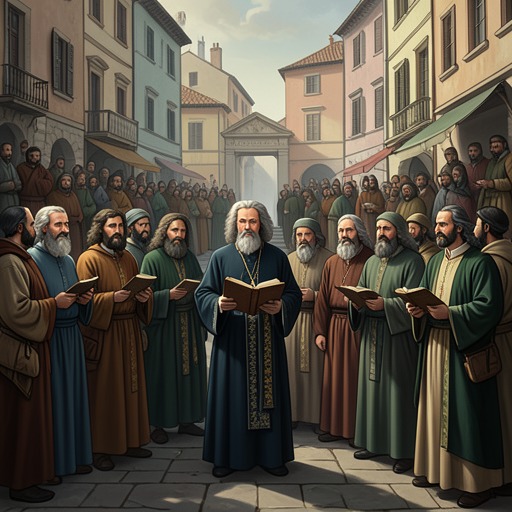
After the earthquake had destroyed three-fourths of Lisbon, the country’s sages chose an auto-da-fé as their most effective means of preventing further ruin. The university had declared that a carefully staged ceremony involving the burning of a few people would prevent earthquakes. The decree thus presents human punishment not merely as religious discipline but as a practical technology for controlling nature.
The story gives that claim a sharply material context. The earthquake had crushed 30,000 inhabitants, damaged the city, and shattered vessels in the harbour. Earlier, while the ship was caught in a tempest near Lisbon, Pangloss had explained James the Anabaptist’s drowning as necessary to the general good. After the earthquake, Pangloss proposed that a subterranean sulphur chain connected Lisbon with Lima, while Candide, wounded and in need of help, asked for oil and wine. These competing explanations place the university’s ritual response among other confident accounts of catastrophe, none of which offers relief to its victims.
Selection and Ceremony
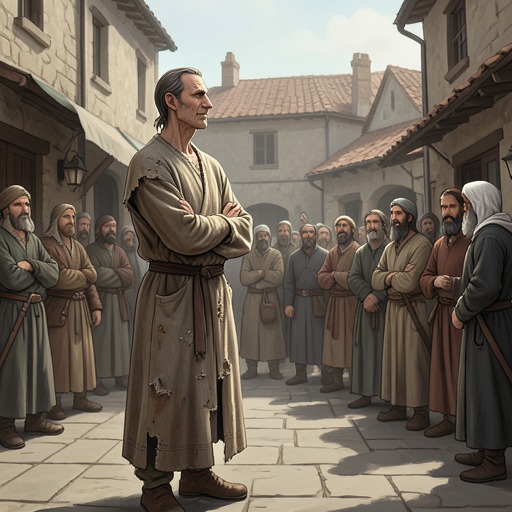
The decree’s logic is enacted through the arrest of a Biscayan convicted of marrying his godmother and two Portuguese who had refused to eat bacon. Pangloss is seized for speaking his mind, and Candide for listening with apparent approval. After eight days in separate, sunless rooms, the prisoners are dressed in san-benitos and paper mitres, then led in procession to a sermon and church music. The ceremony gives punishment an elaborate public form while presenting that form as a safeguard against another disaster.
Candide is whipped; the Biscayan and the two Portuguese are executed by burning, and Pangloss is hanged. The earthquake occurs again on the same day. Rather than confirming the university’s claim, the renewed tremor exposes the gulf between its promised control and the actual outcome. Candide, bloodied and terrified, questions whether this can be the best of all possible worlds, while grieving Pangloss and James.
Political Use and Narrative Significance
Cunegonde’s later account adds a political purpose to the ceremony. She says the Grand Inquisitor arranged it both to ward off earthquakes and to intimidate Don Issachar. Invited to attend, she watched the executions and recognized Pangloss among the condemned; she also saw Candide publicly punished. Her account connects the decree’s supposed public benefit to the Inquisitor’s private coercive power, and shows how the ceremony’s audience could include people already entangled in that power.
A historical note dates the auto-da-fé to June 20, 1756, several months after the Lisbon earthquake of November 1, 1755. That interval sharpens the episode’s irony: an institution answers devastation with a delayed spectacle of punishment, and the earth trembles again even as the spectacle concludes. The decree therefore joins natural catastrophe to religious persecution, showing how a claim to prevent disaster can instead authorize suffering without controlling its cause.