Oreillons
CandideThe Oreillons are the people who capture Candide and Cacambo in the forest after two women denounce the travelers. Their encounter with the pair begins as a threat of retaliation against a supposed Jesuit, but changes when Cacambo explains that Candide is not a Jesuit and that the clothing he wears belonged to a Jesuit officer he killed. The Oreillons investigate his account, accept it, and release both men. In the episode, identity is initially read through an enemy’s garment, while the Oreillons’ willingness to verify a claim makes dialogue—not appearance—the means of resolving the danger.
Setting and First Encounter
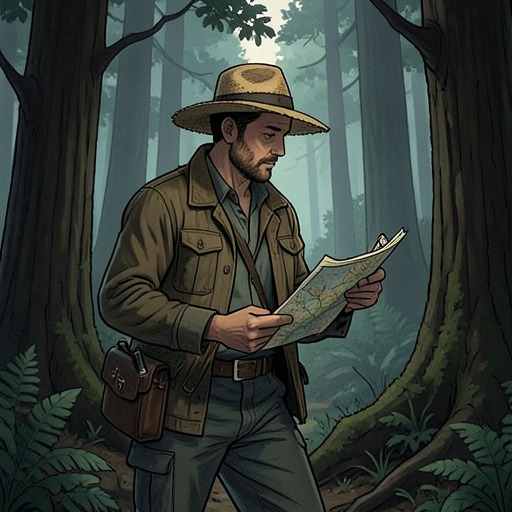
After leaving the meadow and entering a wood, Candide and Cacambo eat and sleep there. The Oreillons inhabit the country, and the two women have denounced the travelers to them. During the night, the Oreillons bind Candide and Cacambo; when the pair wake, they are surrounded by fifty armed people. The Oreillons prepare to punish what they believe is a Jesuit among them, voicing a wish for revenge against the Jesuits.
Candide sees the preparations and fears that he and Cacambo will be killed. His alarm is sharpened by the losses already weighing on him: he laments having lost Cunegonde and imagines death as the next consequence of his journey. He also turns to the ideas of Pangloss, recalling the philosopher’s account of nature while confronting an immediate danger that makes such abstractions difficult to accept. The episode thus places Candide’s inherited optimism beside a situation in which his survival depends on practical judgment.
Cacambo’s Explanation and the Inquiry
Cacambo remains composed while Candide despairs. He says he understands some of the Oreillons’ language and undertakes to speak with them. Candide asks him to argue against their plan on grounds of humanity and Christianity; Cacambo instead addresses their reasoning on its own terms. He acknowledges that enemies are killed in warfare across the world, then argues that the Oreillons should not mistake an ally against the Jesuits for one of their enemies.
The decisive distinction is between Candide’s appearance and his actions. Cacambo explains that Candide is his master, not a Jesuit, and that the clothing causing the mistake came from a Jesuit officer whom Candide killed. He offers a test: the Oreillons can take the clothing to the first boundary of the Jesuit kingdom and ask whether Candide killed the officer. Cacambo presents the claim as verifiable rather than asking for trust without proof. He also represents himself as born in the country, a point that helps establish his connection to the Oreillons as he speaks on Candide’s behalf.
The Oreillons find Cacambo’s argument reasonable. Rather than decide solely on the first appearance of the travelers, they send two of their principal people to establish whether the account is true. The delegates return with confirmation, and that finding changes the Oreillons’ treatment of their captives. The scene gives the community a specific procedure for settling this immediate dispute: hear an explanation, send representatives to inquire, and act on the result.
Release and Change of Judgment
Once the misunderstanding is cleared up, the Oreillons untie Candide and Cacambo, treat them with civility, provide refreshments, and escort them to the edge of their territory. Their announcement that Candide is not a Jesuit marks the reversal plainly: the clothing that first made him a target no longer defines him once the Oreillons have checked the facts. The men who had been prisoners leave under escort rather than as enemies.
Candide is surprised that his deliverance depends on the distinction between being a Jesuit and being mistaken for one. He reflects that, had he not killed Cunegonde’s brother, the Oreillons would have eaten him; he then concludes that “pure nature” is good because they showed him kindness once they knew he was not a Jesuit. His conclusion remains sharply conditional. The same people who threatened him become courteous when his identity and actions are explained, and Candide’s judgment follows that change rather than offering a detached account of the Oreillons.
Narrative Significance
The episode hinges on the Jesuit clothing Candide wears as spoils. It makes him legible to the Oreillons as a member of the group they seek to punish, even though Cacambo says the garment belonged to a Jesuit officer Candide killed. The mistake is corrected not by changing Candide’s appearance but by supplying an account of how he came to wear it and then checking that account. The Oreillons’ inquiry therefore determines the meaning of a visible sign that, on its own, has misled them.
The community is presented through a brief encounter rather than through a broad description of its customs or institutions. Within that encounter, however, its members are not shown acting as an undifferentiated crowd: two principal people are entrusted with verifying Cacambo’s explanation, and the group responds to their report. The episode also distinguishes Candide’s first appeal to Christian morality from Cacambo’s successful argument, which connects the Oreillons’ hostility toward Jesuits to their own understanding of enemies and allies. The Oreillons’ decision to release the travelers gives the episode its reversal, while Candide’s conditional praise of nature leaves the outcome tied to the circumstances of this single encounter.