Theatine Order
CandideThe Theatine Order is represented in Candide chiefly through Friar Giroflée, a monk whose apparent ease in Venice gives way to a blunt account of coercion, resentment, and financial hardship. His story turns the order into one of the institutions through which the novel tests the assumption that an outwardly fortunate condition guarantees happiness: the friar’s habit and healthy appearance conceal a life he says he never chose.
Appearance in Venice
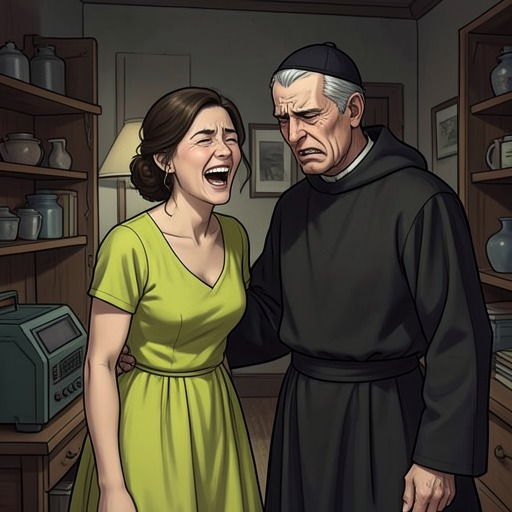
Candide encounters a young Theatine friar in St. Mark’s Piazza while waiting with Martin for Cunegonde. The friar appears vigorous and self-assured, and accompanies a pretty young woman who sings, looks affectionately at him, and pinches his cheeks. Candide reads their gestures as signs of happiness, setting up a wager with Martin about whether the pair are content.
The scene makes the order visible first through its member’s public image, not through a description of its organization or religious practices. Giroflée drinks a glass or two of wine while waiting for dinner, then joins Candide, Martin, and Paquette at table. What looks like an easy, companionable life becomes the occasion for Candide to ask whether the friar’s position is as enviable as it seems.
Friar Giroflée’s account
Giroflée rejects Candide’s impression. He says that his parents made him enter the order at fifteen to preserve the fortune of his elder brother. He describes his religious habit as detestable and says he has repeatedly been tempted to set fire to the convent and leave to become a Turk. The vocation presented through his account is therefore not a freely chosen calling but a family arrangement that benefits an older sibling at his expense.
He portrays the convent as a place of jealousy, discord, and fury, and says that his fellow monks share his misery. His account complicates the surface impression Candide formed in the piazza: robust appearance and confident bearing do not disclose the friar’s alienation from his life. The institutional setting, as Giroflée describes it, offers neither the harmony nor the spiritual consolation that Candide had assumed might accompany the religious habit.
Money, dependence, and apparent happiness
Giroflée says he has earned a little money by preaching sermons, but that the prior takes half. The remainder, he explains, goes toward maintaining his girls. The account gives the order a concrete economic presence in his life: preaching produces income, but the friar does not keep all of it, and his use of what remains is bound up with his relationships outside the convent.
Paquette’s explanation sharpens the contrast between public performance and private suffering. She says that after being robbed and beaten by an officer the previous day, she must put on good humour to please a friar that day. Candide had taken her singing and affectionate behavior as evidence that she and Giroflée were happy; her account, like his, reveals the labor behind that appearance. Martin’s wager is vindicated as each apparently content person describes a painful condition. Candide responds by giving Paquette two thousand piastres and Giroflée one thousand, hoping that the money will make them happy.
Narrative function
The episode presents the Theatine Order through a deliberately limited but pointed case rather than a systematic account of the institution. Giroflée’s testimony supplies the details: imposed entry at fifteen, the convent’s internal rancor, a prior’s share of sermon earnings, and the friar’s stated wish to escape. The order is thus part of the novel’s recurring examination of the distance between appearances and lived conditions.
That examination suits the book’s brisk philosophical form. Candide, written in 1759 as a ridicule of the claim that this is the best of all possible worlds, repeatedly tests confident assumptions against particular encounters. In this scene, the confident assumption is Candide’s quick reading of a healthy-looking friar and affectionate companion; their disclosures turn that judgment into another failed proof of happiness. The Theatine Order matters here as the setting for Giroflée’s testimony, not as the subject of a broader account of its history or doctrine.