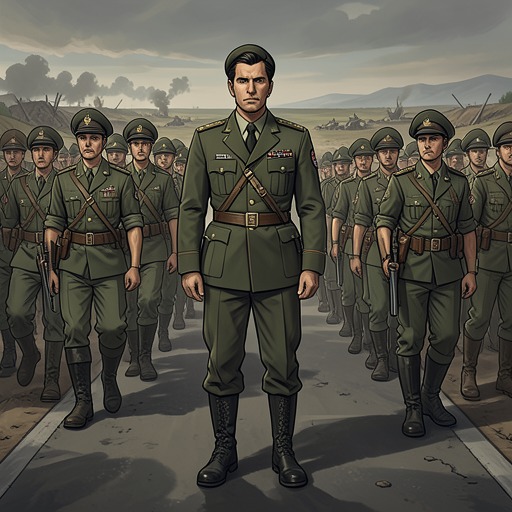
Mahdi Militia Ceasefire and Patrol Restrictions
CherryThe Mahdi Militia Ceasefire and Patrol Restrictions defined the limits of the narrator’s unit in a city controlled by the Mahdi Army. Though two rifle brigades were posted at the downtown Iraqi Police station, the soldiers did not control the city, and neither did the police. The ceasefire turned their presence into a constrained routine: they could go to the station and return, but could not patrol the streets.
Background and Terms
The ceasefire reflected a decision by the military hierarchy that trying to fight the Mahdi Army would make the situation worse. The militia was Shiite and backed by Iran, and the narrator describes the unit as unable to risk provoking it. The patrol ban therefore was not simply a tactical preference; it set a boundary on where the soldiers could go and what they could do, despite their presence in the city.
The Limits of the Unit’s Presence
The two rifle brigades at the police station did not amount to control beyond its walls. The Iraqi Police lacked control as well, leaving the Mahdi Army as the power that held the city. The soldiers’ movement was reduced to a direct journey to the station and back. In this arrangement, their deployment placed them inside a city without granting them freedom to patrol or authority over it.
Uneasy Cooperation
The restrictions extended into dealings with a local Hadji special-intervention group, with whom the soldiers had what the narrator calls a tacit arrangement. The group’s members rode crowded together in a small pickup with a machine gun mounted at the rear. They repeatedly played low-resolution videos of improvised bombs on a portable DVD player, urging the soldiers to look. The display irritated the unit, which regarded the group as self-important and its demonstrations as grating.
Orders and Significance
The narrator says the soldiers would have liked to kill the group and believed doing so would have been easy. Instead, orders required them to support it in heart and spirit, and they complied. The contrast captures the practical force of the ceasefire and patrol restrictions: they did not erase hostility or distrust, but required soldiers to act within political limits and maintain cooperation with people they despised. Their constrained daily movement and enforced support show how the unit’s armed presence could coexist with an inability to control the city.