Czechoslovakia
DeceptionCzechoslovakia is more than the setting of the narrator’s visits to Prague: it emerges through two intertwined accounts as a place of intellectual attraction and ordinary attachment, but also of surveillance that reaches into work, friendship, and intimacy. The country is described through particular encounters rather than as a comprehensive political portrait, with the narrator’s travel memories alongside a woman’s testimony about the pressures that shaped her departure.
Everyday Life and Institutional Pressure
For the woman, life in Czechoslovakia had been comparatively easy and pleasant, apart from episodes of contact with the Czechoslovak secret intelligence agency. She says its representatives asked her to work for them; she refused, and they more or less left her alone. Their presence frightened her even when, in her account, they did not otherwise harm her. That distinction—between direct injury and the persistent fear of being watched—runs through her memories of the country.
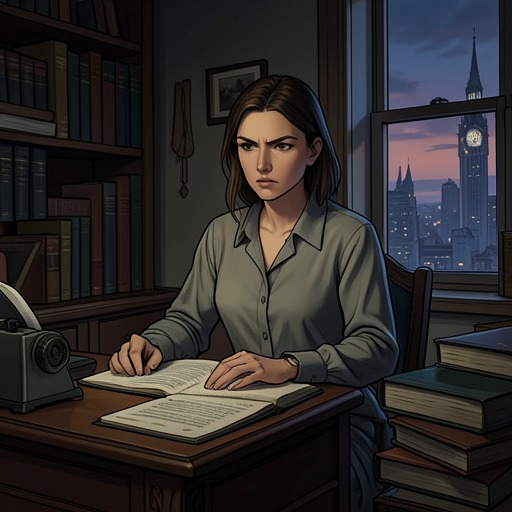
Her work at the American Library began innocently. A professor helped her obtain a job that suited her literary studies, and she expected to spend her time among books. For two years it was, by her account, a wonderful job. The arrangement became dangerous because she was being followed, and because the Czech organization responsible for arranging foreign employment was, as she later learned, a branch of the Czechoslovak secret intelligence agency. Her popularity with Americans increased her difficulties. She recalls being summoned after two years and pressed to accept recruitment, with the value of her salary and other benefits presented as reasons to stay.
The pressure was reinforced by the threat of professional exclusion. She was told that refusing would leave no future for her in the library and that she would have to find other work; leaving would also make it difficult to find employment as a teacher. Before the discussion, officials demanded that she sign a paper acknowledging its state-secret status, warning that disclosure—including to family—could bring prosecution and up to seven years in prison. She refused to sign an agreement whose contents she had not been told and immediately refused the proposed work. The agency did not formally fire her, but told her there was no future for her there. The American side also approached her about working for it, and she refused that offer as well. In her account, speaking several languages made her attractive to both sides, leaving her caught between competing interests.
Surveillance Reaches into Private Life
The woman connects her first direct encounter with the agency to meeting the narrator. After he left for the airport, officials called her in because they had identified her during a hotel visit. At twenty-one, she was taken to an office and questioned for about an hour. One interrogator threatened her while another played the more reassuring role. They asked what she had been doing with the narrator, how she had met him, and whether they had slept together. She remembers trembling and being terrified, unsure what could happen to her.
The questioning made her feel that an ordinary personal encounter had been turned into an object of state scrutiny. She explained that she had met and liked the narrator, and recalled visiting his room because he had asked for help with books. Officials had taken her identity-card details, including her name and address. Their interest, as she understood it, focused less on what she could tell them about him than on whether the two had had sex. Her account places the intrusion into private life beside the pressures surrounding her employment: in both cases, an association with foreigners could draw official attention.
The Narrator’s Visits to Prague
The narrator recalls first feeling drawn to Prague in 1971, after finishing a book and traveling from Vienna. Within half an hour of walking around the city, he felt there was something there for him. A publisher had brought out his first book years earlier; when he visited the publishing house, the director and staff toasted him with slivovitz at ten in the morning. At lunch, one of the editors told him that the director was a swine. The anecdote gives his literary welcome an immediate counterpoint: access to writers and publishers also exposed him to conflicting accounts of the people and institutions around them.
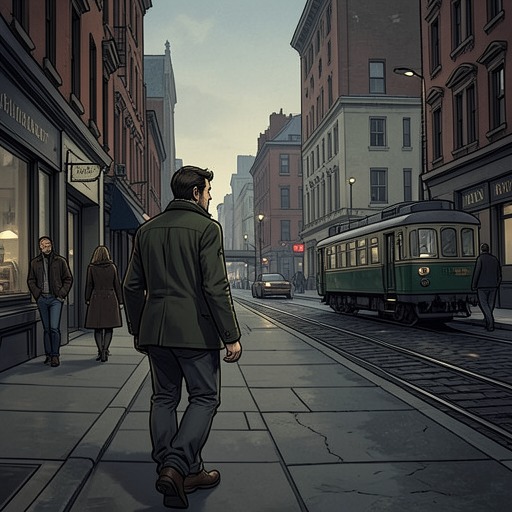
On later spring visits, he had grown accustomed to being followed by police, particularly when he visited writer friends. Those earlier plainclothes officers, he says, were polite and kept their distance. In 1975, however, two uniformed policemen approached him directly in the street and demanded his papers. His passport, visa, and hotel identification card did not satisfy them; they ordered him to go to the police station. He refused and shouted in English and high-school French that he wanted to see the ambassador at the American Embassy. He also appealed to people waiting by a trolley stop, insisting that the police were harassing him without reason.
The stop stretched on for about fifteen minutes. Each time the narrator refused to go, one officer returned to consult a plainclothesman in a blue raincoat before insisting again. A young German couple came close to see what was happening. The narrator gave them his name and hotel and asked them to contact the American ambassador if he was taken away. When the policemen went to confer with the plainclothesman at the end of the block, a trolley arrived. The narrator boarded it, got off two stops later, crossed a bridge, and took another trolley in the opposite direction. After finding a phone kiosk, he called a Czech friend, who told him the police had meant to harass and frighten him, not to detain him permanently. The narrator returned to his hotel, and nothing further happened to him there.
Departure and the Limits of Return
The immediate end of the police encounter did not end its consequences. The narrator says he was never able to get another visa to Czechoslovakia. The evening after he left Prague, police picked up the friend he had called, took him from his home, and questioned him through the night. In a later letter, the friend reported that the questioning centered on the narrator and his annual visits, including why he kept returning. The episode shows how scrutiny extended beyond the traveler to people who helped him, making friendship itself a possible point of exposure.
For the woman, leaving Czechoslovakia also took time and imposed costs. She says it took more than a year to arrange her papers, including the repayment required for her education. She had not seen the man she was leaving with for a year and says she did not even like him by the time she departed; her decision was bound up with a longing for something better, not simply affection. Once in England, she was miserable, missed her friends, and struggled to find work. Typing and selling books at Foyle’s were among the jobs she tried, but she was dismissed from the bookshop on her third day after answering back to an unbearable manager. Her account makes departure neither a clean rescue nor a simple escape: the country’s restrictions shaped the decision to leave, while dislocation continued after she crossed the border.
Prague’s literary welcome and the threat of police attention thus occupy the same remembered landscape. The narrator’s attraction to the city, his annual visits, and the friendships formed there persist alongside the loss of his visa and the interrogation of his friend. The woman’s memories likewise hold together a good job and a life she had liked with fear of the agency and the pressures that drove her away. Czechoslovakia becomes significant in the narrative as a place where cultural and personal connections could flourish, yet remain vulnerable to institutions that monitored movement and association.