Philip and Ivan
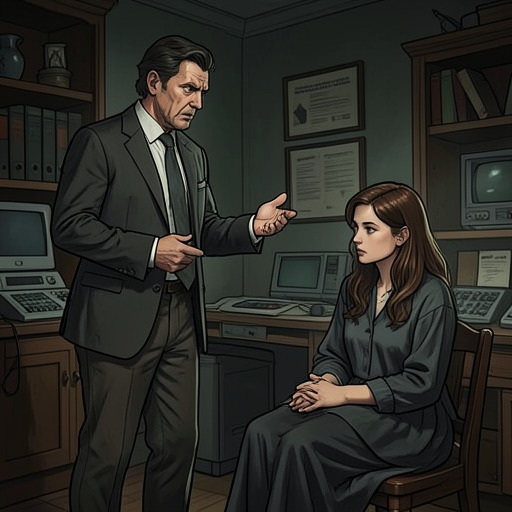
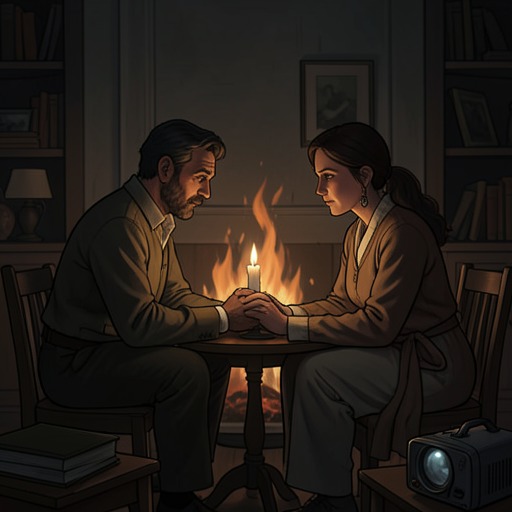
DeceptionPhilip and Ivan’s relationship is presented as a friendship shaped by conversation, literary respect, and a sudden crisis of trust. In a confrontation over Ivan’s wife Olina, Ivan accuses Philip of sleeping with her and exploiting the stories people tell him; Philip emphatically denies the affair. Yet Philip later says Ivan never accused him. That contradiction makes the relationship more than a simple dispute between friends: the scene tests how intimacy, suspicion, and a novelist’s appetite for other people’s stories can become difficult to separate from the act of narration itself.
Friendship and Mutual Regard
Ivan recalls a period in New York City when he, Philip, and their circle were close, after Ivan arrived from Prague. The exchange evokes a friendship with a shared past rather than a casual acquaintance: Ivan’s accusation draws its force from the claim that Philip has betrayed someone who trusted him, while Philip answers that he has supported Ivan. The relationship therefore carries obligations on both sides, even as the two men interpret those obligations differently.
Philip also treats Ivan as someone whose literary judgment matters. When Ivan turns the confrontation into a criticism of Philip’s writing, Philip asks him to explain what he believes Philip does wrong. He says that he respects Ivan’s taste and has learned from their conversations. The request is striking in context: Philip wants candor from a friend who is accusing him of a personal betrayal, and continues to treat Ivan as a reader whose opinion can teach him something. Their shared talk is presented both as the basis of respect and as the material Ivan believes Philip has misused.
The Accusation and Its Denial
Ivan alleges that Philip had sex with Olina four times in New York City. He says Olina told him about it and repeated the account, including her complaint that Philip asked her too many questions. Philip denies the charge more than once, first saying that he never slept with Olina and then insisting that it did not happen even once. The categorical denials establish the central impasse: Ivan presents the affair as a betrayal confirmed by Olina, while Philip rejects the premise rather than conceding any part of it.
For Ivan, the alleged affair is inseparable from a broader charge against Philip’s character. He depicts Philip as drawn to women’s stories, more intent on listening than on ordinary seduction, and unable to resist turning intimate disclosures into narrative. Ivan’s anger is thus directed not only at the alleged sexual betrayal but at Philip’s vocation: the very attentiveness that Philip regards as part of his work becomes, in Ivan’s accusation, evidence of disloyalty. He presents Philip’s interest in Olina’s speech as an appropriation of a friend’s private life.
Philip answers by distinguishing between looking at Olina and having an affair with her, and by rejecting Ivan’s account as a product of paranoia or Olina’s vindictiveness. He also acknowledges how much Ivan has lost, including Olina and professional success, but resists having Ivan’s sense of betrayal extended to him. The exchange leaves their competing accounts unresolved. Philip’s sympathy for Ivan’s losses does not persuade Ivan, and Ivan’s certainty does not make Philip accept the accusation.
Friendship Under Literary Judgment
The quarrel intensifies when Ivan shifts from the alleged affair to Philip’s art. He argues that Philip spoils the unformed quality of lived experience by turning it into plots, and that merely listening to a woman is not enough for him: he must reshape her in fiction. The criticism makes the dispute unusually intimate. Ivan is not simply condemning a book; he is claiming that Philip’s way of writing repeats the same violation he attributes to Philip’s conduct toward Olina.
Philip does not evade the literary challenge. He asks Ivan to identify the fault, despite the insult with which Ivan introduces it, and describes his own supposed failing as a preference for what is explicit over what remains latent. He then turns the charge back on Ivan: in Philip’s account, Ivan and Olina are also making a story out of events by treating the accusation as settled fact. The argument becomes a contest over who is fictionalizing whom. Their friendship offers no neutral ground outside that contest, because their conversations and their interpretations of one another are themselves at issue.
The Later Recollection
A later exchange revises the apparent history of the confrontation. Philip says that Ivan was already badly hurt by his losses and that Olina was all he had; he insists that he neither had an affair with her nor was ever accused of one by Ivan. He further says Ivan never told him that he was a lousy writer, and suggests that Ivan or Olina could be contacted to verify his account. This retrospective statement conflicts directly with the earlier scene, where Ivan voices both accusations at length.
The contradiction prevents the confrontation from serving as an uncomplicated record of what Ivan said in real life. The text instead places Philip’s denial beside a vividly developed version of Ivan’s accusation, making the reader attend to the uncertain boundary between remembered relationship and narrated construction. That uncertainty does not erase the friendship: Philip’s stated respect for Ivan’s judgment and his claim to have supported him remain part of the account. It does, however, make their bond inseparable from the question at the center of Ivan’s attack—whether Philip can listen to another person without converting that person, and their shared history, into a story.