Philip and Rosalie Nichols
DeceptionPhilip and Rosalie Nichols are connected by an affair from before Philip Roth met his wife, but their later relationship is also shaped by memory and authorship. When Philip encounters Rosalie in a hospital, she describes the affair as an intense, unsettling experience; years later, he records some of their conversation and develops other material imaginatively. The relationship thus persists not only as a past intimacy but as a source of narrative whose boundary between testimony and invention becomes difficult to locate.
The Earlier Affair
Rosalie recalls the affair as a sharp division between two kinds of life. On weekends, she was still at home in Bedford, with the childhood setting of her bedroom and ballet shoes; on Monday afternoons, she met Philip in an anonymous room at a Hilton. The contrast made the meetings feel both intimate and disorienting: in the unfamiliar hotel, she remembered their physical closeness as the one familiar element. This account places the affair within the ordinary rhythms of her life while emphasizing how separate the encounters seemed from them.
Rosalie describes the relationship as frightening as well as exciting. She says that for months she could not sleep, and that Philip’s declarations of love brought on severe stomach distress. She characterizes him as a disillusioned, attentive lover who listened, while she experienced herself as comparatively innocent. In retrospect, she calls the affair a kind of education, but not a simple or reassuring one. Her recollection keeps its competing tones intact: intimacy and alarm, attraction and a sense of being drawn into unfamiliar territory.
Reunion and Memory
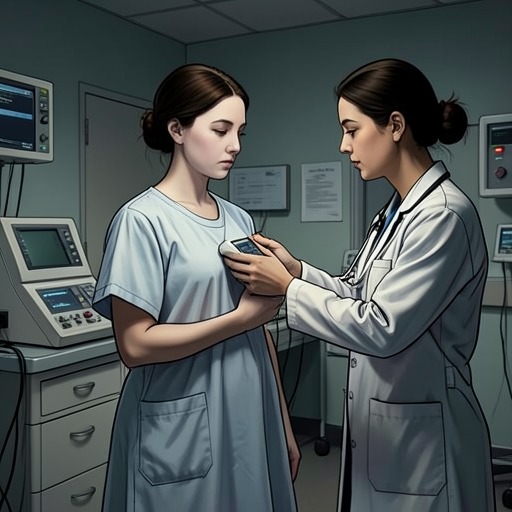
The relationship resurfaces when Philip speaks with Rosalie in the hospital. By then, she says, she can remember little of the past and only vaguely remembers him. She describes having undergone about eight shock treatments, which she found pleasant at the time but which did not restore her memory. She also explains that a severe reaction to a combination of medications had led to hospitalization and intense paranoia. Her account makes the reunion an encounter between people with unequal access to their shared history: Philip can recall their past, while Rosalie struggles to recover hers.
Rosalie describes the difficulty of communicating as part of her present condition. She wants to speak with people, she tells Philip, but finds conversation effortful and uncomfortable; memories return only partially and unpredictably. The past affair therefore does not arrive as a stable story that either person can simply retrieve. It is recalled amid her uncertainty about what she remembers, and Philip’s presence is at once a connection to that past and a reminder of how much of it has become inaccessible to her.
Conversation Becomes Notebook
Philip later acknowledges to his wife that he did visit Rosalie in the hospital and wrote down some of what they said. He explains that he added material they had not said, and that he could no longer distinguish precisely where the recorded exchange ended and his invention began. He says he wanted to preserve the account of Rosalie’s difficult circumstances and her courage. In his description, the notebook is neither a straightforward transcript nor a wholly invented episode: remembered conversation provides a basis for imaginative writing, but the two become entangled.
The notebook’s exposure turns this practice into a conflict within Philip’s marriage. His wife finds it outside his briefcase, reads it, and challenges his explanation of the intimate English woman it contains. Philip argues that the figure is not simply a real person copied into a novel. He says that Rosalie’s experience, including her English background and marriage, supplied some of the knowledge and material behind the imagined character. Rosalie had appeared with her husband at their home on Eighty-first Street after they moved from England; Philip presents that history as one source for the English life represented in his notebook.
Philip also describes writing imagined conversations in the bedroom while his wife is asleep. He admits that this private imaginative activity may constitute a kind of betrayal, even though he presents it as part of his work and as mourning for a life he had led before marriage. He says that his imagination makes him unfaithful in writing, not only to his wife but to everyone it draws into its material. This defense does not settle the dispute: his wife sees the intimacy of the notebook as evidence that the imagined woman is more than an abstract invention.
Literary Use and Its Consequences
Philip’s account of the notebook makes Rosalie both a person he remembers and a source for fiction. He says he learned some things about English life from her, alongside what he gathered by living in England and paying attention. The fictional woman, in his explanation, serves as a repository for that knowledge. The relationship therefore reaches beyond its original circumstances: a past affair and a later hospital conversation contribute to a character whose intimacy and apparent realism prompt his wife to question how much has been transferred from life into art.
Philip insists that writing involves following imaginative impulses rather than suppressing them, and he rejects the idea that he should police himself for fear of criticism. At the same time, he acknowledges that the notebook combines accurate reporting with imagined additions and that he cannot reliably identify the dividing line. His account reveals the cost of that method within the relationship: what he treats as literary transformation is experienced by his wife as a breach of privacy and a possible confession. Rosalie’s role in Philip’s life consequently remains double-edged—she is the former lover whose remembered experience matters to him, and a real person whose conversation and history have been carried into writing beyond the limits of a transcript.