Fields of Mondego
DianaThe Fields of Mondego are a broad, fertile landscape along the Mondego River, where grazing and cultivation unfold in the shadow of Coímbra and Castle of Montemor-o-Velho. When Felismena reaches the region after many days of wandering, its abundance offers a striking contrast to her exile and distress; the surrounding city and fortress also place the pastoral world within reach of a larger history of noble lineages and military resistance.
Landscape and Setting
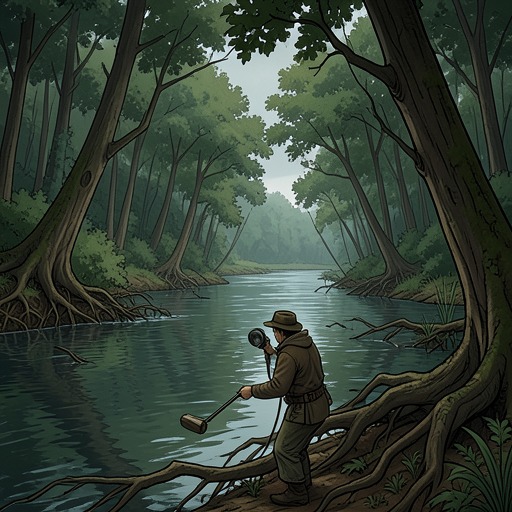
From a high approach, Felismena sees an immense green field whose far end lies about twelve miles away at the foot of distant mountains. The river runs through it, shaping a pleasant bank lined in places with willows, green alders, and other trees, and elsewhere opening onto clear water and a broad sandy shore. The meadow itself is about three miles wide and somewhat longer than that. Crops stand high and close to harvest; moved by a mild breeze, their alternating light and shade make the fertile plain a source of delight to the eye.
The river and open pasture give the region its pastoral character, but the landscape is not isolated. A large wood of alders and wild olive trees contains many finely built houses, and the view leads from the fields toward a city whose walls reach the river. A great bridge spans the water, linking the cultivated countryside to the urban setting beyond it.
Coímbra and the Fortress
Duarda identifies the city as Coímbra, describing it as one of the most distinguished cities in its kingdom and in Europe. She connects its standing to the antiquity and nobility of its lineages, as well as to the surrounding land watered by the Mondego. Her account makes the fields more than a scenic prospect: they belong to a region whose agricultural wealth and inherited social prestige are intertwined.
Across the landscape stands Castle of Montemor-o-Velho, built on the highest mountain in view. Duarda presents it as a celebrated stronghold that resisted a long siege by a Muslim king and emerged victorious. She associates its reputation with the ingenuity, valor, and courage of its inhabitants, and praises the virtues of the castle’s ladies and knights. The pastoral view therefore opens onto a remembered history of conflict and endurance.
Pastoral Life and Narrative Role
The Fields of Mondego are also working country. Duarda recalls that the shepherds who grazed their flocks there drank from the river, and that she herself watched from a hill to make sure the sheep Danteo tended could feed without disturbance. The plain’s streams, grass, and grazing grounds sustain the routines of pastoral life even as those routines become entangled with love and disappointment.
Felismena arrives as a stranger, declaring that she has been driven from her homeland in Vandalia. The Portuguese shepherdesses receive and comfort her, explain the country around them, and offer her food. In this welcoming encounter, the landscape acts as a temporary refuge. Yet it is also the setting for Duarda’s painful account of her past devotion to Danteo and her refusal to return to him after he married Andresa. The fields hold both the apparent ease of shepherding and the lasting consequences of broken promises: an idyllic setting where private affections remain vulnerable to change.