Álora
DianaÁlora is the fortress held by Rodrigo de Narváez in Felismena’s embedded account of Abindarráez and Jarifa. It anchors the tale’s movement from armed encounter to hospitality and clemency: Narváez rides out from its defenses, brings his wounded captive back there, and later receives the lovers when Abindarráez returns to honor his word. The place is therefore more than a military post; within the story, its walls become the setting where a captor chooses generosity over advantage.
Setting and Command
In Felismena’s story, set in the time of the valiant Prince Fernando, Álora is one of two strongholds entrusted to Narváez by the king of Castile. Narváez also holds the defense and command of Antequera, a grant made after Prince Fernando’s conquest of that city. The account presents both commands as recognition of Narváez’s service and as responsibilities he exercises with distinction.
Álora is maintained as a defended fortress, with fifty selected hidalgos in the king’s pay serving under Narváez. The captain and his men are described as active rather than idle: their military ventures sustain the defense of the territory and their reputation. The story places the stronghold near routes used for forays against neighboring Muslim forces, but supplies no broader description of its architecture or civilian life.
The Night Expedition and Capture
One summer night, when the brightness and coolness of the evening invited people to enjoy the air, Narváez rides out from Álora with nine of his knights. The others remain behind to guard the fortress. The party travels armed and quietly, seeking to discover whether their Muslim neighbors have left themselves exposed. At a fork in the road, the riders divide into two groups, agreeing that a horn will summon help if either falls into danger.
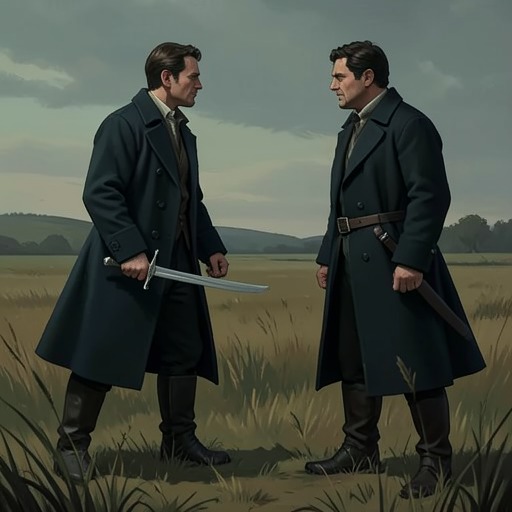
One group hears a man singing and sighing along the road. Hidden among trees, the knights see Abindarráez approaching on horseback, dressed in crimson damask with gold and silver ornament and carrying a sword, shield, and lance. The song identifies him as a man traveling between Álora and Coín, in love at Coín. The knights leave their hiding place and attack. Abindarráez fights back so fiercely that he brings down three of his opponents; wounded in the thigh and having lost his lance, he retrieves it from the ground while attempting to escape. A horn brings Narváez to the encounter. He takes on Abindarráez himself, and, after a hard contest, pulls him from the saddle and captures him.
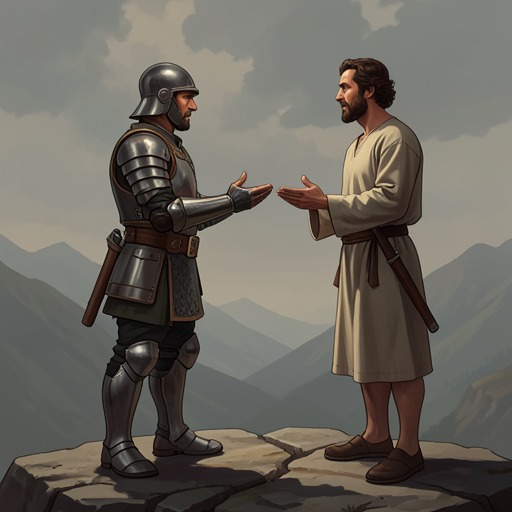
The ambush and fight establish Álora as the base from which Narváez’s armed authority reaches beyond the fortress. Yet the captive is not treated simply as a prize. Once Narváez learns that Abindarráez’s distress comes from an urgent love affair, he allows him to go to Coín on the condition that he return to Álora as a prisoner within the agreed period. Narváez supplies a horse because Abindarráez’s own has been injured in the fight. The fortress thus becomes the destination built into a promise: Abindarráez may pursue his meeting, but must come back.
Refuge for the Lovers
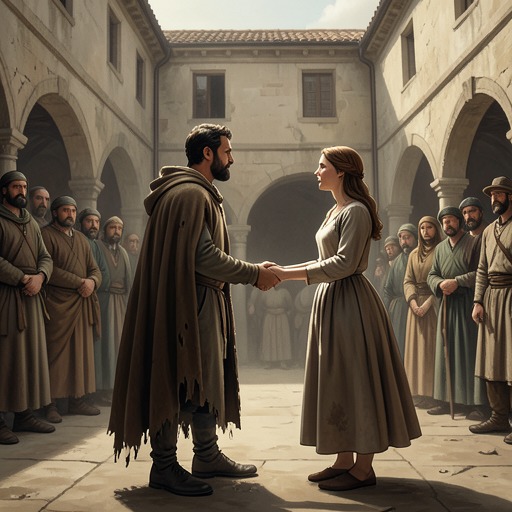
Abindarráez reaches Coín and meets Jarifa, whom he identifies as his wife. Rather than remain free or send a substitute, he sets out with her for Álora before dawn, keeping her face covered so that she will not be recognized. At the fortress gates, the guards already know what has happened and let them in. Abindarráez presents Jarifa to Narváez and points out that he had promised to return as one prisoner but has brought two.
Narváez receives them courteously and offers them his own house as a place to rest. Abindarráez’s wounds, aggravated by the hurried journey, are treated by a surgeon at the fortress; the wounds are not dangerous, and after four days of care he has recovered. The care given there makes the stronghold a temporary domestic refuge as well as a place of detention. Jarifa can remain with her husband, while Narváez can honor the conditions of Abindarráez’s return without separating the couple.
Clemency and the Story’s Resolution
From Álora, Narváez writes to the king of Granada. His letter explains that Abindarráez and Jarifa married without Jarifa’s father’s permission, recounts how the captive returned with his wife, and asks the king to secure the father’s forgiveness. Narváez also offers to waive Abindarráez’s ransom. The appeal matters because the lovers’ problem now exceeds the authority of the fortress commander: Jarifa’s father is the king’s vassal, and the king’s decision is needed to settle the conflict.
The king orders Jarifa’s father to forgive the couple and receive Abindarráez as a son. Narváez then accompanies them from Álora to Coín. After the wedding festivities, Jarifa’s father offers a ransom of four thousand gold doblas, six richly equipped horses, shields, and lances. Narváez distributes the horses and arms among the knights who rode with him, but returns the money, accepting it as a contribution toward the wedding expenses rather than payment for his captive. Jarifa’s gifts and thanks, and Narváez’s continued offer of hospitality, extend the exchange of generosity beyond the fortress walls.
Álora’s role in this embedded tale is shaped by that sequence: it is a royal military stronghold, the site of confinement, a place of healing, and the starting point for a negotiated settlement. Its commander’s conduct transforms the return of a prisoner into proof of trustworthiness, while the fortress’s authority is used to protect rather than break the couple’s bond. Felismena recounts the episode at Felicia’s house, placing Álora within a story that measures honor not only by success in combat but also by keeping one’s word and showing mercy.