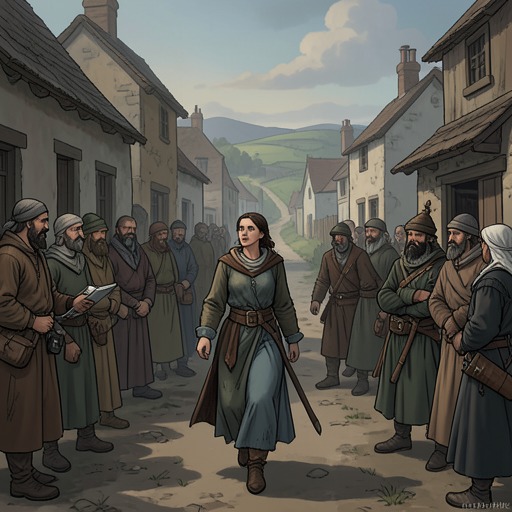
Temple of Minerva
DianaThe Temple of Minerva is a celebrated sanctuary near the Douro River and the setting for an annual pastoral festival. Its customs organize who may enter and when, turning the eve of the celebration into a women’s vigil while the shepherds gather outside. Within that carefully ordered setting, Ismenia’s disguise and deception of Selvagia begin a consequential love story.
Setting and Festival
The temple stands in a village beside the Douro River, within the fertile Lusitanos kingdom. The surrounding region is described as a settled pastoral landscape of ancient communities, wooded valleys, and cultivated land. At appointed times of year, the sanctuary draws most of the shepherds and shepherdesses of the province.
The celebration begins on the day before its formal feast. Shepherdesses and nymphs mark the occasion with songs and hymns, while shepherds hold contests in running, jumping, wrestling, and throwing the bar. The prizes are emblems of pastoral life and distinction: a wreath of green ivy, a flute or zampogna, a shepherd’s staff of knotted ash, or other objects in which shepherds take pride. The account presents the festival as both religious observance and communal festivity, joining prayer and offerings to music, dance, and athletic rivalry.
Rules of Access
On the eve of the feast, shepherdesses may remain in the temple through the night. Shepherds, by contrast, may enter only to offer their devotions; they must then leave until the following day, when everyone may attend the ceremonies and sacrifices. The stated purpose of this arrangement is to leave the shepherdesses and nymphs together without distraction, allowing them to celebrate among themselves.
The separation is spatial as well as temporal. While the women keep vigil inside, the shepherds wait in a green meadow outside, beneath the light of the nocturnal Diana. The rules create a distinct social interval: the sanctuary becomes temporarily a women’s gathering place, while the men’s celebration continues in the neighboring landscape.
The Vigil and Ismenia’s Deception
Selvagia arrives with female friends, dressed in their best clothes rather than their ordinary working garments, intending to keep the customary overnight vigil. A company of apparent shepherdesses enters with male companions. After the men have prayed, they leave the temple in accordance with local custom; the women make offerings before the altar and sit together.
One veiled visitor sits beside Selvagia. With only her eyes visible beneath a white veil and a finely worked straw hat, she repeatedly meets Selvagia’s gaze, then looks away. She takes Selvagia’s hand and declares affection, while concealing her name and identity. Selvagia, drawn in by the visitor’s words and beauty, answers with declarations of devotion of her own. Their intimacy absorbs them so fully that they pay no attention to the songs and dances around them.
When Selvagia presses to know who her companion is, the stranger leads her aside and removes the veil. The visitor is Ismenia, a man whose feminine clothing was arranged as a joke by his female relatives. Ismenia admits the disguise and reveals that the apparent courtship was a deception. The encounter leaves Selvagia overwhelmed and in love, making the temple vigil the starting point of her painful romantic history.
Narrative Significance
The temple’s customs are not merely background: by gathering women inside and sending the men away, they create the privacy that makes Ismenia’s impersonation possible. The same order intended to protect the women’s undistracted celebration becomes the condition for a breach of trust. The scene turns a communal ritual into a private emotional trap, and sets the festival’s harmony against the lasting disturbance of Selvagia’s love and disappointment.